Great Films You Need To See – The Candidate (1972)

This is my latest contribution to The Big Picture, the visually focused film magazine that proves there’s more to film than meets the eye. The Big Picture is running a series of features and reviews throughout May with the theme of ‘politics’. This piece is part of the site’s Lost Classics section (featuring in my list of Great Films You Need To See), in this case the Robert Redford-starring The Candidate.

It’s difficult to pinpoint precisely when the political process finally surrendered to the whim of the media machine and devolved into little more than a playground trade-off centred on bite-sized slogans and soundbites.

The Candidate - as relevant and contemporary now as it was at the time of its release in the dark days of Nixon

The Candidate – as relevant and contemporary now as it was at the time of its release in the dark days of Nixon

‘Playing the game’ has become a damning pre-requisite for those who seek to govern us, as Robert Redford’s idealist-turned-stooge Bill McKay comes to learn in Michael Ritchie’s expose of the business-as-usual cynicism at the empty heart of party politics.

Largely filmed as if US Senate candidate McKay is being shadowed by a documentary crew, often with the sort of overlapping dialogue you’d expect to hear under such frantic circumstances, The Candidate painstakingly (and painfully) shows how the hamster wheel of campaigning chips away at McKay’s principles.

Bill McKay (Robert Redford) - guaranteed to lose in The Candidate

Bill McKay (Robert Redford) – guaranteed to lose in The Candidate

A respected community organiser who has never registered to vote (“he’s never seen the point of it”, according to his wife), McKay is assured by campaign manager Marvin Lucas (Peter Boyle) that he can say and do what he wants because he doesn’t stand a chance against long-serving incumbent Senator Crocker Jarmon (Don Porter) – a deal Lucas seals by scribbling the words “you lose” on the inside of a matchbook.

However, before he can say “read my lips…”, McKay is being maneuvered from the liberal left to the safe centreground; be it getting a haircut, donning a suit and tie just like his retired governor father (brilliantly played by Melvyn Douglas), or having his views skillfully edited by media manager Howard Klein (Allen Garfield) for the purposes of ‘man of the people’ TV ads.

A better way? - Bill McKay (Robert Redford) in The Candidate

A better way? – Bill McKay (Robert Redford) in The Candidate

McKay may spout hot air about being stifled from saying what he really thinks (for instance, when Lucas suggests McKay’s opinion on legalised abortion that “every woman should have that right” be watered down to “it’s worth studying”), but he ultimately does what he’s told – especially when the polls indicate the gap is closing on Jarmon.

Inversely, the further McKay moves away from the principles he once had, the more accomplished and popular he becomes with the people, who spout back his slogan “A better way” in ever-growing numbers.
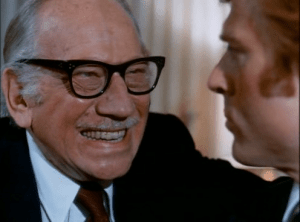
Father and son: John J McKay (Melvyn Douglas) and Bill McKay (Robert Redford) in The Candidate

Father and son: John J McKay (Melvyn Douglas) and Bill McKay (Robert Redford) in The Candidate

Much like Warren Beatty, whose under-appreciated Bulworth (1998) is The Candidate turned on its head, Redford wears his politics on his sleeve. However, he cleverly undermines his liberal poster-boy image in his portrayal of a weak-willed puppet unable and ultimately unwilling to break the mould.

When real-life political commentator Howard K. Smith cuts to the bone of McKay’s campaign by exclaiming that “the Madison Avenue commercial has taken over as his standard means of persuasion; the voters are being asked to choose McKay as they would a detergent”, the candidate can only watch with the look of someone resigned to their fate.

Robert Redford plays Bill McKay in The Candidate

Robert Redford plays Bill McKay in The Candidate

The absurdity of the situation is encapsulated late on when a frazzled McKay self-mockingly starts jumbling his speeches together into one giant meaningless soundbite, while the lost boy look he gives Lucas when he asks “what do we do now?” after their unexpected election victory is priceless.

As relevant and contemporary now as it was at the time of its release in the dark days of Nixon, The Candidate is a reminder should one be need one that the house always wins.

Review – The Duke Of Burgundy

It’s something of a paradoxical quirk that the work of one of Britain’s most vital and uniquely gifted filmmakers should be so un-British in its style and subject matter.

The Duke Of Burgundu -

The Duke Of Burgundy – “a seductive and singular work of real vision”

Peter Strickland’s assured debut Katalin Varga (2009) saw the writer/director up sticks and decamp to Transylvania to get his slippery revenge drama made, while the giallo horror movie Toby Jones’s unassuming foley artist works on stirs up an increasingly frenzied hornet’s nest in his remarkable follow-up Berberian Sound Studio (2012).

This, the third beguiling motion picture from Strickland serves as yet another reminder that this is a filmmaker who resolutely refuses to be bound by the trappings of genre cinema.

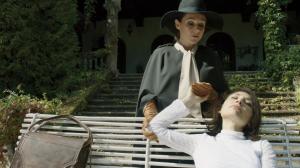
Cynthia (Sidse Babett Knudsen) tends to Evelyn (Chiara D'Anna) in the

Cynthia (Sidse Babett Knudsen) tends to Evelyn (Chiara D’Anna) in the “beguiling” The Duke Of Burgundy

Whilst cinephiles will fall over themselves to spot the references to the sleazy Euro-erotica of the 1970s (movies that were generally seen as being more notable for their lascivious titles than for their quality) the film ostensibly tips its hat to, The Duke Of Burgundy operates at a far more sophisticated level in its examination of the BDSM-charged relationship between Cynthia (Sidse Babett Knudsen) and Evelyn (Chiara d’Anna).

Set in a nondescript wooded locale seemingly lifted from the pages of a Grimm fairytale, the interplay between Cynthia and Evelyn appears to suggest a mistress/servant dynamic, with Cynthia the dominant sadist who lazes around whilst ordering Evelyn to shine her boots or scrub her underwear.

However, the film’s sleight of hand is gradually uncovered as the give-and-take between the two is revealed to be a role play that, as the cracks of repetition start to show, suggests the power dynamic isn’t quite as one-sided as we first thought.

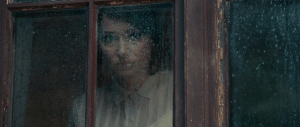
The butterfly effect: Chiara D'Anna's Evelyn in The Duke Of Burgundy

The butterfly effect: Chiara D’Anna’s Evelyn in The Duke Of Burgundy

Cynthia and Evelyn exist in a world apparently devoid of men, while they and the community around them are all lepidopterists – collectors and studiers of moths and butterflies (the eponymous Duke of Burgundy is a reference to the species of butterfly, rather than a male ruler).

The numerous cases of carefully arranged butterflies and moths displayed around Cynthia’s abode seem at first to suggest a visual metaphor for the controlling master/servant dynamic, but as their relationship metamorphoses into something more striking and free-floating the symbolism of the butterfly becomes crystallised.

As stylised as the film is (the bucolic production design and Nic Knowland’s sun-dappled cinematography are a joy), Stickland’s genuinely funny script is full of absurdist flourishes, from the mannequins sat at the back of a lepidopterary lecture to the straight-faced suggestion by Fatma Mohamed’s elaborately dressed Carpenter of a “human toilet” as a potential birthday present for Evelyn.

Sidse Babett Knudsen's Cythia in The Duke Of Burgundy

Sidse Babett Knudsen’s Cynthia in The Duke Of Burgundy

Whilst the more intimate scenes between the two leads are undoubtedly sensual, it never veers into leering exploitation and is almost always subverted by an amusing look or witty line (Cynthia’s declaration to Evelyn that “I need an instruction manual to get into half the things you buy me” being a case in point).

Both d’Anna and Knudsen play off each other beautifully and breathe an enchanting and sensitive life force into an unorthodox and complex bond; one that is more fragile and hypnotic than a butterfly and woozily evoked by the stirrings of Cat’s Eyes’ dreamlike soundtrack. Meanwhile, a stunningly simple throwaway dissolve from woodland to grass has to be one of the most breathtaking shots of the year.

A seductive and singular work of real vision, The Duke Of Burgundy will take flight in your imagination and confirms Strickland as an auteur of major standing.

‘Decades’ Blogathon – The Final List!

Decades Blogathon Banner

That’s it! The final spots have been filled and we now have the roll call of the 20 entries for the ‘Decades’ blogathon being hosted by myself and Tom over at Digital Shortbread!

As you can see from the list below, there’s a wide range of entries covering all genres that – I’m delighted to say – go back 100 years. Personally speaking, that’s exactly what I wanted to see when I first thought about doing this blogathon and I’m really looking forward to getting this underway.

Thanks so much to everyone for their interest and sorry to anyone who has missed out on this occasion. There’s always next year when we can possibly run this again and feature movies released in the sixth year of the decade – there are plenty I’d like to see on that list!

So here’s the full list:

1. Movies SilentlyThe Taking Of Luke McVane (1915)
2. Back To The ViewerA Night At The Opera (1935)
3. Defiant SuccessMildred Pierce (1945)
4. Epileptic MoondancerNight Of The Hunter (1955)
5. Tranquil DreamsLady And The Tramp (1955)
6. Movie RobMonty Python And The Holy Grail (1975)
7. It Rains… You Get WetShampoo (1975)
8. Fast Film ReviewsOne Flew Over the Cuckoo’s Nest (1975)
9. Carly Hearts MoviesTommy (1975)
10. Cindy BruchmanBarry Lyndon (1975)
11. Film GrimoireDeep Red (1975)
12. Movie Man JacksonThe Stepford Wives (1975)
13. The IPCJaws (1975)
14. Three Rows Back – Back To The Future (1985)
15. The Cinematic FrontierPee Wee’s Big Adventure (1985)
16. Kaput, AlreadyThe Purple Rose Of Cairo (1985)
17. Ramblings of a CinephileLa Haine (1995)
18. Drew’s Movie ReviewsTommy Boy (1995)
19. Committed to CelluloidCasino (1995)
20. Digital ShortbreadBatman Begins (2005)

Now that we have our list, we’ll be aiming to start the blogathon on Monday, 18 May and will post one review each on our sites (10 on this site and 10 on Digital Shortbread). We’ll make sure to flag up each other’s daily posts to ensure every review on the list gets plenty of exposure.

Thanks again to everyone who’s taking part in what’s sure to be a great blogathon. See you on the 18th!

‘Decades’ Blogathon – Get In Quick!

Decades Blogathon Banner

Spots have been filling up fast for a new blogathon being hosted by myself and Tom from Digital Shortbread… but there’s still time to get involved before they all go!

The response to our call for contributors to the ‘Decades’ blogathon has been fanastic and it’s already promising to be a great event. We have a couple of spots left so be quick!

The blogathon focuses on movies that were released in the fifth year of the decade – whether that be 1985, 1935, 1945 or any other decade.

So far, the following discerning writers have confirmed that they will be joining Tom and I in this endeavour:

The Cinematic FrontierPee Wee’s Big Adventure (1985)
Ramblings of a CinephileLa Haine (1995)
Drew’s Movie ReviewsTommy Boy (1995)
Movie RobMonty Python And The Holy Grail (1975)
It Rains… You Get WetShampoo (1975)
Epileptic MoondancerNight Of The Hunter (1955)
Tranquil DreamsLady And The Tramp (1955)
Fast Film ReviewsOne Flew Over the Cuckoo’s Nest (1975)
Carly Hearts MoviesTommy (1975)
Committed to CelluloidCasino (1995)
Movies SilentlyThe Taking Of Luke McVane (1915)
Cindy BruchmanBarry Lyndon (1975)
Kaput, AlreadyThe Purple Rose Of Cairo (1985)
Back To The ViewerA Night At The Opera (1935)
Film GrimoireDeep Red (1975)
Movie Man JacksonThe Stepford Wives (1975)

On top of these guys, Tom will be reviewing Batman Begins (2005), while I’ll be having a stab at Back To The Future (1985).

We’re looking to run the blogathon from Monday, 18 May. If you’d like to get involved then please drop me an email at threerowsback@gmail.com or email Tom at tomlittle2011@gmail.com letting us know which film you’d like to cover or for more info.

Don’t miss out!

Review – Avengers: Age Of Ultron

For a film with so much baggage it could clog up a whole fleet of invisible S.H.I.E.L.D jets, this latest instalment in the unstoppable Marvel juggernaut somehow manages to avoid collapsing under the weight of its own cinematic universe.

Avengers: Age Of Ultron may not be the game changer its predecessor was, but Whedon has closed this particular chapter in the Marvel Cinematic Universe about as as well as he could. Now what's next?

Avengers: Age Of Ultron may not be the game changer its predecessor was, but Whedon has closed this particular chapter in the Marvel Cinematic Universe about as as well as he could. Now what’s next?

Guided by any hand other than that of Joss Whedon, Avengers: Age Of Ultron could so easily have turned into another Spider-Man 3 (2007) – overloaded to the point of bewilderment.

Despite having enough characters to fill a whole season of Game Of Thrones and a plot that, when boiled down, follows a very similar thread to its 2012 predecessor (supervillain exposes the underlying tension between our team of superheroes before they assemble stronger-than-ever for the good of humanity), Whedon just about keeps the plates spinning.

Iron Giant: Ultron (James Spader) in Avengers: Age Of Ultron

Iron Giant: Ultron (James Spader) in Avengers: Age Of Ultron

Ignoring Jeff Goldblum’s immortal warning from Jurassic World that man shouldn’t be “so preoccupied with whether or not they could that they didn’t stop to think if they should”, Tony Stark/Iron Man (Robert Downey Jr), with the help of Dr Bruce Banner/Hulk (Mark Ruffalo) creates artificial intelligence to give life to his Ultron project, a global defence force of Iron Men to help thwart threats both terrestrial and extraterrestrial.

No sooner does Ultron (James Spader) spark up then he unleashes a diabolical plan to wipe out the Avengers; a scheme bolstered by the assistance of the super-fast Quicksilver (Aaron Taylor-Johnson) and the mind-bending Scarlett Witch (Elizabeth Olsen); mutants whose grudge against Stark seems well founded.

Tony Stark/Iron Man (Robert Downey Jr) and Hawkeye (Jeremy Renner) wonder what to do next in Avengers: Age Of Ultron

Tony Stark/Iron Man (Robert Downey Jr) and Hawkeye (Jeremy Renner) wonder what to do next in Avengers: Age Of Ultron

With the odds stacked against them, the Avengers – Iron Man, Captain America (Chris Evans), Thor (Chris Hemsworth), Black Widow (Scarlett Johansson), Hawkeye (Jeremy Renner) and Hulk – must come together as never before in order to stop Ultron.

In some ways, Age Of Ultron is actually superior to its monstrously successful forebear. The time given to each character is more democratic, in particular Hawkeye, who virtually becomes the beating heart of the team.

Thor-some: Captain America (Chris Evans) and Thor (Chris Hemsworth) in Avengers: Age Of Ultron

Thor-some: Captain America (Chris Evans) and Thor (Chris Hemsworth) in Avengers: Age Of Ultron

We also finally get to see Hulk properly lose it in an epic bust up with Iron Man, while the film’s final extended set piece endeavours to keep the action grounded (a bad pun for anyone who’s seen the movie, sorry) while all hell is being unleashed and – unlike some other superhero flicks – actively gives a damn about the poor civilians caught up in the ensuing chaos.

It is at its strongest when it takes the time to let the characters breathe and interact with other, most amusingly at a party at Avengers HQ (formerly Stark Tower) in which the team kick back and chew the fat alongside some of the franchise’s periphery characters, including Don Cheadle’s War Machine and Anthony Mackie’s Falcon. A scene in which Thor challenges his comrades to pick up his hammer is lovely and mirror’s the film’s best exchange late on between the crown prince of Asgard and a character whose origin I won’t spoil.

He's fast, she's weird: Quicksilver (Aaron Taylor-Johnson) and sister Scarlett Witch (Elizabeth Olsen) in Avengers: Age Of Ultron

He’s fast, she’s weird: Quicksilver (Aaron Taylor-Johnson) and sister Scarlett Witch (Elizabeth Olsen) in Avengers: Age Of Ultron

In spite of Spader’s cooly malevolent delivery, Ultron fails to leap off the screen as effectively as Loki managed to in Avengers Assemble. However good the visual effect, a human villain will almost always engage more with the audience and if that bad guy is a maniacally grinning Tom Hiddleston then so much the better.

Whedon has now taken a step back from Avengers duties and it’s not too difficult to see why. In a recent interview he said: “There’s basically 11 main characters in this movie, which is quite frankly too much.” When your writer/director acknowledges there’s simply too much stuff to crowbar into one movie you have to start wondering if he maybe has a point. That he’s kept this stew from boiling over is, frankly, remarkable.

Black Widow (Scarlett Johansson) in Avengers: Age Of Ultron

Black Widow (Scarlett Johansson) in Avengers: Age Of Ultron

The torch has now passed from a seemingly relieved Whedon to Captain America: The Winter Soldier‘s Anthony and Joe Russo who, before helming the two-part Infinity War will first serve up Cap’s next solo outing Civil War – it’s safe to say there’s a lot of war coming up.

Avengers: Age Of Ultron may not be the game changer its predecessor was, but Whedon has closed this particular chapter in the Marvel Cinematic Universe about as well as he could. Now what’s next?