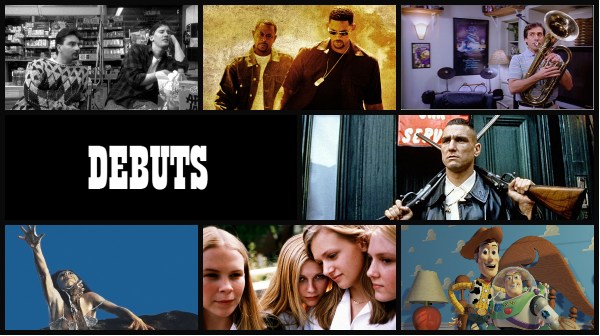
Debuts Blogathon: Danny Boyle – Shallow Grave (1994)
Debuts Blogathon

It’s the penultimate day of the Debuts Blogathon, hosted by myself and Chris at Terry Malloy’s Pigeon Coop, and today Chris and I will be featuring the same review of Danny Boyle’s first feature Shallow Grave by Shah from Blank Page Beatdown. Shah’s great looking site examines trailers and features interesting reviews of new and recent releases from around the world, including some great Bollywood stuff. He also runs a section called Random Rants that, as the title suggests, sees Shah riffing about what’s currently setting the internet alight. Do make a point to check out his great site.

Danny Boyle

Shallow Grave (1994)

Danny Boyle’s body of work is pretty varied and diverse; he is one of the few directors whom I cannot label a hack. Quentin Tarantino is a hack; Guy Ritchie is a hack; J. J. Abrams is a hack.

Shallow Grave PosterI don’t mean this as an insult; those guys are some of my favorite directors, I just mean that most directors’ films will have some clear indications of the fact that it is their brand of cinema. This could be through style of cinematography (Tim Burton), similar subject matter and content (Tarantino), or unique technical execution, such as a plethora of lens flares (Abrams) that will clearly identify the director of the movie. The complete opposite is true of Danny Boyle.

Boyle is probably the only director whose movies reveal nothing of the man behind the camera, as no two movie are alike in theme, tone, style or even genre. From zombie apocalypses, to Bollywood extravaganzas, to drug induced piles of awesome, there is nothing that Danny Boyle cannot direct, apparently.

Shallow GraveThe Debuts Blogathon, started by Chris over at Terry’s Malloy’s Pigeon Coop and Mark from Three Rows Back, has allowed me a chance to visit Boyle’s debut as a feature film director in Shallow Grave and compare it against his now famous repertoire of film. Even though Trainspotting launched Boyle (and others) into cult fanatic status, Shallow Grave is where he started his path of originality and has stayed true to it ever since.

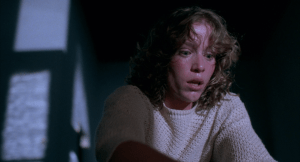
Shallow GraveShallow Grave is an easy story that goes places and requires little explanation. Three friends have to come to grips with the death of a new roommate, while being transformed due to the discovery of a suitcase full of money with the body. It’s never explained who the man was, or why he had the money; it doesn’t matter.

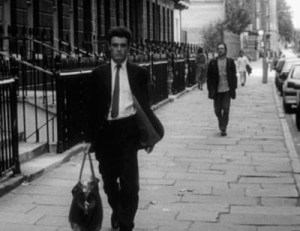
Shallow Grave stars Ewan McGregor in his first leading role as the jester with a heart of stone. Along with him is Christopher Eccleston, better known as (one of many) Dr Who, who is amazing as a soft-spoken bookish man, who’s traumatised by his experiences during the story. Eccleston steals the show, in my opinion, in  a performance with great range and depth.

Shallow GraveI say it’s an easy movie because the usual sequence of events don’t take place. There aren’t long drawn out moral conundrums about what to do with the money, or how to dispose of the dead body; they just do it and move on. What’s more interesting is the slow and steady transformation of mild-mannered David played by Eccleston. The brutal actions he takes part in, almost compelled to do so by his so-called friends, changes him dramatically. The movie focuses on the bonds of friendship when tested under unusual circumstances and challenged by greed and selfishness.
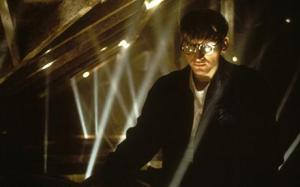
Shallow GraveWhile being his most mediocre film, it’s not difficult to see how this is Boyle’s first film. The ‘wow factor’ isn’t really present until the third act in terms of the story. Boyle’s usual aesthetics seem amateurish, with topsy-turvy camera work, even though it works for the story being told in this particular movie and is similar to how the rawness of the camerawork worked for a story like 28 Days Later. The Brit chemistry is on full display between the three main characters; just like Trainspotting, but to a lesser extent.

Shallow GraveLike most Boyle films, Shallow Grave does go deeper than what it gives you at face value. It goes to darker places while invoking emotion that bring you to the edge of the seat, at least in the final 10 minutes. The journey of the characters within the story follows the darkness exhibited by the lead in Boyle’s The Beach; however, nowhere near as extreme. The one thing consistent with Boyle’s other movies is the downward spiral the characters take throughout the film, and especially near the end, with intense consequences.

Boyle has become one of my favorite directors despite, or in spite of, his completely out-of-the-box style of filmmaking and interests. Every Boyle movie looks nothing like the last Boyle movie, which I think is more challenging than creating a trademark style evident in all of one’s films. Shallow Grave marked the beginning of an acclaimed career and it’s not difficult to see in this film how the talent behind the camera got more creative and stylistic over the years.

Tomorrow, the Debuts Blogathon reaches its conclusion with my thoughts of Steven Soderbergh’s Palme d’Or-winning Sex, Lies And Videotape, while Chris over at Terry Malloy’s Pigeon Coop will be examining Stanley Kubrick’s 1953 debut Fear And Desire. It’s been a fun ride, so please don’t miss the end!

Debuts Blogathon: Quentin Tarantino – Reservoir Dogs (1992)

Debuts Blogathon

As the Debuts Blogathon, hosted by myself and Chris at Terry Malloy’s Pigeon Coop, nears its end, we’ve saved one of the very best till last. Tyson from Head in a Vice is covering the one and only Reservoir Dogs, Quentin Tarantino’s hugely influential 1992 debut. Tyson was the first movie blogger to follow me and I’ve followed his posts ever since. His site is a real one-of-a-kind, providing entertaining reviews of genre fare, as well as his long-term Project: De Niro to watch and review all of Bobby’s films and his popular Desert Island Films feature (I promise to sort mine out soon!). Simply put, this is a fantastic site you really need to be following.

Quentin Tarantino

Reservoir Dogs (1992)

When Chris and Mark posted about this project, I immediately knew I could only do it if I could grab Quentin Tarantino’s debut Reservoir Dogs.

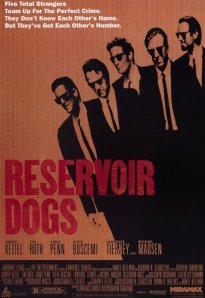
Reservoir Dogs PosterFor my money, it’s the greatest directorial debut and the man has continued to inspire and make incredible movies in his uncompromising style. Luckily, I was quick off the mark and the boys gave me this movie to talk about. Now I have it, I’m here to offer my thoughts on the film, Tarantino himself and the lasting effects Reservoir Dogs has had on cinema.

Reservoir DogsWhat can I say about Reservoir Dogs that hasn’t already been said a million times, by people much more respectable than me? Not a lot, but I’ll throw some stuff out here anyway. For those that don’t know, the plot goes a little something like this: a diamond heist goes bad and the thieves are left to pick up the pieces back at their warehouse headquarters, all the while suspecting that a traitor in their midst sabotaged the operation.

Tarantino’s style can be seen immediately in the opening scene, and it showcases what most people associate Tarantino with – dialogue. The conversations his characters have in all his movies, I mean, you can tell a Tarantino film just by tuning in to a conversation. The smallest, most subtle things take on so much meaning and for me no one writes like this man. I didn’t see the film on its release (as I was 10-years-old), but I can imagine people watching it and wondering who the hell this Quentin Tarantino guy was; writing, directing and acting in his debut movie.

Reservoir DogsThen the opening scene kicks in and we are listening to some guys talking about random things like tipping and the subtext of Madonna’s Like a Virgin song. It just holds your attention, then the guys leave; the suave crew walking out of the diner in slow motion, set to the George Baker Selection’s super cool Little Green Bag. Wow. You’re just hooked, and here we are over 20 years later, the effect has not diminished at all.

Reservoir DogsI love how within this opening scene, where the issue of tipping the waitress comes up and Mr Pink’s refusal to tip, sets into action a discussion that not only tells us all we need to know about these characters, but even foreshadows the events of the film. Mr Pink won’t tip, showing he mostly cares only about himself (I’ll be honest, his argument is solid and I hate tipping). Mr White believes the waitress works hard and deserves a tip, which shows despite being a criminal he cares for people, which is what leads him to be so blindly trusting with regards to Mr Orange. Mr Blonde offers to shoot Mr Pink for a joke, foreshadowing his sociopathic tendencies. Mr Orange tells Joe that Mr Pink refused to tip, playing the part of a rat, which he is. Joe pressures Mr Pink to tip and he does, showing Mr Pink is ultimately a coward. All that is gleaned from an argument about a tip. That is great writing, and a standard which he has continued throughout his career.

Reservoir DogsIt’s a heist movie where we never actually see the heist. People always assume it’s a horrendously violent film, yet apart from the police torture scene – the camera even cuts away from the ear slicing – it really isn’t that violent. Most of it is set in a warehouse, with a small cast. Yet I can’t find a bad thing about it. Everything from the dialogue, to the cast and the music is not only perfect, but something which is synonymous with all of Tarantino’s films. He finds random music in Japanese clothing stores. He takes washed up actors and gives them the part of a lifetime. But mostly he just does what the hell he wants, when he wants.

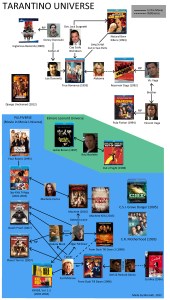
Reservoir DogsAs a fan, the one thing I think I love more than anything else Tarantino-wise is that all the characters from his films are alive and real to him. They all play out in his head, and by doing so he has created an intricate, instantly recognisable movie universe – one which boasts a family tree of miscreants that overlap between movies in weird and wonderful ways. This chart shows the links, and it just emphasises the detail and thought that goes into everything he writes.

Reservoir DogsThese connections – however subtle they may be – bear little effect, if any, on the plots of Tarantino’s movies. Instead, they’re like Easter Eggs that reward observant onlookers: in-jokes that might mean nothing to us, but mean the world to their creator. Even in his early work, Tarantino was building his own giant playground, in which not only his individual movies co-exist, but their characters’ paths cross and intersect behind the scenes.

I could go on and on about it, but I’m merely scratching the surface. Ultimately Reservoir Dogs is a work of genius by a debut director and a film that, while he may have bettered in my opinion with Pulp Fiction, will easily stand the test of time. I’m hungry, let’s get a taco.

Over at Terry Malloy’s Pigeon Coop, Dave from ccpopculture provides a piece on New Zealand-born director Andrew Dominik’s 2000 debut Chopper. Head over to Chris’s site now by clicking here.

Tomorrow is the penultimate post in the Blogathon and comes courtesy of Shah from Blank Page Beatdown with his piece on Danny Boyle’s Shallow Grave. Don’t miss it!

Debuts Blogathon: Ben Affleck – Gone Baby Gone (2007)

Debuts Blogathon

Another day, another great post in the Debuts Blogathon hosted by myself and Chris at Terry Malloy’s Pigeon Coop, this time courtesy of Ruth from FlixChatter. If it’s quality you’re  looking for, look no further than this great site. Each and every post is infused with great insights, as well as Ruth’s unique, conversational style. She brings that style to this analysis of Ben Affleck’s debut feature Gone Baby Gone. I thoroughly recommend that you visit Ruth’s site (if you haven’t already of course) and see what I’m talking about.

Ben Affleck

Gone Baby Gone (2007)

When I first heard about this Blogathon, I was initially going to do The Usual Suspects as I thought it was Bryan Singer’s debut, but I ended up settling with Ben Affleck’s first film instead, which I think is still the top one out of the three excellent feature films he’s done. This is his directorial debut in a major motion picture, although he did direct two other movies that never made it to the big screen.

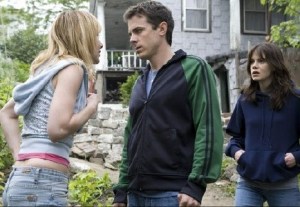
Gone Baby GoneI saw this crime drama/mystery quite a while ago, but I remember being quite affected by it. Set in Affleck’s hometown of Boston and starring his kid brother Casey, the story centres on an investigation into a little girl’s kidnapping, which turns out to become a professional and personal crisis for the two detectives involved. Based on the Dennis Lehane novel of the same name (who also wrote Mystic River and Shutter Island), this film has a strong cast that elevates the complex story and gripped me from start to finish.

Casey Affleck, who I think is the better actor of the Affleck brothers, plays private investigator Patrick Kenzie. He opens the story with a monologue as we get a glimpse of the neighborhood where he’s lived his whole life: “I’ve always believed it’s the thing you don’t choose that made you who you are…” It’s an effective opening montage that establishes Casey’s character and puts the grim kidnapping scenario into context.

Gone Baby GoneI’m not going to go into the plot as I feel that if you haven’t seen the film, the little you know about this film the better. What I can tell you is that, initially, you might think the film is about one thing, but slowly but surely, as details unfold it becomes even more devastating than what you think it is. Another missing person case in the second half of the film inexorably shines a light to a darker world of corruption within the force. It’s not something new that we see stories about police corruption; how those who’re sworn to protect us end up betraying that trust, but the way things play out here certainly makes you stop and pause. Despite some hints along the way, the ending managed to still hit me out of left field. It’s such a simple scene, but once you see it in context, Casey’s expression in that scene is just so gut-wrenching. In fact, as I re-watched it recently, it hit me how much of an emotional roller coaster this film was.

What makes this a worthy debut?

Gone Baby GoneIt’s quite a bold choice for Ben to tackle as his first film, considering how complex, twisty and morally-ambiguous Lehane’s novel is. This film stays with me for quite a long time after the end credits roll. It left me speechless as I pondered: ‘OMG! What would I have done? Would I have chosen to do the right thing? And what is really the right thing?’ What if the people you consider ‘righteous’ do unthinkable things because they believe they’re doing something for the greater good? Does that justify the act? Things aren’t always so black and white in our world and this film certainly made a good case for that.

The way he filmed the underbelly of Boston feels authentic and raw; it’s not the typical glamorous-but-impersonal shot of the city. It turns out that the people in the backgrounds in a lot of the scenes are real local Boston actors and members of the local town. Ben made a deliberate choice not to cast professional extras for authenticity and it certainly worked. It’s clearly a personal project for Ben all round, as Gone Baby Gone is also his favorite novel. Now, that doesn’t automatically translate into a good film, but Ben has quite a keen eye behind the camera and he certainly has a way of getting great performances out of his actors.

Gone Baby GoneI love how layered the characters are, beautifully realised by Casey and the stellar supporting cast, especially Morgan Freeman, Amy Ryan, Michelle Monaghan and the oh-so-underrated Ed Harris. Ryan was Oscar-nominated, but I think Casey and Harris were both robbed that year.

What I admire about this film, and it’s become a signature of sort in Ben’s direction, is the lengthy dialogue. They can be as thrilling and tense as any action scenes, in this case, the well-written script is fully realised by the terrific performances of the cast. The conversation between Casey Affleck and Ed Harris in this clip is a great example, take a look:

Ben Affleck – the auteur?

Ok, so maybe he hasn’t earned that label yet, but he’s certainly a force to be reckoned with as a director. It’s interesting to note that Ben was at a low point in his career a few years before this, starring in forgettable-to-downright awful films likePaycheck, Jersey Girl, Gigli and Surviving Christmas. He did ok in Hollywoodland, but his career wasn’t exactly in the up and up. I think Ben made the right choice to not star in this film and just focus on his work behind the camera. He did work on the screenplay, which is his first screenwriting credit since his Oscar win with his BFF Matt Damon inGood Will Hunting.

Gone Baby GoneI’ve seen all three of his feature films and all of them are excellent. I think if I were to rate his films, I’d go Gone Baby Gone, Argo and The Town in that order. Yes, I know Argo won Best Film at the Oscars last year and I’m good with that, but in the degree of how a film affects me, I think his first film still tops it for me.

That said, Ben’s work has improved over time as he’s become more confident behind the camera, and I like that he still maintains a certain degree of intimacy in the way he shoots his films. They don’t become ‘Hollywood-ized’ for lack of a better term, as his films are always story and character-driven. I hope he continues that trend in the future. I like how he chose characters who are caught in situations out of their depth; they certainly make for an intriguing protagonists. Though the budgets he’s worked with have gone up steadily from the $19m he got for this film, his films are still relatively small. The Town was only $37m, while Argo had a $44m budget.

Gone Baby GoneIt’s interesting that after the film came out, “…[it] was perceived either as a fluke or too dark to make Affleck a candidate for bigger films”, according to an interview piece Affleck did with The Hollywood Reporter. Affleck states in the interview that only Warner Bros executive Jeff Robinov pursued him with absolute conviction despite the lack of financial success: “… Robinov brought me into his office and said: ‘I think you’re a hell of a filmmaker, actor. What do you want to do? Tell us, and we’ll do it.’ And I wasn’t having those meetings with every studio”. He settled on doing The Town, which ended up earning nearly three times its budget.

I’m looking forward to Ben’s next directorial effort. It’s listed that he’s doing another Lehane adaptation, Live By Night, where he’s going to direct and star. Not sure what’ll happen to that project now that he’s been contracted to play Batman/Bruce Wayne in multiple films. I do think he’ll always be a better director than actor, but really, that’s really not a bad place to be in.

So yeah, if you haven’t seen this film yet, I can’t recommend it enough. I think it stands as one of the best directorial debut by a young director. We’ll see if one day Ben Affleck would indeed earn his status as an auteur.

Over at Terry Malloy’s Pigeon Coop, it’s the turn of Nika from The Running Reel. Nika covers Sam Mendes’ multi-Oscar-winning American Beauty. Head over to Chris’s site now by clicking here.

Tomorrow, I’m thrilled to welcome Tyson from Head in a Vice, who’ll be covering a biggie; it’s Quentin Tarantino’s 1992 debut Reservoir Dogs. You won’t want to miss it.

Debuts Blogathon: Joel Coen – Blood Simple (1984)

Debuts Blogathon

Today in the Debuts Blogathon, hosted by myself and Chris at Terry Malloy’s Pigeon Coop, I’m delighted to welcome the contribution of Mark from Marked Movies. This was one of the first blogs I followed and I’ve never been less than mightily impressed by his output. Mark’s reviews set a high standard, while his great features, such as ‘Classic Scene’, are great fun to read. Here Mark covers Joel ‘Coen Brother’ Coen’s celebrated first feature Blood Simple. In case you haven’t already signed up to Marked Movies, do so now. You won’t regret it.

Joel Coen

Blood Simple (1984)

Having cut his teeth as Assistant Editor on director Sam Raimi’s cult classic The Evil Dead in 1981, Joel Coen went on to become a fully fledged director himself with his debut Blood Simple in 1984.

Blood Simple Poster On the advice of Raimi, Joel and his brother Ethan (whom it has always been said, actually shared directorial duties) went door-to-door showing potential investors a two minute ‘trailer’ of the film they planned to make, which resulted in them raising $750,000 and just enough to begin production of their movie. It was at this point that two of cinema’s most consistent and original talents had arrived.

Blood SimpleIn West Texas, saloon owner Julian Marty (Dan Hedaya) suspects that his wife Abby (Frances McDormand) is cheating on him with Ray (John Getz), one of his bartenders. Marty then hires Loren Visser (M. Emmet Walsh), a private detective, to investigate. Once Marty gains proof of the adulterous affair, he pays Visser to kill them. However, Visser is a very unscrupulous type and has plans of his own.

When you comb through the filmography of the Coen’s, three renowned and highly respected crime writers will inevitably surface. They are: James M. Cain, Raymond Chandler and Dashiell Hammett. However, it’s their debut Blood Simple that fully harks back to the hard boiled noirs of the 1940′s, namely The Postman Always Rings Twice and Double Indemnity – both of which are written by Cain and the latter, in fact, co-scripted by Chandler when it made it the screen.

Blood SimpleHammett was also a contemporary of these writers and wrote the novel Red Harvest, which actually coined the term “blood simple”. It is described as “the addled, fearful mindset people are in after a prolonged immersion in violent situations”. This very description sums the movie up perfectly. It’s a homage to these great writers and the genre they excelled in. Also, like their stories, once the characters and their motivations are established, there is no going back.

Although this was their debut, labyrinthine plots and double-crosses would become a staple of the Coens’ work that followed. Give or take the odd zany comedy, their filmography largely consists of these writers; Miller’s Crossing was heavily influenced by Hammett’s The Glass Key, while The Big Lebowski loosely took its structure from the work of Raymond Chandler, and James M. Cain would resurface in The Man Who Wasn’t There. Even the Oscar-winning Fargo and No Country For Old Men could be seen as riffs on Blood Simple itself. The thing that’s most apparent about this debut from the Coen’s, though, is that their stylistic approach is plain to see. It cast the mould from which we have witnessed their serpentine abilities in storytelling and hugely inventive directorial flourishes.

Blood SimpleMuch has been said about the cinematography on the Coens’ output. This has largely been due to the work of their regular collaborator Roger Deakins. However, it was Barry Sonnenfeld who worked on the first three Coen’s movies and you’d be hard pushed to notice much of a difference between them. This simply comes down to them translating exactly the vision that the brothers had. That’s not to take away from the work of Deakins or, in this case, Sonnenfeld as their cinematography has always been sublime but ultimately it comes down to the Coens’ inventively keen eye for a shot.

Blood SimpleThey are known for being sticklers for detail, knowing exactly what they want and exactly how it should look and working from a shoestring budget doesn’t prevent them from realising their Hitchcockian melee of passion, bloodshed and suspense. If anything, their limited budget shows how artistic and creative they really are and they’re not without (or what would become) their trademark moments of irony.

The Coen Brothers have gone on to become two of the most respected filmmakers in the business, and rightfully so. With many classics – cult and mainstream – under their belts already, there’s really no end to what they’re capable of. That being said, it’s always a pleasure to return to their roots and see where it all began.

Over at Terry Malloy’s Pigeon Coop, Alex from And So It Begins… writes about David Gordon Green’s much-loved debut George Washington. Head over to Chris’s site now by clicking here.

Next up, it’s the turn of Ruth from the awesome FlixChatter. Ruth will be covering Ben Affleck’s first feature Gone Baby Gone. Looking forward to this; see you then.

Debuts Blogathon: Christopher Nolan – Following (1998)

Debuts Blogathon

It’s Day 7 of the Debuts Blogathon hosted by myself and Chris at Terry Malloy’s Pigeon Coop and next up we have Elroy from The Silver Screener‘s insightful take on Christopher Nolan’s low-budget neo-noir debut Following (1998). Elroy’s great looking site covers new releases in an intriguing way, while his Kubrick Awards dig deep into why cinematic ‘classics’ are so revered. As if that wasn’t enough, Elroy also does audio reviews on YouTube and SoundCloud. This guy’s got it covered!

Christopher Nolan

Following (1998)

Following is a beautiful film to watch. It unfortunately suffers from ‘amateur-itis’ in several ways, but had it been made by a Christopher Nolan 10 years into his professional career, I believe it would almost certainly be considered one of the great crime dramas of the modern era.

Following Poster As I said, it does suffer from ‘amateur-itis’ – a term I’ve made up to describe elements of a film that really tell us ‘this was made by someone early into his career’. There is a fight scene that isn’t the most amazingly shot sequence in film history. Some of the acting seriously lacks.

FollowingThe main character is referred to by Nolan as The Young Man, and played by Jeremy Theobald pretty well actually, although really there isn’t much to do emotionally – all the emotions are written into the dialogue. But the other two leads, Cobb and The Blonde, are not very well portrayed by their actors – Alex Haw (Cobb) seems to have difficulty making any of the swears he so often says seem needed, and Lucy Russell (The Blonde) just isn’t believable in the first place.

The sound mixing isn’t very good as well, which is somewhat surprising seeing as the editing of the shots is one of the better exponents of the film. A lot of the time it’s hard to hear what the actors are saying, yet I guess we can probably assume that Cobb’s swearing his head off.

FollowingBut put all of that aside and you have yourself with a pretty damn good film.

FollowingNolan’s direction early on, while the actual premise itself of ‘following’ was being explained, gives us a great connection to the action. We are viewing things from a faraway point, in the midst of cars blocking our view as they pass by, as people scatter the streets, like we’re the ones spying, like someone’s being watched, and that really taps into the tone of the film – black and white colours, two-faced people, two-faced situations. That’s one of the real feats of the film; how it establishes the mystery, the disguises these people represent.

The non-linear structure of the screenplay isn’t too dissimilar to that of Quentin Tarantino’s Reservoir Dogs in that it tosses back and forth between time periods, so the story isn’t told completely in a row. That technique, when harnessed properly, can be extremely effective. It is harnessed very properly in Following. It works so well because we feel confused in the beginning when the non-linear style kicks in, but by the end of the film we can understand why this is done – because the effect of mystery and deceit in confusing times is transferred perfectly from characters to viewer by Christopher Nolan.

FollowingFollowingBut I find that the film isn’t as similar to Reservoir Dogs as it is to one of my all-time favourite movies, The Usual Suspects. That story is also somewhat non-linear and told through flashbacks and a constant narrative from the protagonist, Verbal. That’s how the early goings work in Following – we hear The Young Man telling his story and giving background. But more than that is how the story unravels to such a point where it finally gets to the ending and the plot twist hits you over the head in a blaze of smoke and sudden surprise. That’s the best thing about The Usual Suspects and it’s also the best thing about Following. We know it’s perfectly choreographed because once you see the film and think back, you can visualise all the clues left, and say to yourself “wow, that’s damn smart”.

I have no doubt that this is Christopher Nolan’s love letter to noir films of the 50s; the Dial M for Murder’s, the Double Indemnity’s, the Sunset Boulevard’s. It was shot in lovely black and white; I was completely infatuated with its raw beauty, and even though I didn’t get the chance to watch it on a cinema screen, I could still feel the raw graininess of Nolan’s Following. That’s how lovely it was to watch. I could feel mystery in the air.

It was almost like it had put the thought in my mind that at any moment, I could turn around and find a completely unknown man following me.

Meanwhile, over at Terry Malloy’s Pigeon Coop, Kim from Tranquil Dreams provides a great piece on Hayao Miyazaki’s directorial debut The Castle of Cagliostro. Head over to Chris’s site now by clicking here.

Next on the slate I have the pleasure of introducing Mark from Marked Movies‘s take on Joel ‘Coen Brothers’ Coen’s Blood Simple. Hope you’re looking forward to this one as much as I am. See you then.