In Retrospect – The Manchurian Candidate (1962)

This review forms part of the IMDB Top 250 Films project on the fantastic Head in a Vice‘s fantastic site. Try to make a beeline to his informative, entertaining site.

For a film so of its time, it’s remarkable how relevant John Frankenheimer’s 1962 Cold War classic The Manchurian Candidate has remained.

The Manchurian Candidate

John Frankenheimer’s The Manchurian Candidate – “one of the most chilling, paranoiac, satirical and downright surreal polemics against the politics of fear ever made”

Ostensibly a white knuckle thriller about a decorated soldier being brainwashed by a cabal of Communist conspirators into becoming an unwitting assassin, this adaptation of Richard Condon’s novel remains one of the most chilling, paranoiac, satirical and downright surreal polemics against the politics of fear ever made.

One of the first films to explore the notion of using mind control to create so-called sleeper agents, its continued resonance is such that ‘Manchurian Candidate’ is a term still used by panic-peddlers to describe public figures who they claim are the mouthpiece of evildoers.

The unfortunate platoon, unwitting pawns in a much larger game, in The Manchurian Candidate

The unfortunate platoon, unwitting pawns in a much larger game, in The Manchurian Candidate

Condon’s book, published in 1959 had, like Arthur Miller’s 1952 play The Crucible been a thinly veiled attack on Senator Joseph McCarthy’s poisonous, demagogic anti-Communist witch hunts.

The book’s central premise of a fantastical Communist plot to overthrow America from the inside is mere window dressing for Condon’s real target, made manifest in the character of John Iselin (played in the film by James Gregory), an ignorant, but dangerous buffoon controlled by his domineering, ideologically driven wife (Angela Lansbury).

The Communist plot takes shape when a platoon of US soldiers serving in the Korean War is captured and brainwashed. The platoon returns to America, where cold, unloveable Staff Sergeant Raymond Shaw (Laurence Harvey) is credited with saving the lives of his men and recommended for the Medal of Honour by Captain Marco (Frank Sinatra). Marco suffers a recurring nightmare in which Shaw brutally kills two of his own men and becomes convinced they were conditioned and that Shaw is being primed for something terrible. Little does Marco realise, however, who Shaw’s American operator is and quite how ambitious the plot is.

A meeting of the Ladies Garden Club concerning 'Fun with Hydrangeas' - or maybe not - The Manchurian Candidate

A meeting of the Ladies Garden Club concerning ‘Fun with Hydrangeas’ – or maybe not – The Manchurian Candidate

America was still in the icy grip of the Cold War when Frankenheimer’s film was released. Indeed, it landed in cinemas slap bang in the middle of the Cuban Missile Crisis when the Soviet Union and United States appeared destined for nuclear conflict and initially suffered at the box office as a result.

It’s appropriate for a film about a massive multi-national cabal to be the subject of its own conspiracy theories. Sinatra purchased the rights following the assassination in 1963 of President Kennedy (who was a fan of the book) and kept it from circulation until 1988, supposedly out of a sense of remorse for the loss of his friend. However, according to Frankenheimer the film’s withdrawal was actually the result of a fall-out over money between Sinatra and distributors United Artists.
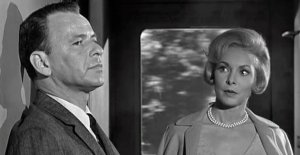
Captain Bennett Marco (Frank Sinatra) has a strange exchange with Rosie (Janet Leigh) in The Manchurian Candidate

Captain Bennett Marco (Frank Sinatra) has a strange exchange with Rosie (Janet Leigh) in The Manchurian Candidate

The film’s quasi-documentary style lends the film an urgency and its recognition that television could be used to shape opinion and spread disinformation was well ahead of its time. The scene when Iselin gatecrashes a press conference waving a list of “card-carrying Communists” working within the government is expertly staged by Frankenheimer, who shows Iselin tub-thumping on TV screens in the foreground and an uproarious media behind.

The Manchurian Candidate‘s most powerful moments bookend the film. The celebrated brainwashing sequence near the start is a bizarre, deeply unsettling tour-de-force by Frankenheimer and still shocks. The virtuoso 360° tracking shot starts with the soldiers sat laconically on stage at a talk given to the Ladies Garden Club concerning ‘Fun with Hydrangeas’. As the camera gradually comes full circle the terrifying reality dawns on the viewer – we’ve actually been witnessing events through the platoon’s delusional perspective; the person giving the talk is smug Communist doctor Yen Lo (Khigh Dhiegh), the ‘ladies’ are a coalition of Soviet, Chinese and Korean officials and rather than being a quaint affair this is a deadly demonstration of mind control.

Likewise, the political convention climax in Madison Square Garden is nail-biting stuff, shamelessly lifted from Hitchcock’s The Man Who Knew Too Much.

Eleanor Iselin (Angela Lansbury) and Raymond Shaw (Laurence Harvey) - one of the most uncomfortable mother/son relationships in history -  in The Manchurian Candidate

Eleanor Iselin (Angela Lansbury) and Raymond Shaw (Laurence Harvey) – one of the most uncomfortable mother/son relationships in history – in The Manchurian Candidate

One of the odder aspects of the film is George Alexrod’s script, dense and verbose at times (especially during the brainwashing sequence) and just plain surreal at others, most notably when a shaky Marco meets Rosie (Janet Leigh) on the train. After Marco corrects her on which state they’re in she replies: “I know. I was one of the original Chinese workmen who laid the track on this stretch.”

It’s a nonsensical exchange that some believe is code by Rosie to control Marco. Things get stranger still when, at their next encounter she announces she’s suddenly broken off her engagement with her fiancé and wants to get together with Marco.
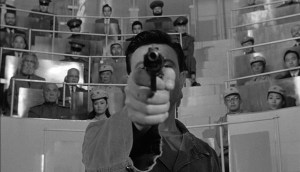
Raymond Shaw (Laurence Harvey) - "the kindest, bravest, warmest, most wonderful human being I've ever known in my life" - in The Manchurian Candidate

Raymond Shaw (Laurence Harvey) – “the kindest, bravest, warmest, most wonderful human being I’ve ever known in my life” – in The Manchurian Candidate

Sinatra could pull it out of the bag when he needed and he’s never been better as the edgy soldier frustrated he can’t do more to help his sergeant. Harvey is perfectly cast as the doomed, tragic Shaw, a puppet on a string helplessly controlled by both his conditioning and his despicable mother, played by Lansbury.

One of the great movie villains, Lansbury (who was only three years older than Harvey) plays Mrs Iselin as the ultimate spin doctor, an ultra-domineering sociopath who serves an ideology but isn’t afraid to stamp on her comrades when things get personal.

Frankenheimer litters the film with numerous other subtle moments (Iselin’s reflection in a portrait of Abraham Lincoln to symbolise just how low politics has sunk) and his use of deep focus lends the film a clammy claustrophobia.

That the film is more relevant today than its unsatisfactory 2004 remake speaks volumes about its importance not only as a work of cinema but also as a beacon of vigilance against fear being used as the weapon of choice by our public servants.

In Retrospect – The Departed (2006)

This review forms part of the Martin Scorsese Guest Review series on the very impressive Rorschach Reviews site. If you’re a lover of film like me, you’ll find a lot of interesting stuff over there.

One of cinema’s great injustices was finally laid to rest at the 2007 Oscars when Academy voters ended Martin Scorsese’s 30-year wait for a best directing award.

The Departed

The Departed will be best remembered as the film that bagged Scorsese that elusive Oscar. Judged against the director’s other work, however, it’s an entertaining footnote, but a footnote just the same.

That it was for The Departed, a solid, entertaining crime thriller and not for any one of his five previous nominations, most of which are better pictures, must have been a bittersweet feeling for Scorsese, who joked it probably won its accolades because it was “the first movie I’ve done with a plot”.

After directing what were arguably the landmark American films of the 1970s (Taxi Driver, 1976), 1980s (Raging Bull, 1980) and 1990s (Goodfellas, 1990), Scorsese entered a new phase of his career in the 2000s, flip-flopping between prestige studio pictures like The Aviator and personal documentaries, such as his Bob Dylan project No Direction Home.

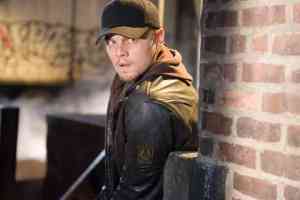
William Costigan (Leonardo DiCaprio) goes undercover in The Departed

William Costigan (Leonardo DiCaprio) goes undercover in The Departed

Arriving in 2006, The Departed feels like the last throw of the dice for Scorsese, who at this time must have been wondering if he’d ever collect one of those little golden statuettes.

A remake of Andrew Lau and Alan Mak’s superb Infernal Affairs (2002), William Monahan’s script stays pretty faithful to the original, but transfers the storyline from Hong Kong to the mean streets of South Boston.

Psychopathic mob kingpin Frank Costello (Jack Nicholson) in The Departed

Psychopathic mob kingpin Frank Costello (Jack Nicholson) in The Departed

Irish mob kingpin Frank Costello (Jack Nicholson) plants young acolyte Colin Sullivan (Matt Damon) as a mole within the Massachusetts State Police. At the same time, William Costigan (Leonardo DiCaprio), a kid trying to escape his family’s criminal ways by becoming a cop is persuaded to go deep undercover into Costello’s notorious gang in order to expose its murderous leader. Essentially negative images of one another, the stakes are raised as each risks life and limb to expose the other ‘rat’.

The Departed feels like a Scorsese Greatest Hits package in many ways. With long time Editor Thelma Schoonmaker once again on board, the kinetic editing style he employed to such great effect in Goodfellas and Casino is used throughout the picture, as are the director’s trademark freeze frames and restless, back-and-forth camerawork, lending the film a hyper-reality.

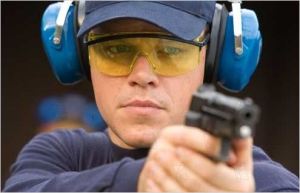
Costello's mole in the police, Colin Sullivan (Matt Damon) in The Departed

Costello’s mole in the police, Colin Sullivan (Matt Damon) in The Departed

Music has always played a major part of Scorsese’s oeuvre and here it’s no different. Although the soundtrack is fantastic the songs tend to telegraph the action on screen a little too obviously. The Rolling Stones’ Gimme Shelter (seriously, how many times has Scorsese used that song in his films?) is played as Costello takes Sullivan under his wing, while Comfortably Numb (the version featuring Roger Waters, Van Morrison and The Band) soundtracks Costigan finding solace with state-appointed psychiatrist Madolyn Madden (Vera Farmiga), and Roy Buchanan’s cover of Sweet Dreams is used to ironic effect over the closing credits.

A celebrated film historian, Marty also litters the movie with homages, from Scarface (both versions) to Night and the Hunter and The Third Man among others.

Psychiatrist Madolyn Madden (Vera Farmiga), torn between two men in The Departed

Psychiatrist Madolyn Madden (Vera Farmiga), torn between two men in The Departed

One of the film’s biggest diversions from Infernal Affairs is its preoccupation with Catholicism, specifically its hang-ups with sin, guilt and redemption. For someone who almost entered the priesthood in his formative years, it’s no surprise many of his films deal with these issues, although not since his breakout film Mean Streets has Catholicism been so integral to the story.

The church and the streets (literally) bleed together, most viscerally when Costigan uses a picture of Jesus to smash over a guy’s head. Costello represents the devil, luring an impressionable Sullivan into his fold, while Sullivan tellingly purchases an apartment in view of the local church. Also, the guilt Sullivan feels manifests itself in his struggle to perform sexually with Madden.

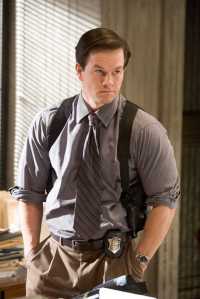
Foul-mouthed cop Dignam (Mark Wahlberg) in The Departed

Foul-mouthed cop Dignam (Mark Wahlberg) in The Departed

The concepts of ‘good’ and ‘bad’ are integral to The Departed and fascinated Scorsese, who said in an interview: “Good and bad become very blurred. That is something I know I’m attracted to. It’s a world where morality doesn’t exist, good doesn’t exist, so you can’t even sin any more as there’s nothing to sin against. There’s no redemption of any kind.”

The film is full of memorable performances, including Martin Sheen and Mark Wahlberg, who make a great double act as Costigan’s chalk and cheese undercover handlers. Likewise, Alec Baldwin has a ball playing big as Sullivan’s boss, while Farmiga holds her own in the picture’s only significant female role.

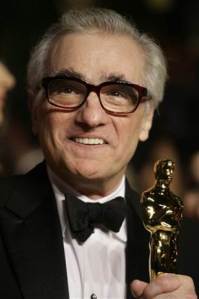
Martin Scorsese with the Best Director Oscar he won for The Departed

Martin Scorsese with the Best Director Oscar he won for The Departed

Damon, a far more talented actor than he’s given credit for, gives a performance of impressive restraint. DiCaprio on the other hand goes in the other direction and too often falls back on that trademark look he gives of squinting his eyes, pursing his lips and jutting out his jaw to imply anger or stress. It’s to DiCaprio’s credit as an actor that in spite of all that he still gives an impressive performance.

But DiCaprio’s positively catatonic when compared to Nicholson. A legend he may be, but when let off the leash he generally can’t help going way overboard. It’s well established that Costello is a psychopath (his reaction to executing a woman says as much – “Jeez, she fell funny”), but Nicholson’s rabid portrayal bypasses unhinged and goes straight to cartoonish.

The Departed will be best remembered as the film that bagged Scorsese that elusive Oscar. Judged against the director’s other work, however, it’s an entertaining footnote, but a footnote just the same.

In Retrospect – Life Of Brian (1979)

This review forms part of the IMDB Top 250 Films project on the excellent Head in a Vice site. If you haven’t already, make sure to check out the site, it really is very good.

Every once in a while a film comes along that generates a more fervent reaction among those who haven’t seen it compared to those who have.

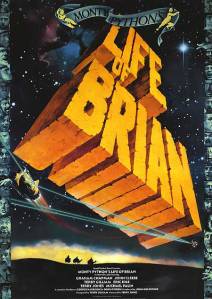
Life of Brian

Life of Brian

David Cronenberg’s Crash was hugely controversial on its 1996 release, leading to some councils banning it from being shown, while the furore dredged up by the slew of so-called ‘video nasties’ led to stricter censorship laws being adopted in the UK.

A similar outcry greeted the release of Monty Python’s Life of Brian in 1979. Branded ‘satanic’ and ‘blasphemous’ in the United States, almost exclusively by those who had only heard what the film was about through Chinese whispers, the film generated an equally vitriolic reaction in the British media, among certain religious groups and rent-a-quote social campaigners such as Mary Whitehouse.

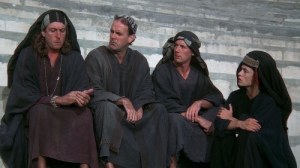
"Squatters!" Members of the People's Front of Judea put the world to rights in Life of Brian

“Squatters!” Members of the People’s Front of Judea put the world to rights in Life of Brian

Most (in)famously, Python’s own John Cleese and Michael Palin staunchly defended the film on the BBC against the juvenile and contrary jibes peddled by Christian broadcaster Malcolm Muggeridge and the flamboyant Bishop of Southwark, Mervyn Stockwood.

The simple fact is that, almost 35 years on from its original release, Life of Brian remains the most insightful and satirical film ever made about religious dogma, as well as one of the funniest movies in cinema history.

As the title suggests, the film follows the life of Brian Cohen, a simple Jewish man who happens to be born in the stable next to Jesus Christ. Brian falls in love, joins the People’s Front of Judea, is temporarily picked up by an alien spaceship and is mistaken for the messiah on his way to a very musical end.

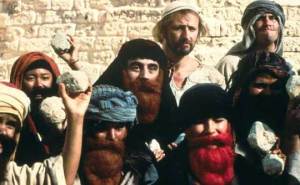
Brian at the 'men' only stoning in Life of Brian

Brian at the ‘men’ only stoning in Life of Brian

Upon the release of the comedy troupe’s previous feature Monty Python and the Holy Grail in 1975, a journalist reportedly asked Eric Idle what their next film would be, to which Idle replied “Jesus Christ – Lust For Glory”. The Pythons ultimately decided not to cheapen the image of God’s only child (Hollywood epics had been doing that for decades); instead they took the far cleverer approach of using their singularly left field style to subvert many of the clichés we have of that time and point the finger at those who practice religious intolerance.

Right from the off it is made patently clear this is not a film about Christ. The first scene sees the Three Wise Men enter the manger where Brian has just been born, believing him to be the messiah, only to realise a few moments later they’ve gone to the wrong stable. The next scene picks up in AD33 with Jesus giving the Sermon on the Mount, only to pan to the back of the crowd where someone shouts “speak up!”, while a group behind bicker among themselves over what they think they’re hearing (“I think he said blessed are the cheese makers”) and call each other names.

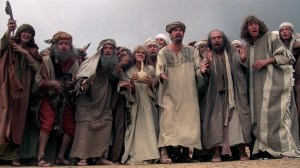
Brian's unwanted followers try to find meaning in the smallest things in Life of Brian

Brian’s unwanted followers try to find meaning in the smallest things in Life of Brian

This misinterpretation of religion – and the dangers that can ensue – is central to Life of Brian, none more so than in the hilarious scene when Brian unwittingly creates a movement and attracts a legion of followers who attach their own nonsensical symbolism to everything he does or says. A lost sandal is interpreted as a sign that all must cast off their shoes, while a blind man declares he has been given back his sight … shortly before plunging head first into a hole.

Indeed, when an exasperated Brian shouts “I’m not the messiah!”, one follower replies in all seriousness: “I say you are Lord, and I should know I’ve followed a few.”

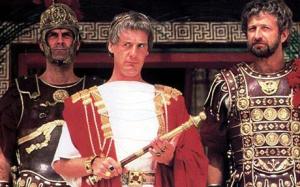
Pontius Pilate (Michael Palin) and right-hand-man Biggus Dickus (Graham Chapman) in Life of Brian

Pontius Pilate (Michael Palin) and right-hand-man Biggus Dickus (Graham Chapman) in Life of Brian

This inspired deconstruction of the delusionary influence of religious dogma is soon followed by an equally brilliant scene when Brian opens his window to be met by hundreds of his ‘followers’:

Brian: “You don’t need to follow me. You don’t need to follow anybody. You’ve got to think for yourselves. You’re all individuals.”
Crowd: “Yes! We’re all individuals.”
Brian: “You’re all different.”
Crowd (except one): “Yes! We are all different.”
One crowd member: “I’m not.”

Brain and chums try to look on the bright side of life in Life of Brian

Brain and chums try to look on the bright side of life in Life of Brian

The Pythons also take aim at the talking shop politics of old-school socialists/communists/trade unionists who like the sound of their own voice too much to do anything constructive, encapsulated in the People’s Front of Judea, who brand fellow Roman-haters the Judean People’s Front and the Judean Popular People’s Front “splitters” and call for a meeting instead of action following Brian’s arrest.

The swipes don’t stop there. Public schools and the British gentrified classes both get sent-up, while the appearance of the alien spacecraft could be seen as the only direct example of religion-bating. As their TV show so often proved, the Pythons aren’t below the odd spot of low-brow humour either, be it Pontius Pilates’s ridiculously over-the-top lisp (“I shall welease Woger!”) or the character of Biggus Dickus.

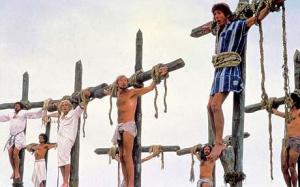
In the end, Brian is encapsulated by his wildly overbearing mother as “not the messiah. He’s a very naughty boy!”. It’s a very silly line from an equally silly film that somehow manages to walk the tight rope between respect and out-and-out satire, and in doing so cements its position as one of the very greatest screen comedies.

Review – Welcome To The Punch

British film has many forms, but it’s period dramas and social realism we often still think of first when seeking to epitomise its cinematic identity.

Welcome to the Punch

Just as L.A. Takedown was Michael Mann’s dry run for Heat, it remains to be seen whether Eran Creevy’s Welcome to the Punch is going to be a dress rehearsal for something better

Directors of the stature of Ken Loach and Mike Leigh continue to cast a long shadow over the British film landscape. But while much of their output is justifiably revered this narrow focus ignores those other figures whose work has helped to shape 21st Century British cinema.

The likes of Danny Boyle, Michael Winterbottom and Shane Meadows owe much to Loach and Leigh (as well as other talismanic figures such as Alfred Hitchcock, Nicolas Roeg and Lindsay Anderson) and have themselves opened the door for a slew of exciting young directors.

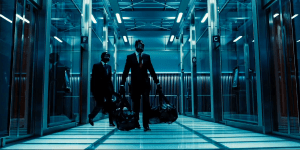
The impressive opening robbery in Welcome to the Punch

The impressive opening robbery in Welcome to the Punch

Eran Creevy marked himself out four years ago with the ultra low-budget urban thriller Shifty, a highly promising debut funded by Film London’s Microwave scheme that won him a Bafta and the attention of Ridley Scott, who came on board as executive producer for Creevy’s sophomore feature.

The partnership with Scott makes perfect sense when watching Welcome to the Punch, a super-slick crime drama that belies its minimal budget and polishes London up to look like New York.

London provides the canvas on which the blood and bullets of the film are painted. Ex-criminal Jacob Sternwood (Mark Strong) must return to the Big Smoke when his son is involved in a botched heist, giving obsessed cop Max Lewinsky (James McAvoy) one last chance to bring his quarry to justice.

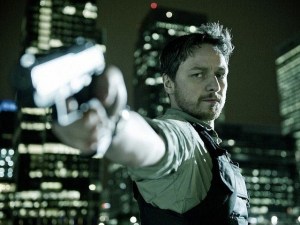
Obsessive cop Max Lewinsky (James McAvoy) in Welcome to the Punch

Obsessive cop Max Lewinsky (James McAvoy) in Welcome to the Punch

Although Michael Mann is an obvious touchstone for the film (specifically his epic crime thriller Heat, wherein the cop and criminal who are two sides of the same coin), Creevy owes an equally big debt to Scott.

Just as Scott has a penchant for using extreme levels of lighting, Creevy bathes each frame with light, much of it artificial due to most of the film being shot at night. Indeed London has rarely looked quite so mouth-watering (or so empty – seriously, where the hell is all the traffic, especially in the well-staged opening robbery?) and is arguably the most important character in Welcome to the Punch, in much the same way that Scott utilises cityscapes to emphasise many of his stories.

Master thief Jacob Sternwood fights for his life in Welcome to the Punch

Master thief Jacob Sternwood fights for his life in Welcome to the Punch

One area where Creevy doesn’t reflect Scott, however, is in his use of female characters. While Scott has G.I. Jane, Ripley and Thelma and Louise, Welcome to the Punch‘s most prominent female is Lewinsky’s plucky partner Sarah Hawks who, despite Andrea Riseborough’s galant efforts remains an underwritten token effort on the writer-director’s part.

Partners in fighting crime Sarah Hawks (Andrea Riseborough) and Max Lewinsky (James McAvoy) in Welcome to the Punch

Partners in fighting crime Sarah Hawks (Andrea Riseborough) and Max Lewinsky (James McAvoy) in Welcome to the Punch

It’s the script and characters where the film falls down most. Creevy’s tried so hard to give us a crime drama with the look of a Hollywood budget, he’s also fallen prey of the two-dimensional characterisation and clichéd dialogue that has blighted so many American films of this genre.

Lewinsky’s the kind of cop who’ll disobey orders to get his man, but is warned he’s getting “too close” to the case and is told: “You’re obsessed; you’re not thinking straight.” Likewise, David Morrissey gets an equally cringeworthy humdinger when, as senior cop Thomas Grainger he tells Lewinsky to “take him [Sternwood] down this time … take him down hard”.

"You're too close!" Senior cop Thomas Grainger (David Morrissey) gives Max Lewinsky (James McAvoy) a dressing down in Welcome to the Punch

“You’re too close!” Senior cop Thomas Grainger (David Morrissey) gives Max Lewinsky (James McAvoy) a dressing down in Welcome to the Punch

A starry British cast rise above the creaky dialogue, especially the ever-reliable Strong and Peter Mullan as Sternwood’s lieutenant Roy Edwards, while the usually unengaging McAvoy does just about enough to avoid looking like he’s channeling The Professionals.

What the film lacks in originality and a good script it makes up for in pace and the impressive set pieces. It’s here Creevy borrows heaviest from Mann, with the opening robbery nodding to Heat‘s incredible central bank heist and the skilfully handled nightclub gunfight (the best scene in the film) owing a debt to Collateral.

Creevy is clearly a director with an eye for style and an ability to make a small budget go a long way, but just as L.A. Takedown was Mann’s dry run for Heat, it remains to be seen whether Welcome to the Punch is going to be a dress rehearsal for something better.

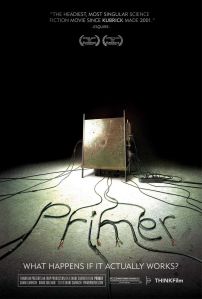
Great Films You Need To See – Primer (2004)

We’ve all wished at least once in our lives for the opportunity to go back and do things differently.

Shane Carruth's Primer

Shane Carruth’s Primer – “a film that puts the science into science fiction and is quite possibly the last word in time travel”

We have to contend ourselves with the fact that hindsight  is all we have, but in the movies where anything is possible, that wish can be fulfilled.

The gift that keeps on giving when put in the right hands, time travel has provided the backdrop to lots of great motion pictures over the years, most recently Rian Johnson’s action flick Looper.

Movies like Looper and the Back to the Future and Terminator franchises use the concept of time travel as the springboard to a popcorn-fuelled rollercoaster ride. On the flip side we have Shane Carruth’s serious, occasionally impenetrable but always absorbing Primer, a film that puts the science into science fiction and is quite possibly the last word in time travel.

The mode of time travel used in Primer (pic taken from the film's Wikipedia page)

The mode of time travel used in Primer (pic taken from the film’s Wikipedia page)

Made for just $7,000 and released to award-winning acclaim at the 2004 Sundance Film Festival, Carruth’s debut feature remains as much of an enigma today as it did when it first left critics and moviegoers scratching their heads almost 10 years ago.

At its heart a cautionary tale about the dangers of possessing ingenuity and an insatiable curiosity, Primer concerns itself with Aaron (Carruth) and Abe (David Sullivan), white-collar engineers by day and amateur inventors by night who stumble on a means of time travel.

Aaron (Shane Carruth) and Abe (David Sullivan) with their time travel boxes in Primer

Aaron (Shane Carruth) and Abe (David Sullivan) with their time travel boxes in Primer

Primer is as far removed from big budget bombast as you can get. Aaron and Abe work from a suburban garage, while the device itself is nothing more than a box (no DeLoreans here), hidden away in a self storage lock-up. Carruth frequently shoots his characters in long shot, as if he’s eavesdropping on their rapid-fire, tech-heavy dialogue and this is reflected in the actions of Aaron and Abe, who coolly observe events around them from a safe distance.

Described by Abe as “the most important thing that any living organism has ever witnessed”, the pair are nervous at first, unsure of how best to proceed with their momentous invention. However, it doesn’t take long before greed and ambition take over and their “reverse engineering” of the past gets out of control.

Aaron (Shane Carruth) can't quite believe who he's warching in Primer

Aaron (Shane Carruth) can’t quite believe who he’s watching in Primer

The film’s tagline – ‘what happens if it actually works?’ – speaks to Carruth’s documentary-style approach while the decision to film on grainy 16mm, financial constraints not withstanding (this was before digital had become all-pervasive), lends a matter-of-fact realism.

The director (who also wrote, produced, edited and wrote the music for the film) cleverly shows how even the extraordinary can become routine with lines such as “Are you hungry? I haven’t eaten until later this afternoon”, and “I think my body’s getting used to the 36-hour days”.

Aaron (Shane Carruth) and Abe (David Sullivan) wonder where to go next in Primer

Aaron (Shane Carruth) and Abe (David Sullivan) wonder where to go next in Primer

Primer‘s cerebral, scientific approach to time travel will certainly infuriate many and leave most others discombobulated. Carruth makes no concessions to his audience and what little action there is centres on the two tech heads talking excitedly among themselves whilst tweaking a large metal box.

That being said, like most time travel films it largely avoids dealing with the thorny issues of causality and paradox (Looper, for example, jokingly shrugs it off by having Bruce Willis’ Old Joe Simmons refusing to talk about it to his younger self (Joseph Gordon Levitt) because they’d end up spending hours “drawing diagrams with straws”). Aaron refers to the age-old question of whether you’d exist if you went back in time and killed your mother before shrugging it off and stating that “it has to work itself out somehow”.

Primer is a  fascinating puzzle that expects you to keep up (the final 20 minutes are almost maddening in their complexity). Those looking for crazy-haired scientists, killer robots or cool time machines are barking up the wrong tree here, but give yourself in to Carruth’s unique vision and it’s sure to stick in the mind long into the future.