Review – The World’s End

The Cornetto trilogy comes to a minty conclusion in this typically homage-heavy sci-fi comedy about bars, buddies, brawls and beer – lots of beer.

“Where Wright, Pegg and Frost go together from here who knows, but as the Cornetto trilogy’s final flavour The World’s End is sweet indeed”

Edgar Wright, Simon Pegg and Nick Frost followed-up their cult TV series Spaced with the 2004 rom-zom-com Shaun Of The Dead, a slice of genius that embraced George A Romero’s Dead films while at the same time doing something truly original with the formula.

They teamed up again three years later for the even more successful Hot Fuzz, an action comedy that winked in the direction of cop buddy movies like Lethal Weapon and Bad Boys, but was still very much its own quirky beast.

Oliver (Martin Freeman), Steve (Paddy Considine), Gary (Simon Pegg), Andrew (Nick Frost) and Pete (Eddie Marsan) prepare to get annhiliated in The World's End

Oliver (Martin Freeman), Steve (Paddy Considine), Gary (Simon Pegg), Andrew (Nick Frost) and Pete (Eddie Marsan) prepare to get annihilated in The World’s End

As the years have ticked by, Wright, Frost and Pegg especially have eclipsed their humble TV beginnings to become Hollywood figures, but that hasn’t stopped them from getting the band back together one more time for this long-awaited final chapter in the Cornetto trilogy (so named for the appearance of the famous ice cream brand in each film).

The film starts with a lengthy exposition-heavy voiceover from Pegg’s Gary King, the rebellious cool kid who led his four mates Andrew, Steve, Oliver and Pete on an epic post-school quest to traverse the ‘Golden Mile’, a perilous pub crawl encompassing 12 pubs in their hometown of Newton Haven. Despite a brave attempt, the gang failed to make it to The World’s End, the Golden Mile’s final watering hole.
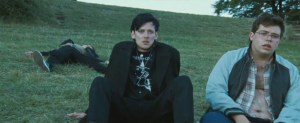
A young Gary (Thomas Law) and Andy (Zachary Bailess) consider what's to come of their lives in The World's End

A young Gary (Thomas Law) and Andy (Zachary Bailess) consider what’s to come of their lives in The World’s End

Now approaching 40, Gary tracks down his estranged buddies and convinces a reluctant Andrew (Frost), Steve (Paddy Considine), Oliver (Martin Freeman) and Pete (Eddie Marsan) to finally conquer the Golden Mile. An uncomfortable start to the crawl, made more awkward by the arrival of Oliver’s sister Sam (Rosamund Pike), suddenly takes a loony turn for the dangerously extraterrestrial.

Gary (Simon Pegg) unveils the map of 'the golden mile' showing all 12 watering holes in The World's End

Gary (Simon Pegg) unveils the map of the ‘Golden Mile’ showing all 12 watering holes, culminating at The World’s End

It would have been so easy for co-writer/director Wright, Pegg (also a co-writer) and Frost to have reheated the magic that made Shaun… and Hot Fuzz so adored, but to their credit they instead go off in another direction entirely, while still delivering the sort of joke rate that most ‘comedies’ don’t get anywhere near.

Gary is a pathetic character, an adult straightjacketed by stubborn arrested development who’s never been able to get past 1990. Still wearing the same goth clothing and still driving the same clapped out car he had as a teenager, Gary’s obnoxious, hard edges are softened out by Pegg’s sympathetic portrayal.

Gary (Simon Pegg), Oliver (Martin Freeman) and Steve (Paddy Considine) realise something is rotten in Newton Haven in The World's End

Gary (Simon Pegg), Oliver (Martin Freeman) and Steve (Paddy Considine) realise something is rotten in Newton Haven in The World’s End

The top-notch cast work splendidly off each other, each bringing their own unresolved baggage to what gradually turns into a painful, but necessary reunion for them all. Normally cast as resentful and/or angry, Marsan lets his hair down in a role that actually allows him to have a giggle, while Frost shows that when he’s given the right material (usually co-written by Pegg and Wright) he’s an actor with range.
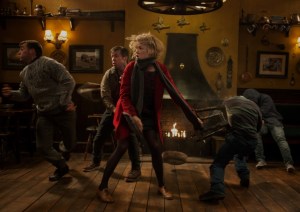
Sam (Rosamund Pike) kicks butt in The World's End

Sam (Rosamund Pike) kicks butt in The World’s End

The film cleverly manages to have it both ways; in the one hand it drums home the message that there’s little point dwelling on the past, while at the same time wallowing in the nostalgia of its early 90s soundtrack, in particular Primal Scream’s seminal track Loaded.

Wright has cited the legendary sci-fi writer John Wyndham as a big influence and there are definite nods to his paranoid tome The Midwich Cuckoos (turned into the classic movie Village Of The Damned), while other 1950s sci-fi classics Invasion Of The Body Snatchers and The Thing From Another World are also interwoven into the film’s DNA.

Despite being very amusing, The World’s End isn’t as instantly likeable as either Shaun… or Hot Fuzz. Maybe it was the special effects getting in the way, or the increasingly bonkers plot, but something felt missing. That being said, the first two chapters in the trilogy improved with age, so there’s no reason to think The World’s End won’t become a richer experience on repeated viewings.

Where Wright, Pegg and Frost go together from here who knows, but as the Cornetto trilogy’s final flavour The World’s End is sweet indeed.

Review – Pacific Rim

Michael Bay’s never-ending Transformers franchise may have given giant robots a bad name, but Guillermo del Toro’s epic monsters vs aliens mash-up delivers robo-spectacle on an eye-popping scale.

Leave your cynicism at the door and Guillermo del Toro's Pacific Rim will reward you two hours of monster mayhem that'll overload your senses

Leave your cynicism at the door and let Guillermo del Toro’s Pacific Rim reward you with two hours of monster mayhem that’ll pulverise your senses

Best known until now for modern Spanish-language horror-fantasy classics Pan’s Labyrinth and The Devil’s Backbone, as well as his two Hellboy films, del Toro has taken a (literal) giant step up with Pacific Rim.

Now that's a footprint, in Pacific Rim

Now that’s a footprint, in Pacific Rim

Pacific Rim has a long tradition of giant monster films in its wake and owes a tremendous debt to both legendary creature effects wizard Ray Harryhausen and iconic Japanese film director Ishirō Honda, whose 1954 classic Godzilla was the most influential monster movie since King Kong (1933).

Godzilla launched the Kaiju (“giant monster”) genre, which exploded in popularity in its native Japan and led to a slew of creature features, each more bonkers than the last. Rather a point of reference than a direct homage, Pacific Rim‘s giant bad guys are referred to as Kaiju, invading aliens from an underwater portal between dimensions that have only one thing on their mind – to take over the planet.

Brothers Yancy (Diego Klattenhoff) and Raleigh Becket (Charlie Hunnam) pilot their Jaeger in Pacific Rim

Brothers Yancy (Diego Klattenhoff) and Raleigh Becket (Charlie Hunnam) pilot their Jaeger in Pacific Rim

Faced with annihilation, mankind works together to build a series of 25 storey-high fighting machines called Jaegers (“hunters”), whose human pilots must share a mind link called The Drift in order to become one with the giant mechas.

A Kaiju goes to work on Sydney, in Pacific Rim

A Kaiju goes to work on Sydney, in Pacific Rim

Del Toro and Travis Beacham’s script ain’t much interested in the human characters; their back stories are perfunctory, or in some cases non-existent, and they trade-off with each other using the sort of dialogue that’s only ever found in special effects-laden summer blockbusters.

The cast is also predominately made up of familiar TV faces (mostly British), including Charlie Hunnam (Sons Of Anarchy) as Raleigh Becket, a gifted Jaeger pilot who’s lost his way since a tragic stand-off against a Kaiju (think Tom Cruise from Top Gun); Idris Elba (The Wire, Luthor) as tough, but fair Jaeger force commander Stacker Pentecost (who gets to utter the class line: “Today, we are cancelling the apocalypse!”); and Robert Kazinsky, who until now is best known for appearing in British soap EastEnders and here plays arrogant Australian Jaeger pilot Chuck Hansen.

Wannabe Jaeger pilot Mako Mori (Rinko Kikuchi) in Pacific Rim

Wannabe Jaeger pilot Mako Mori (Rinko Kikuchi) in Pacific Rim

In a film with delusions of grandeur, the paper-thin characterisation (with the exception of Rinko Kikuchi’s wannabe Jaeger pilot Mako Mori) and stilted dialogue would be too much of an issue, but what saves Pacific Rim is its self-awareness. Lest we forget, this is a film about enormous man-made robots laying into massive alien lizards; characterisation and dialogue doesn’t really matter when you’ve got that sort of spectacle on screen. The squabbling interplay between the chalk and cheese scientists Dr Newton Geiszler (Charlie Day) and Dr Hermann Gottlieb (Burn Gorman) is so heightened as to be cartoonish, but that’s exactly what del Toro is going for.

The Jaeger's go to war in Pacific Rim

The Jaegers go to war in Pacific Rim

That’s not to say the film is completely devoid of any depth (pun intended). While the creature Godzilla represented the unforeseen consequences of the Atomic Age, the Kaiju in Pacific Rim have only made it to our planet due to the effects of global warming on our oceans.

"Today, we are cancelling the apocalypse!" - tough, but fair Jaeger force commander Stacker Pentecost (Idris Elba) in Pacific Rim

“Today, we are cancelling the apocalypse!” – tough, but fair Jaeger force commander Stacker Pentecost (Idris Elba) in Pacific Rim

The special effects themselves are nothing less than jaw-dropping. When the Kaiju first attack in the lengthy, exposition-heavy pre-title sequence it’s a moment that will have you sat bolt upright in your seat. Bringing to mind Cloverfield (rather than 1998’s forgettable Hollywood remake of Godzilla), there’s nothing quite like watching a giant lizard tearing into a bridge.

The fact that it’s robots vs lizards certainly helps when it comes to working out who’s hitting whom. While Bay isn’t interested in whether you can follow which Decepticon is hitting which Autobot, del Toro keeps the action well-defined and, most importantly, epic in scale. The big problem with another of this summer’s tent pole movies, Man Of Steel, came in its final act where loud noises and mass destruction did not equal nose-bleeding entertainment; here the noise is deafening and the destruction is ultra-massive, but the difference comes in the fact you actually care about what’s happening and, in my case anyway, love every moment.

Leave your cynicism at the door and let Pacific Rim reward you with two hours of monster mayhem that’ll pulverise your senses.

In Retrospect – The Player (1992)

Robert Altman may have playfully described his ‘Hollywood on Hollywood’ black comedy as “a very mild satire”, but he was fooling no-one.

One of Robert Altman's very best, The Player could arguably be the ultimate example of Hollywood eating itself

One of Robert Altman’s very best, The Player could arguably be the ultimate example of Hollywood eating itself

One of the most cynical, caustic and clever dissections of a creatively bankrupt studio system that has only become worse in the 21 years since its release, Altman’s The Player is one of the late director’s most celebrated works and, ironically, brought him back in from the cold after a decade spent making no budget chamber pieces.

Actors are a contrary lot. Happy to take the cheque and star in the sort of drivel the director mercilessly satirises, dozens of actors (whose star wattage could power a small town) lined-up to take walk-on parts mostly as themselves in order to take a gleeful swipe at the piñata that is Tinseltown’s lumbering studio system.

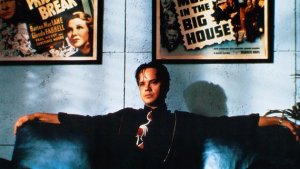
The sleek, shark-like studio executive Griffin Mill (Tim Robbins) in The Player

The sleek, shark-like studio executive Griffin Mill (Tim Robbins) in The Player

Based on Michael Tolkin’s book, Altman’s anti-hero is sleek, shark-like studio executive Griffin Mill (Tim Robbins), who’s scared he could be axed in favour of the younger, up-and-coming story executive Larry Levy (Peter Gallagher). Mill’s life is thrown into further disarray when he continues to receive increasingly threatening postcards from a writer he can’t remember whose pitch he ignored.

Everything in The Player is artifice from the very first shot of someone asking for “quiet on set” and a clapperboard shutting. A person’s word counts for nothing, false sincerity and hypocrisy is in plentiful supply and artistic backbone turns to spinelessness when money and power enter the equation. At one point, Mill bumps into Burt Reynolds, who’s all smiles until Mill walks away, at which point he calls him an “asshole”.

Studio exec Griffin Mill (Tim Robbins) sets his sights on artist June Gudmundsdottir (Greta Scacchi) in The Player

Studio exec Griffin Mill (Tim Robbins) sets his sights on artist June Gudmundsdottir (Greta Scacchi) in The Player

This most tellingly plays out in the second half of the film when pretentious English writer Tom Oakley (Richard E Grant) and producer Andy Civella (Dean Stockwell) pitch the death row thriller Habeas Corpus to Mill at a restaurant. Oakley vociferously insists it mustn’t lose its downbeat conclusion (“no Hollywood endings”) and feature no stars. Inevitably, as the studio’s claws get into the project Habeas Corpus turns into a very different movie, to the extent that has Bruce Willis and Julia Roberts as its leads and includes a tacked-on happy ‘Hollywood ending’, both of which Oakley seems happy about now it’s been made (in an example of life imitating art, one of the stars of Habeas Corpus is Susan Sarandon, who three years later teamed up with her long-time partner Robbins to make Dead Man Walking, a death row thriller).

Griffin Mill (Tim Robbins) receives yet another death-threatening postcard from a mystery writer in The Player

Griffin Mill (Tim Robbins) receives yet another death-threatening postcard from a mystery writer in The Player

Oakley isn’t the only writer who fails to come out of The Player smelling of roses. One pitches The Graduate: Part 2 (I’m personally amazed that one hasn’t been made) in which all the original characters incredulously still live together “in a big, old spooky house”. Another pitches “Out Of Africa meets Pretty Woman“, while a further writer’s idea for a hard-hitting politically radical film with a supernatural edge (“Ghost meets The Manchurian Candidate“) is reduced to a bland paint-by-numbers thriller after only 30 seconds in Mill’s hands.

One thing that strikes you about watching the film is just how disinterested Mill and his cronies are in watching movies (something you suspect is true for a lot of today’s execs). At an informal lunch, Mill asks those around him: “Can we talk about something other than Hollywood for a change?” The silence that follows speaks volumes.

At one point Mill gives a speech at a gala dinner in which he bangs on about the importance of finding the next John Huston or Orson Welles and the fact that “movies are art”. He unsurprisingly contradicts himself later in the film when he lists the key ingredients that make a successful Hollywood film, the most important one being “happy endings”.

Griffin Mill (Tim Robbins) says hi to the agent and Burt Reynolds, just one of dozens of cameos in The Player

Griffin Mill (Tim Robbins) says hi to the agent and Burt Reynolds, just one of dozens of cameos in The Player

The only time we see Mill actually watch a film is when he thinks he’s tracked down the mystery writer sending him death threats to an old movie theatre showing Vittorio De Seca’s 1948 neo-realist classic Bicycle Thieves and even then it’s only for the last five minutes. Perhaps underlining how there are no original ideas left in Tinseltown, Altman constantly makes references to Hollywood’s golden age, whether it be the posters of old classics in the studio’s offices or the threatening postcards featuring Humphrey Bogart and James Dean.

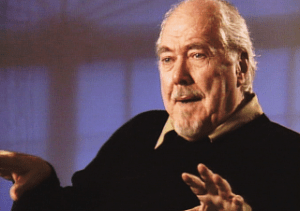
The late Robert Altman, director of The Player

The late Robert Altman, director of The Player

Head of studio security Walter Stuckel (Fred Ward) complains that all films today are “cut, cut, cut” and refers to the six-and-a-half-minute opening shot of Touch Of Evil. It’s a clever, self-referential nod to the audience as he opens the film with a celebrated tracking shot lasting almost eight minutes. It’s bravura filmmaking and shows off Altman’s unique and complex Peeping Tom style of filming certain moments using a long lens that often incorporate overlapping conversations and multiple set-ups.

The film has a wicked sense of humour (in a cute piece of marketing, a poster for it includes the quote “the best movie ever made!” … attributed to Griffin Mill) that veers from pitch black satire to farce. Altman was always a pranksterish filmmaker and this knowing humour runs through the core of The Player.

Alas, The Player feels all-too-pertinent to a modern-day big studio system scrambling about in the dark for the next big thing. One of Altman’s very best, this could arguably be the ultimate example of Hollywood eating itself.

Review – Mud

A serious contender for this year’s Great American Film, Jeff Nicholls’ lyrical, poetic third feature evokes a timeless quality all-too-rare in today’s cinematic landscape.

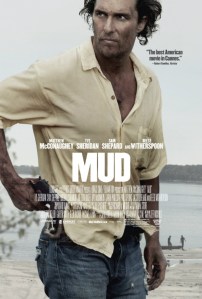
A serious contender for this year's Great American Film, Jeff Nicholls' lyrical, poetic Mud evokes a timeless quality all-too-rare in today's cinematic landscape

A serious contender for this year’s Great American Film, Jeff Nicholls’ lyrical, poetic Mud evokes a timeless quality all-too-rare in today’s cinematic landscape

Nicholls has quietly positioned himself among the most visionary and essential directors at work today with his striking 2007 debut Shotgun Stories and his belated follow-up, the disturbing and astonishing Take Shelter (2011).

The incredible boat in a tree in Mud

The incredible boat in a tree in Mud

In both Shotgun Stories and Take Shelter, their leading characters (played each time by the mesmeric Michael Shannon) are driven by an almost insane conviction. That same dogmatic approach is adopted by Mud (Matthew McConaughey), the charismatic fugitive living out on a small island in the Mississippi River who befriends inquisitive teenagers Ellis (Tye Sheridan) and Neckbone (Jacob Lofland). Mud has risked his freedom by returning to the area in which he grew up to be reunited with his true love Juniper (Reese Witherspoon), but a group of killers arrive in town looking to avenge a past crime by Mud.

Nicholls has been quick to acknowledge the debt the film owes to Mark Twain’s Adventures of Huckleberry Finn in the overtly Finn/Tom Sawyer relationship between Ellis, who lives on a river boat with his squabbling parents (played by the excellent Ray McKinnon and Sarah Paulson) and Neckbone.

Ellis (Tye Sheridan) and Neckbone (Jacob Lofland) first meet Mud (Matthew McConaughey) in Mud

Ellis (Tye Sheridan) and Neckbone (Jacob Lofland) first meet Mud (Matthew McConaughey) in Mud

The 14-year-old Ellis is an idealist who’s obsessed with reuniting Mud and Juniper because he believes in the power of love. As young teenagers, the concept of true love can be all-encompassing and Ellis acts with such doggedness in order to counterbalance the failing relationship of his parents. Likewise, he gets a tough lesson in the ways of love courtesy of an older girl he falls for.

The love of Mud's life, Junniper (Reese Witherspoon) in Mud

The love of Mud’s life, Juniper (Reese Witherspoon) in Mud

Mud brings to mind Terence Malick in its penchant for the Magic Hour (and its fascination with nature) and Nicholls with long-time director of photography Adam Stone captures a string of breathtaking shots. The relationship with Malick doesn’t end there; Mud’s producer Sarah Green worked on The Tree of Life, while Sheridan was given his debut in that film.

Jeff Nicholls' long-time partner Michael Shannon plays Galen in Mud

Jeff Nicholls’ long-time partner Michael Shannon plays Galen in Mud

He only has a limited filmography, but Sheridan is already showing himself as a young actor with a lot of promise. It’s a demanding role and he brings a lot of maturity to it. All he wants is for people to be happy and for things to be in order, so you can feel his pain when he realises life is much harder to get a handle on.

Maintaining his remarkable career renaissance (aka, his McConaisance), McConaughey is a revelation in the title role. Once the butt of many a joke for his languid, cheque-grabbing performances in duds like Failure to Launch, McConaughey of late has returned to the high watermark he achieved in the likes of Dazed and Confused and Lone Star. Lovelorn, scared, but determined also, his Mud is not so very different from Ellis.

Mud (Matthew McConaughey) tries to save his skin in Mud

Mud (Matthew McConaughey) tries to save his skin in Mud

The excellent supporting cast includes Shannon as Neckbone’s placid Uncle Galen (as far removed from Take Shelter‘s Curtis LaForche as you can get) and the impeccable Sam Shepard as Tom, who may or may not be a former CIA agent living off the grid in the Mississippi swamps.

Just as Malick managed to capture the coming of age adventure of adolescence in The Tree of Life, so too does Nicholls here. When we see a boat stuck up a tree (Mud’s temporary home), we marvel instead of questioning the unlikelihood of what we’re watching; such is the power of Nicholls’ persuasive vision.

The slightly fumbled ending doesn’t detract from what is a work of true poetry from Nicholls. Much like last year’s Beasts of the Southern Wild, Mud is a real one-off that will stay with you for a long time after.

Review – Hummingbird

Britain’s last action hero Jason ‘The Stath’ Statham flexes his acting muscles as much as his real ones in this low-key curiosity.

Whether Hummingbird turns out to be a one-off diversion on Statham's action-packed career path we'll wait and see, but I for one would welcome more roles like this from Mr Chrome Dome

Whether Hummingbird turns out to be a one-off diversion on Statham’s action-packed career path we’ll wait and see, but I for one would welcome more roles like this from Mr Chrome Dome

Whether you like Statham or not (and there are plenty who don’t), there’s no denying the former diver and black market trader has done the business on his own terms.

I for one have a huge amount of respect for Statham. While many of his action man peers rely on straight-to-DVD trash to make a living, Mr Chrome Dome has become a genuine movie star in his own right. A big reason for this is because he (mostly) tends to choose his films wisely and isn’t afraid to send his hard man persona up.

Down and out Joseph 'Joey' Smith (Jason Stathom) in Hummingbird

Down and out Joseph ‘Joey’ Smith (Jason Statham) in Hummingbird

Film series like The Transporter and the two Expendables movies may be his bread and butter, but with his latest Hummingbird (released as Redemption in the States and, erroneously, Crazy Joe in France) he gets down to the serious business of acting… while still kicking ass and taking names.

Statham plays Joseph ‘Joey’ Smith, who’s deserted from the Royal Marines following a traumatic tour of duty in Afghanistan’s Helmand Province and is living day-to-day on the streets in London. He escapes a couple of brutal gangsters and breaks into a swish apartment, whose owner is out-of-town for several months. While getting himself back on his feet he tries to help Sister Cristina (Agata Buzek), whose shelter saved him when he was at his lowest ebb, while also looking for revenge against the low life who murdered his girlfriend.

I don't Adam and Eve it, Jason Statham's crying in Hummingbird

I don’t Adam and Eve it, Jason Statham’s crying in Hummingbird

Played straight for the most part, writer-director Steven Knight revisits the same down and dirty side of the Big Smoke he explored in his script for David Cronenberg’s Eastern Promises. Knight clearly knows the city well and, with the help of cinematographer Chris Menges (who also shot the Colin Farrell gangland drama London Boulevard) captures it beautifully. Shot mostly at night, the camera lovingly follows Smith as he silently walks the streets.

When it comes, the violence is as nasty as you would expect in a Statham picture, although it doesn’t wallow in it. In fact the only nod to Stath’s better known fare comes when Smith, challenged by a goon holding a blade, utters the immortal line “you got a knife? I got a spoon”.

A broken Joey Smith (Jason Statham) is held by Sister Cristina (Agata Buzek) in Hummingbird

A broken Joey Smith (Jason Statham) is held by Sister Cristina (Agata Buzek) in Hummingbird

No-one would argue Hummingbird should win any prizes for originality, although the nods to Mike Hodges’ classic 1971 crime thriller Get Carter are pretty blatant, right down to the way he dispatches one particularly loathsome individual.

That being said, there are enough moments here to make the film stand on its own two feet. The parallel, for instance, in the opening moments between an aerial shot of Helmand featuring radio chatter and one of London is very nicely handled and sets up the rest of the movie well.

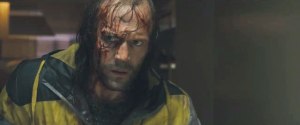
Joey Smith (Jason Stathom) sets his sights on his prey in Hummingbird

Joey Smith (Jason Statham) sets his sights on his prey in Hummingbird

And what of Statham himself? In interviews for the film, he’s spoken of his pride in the film, while the work he went through for the role is evident on screen as he taps into previously unseen emotions (guilt, weakness, depression).

Whether Hummingbird turns out to be a one-off diversion on Statham’s action-packed career path we’ll wait and see, but I for one would welcome more roles like this from Mr Chrome Dome.