Debuts Blogathon: Ben Affleck – Gone Baby Gone (2007)

Another day, another great post in the Debuts Blogathon hosted by myself and Chris at Terry Malloy’s Pigeon Coop, this time courtesy of Ruth from FlixChatter. If it’s quality you’re looking for, look no further than this great site. Each and every post is infused with great insights, as well as Ruth’s unique, conversational style. She brings that style to this analysis of Ben Affleck’s debut feature Gone Baby Gone. I thoroughly recommend that you visit Ruth’s site (if you haven’t already of course) and see what I’m talking about.
Ben Affleck
Gone Baby Gone (2007)
When I first heard about this Blogathon, I was initially going to do The Usual Suspects as I thought it was Bryan Singer’s debut, but I ended up settling with Ben Affleck’s first film instead, which I think is still the top one out of the three excellent feature films he’s done. This is his directorial debut in a major motion picture, although he did direct two other movies that never made it to the big screen.
 I saw this crime drama/mystery quite a while ago, but I remember being quite affected by it. Set in Affleck’s hometown of Boston and starring his kid brother Casey, the story centres on an investigation into a little girl’s kidnapping, which turns out to become a professional and personal crisis for the two detectives involved. Based on the Dennis Lehane novel of the same name (who also wrote Mystic River and Shutter Island), this film has a strong cast that elevates the complex story and gripped me from start to finish.
Casey Affleck, who I think is the better actor of the Affleck brothers, plays private investigator Patrick Kenzie. He opens the story with a monologue as we get a glimpse of the neighborhood where he’s lived his whole life: “I’ve always believed it’s the thing you don’t choose that made you who you are…” It’s an effective opening montage that establishes Casey’s character and puts the grim kidnapping scenario into context.
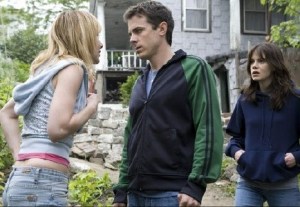 I’m not going to go into the plot as I feel that if you haven’t seen the film, the little you know about this film the better. What I can tell you is that, initially, you might think the film is about one thing, but slowly but surely, as details unfold it becomes even more devastating than what you think it is. Another missing person case in the second half of the film inexorably shines a light to a darker world of corruption within the force. It’s not something new that we see stories about police corruption; how those who’re sworn to protect us end up betraying that trust, but the way things play out here certainly makes you stop and pause. Despite some hints along the way, the ending managed to still hit me out of left field. It’s such a simple scene, but once you see it in context, Casey’s expression in that scene is just so gut-wrenching. In fact, as I re-watched it recently, it hit me how much of an emotional roller coaster this film was.
What makes this a worthy debut?
 It’s quite a bold choice for Ben to tackle as his first film, considering how complex, twisty and morally-ambiguous Lehane’s novel is. This film stays with me for quite a long time after the end credits roll. It left me speechless as I pondered: ‘OMG! What would I have done? Would I have chosen to do the right thing? And what is really the right thing?’ What if the people you consider ‘righteous’ do unthinkable things because they believe they’re doing something for the greater good? Does that justify the act? Things aren’t always so black and white in our world and this film certainly made a good case for that.
The way he filmed the underbelly of Boston feels authentic and raw; it’s not the typical glamorous-but-impersonal shot of the city. It turns out that the people in the backgrounds in a lot of the scenes are real local Boston actors and members of the local town. Ben made a deliberate choice not to cast professional extras for authenticity and it certainly worked. It’s clearly a personal project for Ben all round, as Gone Baby Gone is also his favorite novel. Now, that doesn’t automatically translate into a good film, but Ben has quite a keen eye behind the camera and he certainly has a way of getting great performances out of his actors.
 I love how layered the characters are, beautifully realised by Casey and the stellar supporting cast, especially Morgan Freeman, Amy Ryan, Michelle Monaghan and the oh-so-underrated Ed Harris. Ryan was Oscar-nominated, but I think Casey and Harris were both robbed that year.
What I admire about this film, and it’s become a signature of sort in Ben’s direction, is the lengthy dialogue. They can be as thrilling and tense as any action scenes, in this case, the well-written script is fully realised by the terrific performances of the cast. The conversation between Casey Affleck and Ed Harris in this clip is a great example, take a look:
Ben Affleck – the auteur?
Ok, so maybe he hasn’t earned that label yet, but he’s certainly a force to be reckoned with as a director. It’s interesting to note that Ben was at a low point in his career a few years before this, starring in forgettable-to-downright awful films likePaycheck, Jersey Girl, Gigli and Surviving Christmas. He did ok in Hollywoodland, but his career wasn’t exactly in the up and up. I think Ben made the right choice to not star in this film and just focus on his work behind the camera. He did work on the screenplay, which is his first screenwriting credit since his Oscar win with his BFF Matt Damon inGood Will Hunting.
 I’ve seen all three of his feature films and all of them are excellent. I think if I were to rate his films, I’d go Gone Baby Gone, Argo and The Town in that order. Yes, I know Argo won Best Film at the Oscars last year and I’m good with that, but in the degree of how a film affects me, I think his first film still tops it for me.
That said, Ben’s work has improved over time as he’s become more confident behind the camera, and I like that he still maintains a certain degree of intimacy in the way he shoots his films. They don’t become ‘Hollywood-ized’ for lack of a better term, as his films are always story and character-driven. I hope he continues that trend in the future. I like how he chose characters who are caught in situations out of their depth; they certainly make for an intriguing protagonists. Though the budgets he’s worked with have gone up steadily from the $19m he got for this film, his films are still relatively small. The Town was only $37m, while Argo had a $44m budget.
 It’s interesting that after the film came out, “…[it] was perceived either as a fluke or too dark to make Affleck a candidate for bigger films”, according to an interview piece Affleck did with The Hollywood Reporter. Affleck states in the interview that only Warner Bros executive Jeff Robinov pursued him with absolute conviction despite the lack of financial success: “… Robinov brought me into his office and said: ‘I think you’re a hell of a filmmaker, actor. What do you want to do? Tell us, and we’ll do it.’ And I wasn’t having those meetings with every studio”. He settled on doing The Town, which ended up earning nearly three times its budget.
I’m looking forward to Ben’s next directorial effort. It’s listed that he’s doing another Lehane adaptation, Live By Night, where he’s going to direct and star. Not sure what’ll happen to that project now that he’s been contracted to play Batman/Bruce Wayne in multiple films. I do think he’ll always be a better director than actor, but really, that’s really not a bad place to be in.
So yeah, if you haven’t seen this film yet, I can’t recommend it enough. I think it stands as one of the best directorial debut by a young director. We’ll see if one day Ben Affleck would indeed earn his status as an auteur.
Over at Terry Malloy’s Pigeon Coop, it’s the turn of Nika from The Running Reel. Nika covers Sam Mendes’ multi-Oscar-winning American Beauty. Head over to Chris’s site now by clicking here.
Tomorrow, I’m thrilled to welcome Tyson from Head in a Vice, who’ll be covering a biggie; it’s Quentin Tarantino’s 1992 debut Reservoir Dogs. You won’t want to miss it.









 three rows back