Review – The Hunger Games: Catching Fire

There may be plenty of hunger before we finally get to the games, but it’s more than worth the wait in this bigger, bolder and – yes – better sequel.

Even in spite of Lawrence's knockout performance The Hunger Games: Catching Fire is so pleasing that come the closing credits, you'll be hungry for the next serving

Even in spite of Lawrence’s knockout performance The Hunger Games: Catching Fire is so pleasing that come the closing credits, you’ll be hungry for the next serving

Despite being an international bestseller, nothing was written in stone to suggest Suzanne Collins’ trilogy of young adult sci-fi adventure novels would make a convincing leap to the big screen.

However, paydirt was well and truly hit with the casting of star-in-waiting Jennifer Lawrence in the central role of Katniss Everdeen who, along with strong direction from Gary Ross and striking production design, turned 2012’s The Hunger Games into a mature and effective first chapter in the franchise.
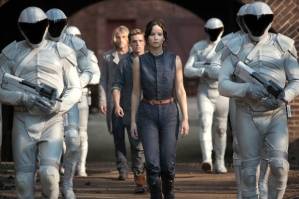
Katniss Everdeen (Jennifer Lawrence), Peeta Mellark (Josh Hutcherson) and Haymitch Abernathy (Woody Harrelson) must jump through President Snow's hoops in The Hunger Games: Catching Fire

Katniss Everdeen (Jennifer Lawrence), Peeta Mellark (Josh Hutcherson) and Haymitch Abernathy (Woody Harrelson) must jump through President Snow’s hoops in The Hunger Games: Catching Fire

With almost double the budget under his belt, new director Francis Lawrence (no relation) has turned in a follow-up that manages to avoid many of the symptoms of sequel-itis and builds on the foundations of the first movie to impressive effect.

Catching Fire picks up where The Hunger Games left off, with Katniss and fellow 74th Hunger Games tribute Peeta Mellark (Josh Hutcherson) reluctantly embarking on a victor’s tour of the impoverished districts of Panem out of fear for their families’ safety. Anxious to stamp out the unrest that’s been brewing following Katniss’ show of defiance in the last Games, despotic President Snow (Donald Sutherland) announces that the 75th anniversary Quarter Quell will see former champions – Katniss and Peeta included – fight to the death in the most twisted and sickening Games yet.
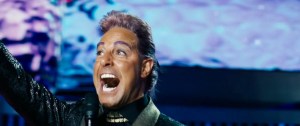
Talk show host from hell Caesar Flickman (Stanley Tucci) in The Hunger Games: Catching Fire

Talk show host from hell Caesar Flickman (Stanley Tucci) in The Hunger Games: Catching Fire

Just as in the first installment, Catching Fire spends a great deal of time building up to the gladiatorial spectacle of the Games themselves. However, unlike The Hobbit: An Unexpected Journey, for example, you never get the sense the film is treading water and indulging itself. The slow, gradual wind up towards the horror of the Quarter Quell feels neccessary, as if the characters are pieces on a chessboard being carefully positioned.

Gale Hawthorne (Liam Hemsworth) defies the authorities in The Hunger Games: Catching Fire

Gale Hawthorne (Liam Hemsworth) defies the authorities in The Hunger Games: Catching Fire

That this build up is as engaging as it is is largely down to the captivating performance of Lawrence, who commands the screen. Since her breakout turn in Winter’s Bone, Lawrence’s stature has grown with every film and here it’s as if the camera is magnetised to her. What makes Katniss so appealing – and so human – is that she remains a reluctant hero, someone who would much rather be out hunting with her friend/love interest Gale (Liam Hemsworth) than be the face of the rebellion or a thorn in Snow’s side.

Catching Fire‘s supporting cast is an engaging mix of young and established talent, from Sutherland’s oily turn as the banally evil Snow, to Woody Harrelson’s colourful performance as Katniss and Peeta’s alcoholic mentor Haymitch and Elizabeth Banks’ nuanced portrayal of the garishly dressed Team Katniss cheerleader Effie Trinket, whose blind obidience to the Capitol gradually erodes as the veil is lifted.

The banally evil President Snow (Donald Sutherland) in The Hunger Games: Catching Fire

The banally evil President Snow (Donald Sutherland) in The Hunger Games: Catching Fire

Special mention must go to Stanley Tucci, who’s even more over-the-top this time around as Caesar Flickerman, the Hunger Games talk show host with the impossibly white teeth and insincere laugh who peddles bread and circuses to the masses and stands alongside Snow as the face of Panem’s totalitarian regime. It’s the film’s creepiest character and Tucci’s performance is skin-crawlingly effective.

Just as in the first film, Catching Fire, well, catches fire when the Hunger Games finally commence. Although essentially the same set-up as the previous film (last person standing wins), this time around we get poisonous gas, electrified force fields, psychological warfare and, most disturbingly, flesh-eating monkeys thrown in. Each mini-set piece is striking in its own way and follow each other so quickly you’ll be left as exhausted as the tributes.

Katniss Everdeen (Jennifer Lawrence) and Peeta Mellark are the girl, and boy, on fire in The Hunger Games: Catching Fire

Katniss Everdeen (Jennifer Lawrence) and Peeta Mellark are the girl, and boy, on fire in The Hunger Games: Catching Fire

As is the way of modern day franchises, this second installment is darker than its predecessor and is much better for it. The social commentary and political subtext alluded to in the first film is more pronounced this time around (both visually and in the dialogue, most notably between Snow and Philip Seymour Hoffman’s Games Designer Plutarch Heavensbee) and the violence more reactionary and brutal. It’s pretty strong stuff for what’s supposed to be a film aimed at young adults.

Even in spite of Lawrence’s knockout performance Catching Fire is so pleasing that come the closing credits, you’ll be hungry for the next serving.

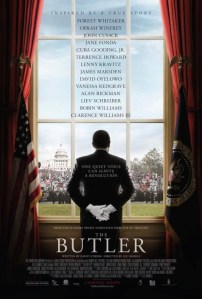
Review – The Butler

Forrest Gump may have been referring to life and boxes of chocolates when he remarked that “you never know what you’re gonna get”, but he could just have easily been talking about the films of Lee Daniels.

In trying to tick too many boxes and pull in too may directions The Butler only serves to weaken its message

In trying to tick too many boxes and pull in too may directions The Butler only serves to weaken its message

Following the little-seen crime thriller Shadowboxer (in which Helen Mirren stars as a contract killer – RED doesn’t seem so odd now), Daniels broke out with the rough and tough Precious before going completely off the reservation with 2012’s tawdry slice of American gothic The Paperboy.

The wild excesses and craziness of The Paperboy have been reigned in and sanitised with his latest offering, The Butler, loosely based on the true story of long-serving White House butler Eugene Allen.

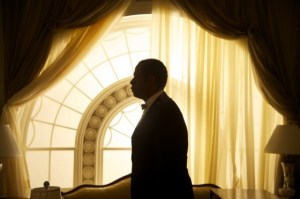
Cecil Gaines (Forest Whitaker) within his second home - the White House - in The Butler

Cecil Gaines (Forest Whitaker) within his second home – the White House – in The Butler

The Forrest Gump analogy works on another level also, as The Butler is reminiscent of that film’s decade-spanning central character who finds himself brushing shoulders with America’s most powerful and influential figures. However, whilst Forrest’s encounters were largely down to fortuitous timing and dumb luck, Cecil Gaines (Forest Whitaker) becomes part of the fabric of the White House over the course of seven presidencies.

The film charts Cecil’s life from a brutal upbringing on a Georgia cotton farm in the 1920s, in which his father is murdered and his mother raped by the plantation’s sociopathic owner, through to his training as a servant which leads to him being employed as a butler at the White House in 1957 under Dwight D Eisenhower. 1600 Pennsylvania Avenue becomes a second home for Cecil, much to the chagrin of his devoted, but frustrated wife Gloria (Oprah Winfrey). Meanwhile, Cecil’s eldest son Louis (David Oyelowo) becomes a committed civil rights campaigner, while his other son Charlie (Elijah Kelley) chooses to fight in Vietnam.

Cecil's mother Hattie (Mariah Carey) toils away in the cotton fields in The Butler

Cecil’s mother Hattie (Mariah Carey) toils away in the cotton fields in The Butler

The Butler feels like a movie pulling in several different directions, with Daniels never quite sure which way to go. One minute it’s a sweeping historical epic, the next a hard-hitting depiction of the civil rights movement, while a minute later it’s a tear-jerking relationship drama between father and son.

Its opening scenes are a difficult watch and suggest a possible explanation as to why Cecil is so averse to speaking out or picking a fight as an adult. The film is at its strongest when dealing directly with the civil rights movement, which it does in an angry and harrowing way by portraying the shameful physical and verbal abuse meted out to those brave enough to smash through the petty racism that still existed in much of the South.

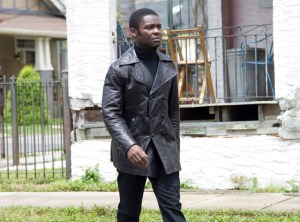
Cecil's volatile eldest son Louis (David Oyelowo) in The Butler

Cecil’s volatile eldest son Louis (David Oyelowo) in The Butler

Oyelowo does an excellent job as Louis, who risks his life and being ostracised from his father to fight for a more enlightened America, but only through peaceful means. His journey is arguably the most compelling in the film and it’s to Oyelowo’s credit that he doesn’t give in to Oscar-grabbing temptation.

Winfrey is also wonderful as Gloria, a complex character who dearly loves her husband but makes mistakes of judgement that etch themselves on her face. It’s performances like these that make you wish she’d spend less time interviewing people and more in front of the camera for different reasons.

Cecil (Forest Whitaker) and fellow White House butlers James Holloway (Lenny Kravitz) and Carter Wilson (Cuba Gooding Jr) in The Butler

Cecil (Forest Whitaker) and fellow White House butlers James Holloway (Lenny Kravitz) and Carter Wilson (Cuba Gooding Jr) in The Butler

As Gary Oldman so memorably proved in Tinker, Tailor, Soldier, Spy, the hardest performances to pull off are the ones that are dialled down almost to zero and Whitaker is similarly restrained as the ghost-like Cecil. Taught early on to silently blend into the background in order to become a successful butler, Cecil goes about his everyday business with the utmost professionalism while presidents come and go and the world moves on around him.

Despite being the headquarters of a world superpower, Daniels shows that very little actually changes within the White House, be it the Downton Abbey-esque stately formality or the attitudes among some senior White House staff towards the black servants.

Cecil Gaines (Forest Whitaker) and his wife Gloria (Oprah Winfrey) in The Butler

Cecil Gaines (Forest Whitaker) and his wife Gloria (Oprah Winfrey) in The Butler

A gamut of stars portray the various presidents, with the most notable being John Cusack’s clammy and paranoid turn as Nixon (including a slightly comical prosthetic nose) and Alan Rickman’s uncanny take on Ronald Regan.

Each president appears only briefly on camera, which lends weight to the argument that The Butler would probably have worked better as a mini-series. With so much to squeeze in, the film inevitably feels rushed and softens its impact as a result.

Daniels should be congratulated for bringing a serious film to the big screen  about the long and arduous journey African-Americans took before a black president finally occupied the White House, but in trying to tick too many boxes and pull in too may directions The Butler only serves to weaken its message.

In Retrospect – New York, New York (1977)

Analyzing De Niro

I’m delighted to have contributed this review to You Talkin’ To Me‘s excellent Analyzing De Niro Blogathon, run by Mark at Marked Movies and Tyson at Head In A Vice. As the title suggests, the Blogathon focusses entirely on the movies of Mr Robert De Niro and this post covers Bobby’s third collaboration with Martin Scorsese, 1977’s New York, New York.

The long and fruitful partnership between Robert De Niro and Martin Scorsese has spawned a multitude of enduring classics forever etched in our collective cinematic consciousness.

A misfire, but a fascinating one nonetheless, New York, New York is the oft neglected offspring of the formidable Scorsese/De Niro partnership

A misfire, but a fascinating one nonetheless, New York, New York is the oft neglected offspring of the formidable Scorsese/De Niro partnership

In the four years between the release of Taxi Driver and Raging Bull, De Niro and Scorsese collaborated on New York, New York, the oft neglected offspring of their remarkable relationship.

After the critical and surprising commercial success of the apocalyptically dark Taxi Driver, an emboldened Scorsese used the bigger budget he was able to command to break away from down and dirty depictions of the Big Apple to instead direct what amounted to a love letter, both to the city of his birth and to the old Hollywood musicals he grew up watching.

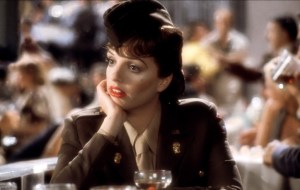
Start spreading the news, it's Francine Evans (Liza Minnelli) and Jimmy Doyle (Robert De Niro) in New York, New York

Start spreading the news, it’s Francine Evans (Liza Minnelli) and Jimmy Doyle (Robert De Niro) in New York, New York

Scorsese cast De Niro in the lead role of Jimmy Doyle, a smooth talking egotist with a zany streak and a gift for the saxophone. Audiences at the time were used to seeing Bobby play wiseguys and sociopaths, so to watch him clowning around on screen must have been a novelty.

The film opens in New York on V-J Day in 1945 and spends the first 20 minutes inside a nightclub in full swing, with Jimmy, sporting a Hawaiian shirt and a shiny pair of spats he won in a bet, trying to work his magic on Liza Minnelli’s demobbed singer Francine. Through sheer force of will it seems, Jimmy eventually manages to woo Francine and the pair discover that her voice and his sax are made for each other.

Robert De Niro learned how to play the sax to play Jimmy Doyle in New York, New York

Robert De Niro learned how to play the sax to play Jimmy Doyle in New York, New York

A marriage and a child follow but, as Francine becomes more successful in her own right, Jimmy’s inherent insecurities, bullying nature and jealousy threaten to tear both their personal and professional ties apart.

De Niro could do no wrong at the time and prepared for the role in typically methodical fashion by learning to play the sax (although the arrangements were actually dubbed in post-production by the esteemed Georgie Auld). As such, he looks at home on stage leading his band and handles the sax with aplomb instead of looking like he picked it up five minutes before the cameras rolled.

New York, New YorkWe now know that De Niro can ‘do’ comedy almost as well as he does drama, but at the time it was uncertain if the actor, renowned for his on-screen intensity, would be able to sell funny. Minnelli’s reaction to some of De Niro’s goofing is priceless, while the scene with Jimmy feigning a war wound to get out of paying a hotel bill is pure slapstick.

The comedy gradually wears off as the picture becomes more of a relationship drama and it’s here Bobby spreads his wings. De Niro is a master of the long silent stare (the one where you’re unsure whether he’s going to explode with violent rage or not) and employs it to disquieting effect here on more than one occasion. Minnelli’s genuine unease in these moments is palpable.

Jimmy Doyle (Robert De Niro) gets into a spot of trouble in New York, New York

Jimmy Doyle (Robert De Niro) gets into a spot of trouble in New York, New York

As Cabaret had shown back in 1972, there was still an audience for musicals. However, unlike the Hollywood greats it was hoping to emulate, New York, New York suffers from confused plotting and a flabby narrative (the film is almost three hours long). Apparently, the actors ad-libbed much of the movie and it shows; scenes are allowed to play out for far too long and things aren’t helped by the tepid on-screen chemistry between De Niro and Minnelli.

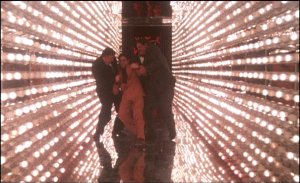
A typically memorable Martin Scorsese shot in New York, New York

A typically memorable Martin Scorsese shot in New York, New York

Sandwiched between Travis Bickle and Jake Lamotta, De Niro’s Jimmy Doyle ain’t all that, but when considered as part of his overall career it’s a notable chapter for opening up audiences’ eyes to a part of his repertoire that he’s since gone on to enjoy considerable success with.

If for nothing else, the film gave Frank Sinatra one of his most iconic hits and provided nightclubbers with an end-of-evening drunken anthem.

Scorsese’s description of New York, New York as a ‘film noir musical’ is apt one –  both Old Hollywood (the lovely moment Jimmy watches a sailor dancing with his girl under the subway tracks is an affectionate wink to On The Town) and New Hollywood are fused into what might end up being a misfire, but a fascinating one nonetheless.

Four Frames – JFK (1991)

This is my latest contribution to The Big Picture, the internationally-recognised magazine and website that offers an intelligent take on cinema, focussing on how film affects our lives. This piece is part of the Four Frames section, wherein the importance of four significant shots are discussed, in this case from Oliver Stone’s conspiracy epic JFK.

Jean-Luc Godard once said that “the cinema is truth 24 times a second … and every cut is a lie”.

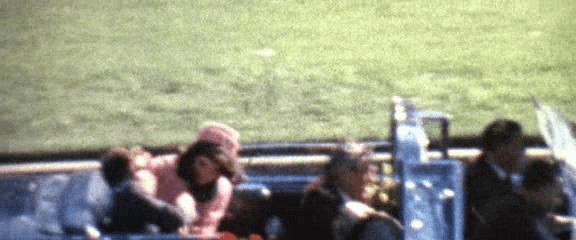
The silent, grainy footage shot by Abraham Zapruder on November 22, 1963 as US President John F Kennedy’s motorcade passed through Dealey Plaza in Dallas lasts less than 30 seconds, features no cuts, and provides the ‘truth’ a conspiracy took place to assassinate JFK, according to New Orleans District Attorney Jim Garrison (Kevin Costner) and, in turn, director Oliver Stone.

JFK

Stone’s sprawling, dissentious and riveting passion project remains as fascinating today as on its release almost 25 years ago and has come under the spotlight once again in light of the 50th anniversary of JFK’s murder.

JFK

Equal parts conspiracy thriller, murder mystery and procedural, the film’s final act is given over to courtroom drama as Garrison goes to trial to expose New Orleans businessman Clay Shaw’s (Tommy Lee Jones) involvement in a plot to kill Kennedy; although it soon becomes apparent he’s more concerned with proving that a shadowy cabal of the ‘military-industrial complex’, Mafia, CIA, FBI and Secret Service staged a coup d’état by assassinating the president.

JFK

In a bravura sequence, masterfully edited and underpinned by John Williams’ iconic score, Garrison/Stone use the Zapruder film to shoot down the so-called ‘magic bullet theory’ and prove Lee Harvey Oswald was a patsy by implying there were three gunmen in Dealey Plaza that day, one of whom was positioned on a grassy knoll and took the kill shot, causing Kennedy’s head to snap “back … and to the left”. Just in case it doesn’t sink in, Garrison methodically repeats the phrase over a loop of Zapruder’s fateful footage.

JFK

Costner, whose “Crash” Davies had declared Oswald to be the lone gunman in Bull Durham two years earlier, amps up the tub-thumping righteousness when he posits that America has surrendered to an Orwellian nightmare wherein truth has been murdered by fascism before finally breaking the fourth wall and declaring “it’s up to you”.

The film sparked a new wave of conspiracy-fuelled movies and TV series that declared the truth was out there, 24 times a second or otherwise.

Whether you believe Stone’s labyrinthine vision or not is ultimately irrelevant; JFK is a sensory-shredding descent down the rabbit hole and a primal scream from one of cinema’s most unique voices.

Review – Gravity

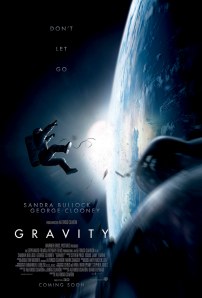
It’s one small step for visual effects and one giant leap for cinema in Alfonso Cuarón’s extraordinary survival thriller where astronauts Sandra Bullock and George Clooney have a very serious problem.

Gravity is nothing short of a game-changer and a fully immersive motion picture experience that raises the bar to dizzying new heights

Gravity is nothing short of a game-changer and a fully immersive motion picture experience that raises the bar to dizzying new heights

Not since 1995’s Apollo 13 has a film delivered the stomach-churning sense of what it must truly be like to be lost in space and have to rely on ingenuity and bravery to survive against all the odds.

The film’s overwhelming box office success is richly deserved recompense for the four years Cuarón spent bringing Gravity to the big screen.

Dr Ryan Stone on her first - and possibly last - shuttle mission in Gravity

Dr Ryan Stone on her first – and possibly last – shuttle mission in Gravity

Cuarón revealed himself to be a technical director par excellence in his under-appreciated 2006 dystopian sci-fi masterpiece Children Of Men and held out on making Gravity until visual effects technology had finally caught up with his vision for the film.

His, and our, patience has been rewarded as the film is nothing short of a game-changer and a fully immersive motion picture experience that raises the bar to dizzying new heights.

Grizzled veteran astronaut Matt Kowalski (George Clooney) takes command in Gravity

Grizzled veteran astronaut Matt Kowalski (George Clooney) takes command in Gravity

Gravity‘s plot is the highest of high concepts. Rookie astronaut Dr Ryan Stone (Bullock) and grizzled veteran Matt Kowalski (Clooney) are on a routine spacewalk to service the Hubble telescope when Mission Control (voiced by Apollo 13‘s Ed Harris) warns of a Russian missile strike on an out-of-service satellite that has caused a chain reaction of debris heading their way fast. Before they have time to properly react the debris tears through their shuttle, leaving them cut off from everything and everyone.

From the moment a shimmering Planet Earth majestically appears, swallowing the tiny shuttle that slowly becomes our focus, we’re putty in Cuarón’s hands. It’s a stunning opening shot, lasting about 15 minutes (Cuarón has also shown to be a past master in the art of the tracking shot too), that introduces us to the nervous Stone and relaxed and charismatic Kowalski before all hell breaks loose.

"Houston, we have a problem" in Alfonso Cuarón's Gravity

“Houston, we have a problem” in Alfonso Cuarón’s Gravity

We’ve grown so used as moviegoers to hearing sound effects for films set in space that the (scientifically accurate) silence of the shuttle being torn to pieces is actually more disconcerting and terrifying.

These sequences are Gravity‘s tour de force as the line between what is real and what is digitally rendered is almost completely removed. Rather than being some lazy 3-D device, the moment when pieces of debris fly towards the screen will have you flinching and ducking out the way, such is the all-consuming effect the film has on the senses.

The only sound we do hear, apart from Stone’s panicked panting, is Steven Price’s urgent and ominous score, which sounds like it’s been beamed in from another planet.

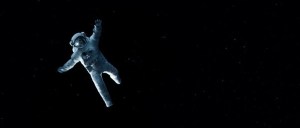
The terrifying moment when the void beckons in Gravity

The terrifying moment when the void beckons in Gravity

Another of the film’s strengths is to emphasise just how vulnerable and helpless we are when setting foot off our planet despite all of our technology. Stone and Kowalski spend much of their time desperately tethering themselves to chunks of metal or each other in a frantic effort to survive.

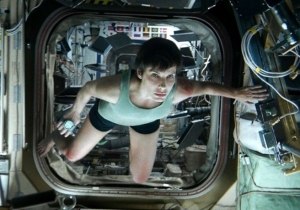
Dr Ryan Stone (Sandra Bullock) reaches the relative safety of the International Space Station in Gravity

Dr Ryan Stone (Sandra Bullock) reaches the relative safety of the International Space Station in Gravity

Bullock is on impressive form as the damaged Stone, who’s put through the wringer and must reach her lowest ebb before finally finding the emotional and physical strength to carry on. Although unsubtle, the scene when she makes it inside the womb of the International Space Station and huddles weightless in the foetal position (still tethered as if umbilically attached) may be an unsubtle metaphor for rebirth, but is a striking one nonetheless.

While Bullock brings an admirable range to her role, Clooney might as well be playing himself. It’s not necessarily the actor’s fault; Cuarón’s script, co-written with his son Jonás, provides the sort of dialogue that suggests it’s Clooney in orbit rather than Matt Kowalski. That said, I’ll take Clooney on autopilot over most other actors any day.

James Cameron, no stranger to sci-fi, has called Gravity “the best space film ever done”. Although there’s stiff competition for that particular accolade, such high praise is justified for a film that sets a new benchmark in what cinema is visually capable of.