Decades Blogathon – The Fountain (2006)

Featured Image -- 5779

2006 2

It’s day two of the Decades Blogathon – 6 edition – hosted by myself and the one and only Tom from Digital Shortbread (check out his site by the way – that boy can write). The blogathon focuses on movies that were released in the sixth year of the decade. Tom and I will run a different entry each day (we’ll also reblog the other’s post); and this excellent review of Darren Aronofsky’s The Fountain comes from Jenna and Allie’s site Flick Chicks.

I was a spectator for last year’s Decades Blogathon, so I am absolutely delighted to make the cut to take part this year! As someone with a worryingly long ‘must watch’ list, this was the perfect chance to tick off a movie that I’ve been putting off for a while. The Fountain (2006) has been on my list for a while now. I can’t remember exactly what first brought my attention to it, but I was fascinated by the mixed opinions on it. Simply look at the chart on Letterboxd here to see what I mean. There aren’t many ratings charts that look like that.
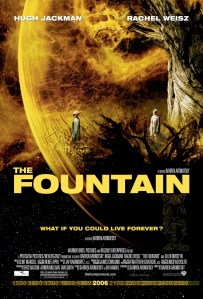
The Fountain Poster

The Fountain is an incredibly artistic and complex movie, but in its most simplest form it is the story of a scientist named Tommy (Hugh Jackman) desperately trying to find a cancer cure for his dying wife Izzi (Rachel Weisz).

It is, of course, much more than that. There are actually three separate stories here, all woven intricately within each other. For the first half of the movie, it’s incredibly easy to get confused with the stories and the timeline itself. There are so many perplexing details that the movie focuses on that it’s hard to switch off and simply enjoy the story for what it is. Rest assured, all those questions you build up get answered in a drip feed as the time goes by.

The Fountain

In fact, it’s incredibly rewarding to see such tiny details explained such a long time afterwards. It’s really one of those rare movies where nothing is shown or said without a purpose,and I like that. My one piece of advice actually would be to stick with this if you find it getting a bit too much. If it wasn’t for the fact I was watching this for the Decades Blogathon, I can’t confidently say I would have watched the whole thing.

What lies beneath these intricate tales is one of the most heartbreaking yet beautiful love stories I’ve ever seen. It’s a real testament to both Hugh Jackman and Rachel Weisz for their amazing acting skills and natural chemistry together. Izzi’s battle with cancer is all too familiar and Tommy’s refusal to accept the reality in front of him was so difficult to watch. The name of the movie comes from the book that Izzi has been writing as she documents her journey and the scene in which she asks Tommy to complete the final chapter for her because he “knows how it ends” is a very memorable one.

The Fountain

My only real complaint is that the spiritual elements of the movie just get too complicated for me to understand. A second viewing might aid this as I literally went in blind, whereas knowing even just the blurb on IMDb would have probably helped me greatly. That said, anyone who is naturally interested in spirituality will have an amazing experience with this. It’s so well done and considering the fact that it’s 10 years old now it hasn’t aged at all. If it weren’t for the famous faces in the lead roles this could easily be mistaken for a current release.

With a runtime of a little over an hour and a half this movie whizzes by and the ending comes all too soon. That said, I think if this was any longer some might give up before the end, when all their questions are finally answered. I highly recommend The Fountain, but I accept that it isn’t one for everyday viewing.


Review – Green Room

If Blue Ruin served as his calling card, then this visceral, anarchic work of slaughterhouse filmmaking firmly marks Jeremy Saulnier as one of genre cinema’s most formidable young talents.

If John Carpenter's ultimate legacy is to help sire a new generation of genre filmmakers with as much talent and guts as Jeremy Saulnier, then he's given us a rich gift indeed

If John Carpenter’s ultimate legacy is to help sire a new generation of genre filmmakers with as much talent and guts as Jeremy Saulnier, then he’s given us a rich gift indeed

The signature of maestro John Carpenter has been etched over a plethora of glorified B-pictures over the last few years and the influence of the bearded one is all over Green Room.

Cinema is nothing if not cyclical, so it makes sense that Carpenter – a child of the 1950s – was drawn to classics of the period like The Thing From Outer Space (1951) for The Thing (1982) and much of Hitchcock’s oeuvre for his various horror classics. Fast forward to today and the work of Carpenter has clearly formed a lasting impression on Saulnier and other directors whose formative film education included the likes of Halloween (1978) and Escape From New York (1981).

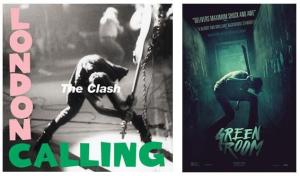
Green RoomIn the case of Green Room, Saulnier has readily acknowledged the debt he owes to Carpenter’s Assault On Precinct 13 (1976); itself a remake of the John Wayne western Rio Bravo (1959). However, to pass this off as a knock-off would do a grave disservice to what is a work of real substance – one that claws under the skin and in the psyche. Besides, Saulnier has also cited First Blood, Peckinpah’s Straw Dogs and nihilistic 80s classic River’s Edge as influences, while the poster pays more than a passing nod to The Clash’s London Calling cover.

The plot bubbles around the horrific ordeal suffered by the members of The Ain’t Rights, a down-at-heels punk band of young misfits that accepts a paycheck to play to a bunch of neo-Nazi skinheads in a fleapit venue stuck out in the middle of nowhere. When one of them witnesses something they shouldn’t they are forced to hole themselves up in the titular green room while the menacingly calm Darcy (Patrick Stewart) is content to solve the problem by any means necessary.

Something Ain't Right: The band get the gig booking from hell in Green Room

Something Ain’t Right: The band get the gig booking from hell in Green Room

As he showed in Blue Ruin, Saulnier is one for subverting our expectations and Green Room plays out in unexpected ways. Moments of hope are often violently snatched away, while each of Darcy’s followers are fully fleshed out characters and given more to do than simply look demented.

Kai Lennox’s Clark is undoubtedly a sociopath, but the bond he shares with his attack dogs is genuine and heartfelt, while also being exploitative. The use of dogs is often violently nauseating, which makes the final moments of the film so clever as our awful assumptions involving a pit bull which has found itself untethered are turned on their head.

Nazis: The Next Generation: Darcy (Patrick Stewart) and Gabe (Macon Blair) in Green Room

Nazis: The Next Generation: Darcy (Patrick Stewart) and Gabe (Macon Blair) in Green Room

Likewise, Macon Blair’s Gabe is at first portrayed as an unswervingly loyal lieutenant to Darcy, but as the events in the club unfold his doubts grow as quickly as his resentment. Whilst no doubt someone with authority among the rabble who frequent Darcy’s establishment, it’s clear he feels frustrated at not having the status he feels is owing to him and this culminates in fascinating ways.

Green Room has garnered plenty of column inches for its breathless tension and hardcore shocks, but it’s surprising just how little gore there is in the film. While it’s most notorious scene involving Anton Yelchin’s Pat making the mistake of leaning his arm outside the green room door is queasy viewing, the aftermath is only momentarily glimpsed and Saulnier leaves it to the viewer to use their adrenalin-fuelled imagination to fill in the blanks.

Amber (Imogen Poots) before things go very wrong in Green Room

Amber (Imogen Poots) before things go very wrong in Green Room

That incident aside, the band members – joined in the green room by Imogen Poots’ club regular Amber – are notable for largely making smart decisions under what are assuredly stressful circumstances. Such is the bleakness of their plight you genuinely question whether any of them will make it out alive and Saulnier once again subverts things by maiming and killing off cast members in a wholly unexpected order.

Despite once again playing a softly spoken leader a la Professor X and Captain Picard, it’s fair to say Stewart is playing against type as Darcy and is clearly having a ball. He imbues the character with effortless authority and a cold pragmatism that largely keeps him one step ahead of everyone else. That said, you get the sense that Darcy would much prefer to be anywhere else apart from where he is – something he lets slip late on when, in response to Pat’s exhausted, bewildered utterance “This is a nightmare”, he quietly responds “For us all…”.

If John Carpenter’s ultimate legacy is to help sire a new generation of genre filmmakers with as much talent and guts as Jeremy Saulnier, then he’s given us a rich gift indeed.