Review – Deadpool

The huge success of Marvel’s latest arguably says more about the conveyor belt of A+B=C comic book superhero movies than it does about the quality of the Merc with a Mouth’s first solo outing.

Deadpool is fun and smart; just not as fun and smart as it thinks it is

Deadpool is fun and smart; just not as fun and smart as it thinks it is

That’s not to say Deadpool is a bad picture – it’s not. Rather, it’s carefully marketed ‘subversiveness’ and ‘different’ have highlighted just how hungry cinemagoers are for a comic book movie that claims to break the mould.

While Tim Miller’s directorial debut has a genuine spark and a leading man who’s clearly relishing the chance to finally mark his mark with a character who until now had been an ill-served side player in the mishap that was X-Men Origins: Wolverine (2009), Deadpool isn’t as anarchistic as it believes itself to be and ultimately gets in line with many of the movies it lampoons by falling back on an explosion-heavy final reel.

Can you guess who it is yet? Deadpool (Ryan Reynolds) wisecracks in Deadpool

Can you guess who it is yet? Deadpool (Ryan Reynolds) wisecracks in Deadpool

Deadpool sets out its stall from the get go with an enjoyably on-the-nose opening credits sequence that mocks the clichés of what anyone versed in comic book movies should expect (while still adopting them) before jumping into an opening reel set piece (as per the play book). The difference here is that Wade Wilson (Reynolds) knows we know this and is as much interested in showboating for the cheap seats as he is in seeing how many bad guys he can end the life of with a fistfull of bullets.

Through numerous flashbacks and regular fourth-wall breaking (“That’s like, sixteen walls!”), we learn that Wilson has revenge on his mind against evil Brit Francis Freeman (Ed Skrein), a mutant who subjected our anti-hero to experiments which left him horribly disfigured. Believing he can no longer be with his fiance Vanessa (Morena Baccarin), Wilson costumes up and adopts the alter-ego of Deadpool in order to deliver some Old Testament justice.
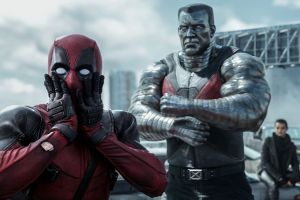
Deadpool (Ryan Reynolds), Colossus (Stefan Kapičić) and Negasonic Teenage Warhead (Brianna Hildebrand) in Deadpool

Deadpool (Ryan Reynolds), Colossus (Stefan Kapičić) and Negasonic Teenage Warhead (Brianna Hildebrand) in Deadpool

On a visceral level Deadpool delivers, with enough acrobatic action and one-liners to satisfy both fanboy and casual cinemagoer alike. The use of B-list X-Men Colossus (Stefan Kapičić) and Negasonic Teenage Warhead (Brianna Hildebrand) provides ample opportunities for Wilson/Reynolds to stick the boot in to the X-Men, from its HQ (“Neverland Mansion”), to Professor Xavier (“some creepy, old, bald, Heaven’s Gate-looking motherf***er”) and Wolverine in particular (a visual gag involving Hugh Jackman towards the end of the movie is particularly amusing).

The delight with which Reynolds spouts Rhett Reese and Paul Wernick’s expletive-laden meta dialogue is palpable and the scenes he shares especially with T.J Miller’s deadpan Weasel and Leslie Uggams’ elderly flatmate Blind Al are the film’s highlight.

Wade Wilson (Ryan Reynolds) in happier times with girlfriend Vanessa (Morena Baccarin) in Deadpool

Wade Wilson (Ryan Reynolds) in happier times with girlfriend Vanessa (Morena Baccarin) in Deadpool

However, Wilson’s romance with Vanessa, whilst gamely played by both actors, feels like it’s stapled on from a different movie and the character rather inevitably becomes a damsel in distress who’s there to be rescued from the clutches of the bad guy; a trope we’ve seen once or twice in the movies.

Reynolds, like the film itself, also veers too often into smugness; basking in its latest insult or ribaldry as if waiting for the audience to stop chuckling before moving on.

Wade Wilson (Ryan Reynolds) resmbling an avocado in Deadpool

Wade Wilson (Ryan Reynolds) resembling an avocado in Deadpool

It will be interesting to see whether the goldmine that Deadpool has unearthed will inspire the studios to take on riskier projects involving characters who operate on the fringes of the comic book universe. If this is the film’s legacy then so much the better.

Deadpool is fun and smart; just not as fun and smart as it thinks it is.

Review – The Hateful Eight

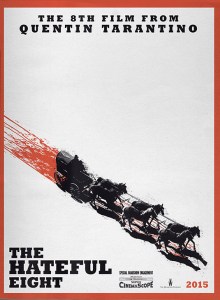
‘Event cinema’ is a term that has largely been reduced over the years to that of the tent pole picture, so it’s nothing if not refreshing to see a filmmaker so brazenly and assuredly resurrecting celluloid’s largest format when presenting his latest work.

The Hateful Eight is often provocative and brilliant, but Tarantino has let himself become his own worst enemy

The Hateful Eight is often provocative and brilliant, but Tarantino has let himself become his own worst enemy

Everything about writer/director Quentin Tarantino’s The Hateful Eight draws attention to itself, from the use of Ultra Panavision 70mm – a film connoisseur’s wet dream and a format so rare (barring Paul Thomas Anderson’s The Master) as to be virtually unheard of since Hollywood’s golden age – to the employment of an overture and intermission; giving the movie a brazen air of regality.

The promise of extra footage to entice people to seek out the film’s 70mm ‘Roadshow’ isn’t the first time QT has presented two different versions of the same movie; he did something similar with his grindhouse homage Death Proof back in 2007.

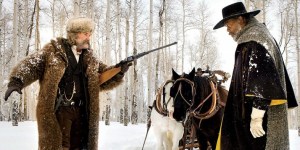
Violence is just around the corner in The Hateful Eight

Violence is just around the corner in The Hateful Eight

It’s fair to say The Hateful Eight is on a different scale; however, with great pomp and circumstance comes the risk of great pitfalls and while the director largely succeeds in his endeavour, it isn’t without the flaws that have come to be synonymous with Tarantino flicks.

Tarantino’s gift for movie dialogue is legendary and virtually unparalleled in modern cinema, but what the director hasn’t received enough credit for over the years is his inherent understanding of how to stage a scene and where to place the camera.

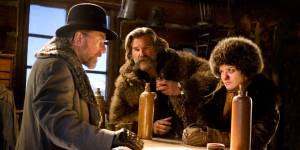
"The Little Man" (Tim Roth) questions "The Hangman" (Kurt Russell) and "The Prisoner" (Jennifer Jason Leigh) in The Hateful Eight

“The Little Man” (Tim Roth) questions “The Hangman” (Kurt Russell) and “The Prisoner” (Jennifer Jason Leigh) in The Hateful Eight

Filming in 70mm is a gamble as it can amplify bad technical decisions; but in the case of The Hateful Eight the use of Ultra Panavision serves to add an extra layer of complexity and subtext to what are already masterfully staged confrontations between his core characters.

The film has attracted comparisons to QT’s 1992 debut Reservoir Dogs (not least of which from the director himself) for sticking to a single location for much of the running time. However, it’s a full 30 minutes before we arrive at Minnie’s Haberdashery as the film patiently sets out its stall with an increasingly uneasy stagecoach journey involving bounty hunter John Ruth (Kurt Russell), who is transporting wanted criminal Daisy Domergue (Jennifer Jason Leigh) to Red Rock to be hanged, fellow bounty hunter Major Marquis Warren (Samuel L. Jackson) and Chris Mannix (Walton Goggins), who claims to be Red Rock’s new sheriff.

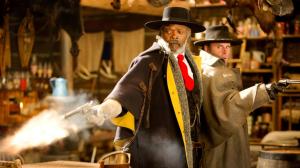
Gun-toting "Bounty Hunter" (Samuel L. Jackson) and "The Sheriff" (Walton Goggins) in The Hateful Eight

Gun-toting “Bounty Hunter” (Samuel L. Jackson) and “The Sheriff” (Walton Goggins) in The Hateful Eight

As wordy a chapter (or two) as this is, it establishes the mood of mistrust, paranoia and violence (filmed using a string a tight shots that juxtapose the vast and unforgiving wintry Wyoming landscape) that permeates much of the film. The suspicion that all is not as it seems is encapsulated in a single shot of Domergue, nursing a bust lip caused by a punch, who we see staring mischievously at Warren as if to shrug off the act of violence before turning away and letting her guard slip for a moment as the pain takes hold; only to laugh it off again as she realises she’s once again being looked upon.

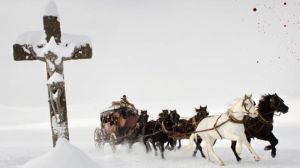
The sense of foreboding and Old Testament justice (signaled by the evocative shot of a snow-covered crucifix) is ratcheted up in typical QT fashion as the action moves into Minnie’s Haberdashery and an increasingly bloodthirsty standoff slowly plays out among the odious octet – who also include Oswaldo Mobray (Tim Roth channeling Terry Thomas), Mexican Bob (Demián Bichir), Joe Gage (Michael Madsen) and Confederate General Sandford Smithers (Bruce Dern) – as a blizzard imprisons them to their fate.

There are moments here of the sort of brilliance that only the former video store clerk could conjure up. The disjointed narrative, so often a staple of Tarantino’s work, is employed to sterling effect and the performances, as ever, are uniformly excellent. Madsen and Roth haven’t been given this much to do for a good long while and Russell once again proves that the more unpredictable he is the better.

Are you gonna bark all day little doggie?: "The Cow Puncher" (Michael Madsen) in The Hateful Eight

Are you gonna bark all day little doggie?: “The Cow Puncher” (Michael Madsen) in The Hateful Eight

Goggins is on breakout form following a highly respected career in TV, while Leigh is arguably the best thing about the film, giving a shrewd and disarming performance that gets under your skin. However, it’s Jackson who once again lifts his game for a Tarantino picture and has a blast delivering the director’s typically colourful dialogue; in particular a comically nasty monologue an hour or so in that finally cranks the film into top gear.

The vice-like score by legendary composer Ennio Morricone fits the jittery mood of the film. Indeed, it’s rather fitting the majority of the score was originally written for The Thing (1982) as The Hateful Eight‘s creeping sense of paranoia between a small group of characters trapped by worsening weather is more than reminiscent of John Carpenter’s classic (minus the Thing of course). The score also fits the film’s whodunnit narrative that tips a wink to Hitchcock.

Too much of anything can be a bad thing, however, and the luxuriant running time cries out for a further edit. The opening hour, as satisfying as it is, spins its wheels and sees the director at his most indulgent. Tarantino is like a screenwriter’s equivalent of Dickens; a beautiful writer who can’t help penning a paragraph when a line will do.

Blood on the snow: "The Hangman" (Kurt Russell) and "The Bounty Hunter" (Samuel L. Jackson) in The Hateful Eight

Blood on the snow: “The Hangman” (Kurt Russell) and “The Bounty Hunter” (Samuel L. Jackson) in The Hateful Eight

The abundant use of the N-word has inevitably drawn heavy criticism and it’s certainly difficult to defend a movie that employs such a charged word so often. Jackson has defended Tarantino, pointing out his dialogue fits the characters and the time in which the film was made, while QT himself has spoken of how dealing with race in America is something he has to offer the western. Whether you buy that is up to you.

As Tarantino nears the self-imposed end of his career (10 films and he’s out), a question remains as to whether his best work is behind him. The Hateful Eight is often provocative and brilliant, but Tarantino has let himself become his own worst enemy.

Review – The Revenant

You have to give Alejandro González Iñárritu his due; few directors generate as many column inches and heated opinions as the Oscar-winning Mexican.

In the end, Iñárritu will always be an awards darling so long as he produces works such as The Revenant, but this work remains as cold as the snow-bound landscapes he portrays

In the end, Iñárritu will always be an awards darling so long as he produces works such as The Revenant, but this work remains as cold as the snow-bound landscapes he portrays

Whereas 2015’s Birdman caused a stir upon its release, Iñárritu’s latest has divided audiences like few other motion pictures of recent years.

Some have labelled The Revenant a masterpiece of epic proportions, while others have branded it nothing more than “pain porn”.

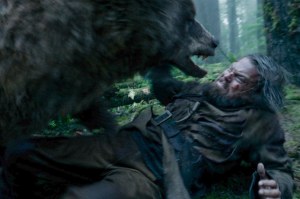
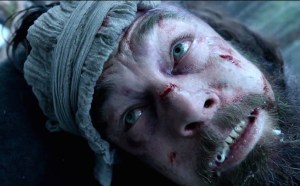
Hugh Glass (Leonardo DiCaprio) goes mano v mano against a grizzly in The Revenant

Hugh Glass (Leonardo DiCaprio) goes mano v mano against a grizzly in The Revenant

Whilst this reviewer wouldn’t go quite so far as that, The Revenant, though more effective than Birdman, is remarkably similar in its failure to generate more than respectful admiration for its technical artistry rather than the adoration the film and its director undoubtedly crave.

Iñárritu deserves credit and, yes, admiration for refusing to compromise on his artistic vision and for leading his cast and crew on what at times must have felt like an endeavour of Herzogian proportions.

It’s certainly hard to argue against the spectacle on show, courtesy of Oscar-winning cinematographer Emmanuel Lubezki (Gravity, Birdman), whose bleakly beautiful compositions give you an uncomfortable appreciation of how unforgiving – and cold – the vast wilderness of the American frontier (actually shot in Canada and Argentina) in 1823 must have been for those seeking to exploit its resources.

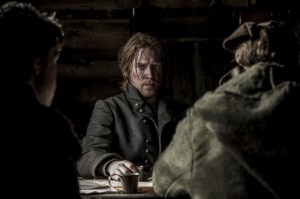
The unforgiving John Fitzgerald (Tom Hardy) in The Revenant

The unforgiving John Fitzgerald (Tom Hardy) in The Revenant

Among those in country are trappers Hugh Glass (Leonardo DiCaprio), his half-native son Hawk (Forrest Goodluck), the clearly unbalanced Fitzgerald (Tom Hardy in full on crazy eyes mode) and Andrew Henry (Domhnall Gleeson), who captains the party. An ambush by natives deals a severe blow, which is compounded when Glass is mauled by a bear and left clinging on to life.

Left for dead and with a thirst for vengeance following a brutal act of violence by Fitzgerald, Glass summons the will against all odds to claw his way back to life and go in search of retribution.

Capt Andrew Henry (Domhnall Gleeson) in The Revenant

Capt Andrew Henry (Domhnall Gleeson) in The Revenant

Much has been made in the media of the hardships visited upon cast and crew in bringing The Revenant to the screen and the several ‘makings of’ showing DiCaprio etc talking about eating raw bison liver or suffering near hypothermia that have appeared online are about as shameless an attempt at Oscar baiting as you’ll likely to see.

That being said, it’s nevertheless laudable watching the lengths the cast and DiCaprio especially put themselves through to achieve authenticity. Hardy mumbles and looks unhinged, while Will Poulter is excellent as fellow trapper Jim Bridger, ashamed at not having the strength of will to ignore self-preservation. This is Leo’s show, however, and the actor puts in a fully committed performance of foaming intensity, practically losing himself in the part; his every tortured expression blown up by the numerous extreme close-ups.

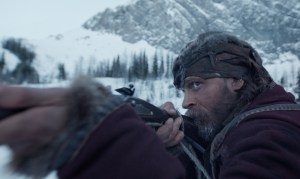
Give me an Oscar! Hugh Glass (Leonardo DiCaprio) in The Revenant

Give me an Oscar! Hugh Glass (Leonardo DiCaprio) in The Revenant

The film’s one obvious use of CGI (there are other less transparent moments) comes during the already infamous bear attack sequence, a horrifying, stomach-churning confrontation that has quite rightly earned its reputation. The attack on the trappers near to the start of the film is equally well staged, veering from one blood-spattered moment to the next as the men find themselves horribly outmatched.

All this spectacle sears itself on the corneas, but never penetrates the heart. Glass is visited on several occasions by ethereal visions of his dead wife, à la Gladiator (which the film owes a nod to), and while the narrative reasoning is understandable, these moments of strained spirituality fail to work because they feel crowbarred in to inject some form of emotional connection.

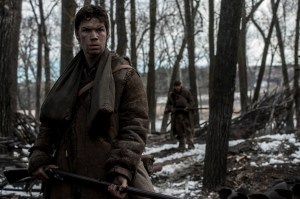
Mountain man: Jim Bridger (Will Poulter) in The Revenant

Mountain man: Jim Bridger (Will Poulter) in The Revenant

More often than not, you find yourself admiring a shot (the numerous slow motion pans of tree tops notwithstanding) and thinking of how wonderfully composed it is rather than being swept along.

In the end, Iñárritu will always be an awards darling so long as he produces works such as The Revenant, but this work remains as cold as the snow-bound landscapes he portrays.

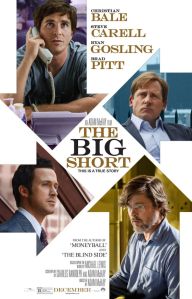
Review – The Big Short

The laughs may be plentiful in Adam McKay’s vigorous and impassioned dissection of the catastrophic financial crash, but the joke – as so many discovered – is ultimately on us.

Filmmakers have largely distinguished themselves when it comes to exploring the global financial meltdown and The Big Short, although over-the-top at times, is an illustrious addition to this growing sub-genre

Filmmakers have largely distinguished themselves when it comes to exploring the global financial meltdown and The Big Short, although over-the-top at times, is an illustrious addition to this growing sub-genre

Whilst the ‘collateral damage’ caused by the fraudulent greed of so many within a morally bankrupt and deregulated industry is touched upon in McKay’s adaptation of Michael Lewis’ book, the director’s gaze is more squarely focussed on the small group of individuals who foresaw – and came to profit from – what so many others either couldn’t or didn’t want to see back in 2007.

This approach has drawn criticism in some quarters for largely ignoring the consequences meted out on ordinary folk but, much like the subprime mortgage crisis that helped fuel the collapse, the central players in The Big Short operate within their own bubble.

CRASH! Hedge funder Dr Michael Burry (Christian Bale) in The Big Short

CRASH! Hedge funder Dr Michael Burry (Christian Bale) in The Big Short

These are the other guys – to employ the title of McKay’s 2010 comedy – hedge fund manager Dr Michael Burry (Christian Bale), who is the first to realise the U.S. housing market is built on sand and uses his investors’ money to bet against it; arrogant, but smart trader Jared Vennett (Ryan Gosling), who stumbles across Burry’s predictions and smells an opportunity; Mark Baum (Steve Carell), a hedge fund manager who is repulsed by the excesses the industry has spawned but nevertheless swims with the sharks; and young investors Charlie Gellor (John Magaro) and Jamie Shipley (Finn Wittrock), who also chance upon Burry’s work and, with the help of retired banker Ben Rickert (Brad Pitt), try to make a killing on the collapse.

The film follows each group (they never come into direct contact with each other) as they defy their colleagues by betting against a AAA-rated system they are convinced is on the brink of oblivion.

Former trader Ben Rickert (Brad Pitt) finds himself back in the game in The Big Short

Former trader Ben Rickert (Brad Pitt) finds himself back in the game in The Big Short

Whilst we know the disastrous events that followed the crash when it eventually arrived in mid-2008, The Big Short takes a procedural approach by having its core cast kick over the rotting carcass that was/is the banking and housing markets and navigate their way through the chaos and bullshit that seemingly permeated every nook and cranny.

McKay paints his supporting characters in broad strokes, whether it be a pair of wildly reprehensible real estate douchebags who boast to Baum’s team about how much money they make selling snake oil to people who want their big house(s) at any cost; or Melissa Leo’s Standard and Poor’s ratings agency rep whose sight problem is a none-too-subtle metaphor for the wanton blindness of the system at large.

The irony is also palpable when several characters attend the American Securitization Forum in, of all places, Las Vegas and see for themselves just how far some will go to bleed the system dry for the sake of a buck.

Outspoken Wall Street hedge fund manager Mark Baum (Steve Carell) tries to keep himself in check in front of suave hot shot Jared Vennett (Ryan Gosling) in The Big Short

Outspoken Wall Street hedge fund manager Mark Baum (Steve Carell) tries to keep himself in check in front of suave hot-shot Jared Vennett (Ryan Gosling) in The Big Short

It’s sometimes easy to forget that the main protagonists here are guys who placed their chips on the entire U.S. economy failing, but in case we get carried away in the moment, Pitt’s wary ex-banker castigates Gellor and Shipley for celebrating, reminding them – and us, of course – exactly what it is they are betting against and the human cost it will incur should they be right.

McKay’s frantic direction, employing crash zooms, freeze frames and plenty of hand-held camerawork fits the farcical comedy of much of the film, although it’s notable that things calm down as the laughs dry up in the final act and are replaced by a bubbling anger.

The film’s tone and regular breaking of the fourth wall is reminiscent of Michael Winterbottom’s 24 Hour Party People (a major influence according to McKay), in particular Margot Robbie (in a bubble bath for some reason), chef Anthony Bourdain and Selena Gomez who provide ‘for dummies’ explanations to camera for the financial sector’s more batshit creations.

Filmmakers have largely distinguished themselves when it comes to exploring the global financial meltdown and The Big Short, although over-the-top at times, is an illustrious addition to this growing sub-genre.

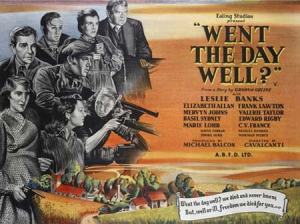
Great Films You Need To See – Went The Day Well? (1942)

This is my latest contribution to The Big Picture, the visually focused film magazine that proves there’s more to film than meets the eye. The Big Picture is kicking off 2016 with a series of features and reviews with the theme of ‘war’ (fun, I know). This piece is part of the site’s Lost Classics section (featuring in my list of Great Films You Need To See), and covers Alberto Cavalcanti’s superb 1942 wartime drama Went The Day Well?

Went The Day Well? remains a brilliantly imaginative and disturbing wartime 'what if'

Went The Day Well? remains a brilliantly imaginative and disturbing wartime ‘what if’

Propaganda films exist to sell a varnished version of real events, which makes it even more remarkable a movie made at a time when the outcome of World Ward Two was far from certain would so boldly write the epitaph for Hitler’s Third Reich.

Adapted from Graham Greene’s magazine story, Alberto Cavalcanti’s 1942 classic Went The Day Well? regales supposedly contemporaneous events from a point in the future (not too distant audiences presumably hoped) when the war was over and the Allies stood victorious.

Cherry villager (Mervyn Johns) shows us "the only bit of England the Germans got" in Went The Day Well?

Cherry villager (Mervyn Johns) shows us “the only bit of England the Germans got” in Went The Day Well?

In spite of the happy ending, it must have nevertheless been discomforting for audiences to be told by a cheery pipe-smoking villager (played by Mervyn Johns) that the so-called Battle of Bramley End had been kept a state secret until after the war was over – a battle for the very heart of England where the front line is a sleepy country village; not too dissimilar to the sort of quaint idyll many people would have returned home to after stepping out of the cinema.

Went The Day Well? enacts the nightmare scenario Brits would have feared at the time; namely a German invasion of Britain under the noses of honest, hard-working folk. What makes the film even more unnerving is that the fifth column of Nazi soldiers who arrive en masse in Bramley End largely speak with cut-glass English accents and ingratiate themselves into this small community with considerable ease.

The dastadly Garmans hatch their plot in Went The Day Well?

The dastardly Germans hatch their plot in Went The Day Well?

It transpires they’ve had help from at least one Nazi sympathiser on the inside, revealing an ugly truth that has hidden in plain sight, and the deviousness of their plan – Bramley End is the beachhead where the English way of life can be destroyed from within – is staged in brutal, thuggish fashion when they reveal their true intentions during a church service (a none-too-subtle implication that the Nazis are a godless lot).

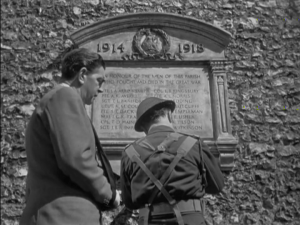
Cavalcanti does away with dramatic flourish and instead films events with a documentarian’s gaze. That said, there are several pointed moments, not least of which a brief shot of Basil Sydney’s Kommandant Orlter consulting his mission plans next to a plaque honouring the fallen dead of World War One.

Postmistress Mrs Collins (Muriel George) turns ax murderer in Went The Day Well?

Postmistress Mrs Collins (Muriel George) turns ax murderer in Went The Day Well?

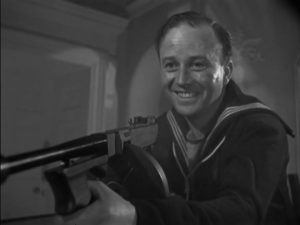
The villagers’ eventual fight back is still startling and must have stirred in audiences of the time an odd mix of revenge fantasy and queasiness at the bloodthirsty nature of what they were watching. Postmistress Mrs Collins’ (Muriel George) use of an axe to kill a gruff-sounding Nazi is tempered by the tear-stained shock etched on her face when the gravity of the deed starts to set in, while the look of joyous satisfaction a villager gives to shooting a German invader augurs the action man movies of the 1980s and beyond.

Even Thora Hird gets in on the act in her first starring role as a gun-toting Bramley Ender who makes the Nazis wish they’d picked another quiet strip of England to invade.

That got 'em! Shooting Germans in Went The Day Well?

That got ’em! Shooting Germans in Went The Day Well?

One can perhaps forgive some of the more circumspect dialogue bearing in mind the time in which it was released, although the response a young Harry Fowler gives when asked “do you know what morale is?” – “yeah, it’s what the wops ain’t got!”- is difficult to defend.

Went The Day Well? remains a brilliantly imaginative and disturbing wartime ‘what if’ that no doubt sent a stark warning to ol’ Adolf – you mess with Little Britain at your peril.