Review – Homefront

The script may be expendable, but Jason Statham does what he does best in this enjoyably old school action flick written by Sylvester Stallone.

Homefront is hardly groundbreaking stuff, but it gets the job done and offers up another star vehicle for Mr Chrome Dome

Homefront is hardly groundbreaking stuff, but it gets the job done and offers up another star vehicle for Mr Chrome Dome

Following the touchy-feely Hummingbird (aka Redemption), The Stath is back on more familiar ground with his third film of the year.

Phil Broker (Jason Statham) enjoys some quality time with daughter Maddy (Izabela Vidovic) in Homefront

Phil Broker (Jason Statham) enjoys some quality time with daughter Maddy (Izabela Vidovic) in Homefront

Since breaking out as a leading man in 2002’s The Transporter, Statham has methodically turned himself into a bankable action man. It speaks to his star wattage that his movies have attracted increasingly big name casts, whether it’s opposite Robert De Niro and Clive Owen in Killer Elite or Jennifer Lopez in Parker earlier this year.

Slumming it they may be, but Homefront co-stars James Franco, Winona Ryder and a barely recognisable Kate Bosworth nevertheless add an extra touch of class to proceedings.

Drug kingpin Gator (James Franco) and his white trash sister Cassie (Kate Bosworth) in Homefront

Drug kingpin Gator (James Franco) and his white trash sister Cassie (Kate Bosworth) in Homefront

Statham plays Phil Broker, who retired as a DEA agent after helping to take down a notorious biker gang. He retreats to a seemingly sleepy Louisiana town with his young daughter Maddy (Izabela Vidovic) but, following a series of improbable coincides, finds his past catching up with him after getting on the wrong side of a bunch of redneck meth dealers led by Gator (Franco).

Despite receiving a Best Original Screenplay Oscar nomination all those years ago for Rocky, Stallone’s range as a scriptwriter is relatively limited. The premise of Homefront is pretty basic, but Sly at least injects Gator and his trailer trash sister Cassie (Bosworth) with a more interesting human dimension than we’re used to seeing in these kinds of flicks. That said, you’d be hard pushed to remember/care about any of the dialogue.
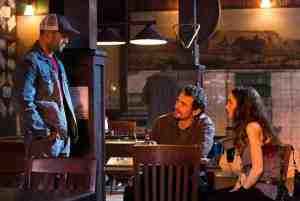
Phil Broker (Jason Statham) confronts Gator (James Franco) and girlfriend Cheryl (Winona Ryder) in Homefront

Phil Broker (Jason Statham) confronts Gator (James Franco) and girlfriend Cheryl (Winona Ryder) in Homefront

Imagine that Alien from Spring Breakers had a brother and you’d be pretty close to nailing Franco’s Gator. Using that same crooked smile (minus the gold teeth), sleazy demeanour and southern drawl, Franco may not inhabit the part as thoroughly as he did the drug-dealing Alien, but it’s a fun performance and you half expect him to say “look at my shit” when he’s showing white trash lover Cheryl (Ryder, looking out-of-place) around his meth lab.

Jason Statham doing what he does best in Homefront

Jason Statham doing what he does best in Homefront

Director Gary Fleder goes through the motions somewhat, using warm colours and clunky pianos in the scenes between Broker and his loving daughter, while – surprise surprise – juxtaposing this a desaturated look for the scenes involving the cold-hearted bikers who ride into turn seeking vengeance.

Although the interplay between Statham and Vidovic is nicely judged by both actors, the film inevitably lives or dies on its action scenes and it’s here the film doesn’t disappoint. In The Stath’s reliable hands, the moments of ass-kicking are explosively handled, in particular the bullet-tastic showdown between Broker and the bikers.

Homefront is hardly groundbreaking stuff, but it gets the job done and offers up another star vehicle for Mr Chrome Dome.

Review – The Secret Life Of Walter Mitty

There’s fridge magnet philosophy a go-go in Ben Stiller’s latest about an ordinary guy with extraordinary fantasies of heroic adventure who finally decides to get busy livin’ when he embarks on a globe-trotting quest.

While there's no denying The Secret Life Of Walter Mitty's anti-capitalist message will chime with many, its hero should have dreamed for someting better than this

While there’s no denying The Secret Life Of Walter Mitty’s message will chime with many, its hero should have dreamed for something better than this

Originally a short story by James Thurber, The Secret Life Of Walter Mitty first appeared on screen in 1947 starring Danny Kaye as the titular everyman.

Apparently Thurber hated the script so much he voiced his disillusionment through the letter pages of Life, the magazine Walter (played by Stiller) works for in this remake.

Walter (Ben Stiller) dissapears into a dram world, to the amusement of his boss (Adam Scott) in The Secret Life of Walter Mitty

Walter (Ben Stiller) disappears into a dram world, to the amusement of his boss (Adam Scott) in The Secret Life of Walter Mitty

Bean counters with identikit suits and beards (led by Adam Scott sporting the scariest facial hair since John Travolta in Killing Season) announce that Life is being turned into a web-only publication and half-heartedly motivate the people they’re firing to make sure its final newstand edition is the best yet. Not only is Walter’s job on the line, but that of his secret crush Cheryl (Kristen Wiig) too.

As much out of a desire to impress Cheryl than a knee-jerk attempt to save his job, Walter goes in search of esteemed photojournalist Sean O’Connell (Sean Penn, obviously) to track down the edition’s missing cover image – called the “quintessence of Life”.

One of Walter's (Ben Stiller) numerous fantasies in The Secret Life of Walter Mitty

One of Walter’s (Ben Stiller) numerous fantasies in The Secret Life of Walter Mitty

Walter’s quest takes him to Greenland, Iceland and Afghanistan and sees him jump out of a helicopter, almost get eaten by a shark, inadvertently skateboard towards a volcanic eruption and climb a great mountain as he finally starts living the dream instead of fantasising about it.

There can’t be many of us who haven’t, at some point, wanted to throw off the shackles of our daily lives and do the things we’ve spent so long going on about. To that end, The Secret Life Of Walter Mitty will chime with a lot of cinemagoers. Despite the stunning locations we’re treated to, however, the film ultimately feels a letdown.

Steve Conrad’s uneven script is very episodic and leads to a topsy-turvy narrative that threatens to stifle the emotional engagement you feel for Walter. In taking big strides to reach the desired end point for our hero, the film misses out on the little things that could and should have made this journey special.

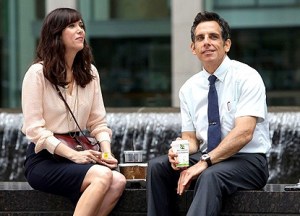
Walter (Ben Stiller) with the object of his affection, co-worker Cheryl (Kristen Wiig) in The Secret Life of Walter Mitty

Walter (Ben Stiller) with the object of his affection, co-worker Cheryl (Kristen Wiig) in The Secret Life of Walter Mitty

A life-changing and possibly dangerous section of Walter’s journey that takes him to the top of a mountain is (literally) written-off by Stiller as a series of bland and cheesy diary entries, while his eventual encounter with O’Connell is undermined by a rather heavy-handed metaphor involving a snow leopard.

While the first section of The Secret Life Of Walter Mitty feels very much like a Stiller movie (including a weird and genuinely funny Curious Case Of Benjamin Button fantasy sequence), the second half comes off as second-rate Wes Anderson, from the use of quick zooms, to long tracking shots and stylised montage. The soundtrack also screams ‘indie’ in an attempt to give the film an edge it never really earns.

Walter's (Ben Stiller) on the adventure of a lifetime in The Secret Life of Walter Mitty

Walter’s (Ben Stiller) on the adventure of a lifetime in The Secret Life of Walter Mitty

Stiller veers between low-key and over-the-top and, like the film itself, can’t seem to decide what he wants to go for. He’s a fine, if limited actor and you can’t help feeling he should have cast someone else and stayed behind the camera. Wiig, meanwhile, does her best with limited material, while the less said about the shameless plugs given to an online dating company and pizza firm the better.

While there’s no denying The Secret Life Of Walter Mitty‘s message will ring true with many, its hero should have dreamed for something better than this.

In Retrospect – Gone With The Wind (1939)

The budgets may get ever bigger and the special effects ever more impressive, but the ambition of contemporary Hollywood is a shadow of its more aspirant younger days.

Despite its refusal to deal with the stain of slavery, as a work of cinema Gone With The Wind is as big an event as they come, an epic in the truest sense of the word that's sure to sweep audiences along for another 75 years

Despite its refusal to deal with the stain of slavery, as a work of cinema Gone With The Wind is as big an event as they come, an epic in the truest sense of the word that’s sure to sweep audiences along for another 75 years

‘Epic’ has become a cheapened term in recent years through its sheer overuse. It gets bandied about so often when describing the latest swathe of blockbusters that its meaning has been lost. It takes a dose of Old Hollywood to offer some perspective and a better appreciation of what ‘epic’ cinema truly is.

We all have black spots in our movie-watching repertoire; films that everyone appears to have seen except us. Gone With The Wind is one such example for me (an ‘epic’ fail you might say), so a pristine digital reissue to mark its impending 75th anniversary seemed as good a time as any to finally give in to Victor Fleming’s grandiose adaptation of Margaret Mitchell’s Pulitzer Prize-winning novel.

Scarlett O'Hara (Vivien Leigh) in Gone With The Wind

Scarlett O’Hara (Vivien Leigh) in Gone With The Wind

As the drums beat inexorably towards Civil War, impetuous and spoiled Southern belle Scarlett O’Hara (Vivien Leigh) seems more interested in stealing the affections of dashing Ashley Wilkes (Leslie Howard) away from her saintly sister Melanie (Olivia de Havilland). When Ashley and Melanie marry and war breaks out, the lovelorn Scarlett finds herself constantly coming back to the wealthy and self-preserving Rhett Butler (Clark Gable), who finds himself falling for Scarlett against his better judgement.

Man about town Rhett Butler (Clark Gable) in Gone With The Wind

Man about town Rhett Butler (Clark Gable) in Gone With The Wind

When taking stock of Gone With The Wind it’s difficult to get away from the numbers. Featuring dozens of speaking parts, almost 2,500 extras and a nigh-on four-hour running time, everything about the film screams ‘epic’. However, it seems only appropriate considering the film’s events take place in the shadow of one of the defining periods in American history.

That being said, at its core Gone With The Wind is a human drama of love lost, found and unrequited. Used to getting what she wants, the petulant and selfish Scarlett becomes obsessed with attaining the one thing she wants the most, but can’t have – the love of Ashley. Her infatuation prevents her from fully embracing a life with the Rhett, who recognises in Scarlett a kindred spirit, and utters: “We’re bad lots, both of us.”

Atlanta burns in Gone With The Wind

Atlanta burns in Gone With The Wind

The chemistry between Gable and Leigh is electric. What’s striking almost 75 years on is how fresh and modern both Rhett and Scarlett remain. Gable’s eyes twinkle as he rolls Sidney Howard’s dialogue around his mouth, but there’s also a sadness there and a resignation that, no matter how hard he tries, he and Scarlett can never last.

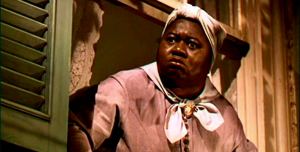
Oscar-winning Hattie McDaniel as house servant Mammy in Gone With The Wind

Oscar-winning Hattie McDaniel as house servant Mammy in Gone With The Wind

Leigh, who came through a tortuous audition process to land the part, positively crackles. Although still one of the feistiest and most driven female parts committed to screen Scarlett is, for the most part, pretty damn annoying and does little to enamour herself as the film progresses. When she runs a horse ragged until it drops down dead in order to get back to her beloved Georgia plantation Tara, she doesn’t bat an eyelid for the animal, while her pursuit of Ashley behind her sister’s back borders on stalking. Rhett sums Scarlett up perfectly when he remarks that she’s “like the thief who isn’t the least bit sorry he stole, but is terribly, terribly sorry he’s going to jail”.

The end is nigh for the Old South in its battle against the Yankee North in Gone With The Wind

The end is nigh for the Old South in its battle against the Yankee North in Gone With The Wind

Rhett is far from perfect himself, of course. Asked why he isn’t fighting for the South, he replies “I believe in Rhett Butler, he’s the only cause I know”, while the scene late on in the film implying marital rape is still troubling to this day.

As a visual spectacle, the film still packs a wallop.  The burning of Atlanta is vividly handled, while the painterly camera shots are a sight to behold. The pull-back from Scarlett to reveal hundreds of dying soldiers and a tattered Confederate flag is pure cinema, while the numerous shots of characters dwarfed by the brooding Technicolor skies overhead (set to Max Steiner’s stiring score) are astounding.

Rhett Butler (Clark Gable) and Scarlett O'Hara (Vivien Leigh) trike a classic pose from Gone With The Wind

Rhett Butler (Clark Gable) and Scarlett O’Hara (Vivien Leigh) trike a classic pose from Gone With The Wind

Despite the visual majesty, there’s no escaping the problems that exist with the film. It’s perversely ironic the film is being re-released around the same time as 12 Years A Slave bearing in mind Gone With The Wind doesn’t give a damn about this long and dark chapter in the country’s history. Hattie McDaniel may have been the first African-American to win an Oscar for her role as house servant Mammy, but this sits very uncomfortably next to the film’s refusal to question the Good Ol’ South’s practice of ‘owning’ fellow human beings. It leaves a bitter taste in the mouth for sure.

Despite its refusal to deal with the stain of slavery, as a work of cinema Gone With The Wind is as big an event as they come, an epic in the truest sense of the word that’s sure to sweep audiences along for another 75 years.

Review – The Hunger Games: Catching Fire

There may be plenty of hunger before we finally get to the games, but it’s more than worth the wait in this bigger, bolder and – yes – better sequel.

Even in spite of Lawrence's knockout performance The Hunger Games: Catching Fire is so pleasing that come the closing credits, you'll be hungry for the next serving

Even in spite of Lawrence’s knockout performance The Hunger Games: Catching Fire is so pleasing that come the closing credits, you’ll be hungry for the next serving

Despite being an international bestseller, nothing was written in stone to suggest Suzanne Collins’ trilogy of young adult sci-fi adventure novels would make a convincing leap to the big screen.

However, paydirt was well and truly hit with the casting of star-in-waiting Jennifer Lawrence in the central role of Katniss Everdeen who, along with strong direction from Gary Ross and striking production design, turned 2012’s The Hunger Games into a mature and effective first chapter in the franchise.

Katniss Everdeen (Jennifer Lawrence), Peeta Mellark (Josh Hutcherson) and Haymitch Abernathy (Woody Harrelson) must jump through President Snow's hoops in The Hunger Games: Catching Fire

Katniss Everdeen (Jennifer Lawrence), Peeta Mellark (Josh Hutcherson) and Haymitch Abernathy (Woody Harrelson) must jump through President Snow’s hoops in The Hunger Games: Catching Fire

With almost double the budget under his belt, new director Francis Lawrence (no relation) has turned in a follow-up that manages to avoid many of the symptoms of sequel-itis and builds on the foundations of the first movie to impressive effect.

Catching Fire picks up where The Hunger Games left off, with Katniss and fellow 74th Hunger Games tribute Peeta Mellark (Josh Hutcherson) reluctantly embarking on a victor’s tour of the impoverished districts of Panem out of fear for their families’ safety. Anxious to stamp out the unrest that’s been brewing following Katniss’ show of defiance in the last Games, despotic President Snow (Donald Sutherland) announces that the 75th anniversary Quarter Quell will see former champions – Katniss and Peeta included – fight to the death in the most twisted and sickening Games yet.

Talk show host from hell Caesar Flickman (Stanley Tucci) in The Hunger Games: Catching Fire

Talk show host from hell Caesar Flickman (Stanley Tucci) in The Hunger Games: Catching Fire

Just as in the first installment, Catching Fire spends a great deal of time building up to the gladiatorial spectacle of the Games themselves. However, unlike The Hobbit: An Unexpected Journey, for example, you never get the sense the film is treading water and indulging itself. The slow, gradual wind up towards the horror of the Quarter Quell feels neccessary, as if the characters are pieces on a chessboard being carefully positioned.

Gale Hawthorne (Liam Hemsworth) defies the authorities in The Hunger Games: Catching Fire

Gale Hawthorne (Liam Hemsworth) defies the authorities in The Hunger Games: Catching Fire

That this build up is as engaging as it is is largely down to the captivating performance of Lawrence, who commands the screen. Since her breakout turn in Winter’s Bone, Lawrence’s stature has grown with every film and here it’s as if the camera is magnetised to her. What makes Katniss so appealing – and so human – is that she remains a reluctant hero, someone who would much rather be out hunting with her friend/love interest Gale (Liam Hemsworth) than be the face of the rebellion or a thorn in Snow’s side.

Catching Fire‘s supporting cast is an engaging mix of young and established talent, from Sutherland’s oily turn as the banally evil Snow, to Woody Harrelson’s colourful performance as Katniss and Peeta’s alcoholic mentor Haymitch and Elizabeth Banks’ nuanced portrayal of the garishly dressed Team Katniss cheerleader Effie Trinket, whose blind obidience to the Capitol gradually erodes as the veil is lifted.

The banally evil President Snow (Donald Sutherland) in The Hunger Games: Catching Fire

The banally evil President Snow (Donald Sutherland) in The Hunger Games: Catching Fire

Special mention must go to Stanley Tucci, who’s even more over-the-top this time around as Caesar Flickerman, the Hunger Games talk show host with the impossibly white teeth and insincere laugh who peddles bread and circuses to the masses and stands alongside Snow as the face of Panem’s totalitarian regime. It’s the film’s creepiest character and Tucci’s performance is skin-crawlingly effective.

Just as in the first film, Catching Fire, well, catches fire when the Hunger Games finally commence. Although essentially the same set-up as the previous film (last person standing wins), this time around we get poisonous gas, electrified force fields, psychological warfare and, most disturbingly, flesh-eating monkeys thrown in. Each mini-set piece is striking in its own way and follow each other so quickly you’ll be left as exhausted as the tributes.

Katniss Everdeen (Jennifer Lawrence) and Peeta Mellark are the girl, and boy, on fire in The Hunger Games: Catching Fire

Katniss Everdeen (Jennifer Lawrence) and Peeta Mellark are the girl, and boy, on fire in The Hunger Games: Catching Fire

As is the way of modern day franchises, this second installment is darker than its predecessor and is much better for it. The social commentary and political subtext alluded to in the first film is more pronounced this time around (both visually and in the dialogue, most notably between Snow and Philip Seymour Hoffman’s Games Designer Plutarch Heavensbee) and the violence more reactionary and brutal. It’s pretty strong stuff for what’s supposed to be a film aimed at young adults.

Even in spite of Lawrence’s knockout performance Catching Fire is so pleasing that come the closing credits, you’ll be hungry for the next serving.

Review – The Butler

Forrest Gump may have been referring to life and boxes of chocolates when he remarked that “you never know what you’re gonna get”, but he could just have easily been talking about the films of Lee Daniels.

In trying to tick too many boxes and pull in too may directions The Butler only serves to weaken its message

In trying to tick too many boxes and pull in too may directions The Butler only serves to weaken its message

Following the little-seen crime thriller Shadowboxer (in which Helen Mirren stars as a contract killer – RED doesn’t seem so odd now), Daniels broke out with the rough and tough Precious before going completely off the reservation with 2012’s tawdry slice of American gothic The Paperboy.

The wild excesses and craziness of The Paperboy have been reigned in and sanitised with his latest offering, The Butler, loosely based on the true story of long-serving White House butler Eugene Allen.

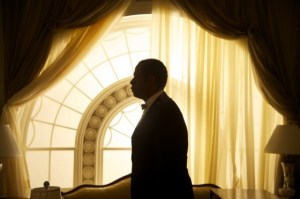
Cecil Gaines (Forest Whitaker) within his second home - the White House - in The Butler

Cecil Gaines (Forest Whitaker) within his second home – the White House – in The Butler

The Forrest Gump analogy works on another level also, as The Butler is reminiscent of that film’s decade-spanning central character who finds himself brushing shoulders with America’s most powerful and influential figures. However, whilst Forrest’s encounters were largely down to fortuitous timing and dumb luck, Cecil Gaines (Forest Whitaker) becomes part of the fabric of the White House over the course of seven presidencies.

The film charts Cecil’s life from a brutal upbringing on a Georgia cotton farm in the 1920s, in which his father is murdered and his mother raped by the plantation’s sociopathic owner, through to his training as a servant which leads to him being employed as a butler at the White House in 1957 under Dwight D Eisenhower. 1600 Pennsylvania Avenue becomes a second home for Cecil, much to the chagrin of his devoted, but frustrated wife Gloria (Oprah Winfrey). Meanwhile, Cecil’s eldest son Louis (David Oyelowo) becomes a committed civil rights campaigner, while his other son Charlie (Elijah Kelley) chooses to fight in Vietnam.

Cecil's mother Hattie (Mariah Carey) toils away in the cotton fields in The Butler

Cecil’s mother Hattie (Mariah Carey) toils away in the cotton fields in The Butler

The Butler feels like a movie pulling in several different directions, with Daniels never quite sure which way to go. One minute it’s a sweeping historical epic, the next a hard-hitting depiction of the civil rights movement, while a minute later it’s a tear-jerking relationship drama between father and son.

Its opening scenes are a difficult watch and suggest a possible explanation as to why Cecil is so averse to speaking out or picking a fight as an adult. The film is at its strongest when dealing directly with the civil rights movement, which it does in an angry and harrowing way by portraying the shameful physical and verbal abuse meted out to those brave enough to smash through the petty racism that still existed in much of the South.

Cecil's volatile eldest son Louis (David Oyelowo) in The Butler

Cecil’s volatile eldest son Louis (David Oyelowo) in The Butler

Oyelowo does an excellent job as Louis, who risks his life and being ostracised from his father to fight for a more enlightened America, but only through peaceful means. His journey is arguably the most compelling in the film and it’s to Oyelowo’s credit that he doesn’t give in to Oscar-grabbing temptation.

Winfrey is also wonderful as Gloria, a complex character who dearly loves her husband but makes mistakes of judgement that etch themselves on her face. It’s performances like these that make you wish she’d spend less time interviewing people and more in front of the camera for different reasons.

Cecil (Forest Whitaker) and fellow White House butlers James Holloway (Lenny Kravitz) and Carter Wilson (Cuba Gooding Jr) in The Butler

Cecil (Forest Whitaker) and fellow White House butlers James Holloway (Lenny Kravitz) and Carter Wilson (Cuba Gooding Jr) in The Butler

As Gary Oldman so memorably proved in Tinker, Tailor, Soldier, Spy, the hardest performances to pull off are the ones that are dialled down almost to zero and Whitaker is similarly restrained as the ghost-like Cecil. Taught early on to silently blend into the background in order to become a successful butler, Cecil goes about his everyday business with the utmost professionalism while presidents come and go and the world moves on around him.

Despite being the headquarters of a world superpower, Daniels shows that very little actually changes within the White House, be it the Downton Abbey-esque stately formality or the attitudes among some senior White House staff towards the black servants.

Cecil Gaines (Forest Whitaker) and his wife Gloria (Oprah Winfrey) in The Butler

Cecil Gaines (Forest Whitaker) and his wife Gloria (Oprah Winfrey) in The Butler

A gamut of stars portray the various presidents, with the most notable being John Cusack’s clammy and paranoid turn as Nixon (including a slightly comical prosthetic nose) and Alan Rickman’s uncanny take on Ronald Regan.

Each president appears only briefly on camera, which lends weight to the argument that The Butler would probably have worked better as a mini-series. With so much to squeeze in, the film inevitably feels rushed and softens its impact as a result.

Daniels should be congratulated for bringing a serious film to the big screen  about the long and arduous journey African-Americans took before a black president finally occupied the White House, but in trying to tick too many boxes and pull in too may directions The Butler only serves to weaken its message.