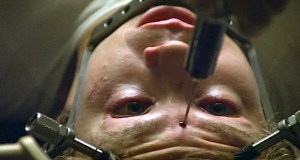
Great Films You Need To See – Sorcerer (1977)

This is my latest contribution to The Big Picture, the internationally recognised magazine and website that offers an intelligent take on cinema, focussing on how film affects our lives. This piece about William Friedkin’s criminally underseen 1977 existentialist thriller Sorcerer was written as part of The Big Picture’s Lost Classics strand, although I am including it within my list of Great Films You Need To See.

Unwittingly foreshadowing the fate of its four displaced protagonists, William Friedkin’s existential follow-up to The Exorcist was doomed the moment a certain lightsaber-rattling space opera arrived in cinemas from a galaxy far, far away.

Still Friedkin's most enigmatic and idiosyncratic film, Sorcerer's bewitching spell deserves to be cast far more widely

Still Friedkin’s most enigmatic and idiosyncratic film, Sorcerer’s bewitching spell deserves to be cast far more widely

Sorcerer (1977) has been cited by some as the beginning of the end for the New Hollywood movement. However, a giant nail had been hammered into its coffin several weeks earlier with the release of George Lucas’ Star Wars.

In light of this new paradigm of droids, Death Stars and Darth Vader, it’s no great surprise the film bombed on its release and disappeared without trace. That said, Sorcerer was (and still is) one of the most unashamedly offbeat big budget films ever released and was always going to be a tough sell.
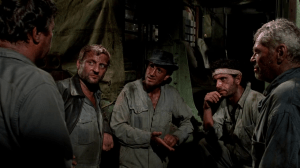
Mexican assassin Nilo (Francisco Rabal), Palestinian terrorist Kassem (Amidou), fraudulent French businessman Victor Manzon (Bruno Cremer) and New Jersey gangster Jackie Scanlon (Roy Schneider) weigh up their options in Sorcerer

Mexican assassin Nilo (Francisco Rabal), Palestinian terrorist Kassem (Amidou), fraudulent French businessman Victor Manzon (Bruno Cremer) and New Jersey gangster Jackie Scanlon (Roy Schneider) weigh up their options in Sorcerer

Although Friedkin insisted it wasn’t a remake of Henri-Georges Clouzot’s classic The Wages Of Fear, financiers Universal Studios and Paramount Pictures didn’t share the same opinion, changing its name to Wages Of Fear and re-editing the picture for international release.

The plot is certainly familiar. Four criminals – a Mexican assassin (Francisco Rabal), a Palestinian terrorist (Amidou), a fraudulent French businessman (Bruno Cremer) and a New Jersey gangster (Roy Schneider) – flee the scenes of their respective crimes and end up in a squalid Dominican Republic backwater working for a dodgy oil conglomerate. When one of the firm’s wells is blown up by ‘terrorists’, the desperate quartet sign-up to drive two truckloads of nitroglycerin across more than 200 miles of unforgiving jungle to put out the resulting blaze and pocket a big payday. The only problem is the dynamite is highly unstable and one false move could lead to an abruptly explosive end.

Getting ready for a dangerous trip in Sorcerer

Getting ready for a dangerous trip in Sorcerer

Friedkin has never been one to do things by half and employed the same guerilla style of filmmaking that won him an Oscar for The French Connection (1971) to down and dirty effect for what the director declares is the most important film of his career.

In his autobiography, The Friedkin Connection, he regales how scenes filmed in Jerusalem for the film’s globe-trotting first reel were given added authenticity by a real-life terrorist bombing that took place near to the shoot. In true Friedkin fashion, he made sure to train the cameras on the chaos that was ensuing rather than getting the hell out of there.

Crossing the most dilapidated bridge in the world in Sorcerer

Crossing the most dilapidated bridge in the world in Sorcerer

This is nothing, however, compared to what comes later in the film. Five years before Werner Herzog dragged a steam ship over a hillside in Fitzcarraldo (1982) in the name of art, Friedkin risked life and limb by having the trucks cross possibly the most dilapidated bridge in the world. The panic-inducing drama as the trucks swing violently back and forth over a raging torrent through almost Biblical levels of rain is almost unbearable to watch and is given extra power by Tangerine Dream’s nightmarish score.

Death and violence seep out of every frame and Friedkin takes an unholy pleasure in stripping hope away from his damned characters at every turn. The look of madness that creeps into Schneider’s eyes as their journey descends further into hell is startling and the hallucinogenic final reel is genuinely unsettling.

Still Friedkin’s most enigmatic and idiosyncratic film, Sorcerer‘s bewitching spell deserves to be cast far more widely.

Great Films You Need To See – Red Rock West (1993)

This is my latest contribution to The Big Picture, the internationally-recognised magazine and website that offers an intelligent take on cinema, focussing on how film affects our lives. This piece about John Dahl’s 1993 western neo noir thriller Red Rock West was written as part of The Big Picture’s Lost Classics strand, although I am including it within my list of Great Films You Need To See.

Cinema’s dustbin is littered with movies that disappeared between the cracks or didn’t fit neatly into any easy-to-sell marketing category.

Watched now, more than 20 years on, Red Rock West has barely aged a day and deserves its place alongside the likes of the Coens’ Blood Simple as one of cinema’s most ingenious neo-noirs

Watched now, more than 20 years on, Red Rock West has barely aged a day and deserves its place alongside the likes of the Coens’ Blood Simple as one of cinema’s most ingenious neo-noirs

It’s a fate that befell the criminally underseen Red Rock West, John Dahl’s sophomore feature that, according to the late Roger Ebert, “exists sneakily between a western and a thriller, between a film noir and a black comedy”.

The film is worth seeing for the cast alone. Nicolas Cage gives one of his most hangdog turns as Michael Williams, an ordinary Joe on the road to nowhere who rolls into dead-end Red Rock and is immediately mistaken for “Lyle from Dallas” by bar owner Wayne Brown (J.T. Walsh).

Michael Williams (Nicolas Cage) fools bar owner Wayne Brown (J.T. Walsh) he's "Lyle from Dallas" in Red Rock West

Michael Williams (Nicolas Cage) fools bar owner Wayne Brown (J.T. Walsh) he’s “Lyle from Dallas” in Red Rock West

Down on his luck, Michael keeps his mouth shut when he accepts $5,000 by Wayne to kill his wife Suzanne (Lara Flynn Boyle). He’s then offered double by Suzanne to kill Wayne after telling her about the contract. The plot takes a turn for the perilous with the arrival of the real Lyle (Dennis Hopper), a psychopathic hitman who dresses like he stepped out of a Garth Brooks concert.

Dahl, who co-wrote the script with brother Rick, throws in more twists than a pretzel factory and has a ball in the process. There’s an amusing running joke that sees the exasperated Michael continually trying to leave Red Rock but, like Jim Carrey’s Truman Burbank, is seemingly never able to escape.

Michael (Nicolas Cage) gets himself into hot water with Wayne's wife Suzanne (Lara Flynn Boyle) in Red Rock West

Michael (Nicolas Cage) gets himself into hot water with Wayne’s wife Suzanne (Lara Flynn Boyle) in Red Rock West

There’s more than a little of David Lynch in the film, and not just because three-quarters of the main cast have worked with him. Hopper is in full-on Frank Booth mode, while Boyle exudes the sort of old school matinee seduction she displayed in Twin Peaks.

In a film of meaty performances, the tastiest is given by Walsh (who should have appeared in a Lynch film, but never did). In lesser hands Wayne could have been a stock villain, but Walsh imbues him with a banality that is all the more chilling for being so underplayed.

Dennis Hopper is in full-on Frank Booth mode as Lyle in Red Rock West

Dennis Hopper is in full-on Frank Booth mode as Lyle in Red Rock West

Dahl is one of life’s nearly men. Now predominately a director of high-end cable and network TV shows, his film career never garnered the commercial success it was due in spite of such entertaining fare as The Last Seduction and Rounders, the Matt Damon and Edward Norton joint that helped launch the current poker craze.

Released in the wake of Reservoir Dogs (1992), Red Rock West became a casualty of the rapidly changing landscape of American independent cinema post-Tarantino. Watched now, more than 20 years on, the film has barely aged a day and deserves its place alongside the likes of the Coens’ Blood Simple (1984) as one of cinema’s most ingenious neo-noirs.

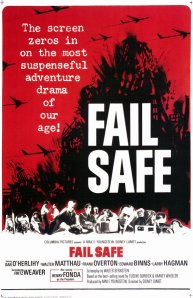
Great Films You Need To See – Fail Safe (1964)

This is my latest contribution to The Big Picture, the internationally-recognised magazine and website that offers an intelligent take on cinema, focussing on how film affects our lives. This piece about Sidney Lumet’s Cold War thriller Fail Safe was written as part of The Big Picture’s Lost Classics strand, although I am including it within my list of Great Films You Need To See.

No doubt frazzled by the Cold War running ever hotter, it’s perhaps not surprising audiences in 1964 preferred their nuclear scare movies to be in the mould of the scabrously satirical Dr Strangelove rather than the grimly portentous Fail Safe.

No film before or since has played out the nightmarish endgame of Mutually Assured Destruction to quite such a chilling and methodical degree

No film before or since has played out the nightmarish endgame of Mutually Assured Destruction to quite such a chilling and methodical degree

As the cold horror of what is unfolding dawns on America’s top brass, the President (played by Henry Fonda) engages in an increasingly desperate exchange with his Russian counterpart via telephone to find a way to stop the bombers from triggering World War III before it’s too late.

The tension builds as the President (Henry Fonda) and his interpreter (Larry Hagman) talk to the Russians in Fail Safe

The tension builds as the President (Henry Fonda) and his interpreter (Larry Hagman) talk to the Russians in Fail Safe

Director Sidney Lumet stages the film in a similar fashion to his 1957 debut 12 Angry Men. The drama plays out in several locations, each of them boiler rooms of fetid tension where the temperature is mercilessly cranked up to the point where a number of characters crack under the strain. Even Fonda’s President loses his cool as the terrible reality of what is happening sinks in.

By doing relatively little with the camera and refusing to pull away, Lumet is able to poison the atmosphere with a thickening dread; so much so that when Larry Hagman’s interpreter’s hands start to shake as he drinks a glass of water we question whether he’s acting or not.

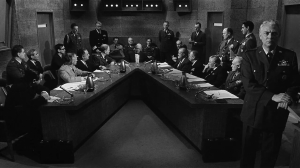
The pressure builds in the War Room in Fail Safe

The pressure builds in the War Room in Fail Safe

The only one who seems unphased is Walter Matthau’s coldly analytical civilian advisor Professor Groeteschele, who is seen at the start of the film at a dinner party calmly rationalising how 60 million deaths should be the highest price America is prepared to pay in a war. The ultimate utilitarian, Groeteschele sees the unfolding tragedy as a golden opportunity to wipe Russia off the map to ensure that American culture, whatever’s left of it, survives. Ironically, his uber-hawkish outlook shocks even the most senior military brass.

The film explores the duality we feel towards technology through the banks of dials, buttons and flashing lights at Strategic Air Command headquarters and the imposing screen displaying the whereabouts of military assets and targets across the world.

The detestable Professor Groeteschele (Walter Matthau) coldly rationalises nuclear war in Fail Safe

The detestable Professor Groeteschele (Walter Matthau) coldly rationalises nuclear war in Fail Safe

Implicit trust has been placed in the instruments, which General Bogan (Frank Overton) confidently states are so good “they can tell the difference between a whale breaking wind and a sub blowing its tanks”. However, it’s this same technology that betrays us by sending the ‘go code’ to the bombers. We are all of us Dr Frankensteins, Fail Safe implies, courting our own destruction through our insatiable hunger for ever more sophisticated technology (a concept more colourfully explored in the Terminator franchise).

Fail Safe concludes with a disclaimer courtesy of the Department of Defense and US Air Force that safeguards and controls are in place to ensure the film’s events can never come to pass. It’s unlikely that would have made anyone watching Fail Safe back in 1964 any more comfortable in their beds.

Great Films You Need To See – One Day In September (1999)

The greatest show on Earth proved to be the greatest showcase on Earth for a faction of radical Palestinian terrorists one fateful day in September during the 1972 Olympic Games in Munich.

Despite a few rough edges here and there, One Day In September is a powerful and absorbing experience that grips like a vice and refuses to let go until its shattering climax

Despite a few rough edges here and there, One Day In September is a powerful and absorbing experience that grips like a vice and refuses to let go until its shattering climax

Following the 1936 Berlin Olympics, which had been turned into a Nazi propaganda tool for the master race, and less than three decades after the end of the bloodiest war in human history, West Germany sought to find some sort of catharsis through the Munich Games and move on from its recent past by projecting a positive image of itself to the world.

One of the Black September terrorists who held Israeli athletes hostage in One Day In September

One of the Black September terrorists who held Israeli athletes hostage in One Day In September

The symbolism surrounding the event wasn’t lost on anyone – diabolical Nazi war crimes led to the foundation of a Jewish state following the war and now Israel was sending athletes to compete on German soil. Promoting itself as the Games of peace and brotherhood, security was intentionally lax within the athletes’ village, which meant it was easy for eight members of the Palestinian Black September organisation to make their assault and kidnap 11 Israeli athletes on 5 September 1972.

Kevin Macdonald’s gripping documentary recounts the awful chain of events that took place over the ensuing 21 hours, from the initial confusion over what was going on, through to the attempts at negotiation with the terrorists, the German authority’s botched ambush operation and the final, bloody firefight at Fürstenfeldbruck Air Base, which led to the massacre of all the hostages, a German police officer and five of the eight Black September members.

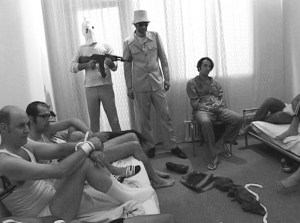
The bleak scene from within the Israeli athletes' apartment in One Day In September

The bleak scene from within the Israeli athletes’ apartment in One Day In September

Macdonald doesn’t do anything particularly radical with the format – the film is made up of archive footage, talking head interviews and digital reconstructions of the final confrontation – but through skilful editing he has you on the edge of your seat throughout.

The film’s major coup was in securing the first known interview with Jamal Al-Gashey, the only surviving member of the terrorist cell who, still in fear for his life from Israel’s national intelligence agency Mossad more than 25 years after the incident, appears on camera wearing a cap and sunglasses and with his face blurred.

The symbolism of an Israeli flag paraded on German soil at the 1972 Munich Olympics in One Day In September

The symbolism of an Israeli flag paraded on German soil at the 1972 Munich Olympics in One Day In September

Al-Gashey speaks to the mood of both his compatriots and the hostages during the crisis and clearly remains proud of what he achieved. Macdonald, however, possibly out of fear of losing his ace in the pack, makes little attempt to gain an understanding of precisely what led to his joining Black September and fails to put him on the spot to more fully explain his actions.

Macdonald has greater success in his other interviews, particularly Walther Tröger, Mayor of the Olympic Village, who was among the first to encounter the terrorists, and General Ulrich Wegener, who rather hangs himself by adopting a somewhat glib attitude towards the tragedy (he founded Germany’s counter-terrorist unit GSG 9 in the wake of the incident).

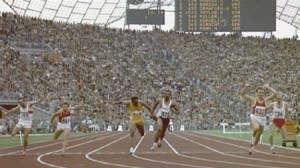
The 1972 Munich Olympics went on in spite of the tragedy unfolding in its back yard

The 1972 Munich Olympics went on in spite of the tragedy unfolding in its back yard

Indeed, the actions on the part of the German authorities seem clueless and Macdonald isn’t afraid to stack the blame on their shoulders. This hapless ineptitude was reinforced when tracksuit-wearing border guards with no experience of handling firearms were drafted in to retrieve the hostages at the athletes’ village, only to have the ill-conceived operation aborted at the last minute because their every move was being reported live on TV and could be seen by the terrorists.

Furthermore, the calamitous rescue attempt at the air base was given little or no chance of success when a group of German police officers waiting to ambush the terrorists voted at the last moment to abandon their mission, while snipers positioned at the air base had no way of communicating with each other.

ABC anchor Jim McKay, whose rolling news provides the commentary for One Day In September

ABC anchor Jim McKay, whose rolling news provides the commentary for One Day In September

ABC anchor Jim McKay, whose rolling news provides a sort of commentary for the film, gave the most fitting and sombre of epitaphs on hearing of the massacre when he said: “When I was a kid my father used to say ‘Our greatest hopes and our worst fears are seldom realized’. Our worst fears have been realized tonight. They have now said there were 11 hostages; two were killed in their rooms yesterday morning, nine were killed at the airport tonight. They’re all gone.”

It wasn’t just the German authorities who came in for flak; there was also anger that the International Olympic Committee decided to continue the Games in spite of the tragedy unfolding in its own back yard and only later bowed to intense international pressure to impose a suspension. The film also shows footage of athletes remarkably – and obscenely – sunning themselves just 200 yards away from where their fellow competitors were being held hostage.

The Olympic Games were forever changed following the tragic events in Munich in September 1972

The Olympic Games were forever changed following the tragic events in Munich in September 1972

It’s details such as this that set One Day In September apart and help to explain why the film won Best Documentary at the 2000 Academy Awards. As well as the exhaustive research that’s clearly gone in, Macdonald is also well served by Michael Douglas’ measured narration.

The film has come under fire, not least of which by the late Roger Ebert, for choosing to accompany a montage of pictures of the victims’ corpses with a rock score (specifically Deep Purple’s Child In Time). The scene would have worked better without music – the images speak for themselves – but in fairness this can probably be put down to the naive decision of a first-time filmmaker.

Despite a few rough edges here and there, One Day In September is a powerful and absorbing experience that grips like a vice and refuses to let go until its shattering climax.

Great Films You Need To See – Jacob’s Ladder (1990)

This is my latest contribution to The Big Picture, the internationally-recognised magazine and website that offers an intelligent take on cinema, focussing on how film affects our lives. This piece about Adrian Lyne’s psychological horror Jacob’s Ladder was written as part of The Big Picture’s Lost Classics strand, although I am including it within my list of Great Films You Need To See.

Psychological horror has long been the neglected offspring of a genre that too often falls back on lazy shocks, recycled storylines and dismembered body parts.

While its unfortunate protagonist is unable to separate reality from demonic hallucination, the unique and relentlessly creepy Jacob's Ladder can be viewed through a prism of nightmarish perceptions, all as valid as each other

While its unfortunate protagonist is unable to separate reality from demonic hallucination, the unique and relentlessly creepy Jacob’s Ladder can be viewed through a prism of nightmarish perceptions, all as valid as each other

Yet, it’s through this underused sub-genre that some of horror’s finest hours have emerged, not least of which the largely forgotten Jacob’s Ladder.

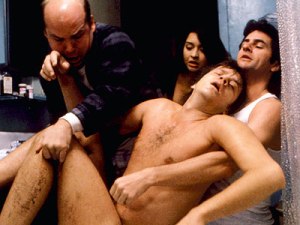
Jacob (Tim Robbins) fights for his life in Jacob's Ladder

Jacob (Tim Robbins) fights for his life in Jacob’s Ladder

Directed by Adrian Lyne, Jacob’s Ladder may seem like an odd fit in a filmography dominated by such libidinous titles as 9½ Weeks and Indecent Proposal, but makes more sense when you consider it followed his 1987 smash Fatal Attraction, a psychological horror in all but name that scared the shit out of men and riled feminists the world over.

Vietnam vet Jacob Singer’s (Tim Robbins) nightmares/flashbacks of a horrific incident during the war begin to bleed into his waking life when he experiences demonic visions that grow ever more disturbing and threatening. Jacob’s slippery grasp on reality is further corroded by his unwitting involvement in what appears to be a deadly military conspiracy seeking to silence him.

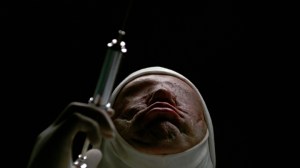
Just one of the nightmarish images in Jacob's Ladder

Just one of the nightmarish images in Jacob’s Ladder

Much like his tortured protagonist, Lyne never lets the viewer settle for more than a few minutes before taking a further step down the ladder towards hell. Best known at the time for supporting turns in Bull Durham and Cadillac Man (not forgetting Howard the Duck and Erik the Viking), Robbins brings a tragic innocence to the tortured Jacob, a psychologically scarred war vet who’s as terrified as he is confused by what he’s being forced to endure.

Jacob's (Tim Robbins) life falls apart in Jacob's Ladder

Jacob’s (Tim Robbins) life falls apart in Jacob’s Ladder

What makes Jacob’s visions more frightening is the plausibility in which Lyne presents them. One woman appears to have filed-down horns which only become apparent when her hat slips, while a car trying to run him down contains the violently shaking masked figure he glimpsed earlier at the back of a subway train. Cronenbergian body horror is also used to phantasmagorical effect at a party where Jacob’s girlfriend Jezebel (Elizabeth Peña) is seemingly violated by a grotesque demon; and the unnerving hospital scene when an incapacitated Jacob is confronted by doctors who really don’t seem to have his best interests at heart.

The angelic chiropractor Louis (Danny Aiello) in Jacob's Ladder

The angelic chiropractor Louis (Danny Aiello) in Jacob’s Ladder

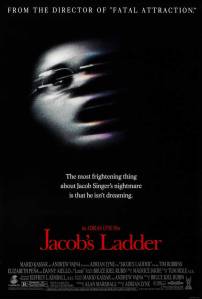
The film features a number of startling images, including a helicopter shot Oliver Stone would have been proud of and the haunting moment when a coin’s sudden movement spells doom for one character. Lyne’s inspirations for the film’s visual palette include the Oscar-winning 1962 short film An Occurrence at Owl Creek Bridge and the austere work of artist Francis Bacon (in particular the film’s poster which shows a ghostly Jacob seemingly trapped in an abyss).

Jacob's (Tim Robbins) war buddy Paul (Pruitt Taylor Vince) confides in Jacob's Ladder

Jacob’s (Tim Robbins) war buddy Paul (Pruitt Taylor Vince) confides in Jacob’s Ladder

Despite toning down Bruce Joel Rubin’s portentous script, the film is still cut through with Old Testament religious symbolism, from the title that refers to a chapter in Genesis in which the prophet Jacob dreams of a ladder ascending to heaven, to the overtly Biblical names (Jacob, Jezebel, his ex-wife Sarah, who in the Bible was Jacob’s grandmother, and son Gabe/Gabriel) and the angelic quality of Jacob’s chiropractor Louis (Danny Aiello).

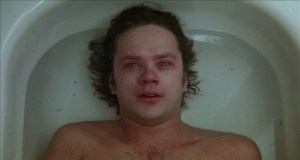
A nasty spot for Jacob (Tim Robbins) in Jacob's Ladder

A nasty spot for Jacob (Tim Robbins) in Jacob’s Ladder

Louis’ citation to Jacob of Christian philosopher Meister Eckhart about devils really being angels freeing a soul that isn’t ready to let go not only strikes at the heart of Jacob’s tortured psyche, but is also a breadcrumb left by Lyne that provides one explanation of the film’s wider context.

While its unfortunate protagonist is unable to separate reality from demonic hallucination, the unique and relentlessly creepy Jacob’s Ladder can be viewed through a prism of nightmarish perceptions, all as valid as each other.