Review – Lincoln

There’s a moment at the start of Lincoln when you fear Steven Spielberg isn’t going to be able to resist going all Amistad on us and clubbing you over the head with the film’s message.

Steven Spielberg's Lincoln

Steven Spielberg’s Lincoln

The scene is thus: following a brief prologue of Civil War carnage involving black and white soldiers (proving that everyone is equal on the battlefield), a black union soldier respectfully gibes the President about inequality. Two white unionists approach separately and in worshipful tones quote Lincoln’s Gettysburg Address (“Four score and seven years ago…”) back to him, but stumble over the final words, leaving it to the African-American trooper to complete the recital before rejoining his company.

On the face of it, this opening four minutes or so brings to mind the sort of heavy-handed approach Spielberg has so often been guilty of in his historical epics. Yet, delve a little deeper and it becomes apparent Tony Kushner’s script and Spielberg’s direction are very cleverly revealing two contrasting perceptions of Lincoln; on one side is the saintly Honest Abe figure common to school textbooks, on the other the crafty politician with a gift for oratory who nevertheless knows that deeds, not words are what’s needed.

Lincoln focuses tightly on the final four months of the Republican president’s life, centring on the politicking and increasingly frantic horse-trading that took place in the darkened corridors of power in early 1865 to secure passage through the House of Representatives of the crucial 13th Amendment to the US Constitution to formally abolish slavery.
Lincoln

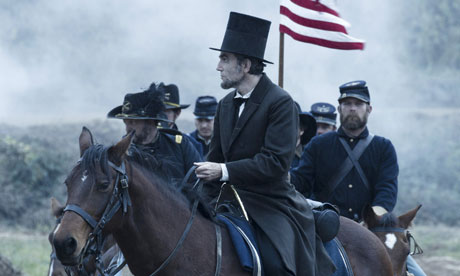
Honest Abe (Daniel Day-Lewis) mournfully surveys the battlefield in Lincoln

With the Civil War in its final death throes, time is of the essence for Lincoln, who is worried his 1863 Emancipation Proclamation decreeing that all slaves be freed will be thrown out by the courts once the war is over and the 13th Amendment defeated by the returning slave states of the south. Warned not to do it by those closest to him for fear of tarnishing his revered reputation, the President realises the opportunity could be lost and leans heavily on his colleagues to help him get the vote through.

Needing a two-thirds majority in the House, Lincoln and Secretary of State William Seward (David Straithairn) send lobbyists William Bilbo (James Spader), Robert Latham (John Hawkes) and Richard Schell (Tim Blake Nelson) out to procure the crucial votes of on-the-fence Democrats by any means necessary.

Tommy Lee Jones as fiery Republican Congessional leader Thaddeus Stevens in Lincoln

Tommy Lee Jones as fiery Republican Congressional leader Thaddeus Stevens in Lincoln

Three distinct threads run through the film – the war of words in the House between Democrats and Republican congressmen enjoying the sound of their own voice, the behind-the-scenes machinations, and the strain on Lincoln’s marriage to First Lady Mary Lincoln (Sally Field) – and it’s to Spielberg’s great credit that we never lose focus of any of them.

Kushner’s witty script is necessarily talky, and it pays not to lose attention, but the enormity of the stakes is always clear and the dialogue positively crackles in the hands of probably the greatest cast assembled for any Spielberg film to date.

Tommy Lee Jones, in his best role for years, has a ball as Republican Congressional leader Thaddeus Stevens, a radical anti-slavery advocate who can’t stop himself insulting Democratic leaders for sport, but knows when to keep his cards close to his chest when the need arises.

There’s a levity to the efforts of the lobbyists to curry the Democrats’ favour, although the grave seriousness of their task is not lost, and the vote itself is expertly handled by Spielberg, who ratchets up the tension like the old pro he is.

Daniel Day Lewis as Honest Abe in Lincoln

Daniel Day Lewis as Honest Abe in Lincoln

The ideologically led politics of Lincoln serves as a timely parallel to the entrenched state of today’s American party political system where petty in-fighting and belligerence can often push progress to the sidelines.

It seems appropriate that America’s most beloved President is played by arguably today’s greatest living actor and Daniel Day-Lewis is stupendous in the title role. He plays Lincoln as a kindly uncle who chooses to win people over with an amusing anecdote or a subtle observation and, ever the politician, engages in a lot of hand holding.

First Lady Mary Lincoln (Sally Field) in Lincoln

First Lady Mary Lincoln (Sally Field) in Lincoln

Day-Lewis makes it look effortless, finding a pause here or a change of tone there to give what will probably become the definitive take on this most adored of presidents. It’s a masterclass in the power of knowing when to underplay a role, to the extent that when some of the cast look in awe of the President you wonder whether it’s actually Day-Lewis they are marvelling at.

We see a more vulnerable Lincoln when he shares private moments with Mary, who has fallen apart following the death of their son and begs her husband to stop their other sibling Robert (Joseph Gordon-Levitt) from joining the war effort. Their pained arguments are powerfully wrought, and Field is excellent as a figure who, like Abe, must compartmentalise personal grief for the good of the country.

Despite this being Spielberg’s most mature and discliplined work to date, he still can’t help himself on occasion, whether it be the rather obvious symbolism of a ticking clock and Lincoln glancing at his watch to show how time is running out, or the saccharine moment when the President walks to a window bathed in light upon hearing the vote has been passed.

Bringing to life a significant moment in the turbulent history of the world’s only superpower, who’d have thought a film where little happens for long periods could be this engrossing?

Review – Django Unchained

For a writer and director who’s the unashamed king of the movie homage there really isn’t anyone else out there making films quite like Quentin Tarantino.

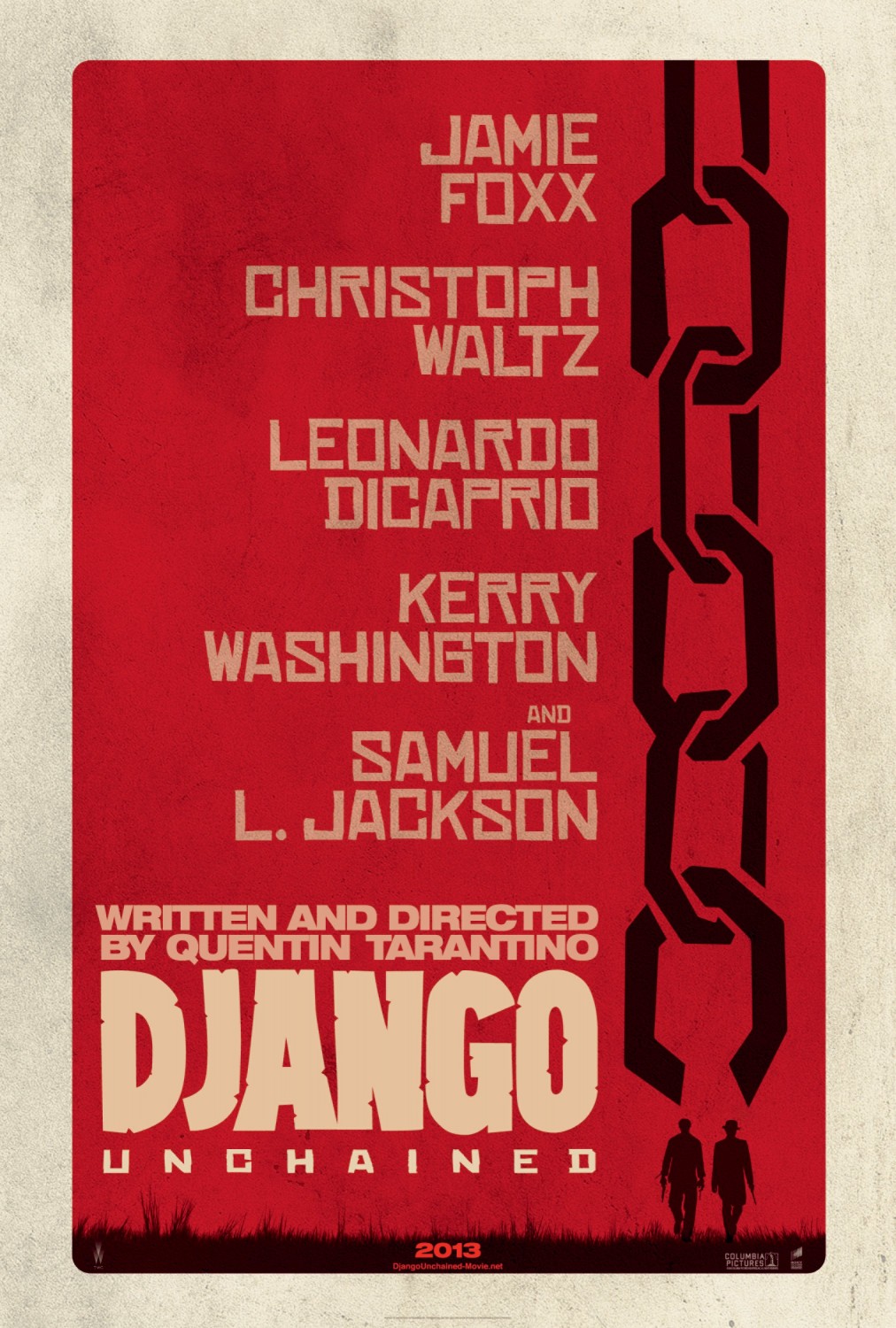
Quentin Tarantino's Django Unchained

Quentin Tarantino’s Django Unchained – arguably his most outrageous film yet

Django Unchained, Tarantino’s eighth feature is arguably his most outrageous yet and serves up a similar stylistic mash-up as his previous film Inglourious Basterds.

In that movie, he somehow got away with making a World War Two spaghetti western (complete with Ennio Morricone music) where a squadron of Jewish-American soldiers give the Nazis a taste of their own medicine.

Here, Tarantino uses a similar mould for his most fully realised and satisfying film since Jackie Brown, jettisoning the episodic structure that has been so familiar throughout his filmography.

Django Unchained is a western with extra spaghetti sauce and features a blaxploitation hero even cooler than Shaft. From the title, which directly references the 1966 spaghetti western Django starring Franco Nero (who makes a cameo here), to the red-painted opening credits, music, ultra violence and theme of revenge (common to virtually all of Tarantino’s work), the film sends the homage-o-meter up to 11.

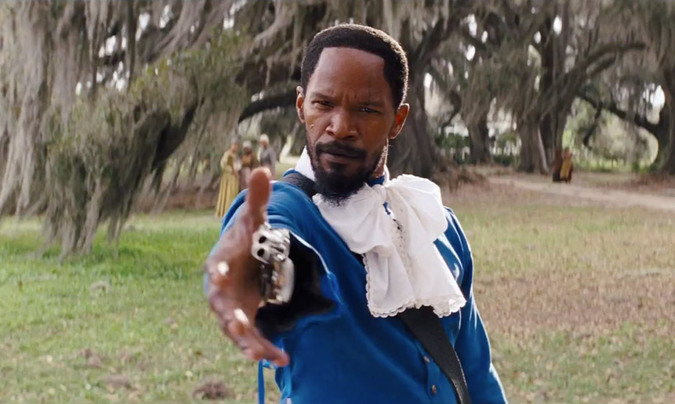
Dr King Schultz (Christoph Waltz) shows Django (Jamie Foxx) the way of the gun in Django Unchained

Dr King Schultz (Christoph Waltz) shows Django (Jamie Foxx) the way of the gun in Django Unchained

It’s also the writer-director’s most overtly political work to date, addressing the still thorny subject of slavery in a frank and often brutal way. Our hero is Django (Jamie Foxx), a slave in 1858 Texas who wins his freedom thanks to the intervention of Christoph Waltz’s German dentist-turned bounty hunter Dr King Schultz (it can’t be a coincidence that a character who abhors slavery shares his name with Dr Martin Luther King).

The sadistic Calvin Candie (Leonardo DiCaprio) in Django Unchained

The sadistic Calvin Candie (Leonardo DiCaprio) in Django Unchained

Schultz takes Django under his wing and trains him in the art of bounty hunting (“like slavery, it’s a flesh for cash business”) and, in return for assisting him, Schultz agrees to help Django win the freedom of his wife, Broomhilda (Kerry Washington), a slave forced to work at the perversely named Candyland, owned by the despicable sadist and racial supremacist Calvin Candie (Leonardo DiCaprio, sporting horribly blackened teeth).

Tarantino has never been one to shy away from throwing in the kitchen sink when it comes to on-screen violence. It’s a facet of his work that has attracted considerable consternation from critics and commentators throughout his career, but while he no doubt takes great pleasure in seeing how far he can go he also never lets you forget that violence and bullets hurt – a lot. When we see slaves being killed in the most vicious of ways at the hands of Candie, we’re left in no uncertain terms that this is no laughing matter.

The deplorable house slave Stephen (Samuel L Jackson) in Django Unchained

The deplorable house slave Stephen (Samuel L Jackson) in Django Unchained

That being said, just as the Nazis have it coming in Inglourious Basterds, there’s a certain gleeful satisfaction in seeing a black man administer justice of the most merciless kind to the racist white trash who have profited from and exploited the slave trade.

In the film’s most amusing scene , a group of proto-Ku Klux Klansmen led by Big Daddy (Don Johnson) go in search of Schultz and Django, only to bicker among themselves because they can’t see properly out of their white hoods. It’s a nicely observed comment on the absurdity and cowardice of racism.

Tarantino also nods to classic John Ford westerns, framing his heroes against a series of expansive vistas, beautifully filmed by cinematographer Robert Richardson, and conjures up a number of arresting images, most strikingly when blood splattters over pure white cotton on a plantation.

Quentin Tarantino directs and unfortunately stars in Django Unchained

Quentin Tarantino directs and unfortunately stars in Django Unchained

As verbose as Tarantino’s scripts are, his rich dialogue is a gift for the superlative cast he’s assembled here. Waltz almost steals the show as the kind-but-deadly Schultz, as memorable a screen presence as his diabolical Hans Landa from Inglourious Basterds.

Foxx does a nice line in man-with-no-name quiet intensity (can you imagine what Will Smith, Tarantino’s original choice, would have done with the role?), while DiCaprio has a whale of a time tearing it up as the dapper southern aristocrat out of control in his own private fiefdom.

The colourfully dressed Django (Jamie Foxx) kicks ass and takes names in Django Unchained

The colourfully dressed Django (Jamie Foxx) kicks ass and takes names in Django Unchained

However, all pale in comparison to the quite brilliant Samuel L Jackson as Stephen, Candie’s house slave who’s so servile he makes Uncle Tom look like a Black Panther. Hidden behind that frail, shuffling walk lies a truly abominable human being who, when he isn’t perched on Candie’s shoulder like a parrot repeating his every line, is punishing his fellow slaves and conspiring against them to get in his white master’s good books. It’s a very disturbing performance that only Tarantino and Jackson could have dreamt up.

What Tarantino still has some trouble with, however, is acting and he’s truly terrible as an Australian (!) slave driver. He can’t even resist affording himself the film’s most colourful death. This entire section is the only weak spot in the whole movie. There’s a natural end point before this, but Tarantino (who has previously admitted to not showing enough discipline when it comes to a script) gives himself another half an hour before he finally wraps things up, all be it in a pleasingly brutal way.

The thing you have to admire about Tarantino is that he’s a rock’n’roll director in the truest sense, a film geek who wants to share his love of cinema’s outer margins and with Django Unchained he hits it out of the park.

Review – Zero Dark Thirty

As politicians lapped up the credit and thousands of people across America took to the streets to revel in the perceived victory, the ones who were truly responsible for the capture and killing of Osama Bin Laden remained behind the scenes.

Kathyryn Bigelow's Zero Dark Thirty

Kathyryn Bigelow’s “complex, challenging and totally gripping” Zero Dark Thirty

Their moment has come in director Kathryn Bigelow and screenwriter Mark Boal’s complex, challenging and totally gripping Zero Dark Thirty, the follow up to their Oscar-winning Iraq war drama The Hurt Locker.

Those expecting or hoping for a flag-waving, ultra-patriotic exercise in easy-to-swallow triumphalism will need to look elsewhere. What we get is a sobering, cerebral and, most importantly, apolitical account of the tireless work that went into tracking down America’s public enemy number one by a small band of Central Intelligence Agency and military personnel.

Zero Dark Thirty is a classic procedural in the mould of All The President’s Men and TV’s The Wire, with the crime here being the 9/11 attacks. Bigelow’s first masterstroke is not to show us those infamous images (they’ve been scorched into our psyches already); instead the film opens with a chilling montage of overlapping telephone calls made by people trapped in the Twin Towers played over a black screen.

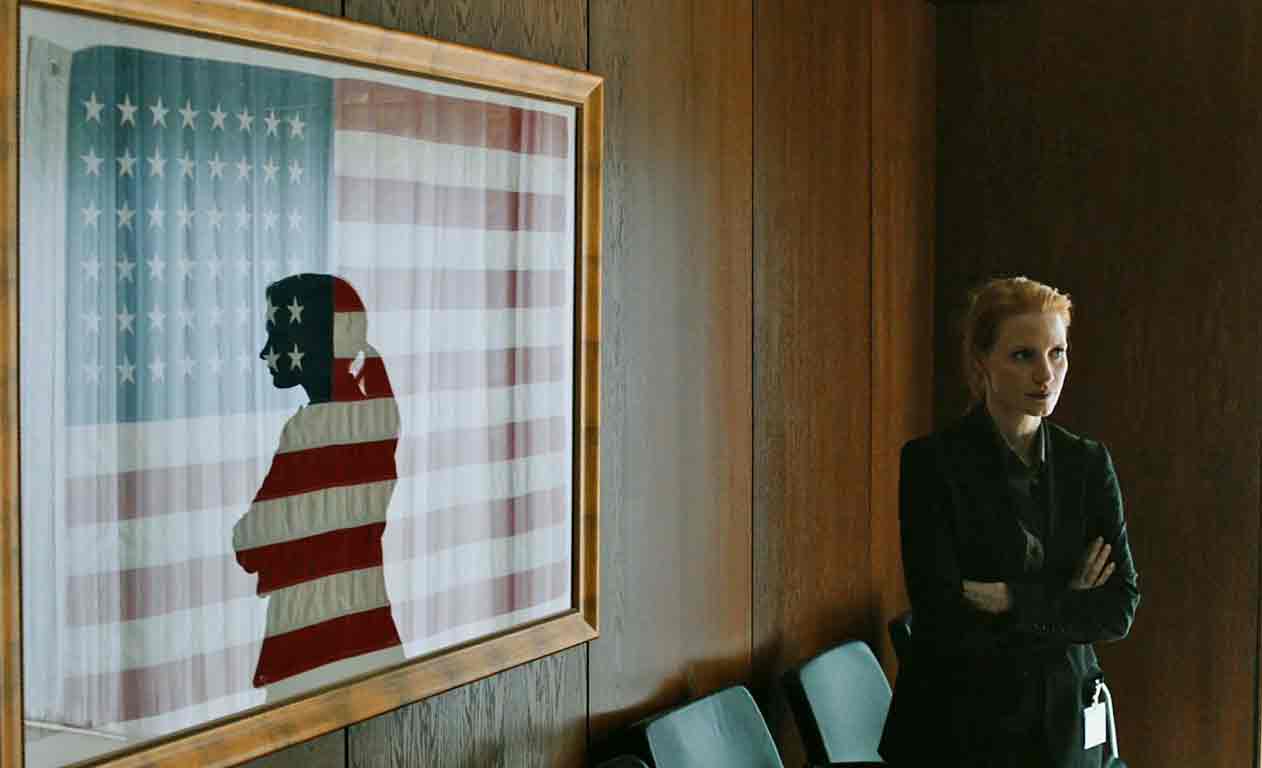
CIA officer Maya (Jessica Chastain) leads the decade-long hunt for Osama Bin Laden in Zero Dark Thirty

CIA officer Maya (Jessica Chastain) leads the decade-long hunt for Osama Bin Laden in Zero Dark Thirty

The film then jarringly throws us into an undisclosed CIA site in Pakistan where new girl Maya (Jessica Chastain) witnesses ‘enhanced interrogation techniques’ (read: torture)  up-close for the first time courtesy of fellow operative Dan (Jason Clarke), a chameleon who looks as comforable in a shirt and tie as he does with his hands around someone’s neck.

Dan wants actionable intelligence and makes good on a repeated threat to his prisoner that “when you lie to me, I hurt you” by subjecting him to waterboarding and other forms of torture. Initially distressed, Maya is soon employing similiar tactics in her own interrogations.

CIA operative Dan (Jason Clarke) in Zero Dark Thirty

CIA operative Dan (Jason Clarke) in Zero Dark Thirty

Maya is a blank canvas, with no back story, personal life or friends, merely an all-consuming, evangelical zeal to find Bin Laden by any means necessary. She represents a post-9/11 America whose moral compass has been eroded by a willingness to justify increasingly unethical behaviour.

The only connections she has are with fellow CIA officers, in particular Jessica (the excellent Jennifer Ehle), an older, more wily operative who talks of baking a cake for a potential informant and having him killed if he doesn’t prove useful in the same conversation.

As coldly analytical as Maya and her colleagues are towards contacts or detainees, seeing them as nothing more than assets to drive forward the investigation, its constant dead-ends, labyrinthine complexity and mounting casualties breeds a frustrated thirst for vengeance. At her lowest ebb, a grieving Maya coldly informs a colleague: “I’m going to smoke everybody involved in this op, and then I’m going to kill Bin Laden.”

The Seal Team Six raid Bin Laden's compound in Zero Dark Thirty

The Seal Team Six raid Bin Laden’s compound in Zero Dark Thirty

In the hands of a lesser director, Zero Dark Thirty could have been reduced to a tub-thumping embarrasment, but Bigelow is too smart to poison Boal’s painstakingly researched script like that and instead maintains a measured detachment to the material.

The Navy Seal raid on the compound believed to house Bin Laden (only Maya is prepared to stick her neck out to categorically state he is in there) is a case in point. It could so easily have turned into a hyper-stylised action set piece akin to a video game, but in Bigelow’s hands Zero Dark Thirty‘s final act has a documentary feel, all be it a superbly filmed one (much of it shot using night vision lenses) that has a taut, nerve-jangling authenticity to it.

CIA senior officer George (Mark Strong) looks on nervously in Zero Dark Thirty

CIA senior officer George (Mark Strong) looks on nervously in Zero Dark Thirty

Bigelow is clearly fascinated with the dehumanising effect the so-called ‘War on Terror’ has on those fighting on the frontlines. In The Hurt Locker it was a bomb disposal expert; here it’s Maya whose soul is gradually eaten away by the things she sees and does.

During one scene Maya, angry at a colleague’s decision not to deploy a team to track down a key target, realises her bad cop approach isn’t working and gives him a beer to sweeten him up. It’s reminiscent of an earlier moment when she observes Dan using the same tactic to get a tortured detainee onside and serves as a subtle allusion to the lengths she’s prepared to go.

The fact that politicians and pundits on all sides have come out against the film means Bigelow and Boal have done their job. In one scene, Maya and Jessica watch impassively as President Obama states on TV that “America doesn’t torture” before carrying on their conversation. Just as with the rest of the film, Bigelow leaves it to us to read into it what we will.

The most explosive charge levelled at the filmmakers has come from those attacking Zero Dark Thirty for supposedly condoning torture (in many cases before they’ve even watched the film). Hard to watch they may be, but to omit these scenes from a film as important as this because they make politicians uncomfortable would have been to disregard a key chapter and inexorably damage the story Bigelow and Boal are trying to tell.

A fantastic cast is led by the compulsive Chastain, who knows exactly what to give in every scene. It’s a haunting performance, one appropriate to a film that, like Robert Redford at the end of The Candidate asks “what do we do now?”.

Review – Les Misérables

The most exhilarating rollercoasters are the ones that feel like they’re about to go off the rails at any second and come crashing to the ground.

Les Misérables movie poster

Tom Hooper’s Les Misérables – “an epic spectacle on such a grandiose scale as to leave you exhausted”

An experience not too dissimilar is had sitting through Tom Hooper’s unashamedly grandiose and wholly cinematic version of the enormously popular and reverred stage musical (itself based on Victor Hugo’s 1862 novel) that begins in 1815 and culminates in the 1832 June rebellion in Paris.

Hooper certainly had his work cut out for him, if for no other reason than to deal with the pressure of meeting the heady expectations of countless thousands of theatregoers who have adored the musical since its premiere in 1985.

Despite working with a far larger canvas than he’s previously been used after The Damned United and The King’s Speech, Hooper has taken the decision not to play safe with the material and to go for it instead. It’s a brave approach and one that is vindicated throughout the film’s 158 engrossing minutes.

From the first scene, the camera (with the assistance of CGI) emerges from the sea and glides over a storm-ravaged ship before coming to rest (momentarily) on the soon-to-be ex-convict Jean Valjean (Hugh Jackman), part of a chain gang being forced to pull the vessel into dry dock. The camera then propels away to prison guard-turned policeman Javert (Russell Crowe), who makes it his life’s mission to hunt down Valjean after the former prisoner breaks parole.

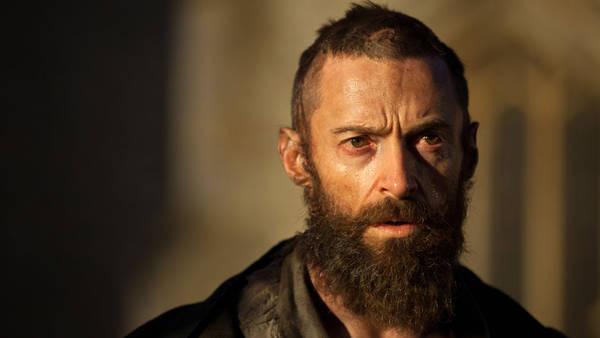
Jean Valjean (Hugh Jackman) searches for redemption in Les Misérables

Jean Valjean (Hugh Jackman) searches for redemption in Les Misérables

These first moments set the tone for what is to follow. This is no staid or stagey adaptation; Hooper wants you to know you’re watching a movie.

Just as the director seems to love attaching his camera to a bungy cord, so too does he delight in using that other device not available to a theatre production – the close up. When a scene calls for a confrontation or a big display of emotion, Hooper gets in tight, refusing to let go until every last drop of despair, grief, elation or anger is wrung out.

The angelic Fantine (Anne Hathaway) in Les Misérables

The angelic Fantine (Anne Hathaway) in Les Misérables

This is most affectingly handled in the scenes with factory worker Fantine (Anne Hathaway), who’s thrown on the street after she’s discovered sending money to her illegitimate daughter Cosette and desperately turns to prostitution to support her child. As Hathaway sings I Dreamed A Dream, Hooper locks the camera in close on her anguished, emaciated face in one continuous, bravura take.

The centrepiece of the film, it’s Hathaway’s Oscar-bait moment and she nails it. She gives it absolutely everything and delivers a shattering, show-stopping performance that runs the gamut from quiet grief to dead-eyed resignation that breaks the heart. If her delivery of the line “Life has killed the dream I dreamed” doesn’t have you welling up, nothing will.

There’s often a dishonesty in musicals as the vocals we hear are actually recorded in post-production. This may result in a cleaner sound, but the performances can lose their authenticity. Another brave move Hooper made was to have his cast sing  live on set, a decision that pays off handsomely and helps to draw out raw and believable turns from his fantastic ensemble. When the cast perform Do You Hear The People Sing?, in this instance you really can.

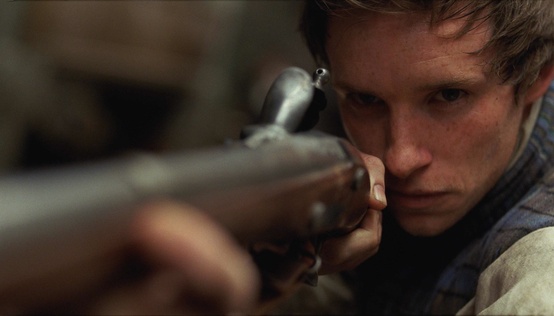
Idealistic revolutionary Marius (Eddie Redmayne) in Les Misérables

Idealistic revolutionary Marius (Eddie Redmayne) in Les Misérables

Previously best known for looking angry and chewing on a cigar as Wolverine, Jackman gives the performance of a lifetime as Valjean, who takes Cosette (Amanda Seyfried) into his care away from the unscrupulous Thénardiers (Sacha Baron Cohen and Helena Bonham Carter) and raises her as his own as a promise to Fantine – an act borne out of kindness and a quest for redemption.

Jackman’s experience in musical theatre is brought to bear, most prominently during his hugely impressive solo numbers Valjean’s Soliloquy, Bring Him Home and Suddenly. He’s matched by the brilliant Hathaway, whose selfless, tragic Fantine is so angelic as to give Mother Teresa a run for her money.

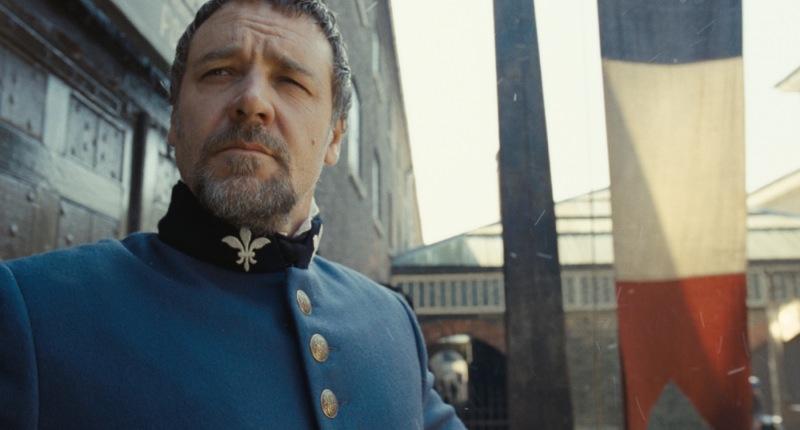
Obsessive lawman Javert (Russell Crowe) in Les Misérables

Obsessive lawman Javert (Russell Crowe) in Les Misérables

Equally impressive is Eddie Redmayne in what is sure to be a star-making turn as Marius, the idealistic student revolutionary who turns his back on his privileged upbringing to lead the rebellion, falling for Cosette in the process. Redmayne brings an intensity to the role that has you rooting for him and his rendition of the sorrowful Empty Chairs at Empty Tables is spine-tingling.

Crowe doesn’t have the singing chops of the others and it shows. There’s no question he gives it his all as the devoutly law-upholding Javert, but the role makes demands on him that he is unable to meet.

Hooper goes to town with the lighter moments involving the Thénardiers and Cohen’s and Carter’s outrageously colourful performances nicely counterpoint all that tragedy and suffering.

Special mention must go to Melanie Ann Oliver’s and Chris Dickens’ superb editing. Despite being over two-and-a-half hours, it moves along at a cracking pace, with the musical numbers bleeding into each other and cut in such a way as to leave you breathless.

Les Misérables at times almost overwhelms itself with its own bombasity, but Hooper somehow keeps the show on the road and delivers an epic spectacle on such a grandiose scale as to leave you exhausted. This is one rollercoaster ride you won’t want to get off.

Bravo!

Review – Safety Not Guaranteed

Looking to fill a blank space in the September 1997 edition of Backwoods Home Magazine, employee John Silveira wrote a pithy classified ad as a joke.

Safety Not Guaranteed

Safety Not Guaranteed – “there’s enough heart here to earn a smile come the closing credits”

The ad stated: “Wanted: Somebody to go back in time with me. This is not a joke. P.O. Box 91 Ocean View, WA 99393. You’ll get paid after we get back. Must bring your own weapons. Safety not guaranteed. I have only done this once before”.

Little did Silveira know that his throwaway paragraph would prove the inspiration for the low-budget Safety Not Guaranteed, a comedy-drama equal parts whimsical and melancholic from the mumblecore stable of American independents.

Disconnected and disillusioned Darius (Aubrey Plaza) interns at a Seattle magazine and volunteers with fellow staffer Arnau (Karan Soni) to assist writer Jeff (Jake Johnson) in tracking down the ad’s author in a sleepy seaside town. This turns out to be Kenneth (mumblecore alumnus Mark Duplass), an eccentric and paranoid supermarket employee who deals in conspiracy theories and is convinced secret agents are out to get him.

She poses as an applicant with her own reasons to want to travel back in time and wins the trust of the slightly obsessed, but kind-hearted loner, who sees in Darius a kindred spirit and someone who’s not afraid “to stare fear and danger in the eye and say ‘yes'”.

Darius at first indulges the child-like Kenneth’s plan to build a time machine, believing it to be nothing more than a fantasy, but as they spend more time together she finds herself increasingly attracted to the fellow misfit and starts to wonder if what he’s claiming is actually the real deal.

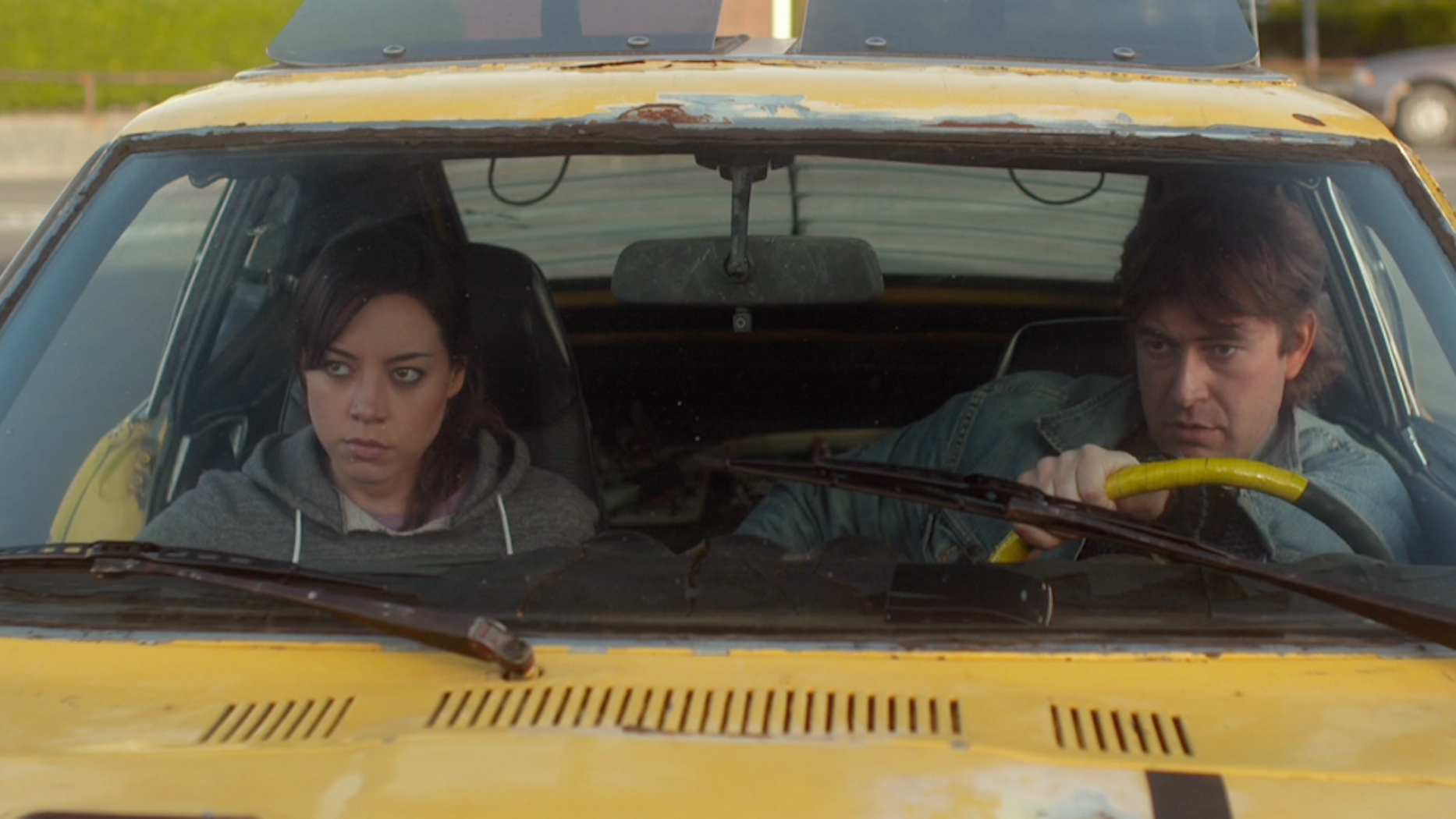
Darius (Aubrey Plaza) and Kenneth (Mark Duplass) in Safety Not Guaranteed

Darius (Aubrey Plaza) and Kenneth (Mark Duplass) in Safety Not Guaranteed

Safety Not Guaranteed brings to mind the offbeat 1980 film Somewhere In Time, in which Christopher Reeve’s writer becomes so obsessed with a picture of an actress (played by Jane Seymour) that he travels back in time to 1912 to be with her.

Memory, in particular the desire to recapture and revisit a specific moment in time, is a prominent motif throughout the film. Darius, who has resigned herself to simply “expect the worst and try not to get my hopes up”, would rather return to when life was easier and made more sense.

According to Kenneth, the whole point of building his time machine is to prevent a tragic event from occurring, although as he lets slip to Darius, it’s actually more “about a time and a place” when he believes he was happiest.

Darius (Aubrey Plaza), Arnau (Karan Soni) and Jeff (Jake Johnson) try to track down the mysterious author of an unconventional ad in Safety Not Guaranteed

Darius (Aubrey Plaza), Arnau (Karan Soni) and Jeff (Jake Johnson) try to track down the mysterious author of an unconventional ad in Safety Not Guaranteed

The melancholic yearning for younger, less complicated days is also present in the character of Jeff, who uses the assignment to look up his first love, whom he has reminisced about and wondered ‘what if?’ for years. He also urges Arnau not to waste his youth and, in scenes reminiscent of Roger Dodger prises the young intern away from his laptop to introduce him to the world of girls.

Director Colin Trevorrow gives the film a lightness of touch that dilutes the sadness of Derek Connolly’s script. Duplass, who has made a career out of directing inward-looking adults with arrested development excels as Kenneth, bringing the right mix of oddball innocence to the role.

Plaza (from TV’s Parks and Recreation) has the face-slapped-with-a-wet-fish look down to a tee, but finds an endearing sweetness in her scenes with Duplass. Indeed, the moments when the two are training for their ‘mission’ are the highlights of the film.

Whether you buy the ending largely depends on how invested you are in the characters. Trevorrow for one tries his best to sell it, as do the cast, and while it doesn’t entirely convince there’s enough heart here to earn a smile come the closing credits.