Four Frames – Mulholland Drive (2001)
This is my latest contribution to The Big Picture, the internationally recognised website that shows film in a wider context. Throughout March, The Big Picture is running a series of articles on ‘dreams’. I argue as much in this piece on David Lynch’s Mulholland Drive as part of the Four Frames section, wherein the importance of four significant shots are discussed.
David Lynch’s films have always existed in their own Red Room, somewhere between surreal reality and unbridled nightmare.
The chorus for Roy Orbison’s In Dreams, lipsyched so memorably by Dean Stockwell in Lynch’s Blue Velvet, are an even more suitable fit for the noirish themes of murderous obsession, unrequited love and broken dreams (both literally and figuratively) that permeate his 2001 masterpiece Mulholland Drive:
In dreams I walk with you
In dreams I talk to you
In dreams you’re mine all the time
We’re together in dreams, in dreams
While critics continue to interpret the director’s intentions, the evidence to support the theory that much of Mulholland Drive is a long, unspooling dream taking place in the emotionally damaged mind of ‘Betty’ (Naomi Watts, giving a superb breakout performance) is tangible.
The film opens with a trippy jitterbug sequence which concludes with a smiling and happy Betty bathed in the spotlight before cutting to a woozy POV shot of a bed that dissolves to black – suggesting what follows may not be entirely reliable.

The noir-heavy framing device of Mulholland Drive centres on Betty, an aspiring actress who arrives in Hollywood and encounters an amnesic woman (Laura Harring) hiding in her aunt’s apartment. As they draw closer while exploring the mystery surrounding the car accident ‘Rita’ was involved in, the story widens its scope to involve director Adam Kesher (Justin Theroux) being pressured by nefarious mobsters to cast actress Camilla Rhodes in his next movie. After discovering a dead woman in an apartment belonging to ‘Diane Selwyn’, a name Rita remembered earlier, the two are drawn to the enigmatic Club Silencio and discover a mysterious blue box, the contents of which can be unlocked with a key in Rita’s possession.

Clues that what we are watching is not real are sprinkled throughout. Betty’s exaggerated mannerisms early on (a shot of her with arms crossed behind her head is especially posed) and ‘golly gosh’ dialogue smack of artifice, while the overarching plot could be lifted straight from a 1950s B-movie (alongside the various other nods to the period, such as the jitterbug dancing, a shot of Sunset Boulevard and the fact Rita names herself after a poster of Rita Heyworth).
Furthermore, an audition scene in which the naive and sweet Betty is able to completely dominate the room by transforming herself into a sexually charged seductress seemingly comes out of nowhere and lends added weight to the suggestion she is employing dream logic.

There are numerous dialogue cues too, such as when Betty says to Rita “we can pretend to be someone else” or when Betty calls Diane Selwyn’s apartment and suggests to Rita: “It’s strange to be calling yourself.”
Likewise, just moments after the blue box is opened, jettisoning us out of the dream and into the real world, the sinister Cowboy (Monty Montgomery), seen earlier threatening Kesher, says “hey pretty girl, time to wake up” to Betty/Diane as she lies broken and bereft in the same bed we saw her in at the start of the film.
The numerous narrative threads that are seemingly unrelated at first interlock, whether it be the real identity of Camilla Rhodes or the episode early on involving a man who comes to a Winkies diner (a key location of the movie) to see whether a nightmare he’s experienced about meeting a terrifying black figure will occur in real life.

Lynch is a master of using light and darkness to amplify the pervasive sense of dread that lingers on the periphery of each frame. The aforementioned scene involving the pale-faced Cowboy and Kesher is lent extra peril by just how calm he is in his demeanour and the fact he won’t tolerate the “smart alec” behaviour of the director.
The use of sound and music, as in all of the director’s work from his queasy debut feature Eraserhead (1977) is just as powerful in its ability to move and unnerve, none more so than during the Club Silencio sequence when Rebekah Del Rio performs her Spanish version of Roy Orbison’s Crying to spine-tingling and surreal effect. Likewise, Angelo Badalamenti’s haunting and ethereal score further muddies the waters between reality and dreamscape.
Like many of Lynch’s films, it has only grown in stature, so much so that it topped the BBC’s list of greatest 21st century films and was one of only two films from this millennium to make it onto Sight and Sound’s most recent poll of the greatest films of all time.
In dreams Mulholland Drive walks with us and talks to us, rewarding and beguiling us with each subsequent viewing.




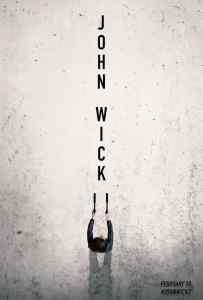 Its no-nonsense approach, flab-free economy and sense of its own ridiculousness singled out Chad Stahelski and David Leitch’s visually arresting original. In keeping with the unwritten rule of movie sequels, Chaper 2 amps up its predecessor’s unique selling points and expands the focus of the world it created.
 Picking up shortly after the events of the first film, assassin John Wick (Reeves) is trying to return to the retirement he had been pulled out from following the murder by Russian mobsters of his puppy, a gift from his terminally ill wife.
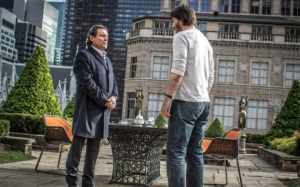 The celebrated night club shoot-em-up from the first film gets a fresh coat of paint here as Wick goes to work on a gamut of gun-wielding goons at an elaborately staged concert. Refreshingly for a film of this ilk, while there’s no denying Wick’s superhuman ability to wipe out countless red shirts, the impact of each blow he receives gradually wears him down to the extent that, come the end, he’s virtually staggering to get away, his face cut to ribbons.
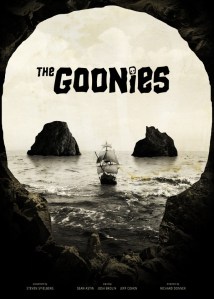 The Goonies was, in writer Chris Columbus’ words “Indiana Jones for kids”, a movie that not only stars youngsters, but is also fundamentally about them – about the scrapes that young friends get into before the complications of adult life get in the way.
 The term ‘Spielbergian’ was coined to describe a certain type of popcorn-friendly feature and Richard Donner’s The Goonies (1985) perfectly fits the mould. Executive produced (and co-directed according to some) by the bearded one, the film is fantastical, fun and acutely sentimental in equal measure.
 Donner encouraged improvisation on set, which perhaps inevitably led to the excited young actors (some of whom like Astin and Brolin were starring in their first feature) speaking over each other in an effort to get the last line in. Although subsequently defended by a number of the cast, it often leads to scenes becoming cacophonous as dialogue gets drowned out by screams and shouts.
 Less successful are the interactions between the Goonies and the dastardly Fratelli clan. Their initial encounter in a run down old restaurant (the starting point for the treasure quest) is clumsily handled and the film can’t seem to decide just how threatening to make its family of criminals.
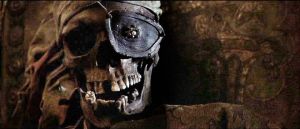 Thrown into the mix is the character of Sloth (John Matuszak), the horribly disfigured brother of Davi and Pantoliano’s Fratellis, who is chained away and later befriends Chunk. Largely ignoring the darkly disturbing aspects surrounding such a tragic character who only wants to be loved, the film instead plays Sloth for light-hearted fun, even going so far as to throw in a Superman gag (a nod to Donner’s 1978 big screen take on the Man of Steel).
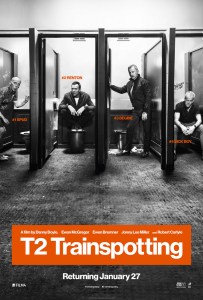 What we get instead from this sequel to 1996’s kinetic Trainspotting is a contemplative look through the rear view mirror of lives beset by regret, anger, inertia and a deep frustration at what could have been.
 In one of the film’s numerous sly nods to Trainspotting, it picks up just as the original did with Mark running, except this time it’s not from security guards, but rather on a treadmill. Boyle flashes between this and the end of the first film with Mark’s defiant walk across Waterloo bridge, not only to act as a literal bridge between the two films but also to underscore the passing of time.
 It’s to John Hodge’s credit as writer and Miller’s performance that we are kept guessing as to Sick Boy’s true intentions towards his old friend. Whilst there is undoubted anger and jealousy, the brotherhood and joy the character also exhibits following Mark’s return feels just as genuine.
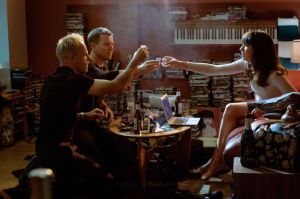 A terrific cast, which sees the return of several familiar faces from the original, is topped by a moving turn by Bremner as Spud. Blessed with a face that exudes so much with a single look, Bremner injects a growing defiance into the most fragile of the central leads. Mark’s return acts as a reawakening for Spud, who’s told by his friend to channel his addictive energy away drugs into something more creative and fulfilling – the results of which become the film’s beating heart and key source of nostalgia.
 That said, the film (and Edinburgh especially) looks stunning and while the needle-drop soundtrack (a big part of the original film’s cultural impact) may not be quite as memorable this time around, it’s in keeping with the tone (Underworld’s Slow Slippy in particular).
 three rows back