Review – Elysium

It’s ‘The Bourne Space Station’ as Matt Damon’s lowly factory worker tries to heal the world with the aid of a big computer game gun in Neill Blomkamp’s long-awaited follow-up to District 9.
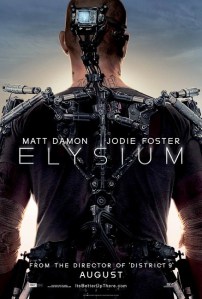
Elysium Poster

Far from engendering a state of perfect happiness, Elysium is a real let down after the promise shown by Blomkamp in District 9

Made for a song compared to today’s mega-budget tent-poles, 2009’s District 9, wherein a ship containing insect-like aliens arrives above Johannesburg in South Africa, seemed to come out of nowhere and announced the presence of a major new talent in sci-fi filmmaking. A major strength of the film is its social themes of racism, segregation, illegal immigration and corruption, all of which carry a greater symbolism when considering the South African roots of the film and its writer-director.

The overpopulated ruins of a future Los Angeles in Elysium

The overpopulated ruins of a future Los Angeles in Elysium

Although handed a much heftier budget this time round, Blomkamp retains the social commentary in his script for Elysium, exploring as it does some of the same issues as District 9, while also touching on such pressing contemporary concerns as universal health care, class divide and the resentment felt towards the one percent-ers.

That it does so in such an unengaging and disappointing fashion, therefore, is a real shame for a film that promises much but, in the end, delivers little.

The unhinged mercenary Kruger (Sharlto Copley) in Elysium

The unhinged mercenary Kruger (Sharlto Copley) in Elysium

Damon plays ex-car thief Max Da Costa, who’s on parole and living in the ruins of a 2154 Los Angeles that more closely resembles a shanty town. Max has always dreamt of living on Elysium, a space station orbiting Earth for the super rich who (literally) look down on the poor, overpopulated and polluted ruins of the planet. However, he has to settle instead for a factory job and having run-ins with the draconian robo-cops who do the bidding of their wealthy masters. When Max suffers an industrial accident and finds his life hanging in the balance, he agrees to undertake a dangerous mission for smuggler and hacker Spider (Wagner Moura) in exchange for a ticket to the station. But Elysium’s Defense Secretary Jessica Delacourt (Jodie Foster) has other ideas and sends her attack dog, unhinged mercenary Kruger (Sharlto Copley), to track him down.

Smuggler/hacker Spider (Wagner Moura) checks on an exo-skeletal Max (Matt Damon) in Elysium

Smuggler/hacker Spider (Wagner Moura) checks on an exo-skeletal Max (Matt Damon) in Elysium

Blomkamp proves once again that he’s the equal of James Cameron when it comes to world-building. The production design and vision that’s gone into Elysium is superb; whether it be something as grandiose as the 2001-esque spinning wheel look of Elysium , or as down and dirty as the graffiti that adorns the robot parole officer that coldly threatens to extend Max’s parole because it senses he’s being sarcastic. As a vision of the future, it’s dystopic and entirely believable.

However, a film needs more than great production design to succeed and it’s when you look more closely at the script and some of the performances you notice the cracks.

The 2001-esque spinning wheel of Elysium

The 2001-esque spinning wheel of Elysium

After a promising start, the film begins to tail off in the middle section and by the time the action moves to Elysium itself it doesn’t seem to know what it’s doing. The final 20-30 minutes are a mess and make you yearn for more successful sci-fi movies like Total Recall and The Terminator. Certain characters suddenly seem to go off in odd directions, leaving you scratching your head as to exactly what’s going on.

Devious Defense Secretary Jessica Delacourt in Elysium

Devious Defense Secretary Jessica Delacourt in Elysium

Normally as reliable as they come, Foster’s performance (and accent) is all over the place. She’s not helped by dialogue that’s as stilted as it is cringeworthy (she tells the President to “go off to a fundraiser or something” at one point) and her fate smacks of laziness by Blomkamp. Likewise, Copley must have winced at some of the lines he was forced to spit out, while his character starts off interestingly enough but ends up coming across like he’s in a different movie. And the less said about Moura’s screeching, overblown Spider the better.

Max De Costa (Matt Damon) and his Big F**king Gun in Elysium

Max De Costa (Matt Damon) and his Big F**king Gun in Elysium

Damon goes some way to counterbalancing the poor work of some of his co-stars with a gritty and engaging performance that sess him in Bourne-style kick-ass mode for chunks of the movie. Frankly, without Damon the film would have fallen flat on its face.

On the plus side, Blomkamp handles many of the action sequences well and indulges himself in the kind of splatter-tastic body dismemberment you don’t see too often in blockbusters.

However, far from engendering a state of perfect happiness, Elysium is a real let down after the promise shown by Blomkamp in District 9.

Debuts Blogathon – The Final List!

Following yesterday’s reminder about the ‘Debuts’ blogathon, hosted by myself and Chris at Terry Malloy’s Pigeon Coop, we’ve taken the difficult decision to stop accepting any further submissions in light of the overwhelming response we’ve had. I can speak for both of us when I say how taken aback we’ve been by the enthusiasm for the blogathon and the fascinating range of directors and films that have been submitted. It’s proven so popular in fact, we’ve regrettably had to turn some people away. Can I thank everyone for their interest in the blogathon.

We’ve had a whopping 22 submissions and the final list of contributors is as follows:

Head in a Vice – Quentin Tarantino’s Reservoir Dogs (1992)

The Soul of the Plot – Alfred Hitchcock’s The Pleasure Garden (1925)

Cindy Bruchman – Clint Eastwood’s Play Misty For Me (1971)

FlixChatter – Ben Affleck’s Gone Baby Gone (2007)

Committed to Celluloid – Alejandro González Iñárritu’s Amores Perros (2000)

Cinematic – Terrence Malick’s Badlands (1973)

Tranquil Dreams – Hayao Miyazaki’s The Castle of Cagliostro (1979)

Karamel Kinema – Darren Aronofsky’s Pi (1998)

The IPC – Jodie Foster’s Little Man Tate (1991)

The Silver Screener – Christopher Nolan’s Following (1998)

And So It Begins… – David Gordon Green’s George Washington (2000)

She Speaks Movies – Joon-ho Bong’s Barking Dogs Never Bite (2000)

Film Police – David Lynch’s Eraserhead (1977)

Ewan at the Cinema – Jean-Luc Godard’s Breathless (1960)

The Running Reel – Sam Mendes’ American Beauty (1999)

Marked Movies – Joel Coen’s Blood Simple (1984)

Big Screen Small Words – Wes Anderson’s Bottle Rocket (1996)

Keith & The Movies – John Huston’s The Maltese Falcon (1941)

The Cinematic Katzenjammer – Duncan Jones’ Moon (2009)

Video as Life – John Lasseter’s Toy Story (1995)

From the Depths… – Frank Henenlotter’s Basket Case (1982)

Blank Page Beatdown – Danny Boyle’s Shallow Grave (1994)

In addition, I’ll be covering Steven Soderbergh’s Sex, Lies and Videotape (1989), while Chris will be casting his critical gaze over Stanley Kubrick’s Fear and Desire (1953). This means there are a total of 24 films on the list – not bad for a first blogathon!

Now that we have our list, we’ll be aiming to start the blogathon on Monday, September 2 and will post one review each on our sites (12 on this site and 12 on Terry Malloy’s Pigeon Coop). We’ll make sure to flag up each other’s daily posts to ensure every review on the list gets plenty of exposure.

Thank you to everyone who’s taking part in what we’re sure will be a great blogathon.

Debuts Blogathon – Second Call

Debuts

Myself and Chris at Terry Malloy’s Pigeon Coop are jointly hosting our first blogathon … and there’s still time to join us!

We’re both delighted at the response so far to what is our first Blogathon, entitled ‘Debuts’, which focuses on a director’s first feature (shorts not included). We put the call out for you to get involved and you haven’t let us down! So far, the following are on board with their director and first feature of choice:

Head in a Vice – Quentin Tarantino’s Reservoir Dogs (1992)

The Soul of the Plot – Alfred Hitchcock’s The Pleasure Garden (1925)

Cindy Bruchman – Clint Eastwood’s Play Misty For Me (1971)

FlixChatter – Ben Affleck’s Gone Baby Gone (2007)

Committed to Celluloid – Alejandro González Iñárritu’s Amores Perros (2000)

Cinematic – Terrence Malick’s Badlands (1973)

Tranquil Dreams – Hayao Miyazaki’s The Castle of Cagliostro (1979)

Karamel Kinema – Darren Aronofsky’s Pi (1998)

The IPC – Jodie Foster’s Little Man Tate (1991)

The Silver Screener – Christopher Nolan’s Following (1998)

And So It Begins… – David Gordon Green’s George Washington (2000)

She Speaks Movies – Joon-ho Bong’s Barking Dogs Never Bite (2000)

Film Police – David Lynch’s Eraserhead (1977)

Ewan at the Cinema – Jean-Luc Godard’s Breathless (1960)

The Running Reel – Sam Mendes’ American Beauty (1999)

Marked Movies – Joel Coen’s Blood Simple (1984)

Big Screen Small Words – Wes Anderson’s Bottle Rocket (1996)

Keith & The Movies – John Huston’s The Maltese Falcon (1941)

The Cinematic Katzenjammer – Duncan Jones’ Moon (2009)

Video as Life – John Lasseter’s Toy Story (1995)

From the Depths… – Frank Henenlotter’s Basket Case (1982)

On top of these discerning types, Chris will be reviewing Stanley Kubrick’s Fear and Desire (1953), while I’ll be writing about Steven Soderbergh’s Sex, Lies and Videotape (1989).

As well as reviewing the film itself, we’d also love your write-ups to look at how their first feature has impacted on their work. How have their subsequent films fared against their debut? Has the director improved or steadily declined over subsequent features?

Do you have a director whose debut you’d like to cover? If so, then there’s still time to contribute! We’re looking to run the blogathon from Monday, September 2. Before you get cracking, please drop me an email at threerowsback@gmail.com or email Chris at chris1039@hotmail.com by Sunday, August 25 letting us know who you’d like to write about (just so we don’t get duplicate posts) or for more info.

Thanks for reading and, most importantly, DON’T MISS OUT!

Review – The Lone Ranger

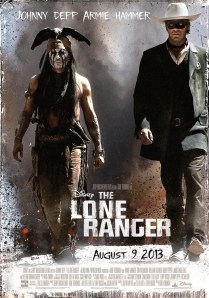
Johnny Depp and Gore Verbinski turn their big budget sights from the high seas to the high plains in this revisionist reboot of the TV serial featuring the sort of running time that would put even a Kevin Costner horse opera to shame.

Better than some knife-wielding critics would have you believe, The Lone Ranger still feels like a missed opportunity to reinvigorate a dying genre for a modern blockbuster audience

Better than some knife-wielding critics would have you believe, The Lone Ranger still feels like a missed opportunity to reinvigorate a dying genre for a modern blockbuster audience

Actually, strictly speaking, this is their second western following the critically acclaimed 2011 animated movie Rango, in which Depp played a chameleon (appropriate considering the diversity of roles he’s had over the years) who becomes the new sheriff of a town called Dirt.

Tonto (Johnny Depp) and John Reid (Armie Hammer) give a nod to John Ford in The Lone Ranger

Tonto (Johnny Depp) and John Reid (Armie Hammer) give a nod to John Ford in The Lone Ranger

Considerably more ambitious, The Lone Ranger desperately tries to cook up the same mix of humour and action that made Pirates Of The Caribbean: The Curse Of The Black Pearl such a massive hit, but while there are glimmers of a superior summer blockbuster here, it ultimately shoots itself in the foot.

The film seeks to reimagine the origin story of The Lone Ranger, a heroic masked ex-Texas Ranger who fights injustice on the American frontier astride his regal horse Silver and with his trusty Native American sidekick Tonto in tow.

Tonto (Johnny Depp) and "weird" horse Silver in The Lone Ranger

Tonto (Johnny Depp) and “weird” horse Silver in The Lone Ranger

Using the framing device of an aged Comanche Tonto (Depp, a la Little Big Man) relating events to a young boy, his narration tells of how he first met John Reid (Armie Hammer) and how the young lawyer was the sole survivor of a brutal massacre by the feared outlaw Butch Cavendish (William Fichtner) and his gang. Befriending a comedy horse, Reid is persuaded by Tonto to become the masked Lone Ranger and help him seek justice against Cavendish and a wider, more insidious corruption.

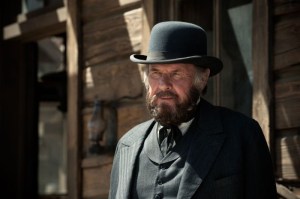
The ruthless outlaw Butch Cavendish (William Fichtner) in The Lone Ranger

The ruthless outlaw Butch Cavendish (William Fichtner) in The Lone Ranger

One of the issues with The Lone Ranger is the rather odd and sudden deviation in tone from eyebrow-raising violence to broad humour, sometimes in the same scene. Following the brutal massacre, for instance, that leaves Reid barely alive, the mood is swiftly lightened by a comic interlude involving Tonto and Silver that feels out-of-place in light of what you’ve just seen.

Ivory-legged brothel madam Red Harrington (Helena Bonham-Carter) in The Lone Ranger

Ivory-legged brothel madam Red Harrington (Helena Bonham-Carter) in The Lone Ranger

It’s a problem that blighted Verbinski’s Pirates… sequels, especially At World’s End (still the most expensive movie ever made), which couldn’t decide what type of film it wanted to be. A reason for this is the presence of Depp, a gifted comic actor whose iconic Jack Sparrow became the foundation on which the Pirates… series was built. Inherently a comic character, Sparrow and the film’s serious storylines created an imbalance (not helped by Depp’s increasingly self-indulgent performances) and it’s an issue that affects The Lone Ranger.

Railroad tycoon Latham Cole (Tom Wilkinson) in The Lone Ranger

Railroad tycoon Latham Cole (Tom Wilkinson) in The Lone Ranger

Depp is terrific as Tonto, channeling Buster Keaton in both his mannerisms and physical performance, not least in the film’s impressively staged final set piece on board a train (bringing to mind Keaton’s The General). If this were a film solely about Tonto and his quest for justice I would be the first in line, but once again Verbinski tries too hard by weaving the Native American around an unengaging plot involving Reid (to be fair to Hammer he’s pretty decent in the title role, but doesn’t stand a chance next to Depp). Verbinski got the balance right with Rango and, as such, produced his most successful and satisfying film to date.

Tonto (Johnny Depp) and John 'Lone Ranger' Reid (Armie Hammer) stride purposefully in The Lone Ranger

Tonto (Johnny Depp) and John ‘Lone Ranger’ Reid (Armie Hammer) stride purposefully in The Lone Ranger

In what must be his umpteenth film this year, composer Hans Zimmer shows here why he’s one of the very best in the business, delivering a soundtrack that gallops along and brings to mind the Saturday morning TV serials the Lone Ranger previously appeared in. Needless to say, Rossini’s William Tell Overture (used as the theme song in the TV show) brings a smile to the face when it’s finally used in the film’s closing moments.

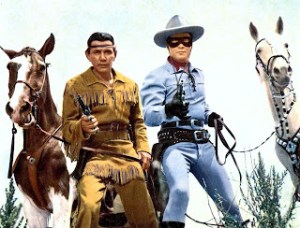
The original Lone Ranger (Clayton Moore) and Tonto (Jay Silverheels)

The original Lone Ranger (Clayton Moore) and Tonto (Jay Silverheels)

Fichtner delivers a typically great performance as the loathsome Cavendish, as does Wilkinson whose railroad tycoon Latham Cole is the sort of role he delivers in his sleep. Helena Bonham-Carter is wasted, however, as ivory-legged brothel owner Red Harrington, who gets too little screen time to make an impact, while British actress Ruth Wilson fares little better as Reid’s love interest Rebecca.

The Lone Ranger wouldn’t be a western if it didn’t tip its pearly white hat to John Ford and does so by filming in the iconic Monument Valley. Cinematographer Bojan Bazelli, whose previous credits haven’t been great (last year’s Rock Of Ages being one example) excels himself here with a number of stunning location shots.

Better than some knife-wielding critics would have you believe, The Lone Ranger still feels like a missed opportunity to reinvigorate a dying genre for a modern blockbuster audience.

Money, Money, Money – Product Placement in Movies

From the moment some entrepreneurial bright spark cottoned on to the money-making opportunities presented by the moving image, cinema and business were forever linked.

Making movies can be an expensive business which explains why studios (and by extension filmmakers) have been so willing to offset the cost by working in a bit of product placement here and there.

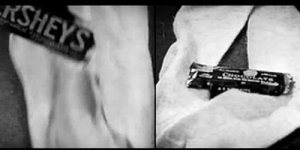
An early(ish) use of product placement (in this case Hershey's chocolate) in 1927's Oscar-winning Wings

An early(ish) use of product placement (in this case Hershey’s chocolate) in 1927’s Oscar-winning Wings

The cinematic romantics out there may disregard the notion that product placement could have featured in the good old days of black and white films, preferring to believe instead that such shameless activities are a relatively new phenomenon.

They would be wrong, however. Product placement has been with us almost as long as cinema itself. As well as being the first film to win the Best Picture Oscar, 1927’s Wings also featured a plug for Hershey’s chocolate. It wasn’t just American cinema that was happy to take the corporate dollar, world cinema also got in on the act. Fritz Lang’s 1931 classic M features in one scene a blatant advert for Wrigley’s PK chewing gum.

The Internship - an example of where the product was placed but never taken awayway

The Internship – an example of where the product was placed but never taken away

While many films shoehorn in a company’s logo or one of its products so conspicuously as to distract you from what you’re watching, at its cleverest, product placement can be used so subtly as to be almost subliminal.

In other cases, such as 1992’s Wayne’s World, product placement can be used to humourous effect – still making sure to actually feature those brands of course – while Morgan Spurlock’s 2011 documentary The Greatest Movie Ever Sold was entirely paid for by sponsors (most notably POM Wonderful) and featured the tagline ‘he’s not selling out, he’s buying in’. Likewise, in 2000’s Cast Away, FedEx featured so prominently (as, of course, did the company Wilson) it’s difficult to disassociate the film and firm.

A more clever use of product placement, hidden inside a joke, in Alan Partridge: Alpha Papa

A more clever use of product placement, hidden inside a joke, in Alan Partridge: Alpha Papa

Recently, we’ve had one of the most barefaced examples of product placement in movie history with the Vince Vaughn/Owen Wilson ‘comedy’ The Internship, which essentially boils down to being one long advert for Google. Meanwhile, the newly released Alan Partridge: Alpha Papa is a more successful use of product placement. By including the product in a fairly blatant joke wherein the words “Alan Partridge drives this Ka” are emblazoned across the vehicle, not only is it part of the joke, it also gives the impression that Ford has a sense of humour and is happy to be associated with a petty, egomaniacal and lonely person such as Alan.

Below are just a few of the many, many examples of shameless product placement in the movies.

Let me know some of your worst offenders:

Mac And Me (1988)

Mac and Me

One of the weirdest, and most cynical attempts at product placement in cinema history, this E.T. rip off has to be seen to be believed. Ostensibly about an alien’s attempt to reunite with its family with the help of wheelchair-bound boy Eric, the film is actually a very thinly veiled advert for fast food chain McDonald’s. In one scene Eric and the Mysterious Alien Creature (MAC – even his name is the same as the company’s most famous burger!) go into a Maccy D’s and are met by the scary-looking Ronald McDonald before MAC, dressed as a giant teddy bear, leads an impromptu dance on the premises. I’m lovin’ it? Not really.

Casino Royale (2006)

Casino Royale

The Bond franchise has had a long association with product placement, be it a well-known vodka brand, or the long list of cars that 007 wrecks. The character’s association with watch makers Omega has been around since the Pierce Brosnan era, but came into its own when the franchise relaunched itself with the Daniel Craig-starring Casino Royale. In one scene that must have had Craig questioning his serious actor credentials, he’s sat opposite Eva Green’s Vesper Lynd, who makes an observation about “former SAS types with easy smiles and expensive watches”, before randomly asking “Rolex?”. Bond suavely corrects her, pointing out it’s an Omega, to which Vesper can only reply “beautiful”. Like you do.

Blade: Trinity (2004)

Blade Trinity

Apple had been struggling to win the public over with the iPod since its 2001 launch and, to give the product a push, paid for it to be featured heavily in this third and final chapter in the Blade franchise about the titular blood-sucker. Blade (Wesley Snipes) is joined this time around by sexy vampire hunter Abigail (Jessica Biel), who can’t seem to be able to kick vampire ass without listening to her trusty MP3 player. In one galling scene, she takes time out to download songs from iTunes and create a playlist before once again going into battle. Safe to say, it’s one of the more shameless examples of product placement in the movies.

I, Robot (2004)

I, Robot

Set in 2035, it is of course entirely coincidental that Will Smith’s detective Del Spooner has a love of Converse trailers circa 2004, the year in which this sci-fi movie based loosely on Isaac Asimov’s more considered series of short stories was released. Director Alex Proyas must have been swallowing some of his own sick when he filmed Smith lovingly caress the shoe box, open it up like a kid unwrapping a Christmas present and slide those new wheels on his grateful feet. Like so much jarring product placement, the scene has absolutely no relevance to the film and makes you grate your teeth at the thought of handing money over for a glorified advert.

What Women Want (2000)

What Women Want

Before Mel Gibson destroyed his career with ill-advised religious comments and run-ins with the law, he made this high concept comedy in which he plays Nick, who acquires the ability to hear womens’ thoughts following an accident with a hairdryer. Nick works in advertising and wows his bosses by stealing rival Helen Hunt’s thoughts for a Nike campaign. The whole Nike thing is woven into the plot in an attempt at ‘brand integration’, but you’re left with a bad taste in your mouth when you realise it’s being rammed down your throat.