Blogathon Announcement – ‘Decades’

Decades Blogathon Banner

Tom from the second-to-none Digital Shortbread and I are jointly hosting a brand spanking new blogathon… but it can only be great if you join us!

We’re already halfway through the 2010s and we thought it would be a good time to run a blogathon focusing on movies that were released in the fifth year of the decade.

We’re calling it – originally enough – the ‘Decades’ blogathon.

Is there a film you’ve always wanted to review that was released in 1995, 1945, 1975 or the fifth year of any other decade? If so, then we’d love you to get involved. Hell, go back to 1905 if you like (I’ve already got dibs on 1985’s Back To The Future, though, sorry)!

Jaws

Jaws

These blogathons are only as good as the entries they receive, so we’re looking forward to receiving some fantastic contributions.

Night Of The Hunter

Night Of The Hunter

So what’ll it be? Michael Mann’s Heat from 1995? Steven Spielberg’s 1975 classic Jaws? The unforgettable Night Of The Hunter from 1955? The choices are huge!

We’re hoping to run the blogathon from Monday, 18 May. We’re keeping the number of entries limited to about 15 or so to stop it getting too unwieldy, so please make sure to get in touch ASAP to avoid disappointment by either dropping me an email at threerowsback@gmail.com or emailing Tom at tomlittle2011@gmail.com letting us know which film you’d like to cover (just so we don’t get duplicate posts) or for more info.

We’re both really excited to receiving your posts for what we’re hoping will be a diverse and absorbing blogathon. Thanks for reading and we hope to hear from you soon! Most importantly, though, GET INVOLVED!

Four Frames – The Wicker Man (1973)

This is my latest contribution to The Big Picture, the internationally recognised website that shows film in a wider context. The Big Picture is running a series of features and reviews during April with the theme of ‘faith’. This piece is part of the Four Frames section, wherein the importance of four significant shots are discussed, in this case from Robin Hardy’s 1973 cult horror The Wicker Man.

The words “oh God” have been uttered countless different times in cinema, but never with such uncomprehending horror as when Edward Woodward’s sacrifice-in-waiting howls them out in The Wicker Man.

Religious intolerance and zealotry have been unfortunate bedfellows for thousands of years and are brought to the fore in Robin Hardy’s cult classic.

The Wicker Man

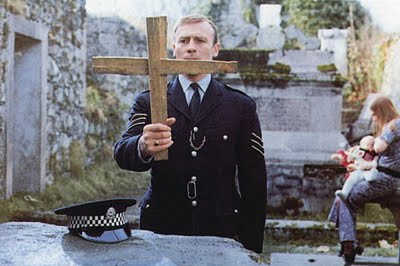
Ostensibly about the mysterious disappearance of a young girl, the film is drawn more to the inimical conflict between the God-fearing police officer Sgt Howie (Woodward) and the equally devout community of Summerisle, a remote island off the Scottish mainland whose paganistic residents are investigated by the “Christian copper”.

Equal parts dumbfounded and appalled by the beliefs and actions of the “raving mad” islanders, Howie confronts its larger-than-life leader Lord Summerisle (Christopher Lee at his fruitiest) about their faith. “And what of the true God?” implores Howie, to which Summerisle drily retorts: “He’s dead. He can’t complain; he had his chance and in modern parlance, he ‘blew it’.”

The Wicker Man

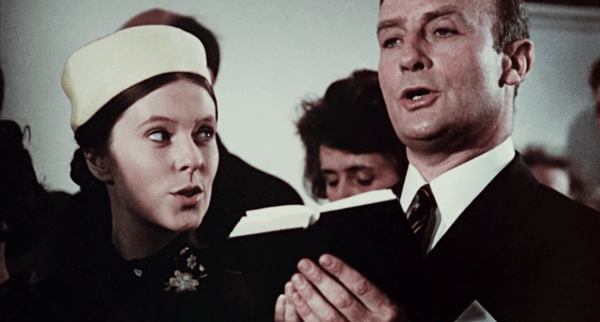
The film opens with Howie proudly singing a hymn in church alongside his fiancée before giving a reading from the Gospel of Luke about the Last Supper and Christ’s imminent sacrifice – a passage loaded with the symbolic weight of the events to come.

As his investigation hits one wall after another, his stunned outrage reaches new heights when a group of schoolchildren enthusiastically espouse the phallic association of the maypole, while their teacher explains to Howie their belief in reincarnation and the elemental power of nature (“children find it far easier to picture reincarnation then resurrection… rotting bodies are a great stumbling block for the childish imagination”).

The Wicker Man

It’s never clear which side the film falls on. Our natural reaction is to side with the Christian Howie; he is after all being led a merry dance by Lord Summerisle and his fellow pagan worshippers. However, Howie’s religiosity is beset by intolerance towards the community’s faith, which he brands a “fake religion” because it doesn’t conform to the notion he holds true. Howie talks down to virtually everyone, while his evangelism borders on sanctimoniousness.

In Summerisle’s eyes, the officer’s sacrifice to the sun god and goddess of the fields is both a religious necessity and a rare gift – “a martyr’s death”. Stripped of the fool’s costume he stole to infiltrate the community’s May Day parade (attire that has extra significance once he realises he’s the one who has been duped), Howie’s arms are outstretched in a crucifix pose as he is dressed in a virginal white robe before being led to the brow of the hill, where he eyes his fate and wails: “Oh God! Oh Jesus Christ!”

The Wicker Man

As the flames dance around the doomed man, Summerisle’s words spoken moments before to Howie linger in the mind: “You will not only have life eternal, but you will sit with the saints among the elect.”

The Wicker Man remains highly provocative, not least for the disturbing endgame played out by the devout in the name of religion.

Review – Fast And Furious 7

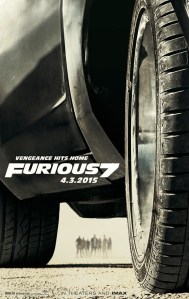
It comes to something when the sight of the Furious Gang launching their fleet of souped-up super cars out of a plane is just another crazy day for a franchise that has well and truly gone into overdrive.

Fast and Furious 7 shows there's still plenty left in the tank of this gloriously absurd franchise so don't think, just strap yourselves in and enjoy the ride

Fast and Furious 7 shows there’s still plenty left in the tank of this gloriously absurd franchise so don’t think, just strap yourselves in and enjoy the ride

Whether by accident or design, the adventures of Dominic Toretto (Vin Diesel) and co have hit upon the perfect formula of cars, cartoon action and complete craziness that has proved to be box office gold dust and all-but guaranteed a further sequel.

While the lurid focus on female flesh would make Michael Bay proud, horror maestro James Wan nevertheless takes the wheel with an assuredness that belies any fan fears that he might fail to step out of the long shadow cast by F&F alumnus Justin Lin.

Dom (Vin Diesel) and Brian (Paul Walker) encounter the enigmatic Mr Nobody (Kurt Russell) in Fast And Furious 7

Dom (Vin Diesel) and Brian (Paul Walker) encounter the enigmatic Mr Nobody (Kurt Russell) in Fast And Furious 7

Wan’s job was made nigh-on impossible with the tragic death of series stalwart Paul Walker. We’ll probably never know what Fast and Furious 7 would have been had its co-lead survived, but the film we have (rewritten to address his departure from the franchise) is a very fitting send off for an actor who got better with each instalment and provides a genuinely moving final scene that will have anyone invested in the series wiping away a tear.

The spectre of death hangs over the film; from the carnage unleashed by ex-special forces hard case Deckard Shaw (Jason Statham) as revenge for what happened to his brother Owen (Luke Evans) in F&F 6, to the quieter moments; most hauntingly when Dom’s crew mourn the loss of one of their ‘family’ and Brian (Walker) responds to Tej’s (Ludacris) plea for there to be no more funerals with the prophetic line: “Just one more…”

Brian (Paul Walker) and Mia (Jordana Brewster) in Fast And Furious 7

Brian (Paul Walker) and Mia (Jordana Brewster) in Fast And Furious 7

As well as being Walker’s final movie, F&F 7 also takes the franchise in a whole new direction with the introduction of Mr Nobody (Kurt Russell), leader of a typically well-stocked covert ops unit who offers to help put down Shaw in return for Dom, Brian and the others locating an all-powerful computer program called the ‘God’s eye’.

There are teasings of it here (in particular during a covert infiltration of an Abu Dhabi’s prince’s hotel penthouse party), but one can foresee future films following in the footsteps of Mission: Impossible, with Dom’s crew choosing to accept increasingly outlandish assignments from Mr Nobody.

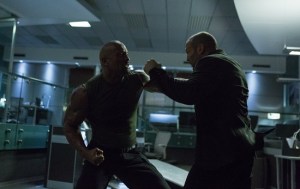
Hobbs (The Rock) and Deckard Shaw (Jason Statham) go toe-to-toe in Fast And Furious 7

Hobbs (The Rock) and Deckard Shaw (Jason Statham) go toe-to-toe in Fast And Furious 7

The addition of Statham to a heaving cast of alpha males adds an extra spice to proceedings. Shaw’s motivations make him dangerous and unpredictable, while his Terminator-esque relentlessness and seeming inability to sustain injury means he’s also fun to have around.

The film is bookended by two satisfyingly titanic fist fights involving Statham; the first (and best) against Diplomatic Security service agent Hobbs (Dwayne ‘The Rock’ Johnson, who doesn’t get nearly enough screen time); and the second with Dom atop a multi-storey car park being besieged by mad-as-a-lorry mercenary Jakande (Djimon Hounsou).

A typically understated scene from Fast And Furious 7

A typically understated scene from Fast And Furious 7

However, it’s the eye-popping motor madness that’s most fun, what with the aforementioned flying cars sequence (nicely referencing an earlier moment when Brian, having spotted his son throwing a toy car out of the window, says “cars don’t fly!”) and an equally unlikely scene when Dom drives off the side of a mountain and thinks nothing of it.

Even this pales in comparison, though, to the truly outrageous sight of Dom and Brian jumping a sports car from one Abu Dhabi skyscraper to another… before doing it again. Quite how they’ll top that one in F&F 8 is anyone’s guess.

Fast and Furious 7 shows there’s still plenty left in the tank of this gloriously absurd franchise so don’t think, just strap yourselves in and enjoy the ride.

Thousand Words – The Portrait Of The Religious Movie By An Atheist Director

This is my latest contribution to The Big Picture, the visually focused film magazine that proves there’s more to film than meets the eye. The Big Picture is running a series of features and reviews throughout April with the theme of ‘faith’. This piece is part of the site’s Thousand Words section and examines why many of the most thoughtful films about religion come from atheist directors.

Ever since its earliest days, cinema has, to quote the esteemed French critic André Bazin, “always been interested in God”.

Whether it be biblical tales of all scales and budgets, stories about saints and sinners, or more grounded accounts of everyday church professionals, filmmakers have consistently returned to the well of religion to draw inspiration.

Many of the most thoughtful and challenging cinematic examinations of religion come from directors who are declared atheists or agnostics; a fascinating paradox that begs the question – just what is it that drives such filmmakers to explore religious themes?

The most recent, and certainly lavish, example is Exodus: Gods And Kings (2014); Sir Ridley Scott’s epic retelling of the Moses story.
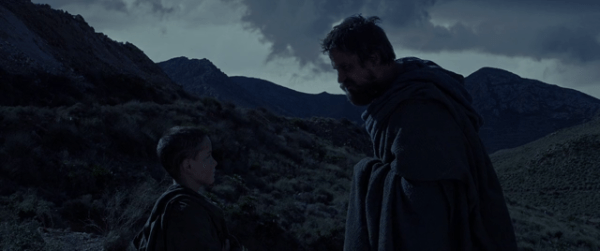
Exodus: Gods and Kings

Scott, an atheist who once declared that “the biggest source of evil is, of course, religion”, has dipped his toe into such waters before with Kingdom Of Heaven (2005), his controversial 12th-century Crusades drama, released at the height of George W. Bush’s War on Terror, which asked why Christians and Muslims can’t just get along.

Scott has spoken of choosing to strip superstition and supernaturalism out to find his way into the story and this is reflected in the logical way the plagues are explained by Ewen Bremner’s Expert, while Moses’ vision of God comes from a knock to the head. Scott’s most interesting decision is to depict God as a petulant young boy, who is accused by Moses of acting out of revenge, not love.

Exodus: Gods And Kings proved a hard sell to the same Christian groups who didn’t take kindly to Darren Aronofsky’s Noah (2014), whose eponymous central figure the atheist director has described as “the first environmentalist”. Aronofsky’s singular vision (he called it the “least-biblical biblical film ever made”) of a zealot driven to the brink of madness by his mission from “the creator” and the presence of giant angels made out of rock proved too subversive for some.

The CGI effects and huge budgets of such tentpole blockbusters are in stark contrast to the work of Ingmar Bergman, whose austere ascetic belies the emotional explosiveness of his dramas.

Winter Light

Reconciling his “tormented and joyless relationship with God” in his autobiography The Magic Lantern, Bergman concludes: “When you die, you are extinguished. From being you will be transformed to non-being.”

Having previously addressed God’s silence in the likes of The Seventh Seal (1957) (“Why can’t I kill God within me?” asks the medieval knight, to which Death replies: “Perhaps no-one is there.”), Bergman returned to this theme as the crux of a trilogy of powerful and devastating masterpieces: Through a Glass Darkly (1961), Winter Light (1962) and The Silence (1963).

The trilogy can be distilled to a key scene in Winter Light involving a depressed Pastor (Gunnar Björnstrand), who goes through the motions for his diminishing congregation in spite of his own faith having evaporated since his wife’s death, and the Sexton (Algot Frövik).

Rather than the physical pain Jesus endured in his final hours (“It couldn’t have been all that bad”), the Sexton suggests Christ’s real torment was emotional, having been abandoned by his disciples and seized by doubt in his last moments on the cross. “Surely that must have been his greatest hardship? God’s silence,” suggests the Sexton, to which the Pastor can only meekly respond: “Yes…”

The Gospel According to St Matthew

The life of Christ has been portrayed countless times on film, but none have done so with the poetic power of Pier Paolo Pasolini’s The Gospel According To St Matthew (1964).

Pasolini is a fascinating figure; a homosexual and atheist who embarked on the film after reading the New Testament in a hotel room and explained his philosophy in a press conference thus: “I may be an unbeliever, but I am an unbeliever who has a nostalgia for a belief.”

Unlike most other depictions of Christ’s life, The Gospel According To St Matthew‘s neorealist approach is striking for just how raw and unvarnished it is. Imbued with Pasolini’s Marxist leanings, Jesus is portrayed as a revolutionary leader who expects and demands the word of God be listened to and obeyed. Arguably the most wholly realised biblical movie ever made, it speaks volumes about The Gospel According To St Matthew that it sits within the Vatican’s list of 45 great movies.

Another atheist filmmaker who appears on that list is Luis Buñuel (for his 1959 film Nazarin); which is amusing as many of his films openly mock the Roman Catholic Church.

Buñuel is well-known for his merciless satirical style, but few institutions get it in the neck as sharply as organised religion, whether it be subverting the image of Christ in L’Age d’Or (1930), or playfully portraying Satan as a busty blonde trying to tempt the saintly title character off the pillar he has sat atop for six years, six weeks and six days in Simon Of The Desert (1965).

Buñuel remained an uncompromising figure, as the following passage from his autobiography My Last Sigh attests: “If someone were to prove to me – right this minute – that God, in all his luminousness, exists, it wouldn’t change a single aspect of my behaviour.”

Equally uncompromising was Robert Bresson, who revisited the themes of redemption, salvation and grace throughout his celebrated career and became regarded as the “patron saint” of cinema; ironic considering the director once cryptically described himself as a “Christian atheist”.

Au Hasard Balthazar

Set in a convent, the metaphysical thriller Angels Of Sin (1943) is a daring and assured first feature that immediately established the director’s unique style. The beauty of grace is central to the spiritual odyssey that is Diary Of A Country Priest (1951), while The Trial Of Joan Of Arc (1962) is unsparing in the suffering handed out to the Christ-like Maid of Orléans.

However, it’s Au Hasard Balthazar (1966) that remains arguably his most divine film, a work described by Jean-Luc Godard as “the world in an hour-and-a-half”. Like Joan, the saintly donkey Balthazar endures cruelties and humiliations with a nobility that rises above the sadistic instincts of his human masters – with the exception of the vulnerable Marie (Anne Wiazemsky), who also withstands the torment of others.

Cinema is storytelling and religion is rife with stories; so should it be any wonder that the most transcendent filmmakers explore such themes, be they believers or not?

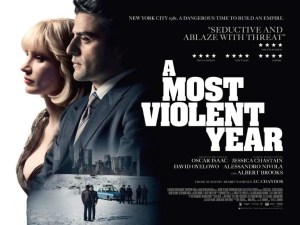
Review – A Most Violent Year

Heating oil may not be the sexiest narrative device for hard-bitten cinema, but J.C. Chandor’s gripping paean to the crime dramas of yesteryear crackles with a slow-burning tension.

An assured step forward in Chandor's so-far unblemished copybook, A Most Violent Year is a timeless and engrossing chapter in America's cinematic crime genre

An assured step forward in Chandor’s so-far unblemished copybook, A Most Violent Year is a timeless and engrossing chapter in America’s cinematic crime genre

While the title suggests otherwise, A Most Violent Year eschews the brutality of Scorsese-aping gangster flicks for a more unconventional and understated drama about an immigrant businessman doing everything in his power to avert bloodshed and avoid being reduced to the level of those who would seek his downfall.

The violent year in question is New York’s annus horribilis of 1981, when 120,000 robberies and more than 2,100 murders were reported. Amidst such chaos, Abel Morales (Oscar Isaac) struggles to keep the plates spinning as he runs his up-and-coming heating oil firm, while his impetuous wife Anna (a formidable Jessica Chastain) looks after the books.

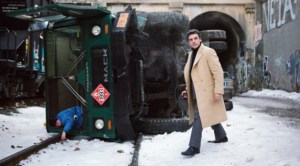
Things start to turn really nasty for Abel Morales (Oscar Isaac) in A Most Violent Year

Things start to turn really nasty for Abel Morales (Oscar Isaac) in A Most Violent Year

The hijacking of the company’s trucks by unknown assailants and an investigation into alleged price-fixing and other dirty tricks by ambitious Assistant District Attorney Lawrence (David Oyelowo) adds to the pressure on Abel, who enters into a potentially dangerous business deal with a group of Jewish Chassidim that could lead to his becoming a major player in the city.

When trouble visits their door, Abel’s reasonable business-minded approach is called into question by Anna, whose family connections seem to suggest violence is no stranger (“You’re not going to like what’ll happen once I get involved”).

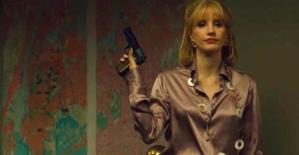
Ms 45: Anna Morales (Jessica Chastain) in A Most Violent Year

Ms 45: Anna Morales (Jessica Chastain) in A Most Violent Year

This reveals itself in a key scene when a deer runs out in front of their car and, before Abel can bring himself to put it out of its misery with a tyre iron, Anna puts three rounds into the poor beast having decided that “she’s going to do something about it”.

In spite of their different outlooks on what needs to be done to survive and thrive, they nevertheless make for a formidable team, with Anna the power behind the throne as she propels her husband to greater heights.

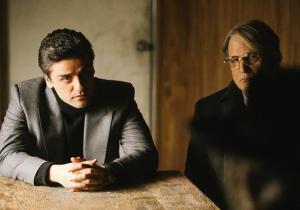
Abel Morales (Oscar Isaac) with attorney Andrew Walsh (Albert Brooks) in A Most Violent Year

Abel Morales (Oscar Isaac) with attorney Andrew Walsh (Albert Brooks) in A Most Violent Year

As well as looking like a Godfather-era Al Pacino, Isaac’s softly spoken tones also bring to mind Michael Corleone, while his sharp suits and perfectly tailored camel-hair coat exude an authority in keeping with his measured demeanour.

In spite of his aversion to violence, Abel is not one to be pushed around, though and his ambition is unrelenting, as his attorney Andrew Walsh (a barely recognisable Albert Brooks) discovers when he asks him “why do you want all this so much?”, only to receive a blank stare and the response “I have no idea what you mean”.

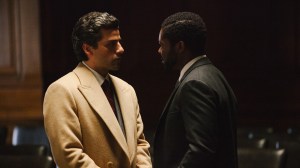
Abel Morales (Oscar Isaac) makes his cast against Assistant District Attorney Lawrence (David Oyelowo) in A Most Violent Year

Abel Morales (Oscar Isaac) makes his cast against Assistant District Attorney Lawrence (David Oyelowo) in A Most Violent Year

The singular image of oil oozing like blood from an oil tank pierced by a bullet speaks to the fascinating battle Abel faces in A Most Violent Year. When violence erupts, it is sudden and striking, notably during a freeway set piece involving truck driver Julian (Elyes Gabel) that spirals out of control.

Comparisons to Sidney Lumet’s 70s/early 80s work, most notably Serpico (1973), Dog Day Afternoon (1975) and Prince And The City (1981), and the output of Lumet’s torch-bearer James Gray (2000’s The Yards being the best example) are plain to see, but Chandor is no magpie and by making the strongest and most intimidating character in the film a woman subverts the normal expectations of the crime drama.

Scenes are juxtaposed between dimly lit rooms (a nod to The Godfather) and a yellow-tinged New York winter courtesy of Bradford Young’s crisp and moody cinematography, while the lack of a consistent score (an extended car, foot and subway chase is made more dramatic by the dearth of music) is refreshing.

An assured step forward in Chandor’s so-far unblemished copybook, A Most Violent Year is a timeless and engrossing chapter in America’s cinematic crime genre. As Abel would say: “The result is never in question; just what path you take to get there.”