Welcome to day three of the Decades Blogathon, hosted by myself and the incomparable Tom from Digital Shortbread. The blogathon focuses on movies that were released in the fifth year of the decade. Tom and I are running different entries each day; and this one comes from Mark at the never-less-than-awesome Movie Man Jackson. Mark’s site really is worth a chunk of your time; it’s amusing and intelligent at the same time. Take a look.
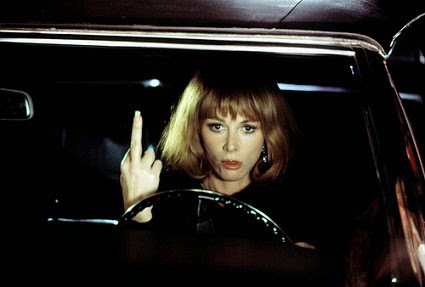
“I’ll just die if I don’t get this recipe”
What is the perfect woman like? And does she know she is ‘perfect’?
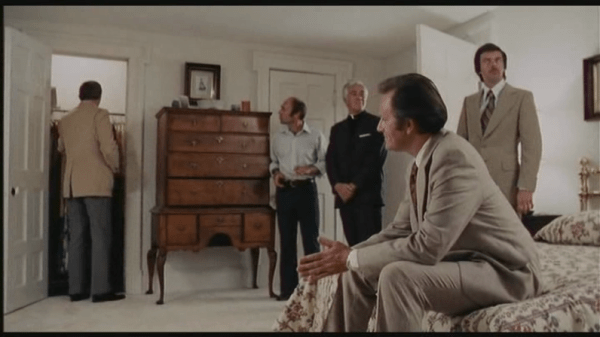
In the state of Connecticut, a quiet and secluded suburb known as Stepford exists. Stepford is a place that photographer Joanna Eberhart (Katharine Ross), her lawyer husband Walter (Peter Masterson) and their two kids will make life relocating from the bustling New York state. On the surface, it is everything one would think a family desires: a safe community, clean air, respectable neighbors and the like.
Things can sometimes be too perfect, though. For a free spirit and nonconformist like Joanna, an uneasy feeling manifests itself immediately and only grows larger as the days move on; and it is not like she can vent to anyone else.
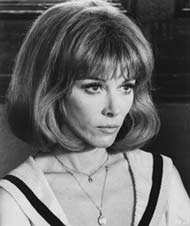
Men are no help, and the other wives in town are the main reason for Joanna’s uneasiness. They want to be nothing more than perfect housewives. The only person she can trust is fellow newbie Bobbie (Paula Prentiss) and together, these two will have to try uncover the mystery of what exactly is going on.
The decade of the 1970s is known for a lot of things, but perhaps the key thing it is known for is the women’s liberation movement. I am not a historian, but I’ll take an educated guess and say if the 1960s served as the world’s introduction to feminist ideals, the 1970s period served as the point in time where the movement really gained steam.
The Stepford Wives novel came along in 1972, and three years later spawned the film adaptation. While the film adaptation may not hold up completely today, mainly because of the different foci feminism fights today, the relevance hasn’t completely been lost either. And just on a more basic sense it is a watchable, oddly funny and entertaining little horror-thriller.
The Stepford Wives is very much a satire; a reflection of the world during its release. The core of the plot, and essentially the whole movie, is the clashing of the two differing beliefs of what women should be, and how they should behave.
All of the men serve as the establishment; the group in power that seeks to keep its dominance over the opposite sex, either due to fear of the unknown or some other, purely indulgent, reasons. Joanna and Bobbie are the resistance, representing the ideals of second wave feminism, the reluctance to accept what a male-driven society expects them to do in being docile, stay-at-home, and the quintessential 1950s housewife.
Over 40 years later, the discussion of gender roles in particular is still a fight being fought today by activists, but maybe not in the rudimentary way shown in this movie. Look at the recent controversy surrounding the madness of Gamergate and the uproar regarding the Black Widow character in Avengers: Age of Ultron. This keeps The Stepford Wives from being terribly dated, but there is a sense had by yours truly that this is sort of period piece not necessarily made to stand the test of time (do filmmakers always go into a production hoping to achieve that? Who knows).
Simplistic as the struggle may be, seeing these two opposing viewpoints play out throughout the movie is very intriguing… at least for the first time it is viewed. It is hard and maybe a little bit wrong to bring this up, but on subsequent views the mystery, not impossible to figure out even if one has never read the book as ‘Stepford’ is pretty much part of the English lexicon, is less hooking than it is on the first watch. However, a scene that doesn’t lose its impact after endless watches is the final one, chilling all the way up through the final lingering image, and a nice bold decision taken by director Bryan Forbes to end on something uneasy.
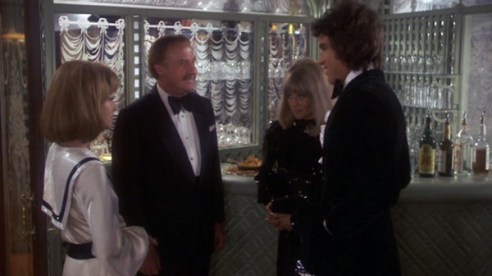
Success also has to be given to Forbes for being able to create a level of tension primarily in the day. Unlike other thrillers where all of the juicy stuff happens in the dark, The Stepford Wives goes the other way and features all of its story bathed in sunlight. And it works, whether in a living room, parking lot, or daytime party. These are all settings that don’t scream creepiness, but work more than well conveying it within the confines of the story.
Still, some dirty spots on the linoleum exists. A wealth of hilarious quotables exist throughout, but at times, the rest of the dialogue feels like it is going nowhere, compounded by the film’s somewhat meandering first half. This is where the movie could use some better production values; the music and cinematography can be, to yours truly at least, kind of amateurish.
And even with the engaging plot, the leads in Katharine Ross, Paula Prentiss, and Peter Masterson are pretty one-note in their performances (aside from an excellent argument scene between Ross and Masterson later in the film). Honestly, the side characters end up making more of an imprint than the stars do, especially Patrick O’Neal as Dale Coba; a man who surely knows more than he lets on.
Perfect for its time, but perhaps a little duller in impact now, The Stepford Wives can still be seen in many respects as a semi-blueprint for similar, later works such as Invasion Of The Body Snatchers, The Faculty, and other like-minded films. If watching women doing little domestic chores is your hobby, you’ll find plenty of it in Stepford.
Grade: B
Photo credits: filmfanatic.org, IMDb.com and pinterest.com.
It’s day two of the Decades Blogathon, hosted by myself and the irrepressible Tom from Digital Shortbread. The blogathon focuses on movies that were released in the fifth year of the decade. Tom and I are running different entries each day; and this one comes from Michael via the brilliant It Rains…You Get Wet. Michael’s site is a belter, full of great features and insight. Check it out!
A heartbroken Warren Beatty looking down on a canyon road as Paul Simon’s acoustic version of Silent Eyes plays in the background. The lingering vestige of Hal Ashby’s Shampoo would use a mournful version of a cut from his Still Crazy After All These Years album out that year as the scene faded to black. Always recall this when looking back at it, and the time. The lone contemporary song of the film’s soundtrack shouldn’t work at all considering the ’60s tunes that littered it, and marked an epoch so distinctly.
Yet, for a film that reached a 40-year milestone that lyrical lament offered a fitting bitter quality, and an eloquent end for the piece and its protagonist.
Banker: “What kind of references do you have, Mr. Roundy? George: “I do Barbara Rush.”
A pity a number of today’s movie-viewers have never seen Shampoo. Even aficionados have seemingly forgotten it since the film debuted in March of 1975. It’s a deft and layered work director Hal Ashby crafted ever so well, with key input from lauded scribe Robert Towne (Chinatown) and Shirley MacLaine’s better looking sibling, Warren Beatty. Truly, it marked the midpoint of a truly sucky decade like few others. Right as the suck appeared to reach its crest too, or so we thought. The Fall of Saigon lay the next month over.
No, the hits just kept on coming. Mind you, I speak from experience, having survived the period, first-hand. I bear the scars of it, if you want proof. Still, the decade remains my all-time favorite for its influential filmmakers and the cinema they enriched and buoyed us with. I’m in good company for that thought, too, it seems. As mentioned last year over at Keith’s site when he asked my answer at his roundtable to what had been “…the greatest decade for movies”:
“Easily, it’s the ’70s. A particular span of time that proved to be one of the most tumultuous for many in the latter half of the 20th century. A decade filled with economic downturns, disillusionment, and the realisation that things really could get a hell of a lot worst. And did. The timing for film couldn’t have been better, though. For all of its crises and missteps, corruption and loss of idealism, the Me Decade heralded some of the absolute best cinema this country had to offer for the period.”
Naturally, I turned to 1975, in particular when Mark and Tom proposed their ‘Decades’ Blogathon. One that focused, like now, “…on movies that were released in the fifth year of the decade”. Didn’t take me long to latch on once more with Shampoo, and a chance to convince those reading. Described as a dramatic comedy, it offered a satiric look at not only the sociopolitical (presidential and sexual) via a heady few Angelenos, but the cost of love then as it sifted through the bed sheets of their sex lives.
All as the ’60s began its close.
The mid-’70s film surprisingly centered its story around the Election Day of 1968. Nixon-Agnew said it all. The irony set early for the audience of the time as the Watergate Scandal had broken open by ’72, with Nixon’s impeachment a couple of years later quite fresh in peoples’ minds. Shampoo‘s producers even benefitted, unknowingly, with the film’s release mere months before the official end of the Vietnam War, and the final disillusionment that came with it. I tell ‘ya, this decade could do irony.
The film, care of its Robert Towne and Warren Beatty screenplay, posited all the crap happening there and then a result of what took place the decade prior; blinded with all that ‘free love’ behavior and ‘flower power’ mentality the ‘Swinging Sixties’ offered. Manifested strangely enough with a Beverly Hills hairdresser of some repute. Beatty, of course, as George servicing his female “clients”. [*1] Its running joke, going against the conventional thinking of most men in the film and the time, being the stylist was a raging heterosexual.
Who better to bring it to a head than Hal Ashby.
“Let’s face it. I f***ed them all. That’s what I do. That’s why I went to beauty school.”
If there was a ’70s filmmaker more authoritative, let alone consistent, during this span, they’re in rare company. The Utah native-turned-California hippy learned his art cutting and pasting pieces of film together during the ’60s and enjoyed his greatest output in the disco era. His underrated debut, The Landlord, prepped the cult hit Harold And Maude, The Last Detail, and then this. Bound For Glory came next before he capped the spell with Coming Home and Being There – an Oscar tally totally seven wins and 24 nominations. ‘Nuff said.
Even among that impressive set, I think Shampoo was in the upper tier of his cinematic work. Certainly, the film traversed a broad range of crisis and comedy, and invigorating carnality, in the most entertaining way imaginable. Avidly focusing on an interconnected coterie of the “beautiful people” then, who’d be internet media whores today. You may not like them, but can’t take your eyes off – located in an area that’s always gathered too much attention for its self-absorbed few amid the Los Angeles dwarfing them.
“Doing it” with a bang up ensemble cast, too, headed by a Warren Beatty at his peak. The latter half of Bonnie And Clyde consummating his conquest of Hollywood, like his friend Ashby, this very decade; ironically, including his girlfriends Julie Christie (then current) and Goldie Hawn (ex-) to parallel the tale with their roles. Carrie Fisher’s feature debut as a 15-year-old seducing George with an immortal three little words [*2], a full two years before “A long time ago in a galaxy far, far away…”
The great (the most repeated key word of the script) Jack Warden and a number of recognisable character actors (Jay Robinson, George Furth, Jack Bernardi, Howard Hesseman, Brad Dexter, and a young Tony Bill) lent the production considerable note. Yet, surprisingly the men played second fiddle to the women of the cast. Especially when another former date, Lee Grant as Felicia, was on screen – earning her supporting Oscar on her feet as well as her back, as only she could.
“Oh god, Lester you are a miserable human being. You’re not helping anybody! You’re just twisting arms here for a lot of silly sons of bitches who are all out for themselves. You’re kidding yourself if you think your new business partner is going to keep his hands off your girl. Or if she’s going to keep her hands off of him!”
Indeed, it’d be the legendary B-movie director William Castle who’d provide a scorned Jackie essential ammunition care of the question all rich old men ask young beautiful women – and she’d answer in the most uproarious fashion, drawing the best reaction ever from her sugar daddy lover and his wife.
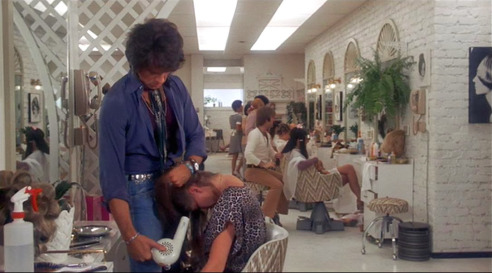
That’s saying something considering Beatty’s hairdresser George pulled in the most female once-overs this side of his namesake Clooney in the film; a good bit of it geared toward the worship of a certain male member, his handheld hairdryer symbolising you-know-what throughout. Notably, how much mileage it got in a 36-hour period. Likewise, the grief it caused… principally for its owner. Clint Eastwood’s Play Misty For Me may have suffered nastier consequences following the ‘free love’ era, but he’d get his, too.
Moreover, Towne uniquely signified the place he made a living writing for, Los Angeles, through scenes and dialogue as only he could. Scripting characters against some real-life L.A. history along the way, keenly having an ear for the common and outlandish parlance of the day. Those we give our hearts to, as well. Few regard this as highly as his Chinatown screenplay, which came out the year before. Drama mostly beating out comedy. But, “dying is easy; comedy is hard.” This razor-edged script is better than you think.
Additionally, few needle-dropped soundtracks of that or any other decade, were as memorable. Its songs impacted the tale so conspicuously. The Beach Boys’ Wouldn’t It Be Nice exemplifying George and Felicia’s lovemaking during the opening credits set the tone for the duration; all the way through to The Beatles’ Sgt. Pepper’s Lonely Hearts Club Band numbers doing much the same by the third act’s affluent hippy party [*3]. Sadly, neither the movie’s musical accompaniment or Paul Simons’ score were ever released.
Existing only for those lucky enough to screen this Hal Ashby classic.
Shampoo may have chronicled Peyton Place… er… Beverly Hills byway of a crackerjack and sexy satire, even if it’s filled with petty messes and moral decay, but did so with ’70s style. And at a key point in time. The bed-hopping, dashed dreams, and selfish betrayals among the self-important in the midst of prepping for a fateful Election Day still influential [*4]. Hal Ashby’s good friend Norman Jewison, who got him into directing, would use George’s womanising excuse – “makes me feel like I’m going to live forever” – as a subplot to his 1987 film Moonstruck.
Stood in well for the bad faith and falseness (socially and politically) of the Nixon-Agnew ticket, which would blossom come the ‘Me Decade’.
Seems strange, unfair even, that more haven’t seen, or at least promoted the movie to others. In the four decades since its release, the Hal Ashby/Robert Stone/Warren Beatty film has been written off, apparently; lost somewhere in film history. Displaced by other notable ’70s fare that epitomised the era’s bleakness and disappointment more forcefully. Overlooked the 1975 production’s wry cleverness, perhaps dismissing it as a silly snapshot of the ’60s sexual laxity and psychedelia through a bell-bottomed mindset.
Deciding somehow it doesn’t apply to us in the new millennium… but, oh it does.
Jackie: “It’s too late.” George: “What do you mean it’s too late. We’re not dead yet. That’s when it’s only too late.”
Not convinced?
Look again at my definition why the period remains a favorite. The ’70s film penchants of love and death, nevertheless, apply here. An antihero, George (or at least his cock), with death stalking unexpectedly. Really, you ask? Sure, it’s hinted throughout. We initially meet Jill fearing her death hearing a gunshot in a celebrity-strewn canyon; George stating he was to take Jill to the “El Cholo” restaurant another knowing allusion. By the end, she’ll dump the philandering George for an upcoming young film director.
You see, they’re not just some actress and her hairstylist boyfriend. No. What most missed was Shampoo gave audiences an unexpected, fictionalized backstory to the real-life events of Sharon Tate and her ex-boyfriend Jay Sebring [*5], byway of a risqué dramedy. The sadly fated pair of L.A.’s infamous Tate murders, here disguised by farce; pictured before their grisly demise, along with a handful of the affluent, less than a year later in Benedict Canyon by Charles Manson’s twisted hippy followers [*6]. Even the aging financier Lester warned our protagonist of what was to come late in the film:
“I don’t know anything anymore. You never know, you know. Ah, one minute you’re here, the next…pfft. I just wish I knew what the hell I was living for. You can lose it all, y’know. Lose it all no matter who you are. What’s the sense of having it all. The market was down 10 points last week, goddamn Lyndon Johnson. Yeah, well. Maybe Nixon will be better. What’s the difference. They’re all a bunch of jerks.”
Satisfied now?
[*1]: Warren Beatty’s dating history the stuff of legend.
[*2]: “You wanna f***?”
[*3]: Compare this to the cheesy instrumental of Paul McCartney’s “Yesterday” ringing in the moneyed contributors ears at the Nixon-Agnew election night party, the hanging portrait of then Governor Reagan driving the point.
[*4]: Take note of George’s reaction at failing his loan application outside of the Beverly Hills bank. Steven Soderbergh and George Clooney would emulate it in 1998’s Out Of Sight, right before Jack Foley heads to a bank and rob it.
[*5]: Jay Sebring, who along with Jon Peters, happened to be “the hair stylist to the stars” Towne and Beatty modeled George’s character on.
[*6]: Both Tate and Sebring, her friend and former lover, were buried on the same day, just hours apart, which happened to be my on birthday.
Here we go! Welcome to the first entry in the Decades Blogathon, being hosted by myself and the legendary Tom from Digital Shortbread. The blogathon focuses on movies that were released in the fifth year of the decade. Tom and I will run a different entry each day; and the first of my entries comes from Kim via the excellent Tranquil Dreams. Make sure to check out Kim’s site – it’s full of fun and informative reviews.
Lady’s always been a loved pet from when she was a little puppy for her masters, Jim Dear and Darling. When they are expecting a baby, everything starts to change.
They treat Lady differently and when the baby arrives and they go away for a few days, leaving her in the care of Aunt Sara, things get even worse. Aunt Sara brings her two Siamese cats who wreak havoc and put the blame on Lady, causing her to finally feel that she isn’t wanted anymore. That’s when she finds Tramp, a dog living on the streets who teaches her about the owner-free life.
Lady And The Tramp – “A family classic”
While I was researching this, I learned that Lady And The Tramp was the pioneer in two things for Disney: one was that it was the studio’s first CinemaScope animated feature and second, it also was the first full-length film from an original story instead of a fable/classic.
Now that’s pretty awesome, right? I didn’t even know that when I was watching this again. Lady And The Tramp is one of my favorite Disney features. One, it’s because the main characters are all sorts of adorable dogs and really the life of them when they are brought into a family and what they go through with change.
A classic scene from Disney’s Lady And The Tramp
Lady And The Tramp is a great movie because of its colorful animation. The colours add to the scenes and atmosphere of the story each time. Along with that, the story itself is simple with a lot of pretty memorable songs. If you’ve seen Lady And The Tramp, and maybe if you haven’t, you still have seen the scene with the spaghetti and meatballs or heard the song Bella Notte.
That’s just the first example here. This time I watched, I realised how the background music really added to what was going on. It was fun and bubbly when Lady was a puppy and changed from there. Not to mention, the little love story between Lady And The Tramp was really cute and they are both really awesome characters, from Lady’s sweet and caring nature to Tramp’s sense of responsibility and braveness.
“We are Siamese if you please” – Lady And The Tramp
There’s a certain level of contrast here from the beautiful houses where Lady lives to the streets where Tramp lives and how it shows the change between the two; even a contrast between the temper of dogs and cats as pets and their sense of responsibility.
Lady gets a surprise in Lady And The Tramp
It’s also a difference between cat and dog lovers. All this stuff is easily relatable to both adults while the simpler story and cute doggies running around is fun. Although, I have to admit, heading to the dog pound was a little scary and that rat looked more evil than the Siamese.
There’s a lot to love about Lady And The Tramp. It’s not only a few Disney firsts for me, but rather a massive love for the characters in Lady And The Tramp. The rich colors here add to the simple story along with some nice background music and memorable songs – all this makes Lady And The Tramp a family classic.












 three rows back