Review – Terminator Genisys

He said he’d be back, and sure enough Arnold Schwarzenegger returns to the franchise that made his name for this convoluted and confounding exercise in everything-and-the-kitchen-sink filmmaking.
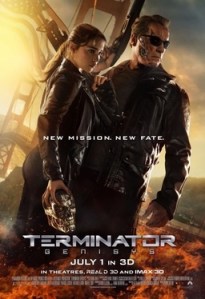
This is the start of a supposed trilogy - on the basis of Terminator Genisys, Judgement Day can't come soon enough

This is the start of a supposed trilogy – on the basis of Terminator Genisys, Judgement Day can’t come soon enough

James Cameron may not be everyone’s favourite director, but in The Terminator (1984) and its game-changing sequel Terminator 2: Judgment Day (1991) he kept the narratives straightforward, the characters interesting and the action eye-popping.

Cameron was smart enough to avoid getting bogged down by the head-scratching ins and outs of time travel; instead using it as a device to drive the action rather than the other way around.

I'll be back...again: 'Pops' (Arnold Schwarzenegger) in Terminator Genisys

I’ll be back…again: ‘Pops’ (Arnold Schwarzenegger) in Terminator Genisys

Alas, the same cannot be said of Terminator Genisys, which ignores the events of Rise Of The Machines (2003) and Terminator Salvation (2009) – no bad thing – and instead tries to have its cake and eat it by invoking Cameron’s first two installments whilst rebooting the franchise.

It’s a tactic that is becoming increasingly popular in Hollywood following the success of J.J. Abrams’ Star Trek (2009), which cleverly took the Trek franchise down an alternate timeline whilst still keeping everything that made the series so successful in the first place.

John Connor (Jason Clarke) and Kyle Reese (Jai Courtney) take the war to the machines in Terminator Genisys

John Connor (Jason Clarke) and Kyle Reese (Jai Courtney) take the war to the machines in Terminator Genisys

Here, director Alan Taylor (Thor: The Dark World) faced an uphill task from the word go, working from a nonsensical script by Shutter Island scribe Laeta Kalogridis and Patrick Lussier, whose most recent credit is, er, Drive Angry, and delivering a movie that has the whiff of studio interference all over it.

The messy trailers didn’t exactly sell the film and a later trailer (not the one I’ve linked to in my review) stupidly gave away a crucial plot twist – a sign that usually signals a studio’s lack of belief in a product.

Genisys follows resistance fighter Kyle Reese (Jai Courtney), who is sent from a 2029 ravaged by Skynet’s apocalyptic destruction back to 1984 by leader John Connor (Jason Clarke) to protect his mother Sarah (Emilia Clarke – no relation) from a Terminator, or Terminators as it turns out. However, Kyle gets a shock when it emerges that Sarah isn’t the defenceless waitress he’s been expecting, but rather a kick-ass soldier who has been protected from childhood by a reprogrammed T-800 model Terminator (Schwarzenegger).

Hanging out: Sarah Connor (Emilia Clarke) and Kyle Reese (Jai Courtney) in Terminator Genisys

Hanging out: Sarah Connor (Emilia Clarke) and Kyle Reese (Jai Courtney) in Terminator Genisys

That just about covers the first 20-30 minutes, which actually promises much before the shark gets truly jumped over and the time travel-laden plot goes off the deep end.

The method behind Skynet’s ploy to achieve world domination is at least relevant to the digital age, but by treading over Cameron’s original the film ties itself up in a ridiculous amount of plot threads to get to where it needs to; with lazy waffle about time nexuses and dual realities served up as creaky bridging points to keep the whole thing from crashing and burning (and failing in the process).

Whilst the script goes off in a multitude of head-scratching tangents, the film attempts to divert the audience’s attention away from picking black hole-sized holes in the plot (who sent Arnie back to protect a young Sarah? Actually, who cares) by piling in action set piece after action set piece. Machines that Cameron’s movies built up to be near unstoppable killers are disposed of with relative ease early doors to make way for the central villain, whose identity is the film’s supposed ace card but only serves to undermine the first two, far superior, installments.
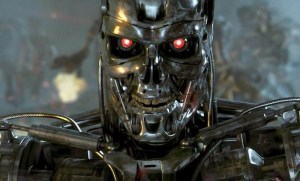
Can you guess which Terminator this is? Nope, neither can I.

Can you guess which Terminator this is? Nope, neither can I.

Arnie is clearly having a good time as everyone’s favourite cyborg. Although the explanation for an ageing Terminator isn’t entirely convincing, it does allow him to point out to all the haters that he is “old, not obsolete”. Emilia Clarke is given a rather thankless task in an underwritten role and the chemistry she shares with a very average Courtney is, at best, tepid.

Jason Clarke, meanwhile, looks like he’s treading water waiting for the next Apes picture, while JK Simmons gets to loosen up in a fun role as a police officer who’s lucky to be alive and Matt Smith, like so many others, gets virtually nothing to do.

This is the start of a supposed trilogy – on the basis of Terminator Genisys, Judgement Day can’t come soon enough.

Review – Inside Out

Pixar’s sublime return to form may be set almost entirely within someone’s head, but it’s the heart this beautifully realised love letter to the highs and lows of growing up really speaks to.

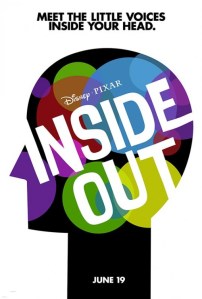
Inside Out - Welcome back Pixar, we've missed you.

Inside Out – Welcome back Pixar, we’ve missed you.

After falling short with the diminished artistic returns of sequels Cars 2 (2011) and Monsters University (2013), there was a fear that laziness had set in at Pixar and the stratospheric heights of The Incredibles (2004) and WALL-E (2008) were no longer being reached for.

Pete Docter clearly had other ideas, however, and with Inside Out has delivered the best original Pixar feature since Up (2009), ironically also helmed by the same director.

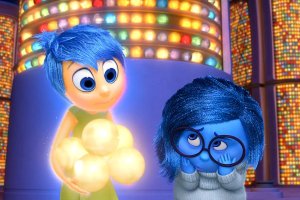
It's going to get emotional: Joy (Amy Poehler) and Sadness (Phyllis Smith) in Inside Out

It’s going to get emotional: Joy (Amy Poehler) and Sadness (Phyllis Smith) in Inside Out

Docter clearly understands the golden rule of animation – don’t talk down to the kids. Ever since Disney had the balls to (spoiler alert) kill off Bambi’s mum way back in 1942, the most timeless animated movies have been the ones that treat their audience, young or old, with the respect they deserve.

Monsters, Inc (2001), Docter’s first film, declared that being scared was a good thing and all part of growing up, while Up dealt with issues of loss and loneliness, most notably in the heartbreaking opening reel. Crucially, both films speak to adults and children in their own way, and not just by throwing in a bit of innuendo or cheap gags to please the mums and dads.

The same can be said of Inside Out, which may follow the familiar Pixar formula of having two disparate characters thrown together and forming a bond through a shared jeopardy, but does so in a beautifully engaging fashion.

Riley's (Kaitlyn Dias) not happy with mum and dad (Diane Lane and Kyle MacLachlan) in Inside Out

Riley’s (Kaitlyn Dias) not happy with mum and dad (Diane Lane and Kyle MacLachlan) in Inside Out

Riley (Kaitlyn Dias) is a happy young girl whose life is thrown upside down when she moves with her mum (Diane Lane) and dad (Kyle MacLachlan) from the only home and friends she’s ever known to a new life in San Francisco.

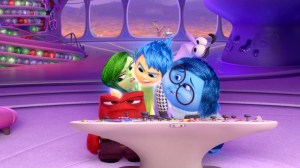
Riley is led by her emotions – Joy (Amy Poehler), Sadness (Phyllis Smith), Anger (Lewis Black), Fear (Bill Hader) and Disgust (Mindy Kaling) – who operate out of Headquarters. But when an unfortunate incident leaves Joy and Sadness stranded elsewhere in Riley’s mind, her life is thrown into turmoil as her other emotions work out what to do whilst Joy and Sadness try to find a way home.

Films set inside a person’s body aren’t unique – Woody Allen’s Everything You Always Wanted to Know About Sex* (*But Were Afraid To Ask) (1972) famously featured a sequence that explored what happens during ejaculation, whilst Fantastic Voyage (1966) and Innerspace (1987) were more action-packed – but what sets Inside Out apart is its sheer inventiveness.

You're in my head! oy (Amy Poehler), Sadness (Phyllis Smith), Anger (Lewis Black), Mindy Kaling (Disgust) and Fear (Bill Hader) in Inside Out

You’re in my head! oy (Amy Poehler), Sadness (Phyllis Smith), Anger (Lewis Black), Mindy Kaling (Disgust) and Fear (Bill Hader) in Inside Out

Joy and Sadness’ trip through Riley’s head is wonderfully realised, with giant banks of marble-shaped memories and grand islands that define her personality (family, friendship hockey) that start to crumble as emotional tumult grips the young girl.

Their journey back to Headquarters (which includes an inspired and tripy Pablo Picasso-esque excursion through Riley’s Abstract Thoughts) is assisted by the colourful Bing Bong (Richard Kind), Riley’s childhood imaginary friend who has been forgotten over time. Bing Bong’s gradual acceptance that Riley has moved on and his time has been and gone culminates in a scene that manages to be both heart-warming and heartbreaking all at once.

This understanding is also shared by Joy, whose single-minded belief that happiness alone is enough to define someone slowly gives way to the recognition that Sadness can play just as important a part in determining who we are.

Family time for Riley (Kaitlyn Dias) and her mum and dad (Diane Lane and Kyle MacLachlan) in Inside Out

Family time for Riley (Kaitlyn Dias) and her mum and dad (Diane Lane and Kyle MacLachlan) in Inside Out

Just as in 2014’s Boyhood, Inside Out speaks to what it’s like for all of us to grow up. Like Mason Jr. in Richard Linklater’s masterpiece, Riley is pulled out of the life she knew and struggles to fully understand the emotional impact it has.

In one hilarious scene set around the dinner table, we’re shown a family argument through the perspective of Riley’s and her folks’ emotions. Tellingly, the predominant emotion in Riley’s mum’s life is Sadness, whilst for her dad it is Anger (a cut scene inside the father’s head with his emotions enjoying watching a game of football instead of listening to the dinner chat is especially funny).

Inside Out is a rarity in cinema; a film that not only speaks to children going through the trials of growing up, but also to the parents who are doing their best, but may sometimes struggle to remember what it was like to be 11. Welcome back Pixar, we’ve missed you.

Review – Jurassic World

The very fact Colin Trevorrow’s mammoth monster movie has replaced the noun ‘park’ with ‘world’ in the title should give a pretty clear indication of the gargantuan aspirations of this latest entry in the dino franchise.

The film's box office stampede means a further installment is inevitable; one can only hope that engaging characters and a solid script aren't as extinct as in Jurassic World

The film’s box office stampede means a further installment is inevitable; one can only hope that engaging characters and a solid script aren’t as extinct as in Jurassic World

It hasn’t quite been 65 million years, but the wait for the fourth film built on the foundations of Michael Crichton’s novel has been long indeed, having been stuck in development hell like an insect trapped in amber for over a decade.

Now that it is finally here courtesy of Safety Not Guaranteed director Trevorrow, Jurassic World emerges as an occasionally thrilling, but ultimately flimsy exercise in 21st century blockbuster filmmaking.

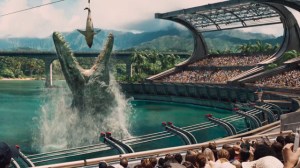
The Mosasaurus jumps the shark in Jurassic World

The Mosasaurus jumps the shark in Jurassic World

With the odd exception, modern day tent pole releases trade-off on what went before whilst repackaging themselves in the hope that a big enough audience will simply shrug their shoulders and swallow what’s being served to them. Although Jurassic World isn’t as egregiously cynical as the likes of Transformers, it’s hard to ignore the suspicion the film is constantly apologising for bowing down at the altar of Steven Spielberg and stealing so shamelessly from the bearded one’s 1993 original.

Trevorrow and co may have felt that having frigid company mouthpiece Claire Dearing (Bryce Dallas Howard) informing rugged-but-nice Velociraptor trainer Owen Grady (Chris Pratt) that the genetically modified Indominus Rex has been cooked up in the lab because audiences expect the latest iteration to be bigger and better is self-referentially winking at the viewer, but it doesn’t excuse the fact Jurassic World is having its cake and eating it.

Isla Nublar's resident hunk Owen Grady (Chris Pratt) in Jurassic World

Isla Nublar’s resident hunk Owen Grady (Chris Pratt) in Jurassic World

There are other examples. The film makes a corporate sponsorship joke about naming its prize exhibit “Verizon Wireless Presents the Indominus Rex”, whilst having outrageous levels of product placement throughout. Furthermore, an incredulous Owen points out to Claire the foolishness running around a swampy rainforest in heels, but she somehow manages to anyway, even managing to outrun a T-Rex while holding a flare in a near carbon-copy rehash of Jurassic Park‘s most memorable scene (Trevorrow also employs Spielberg’s trademark camera zoom to someone’s face on numerous occasions).

Claire Dearing (Bryce Dallas Howard) has a flare for the dramatic in Jurassic World

Claire Dearing (Bryce Dallas Howard) has a flare for the dramatic in Jurassic World

Other aspects simply don’t make any sense. Why on earth, for instance, would the Indominus enclosure be guarded by a comically inept guard who’s more interested in throwing snacks down his gullet than checking on the whereabouts of probably the most dangerous animal on the planet? Also, if the Indominus somehow managed to jump over a 50ft fence, how the hell did no-one see it?

As for InGen security chief Vic Hoskins’ (Vincent D’Onofrio) hair-brained plan to turn Owen’s raptor pack into supersoldiers, the least said about that one the better.

Brothers Zach (Nick Robinson) and Gray Mitchell (Ty Simpkins) look suitably scared in Jurassic World

Brothers Zach (Nick Robinson) and Gray Mitchell (Ty Simpkins) look suitably scared in Jurassic World

Compounded, these moments become increasingly frustrating and overshadow the parts of Jurassic World that do work. The dive-bombing pterosaur attack on the thousands of visitors herded into the resort is the highlight of the film and features its nastiest scene involving a character being dunked in and out of the water by a hungry pterosaur, only to become lunch for the Mosasaurus, a giant aquatic lizard that normally provides SeaWorld-style shows for guests.

A furious stampede of guests aping a herd of dinos is also a nice touch, as is a moment early in the film when a dramatic footprint is revealed to be that of a small bird – one that links us to the introduction of hapless brothers Zach and Gray (Nick Robinson and Ty Simpkins).

Clever girl: Indominus Rex gets to work in Jurassic World

Clever girl: Indominus Rex gets to work in Jurassic World

Meanwhile, the final dino-tastic standoff is admittedly well handled and features a particularly satisfying denouement, but too much of what has come before involving the Indominus is either nicked from Aliens (1986) or Spielberg’s original.

The film’s box office stampede means a further installment is inevitable; one can only hope that engaging characters and a solid script aren’t as extinct as in Jurassic World.

Review – Mad Max: Fury Road

To say the unbearably long wait for George Miller’s fourth instalment in the post-apocalyptic franchise that made his name was worth it would be the mother of all understatements.

Mad Max: Fury Road - the message is simple: see it on the biggest screen possible

Mad Max: Fury Road – the message is simple: see it on the biggest screen possible

Initial grumblings over the two-hour running time and the somewhat unclear motivations of certain characters largely evaporated to dust (save for the sudden switch in allegiance by Nicholas Hoult’s Nux) following a hugely rewarding second viewing of Mad Max: Fury Road.

The genius of Miller’s decades-in-the-making follow-up to his initial trilogy is that it is both sublimely simple in its narrative thrust and also a complex, world-expanding work of real cinematic vision that has ideas coming out of its tailpipe.

Beyond Thunderdome: Imperator Furiosa (Charlize Theron) in Mad Max: Fury Road

Beyond Thunderdome: Imperator Furiosa (Charlize Theron) in Mad Max: Fury Road

It’s also the most brilliantly accomplished action film since The Raid 2: Berandal and a dizzingly demented piece of moviemaking that throws caution, and everything else for that matter, to the wind.

While Mel Gibson’s leather-jacketed lead dominated the action of Miller’s first three Mad Max pictures, Tom Hardy’s eponymous survivor often plays second fiddle to Fury Road‘s real star, Imperator Furiosa (Charlize Theron), a trusted driver for the tyrannical Immortan Joe (Hugh Keays-Byrne).

Bane of existemce: Max (Tom Hardy) in Mad Max: Fury Road

Bane of existence: Max (Tom Hardy) in Mad Max: Fury Road

Furiosa brings the full weight of Joe’s wrath down on her when he discovers she’s smuggled his breeding ‘wives’ out of the Citadel. Meanwhile, Max, who has been captured by Joe’s War Boys and used as a ‘blood bag’ for the sickly Nux, works to free himself and do what he can to survive.

It’s difficult to talk about Mad Max: Fury Road without first referencing the quite incredible action scenes. The fact that everyone is in some sort of vehicle, be it Furiosa’s bad ass War Rig, Joe’s outlandish monster truck or the multitude of pursuit vehicles that look like they’ve been chop-shopped to hell, naturally provides a pulse-quickening kineticism that is well served by Junkie XL’s Hans Zimmer-inspired score.

Immortan Joe (Hugh Keays-Byrne) goes in search of his wives in Mad Max: Fury Road

Immortan Joe (Hugh Keays-Byrne) goes in search of his wives in Mad Max: Fury Road

The first major action set piece that culminates in our leads driving headlong into an apocalyptic sand storm would normally be the dazzling denouement of most movies of this ilk, but that is merely the appetizer here for what is a banquet of senses-shattering craziness.

Miller continues to up the ante, throwing in chainsaws, spear bombs and a host of other weaponry until it gets to the point when Joe’s polecats (guys perched on the end of giant, bendy sticks that are somehow clamped to souped-up vehicles) are flying in from left and right trying to take out Max and co or steal the wives back from inside the War Rig. Words barely do it justice, which also might explain why dialogue is at a premium – when action is this compulsive who the hell needs talking?

The polecats get in on the action in Mad Max: Fury Road

The polecats get in on the action in Mad Max: Fury Road

Hardy once again lets his physicality do the talking in a role where more is said by his haunted, unsettling eyes and fists than his mouth ever could. His Max is searching for redemption as desperately as Furiosa, a character brought vividly to life by Theron in a performance that’s as feral as it is fascinating.

There’s so much more to be said about Mad Max: Fury Road, but it essentially comes down to a simple message – see it on the biggest screen possible.

Review – San Andreas

Anyone expecting a disaster movie of disastrous proportions may be pleasantly surprised by this unashamedly dumb but fun multiplex-friendly popcorn fodder.

Since the release of the Charlton Heston-starring Earthquake in 1974, Hollywood has merrily laid waste to various parts of the world (mostly New York) in a multitude of different ways, be it attacking monsters, aliens, meteors or even solar flares.

Hardly a work of great originality or vision, but San Andreas is far from a disaster

Hardly a work of great originality or vision, but San Andreas is far from a disaster

The biggest culprit remains good old Mother Nature, though; and while we’ve sat through exploding volcanoes, extreme weather, tornadoes, tsunamis and floods, it’s hard to believe we’ve had to wait more than 40 years for another earthquake movie to hit the big screen.

Was it worth the wait? Well, kind of. There’s no doubt San Andreas delivers in the visual effects department, with Los Angeles and San Francisco being torn asunder by a cavalcade of super-destructive quakes; but anyone going into the movie with delusions of anything except nuts and bolts genre filmmaking should probably lower their expectations.

Chief Raymond 'Ray' Gaines (Dwayne Johnson) and estranged wife Emma (Carla Gugino) in San Andreas

Chief Raymond ‘Ray’ Gaines (Dwayne Johnson) and estranged wife Emma (Carla Gugino) in San Andreas

Carlton Cuse’s screenplay ticks off the clichés with shameless abandon. Our hero, LA Fire Department helicopter-rescue pilot Ray Gaines (Dwayne Johnson) is brilliant at his job, but his personal life is a mess. His estranged wife Emma (Carla Gugino) is filing for divorce to shack up with wealthy real estate developer Daniel Riddick (Ioan Gruffudd), while his daughter Blake (Alexandra Daddario) is slipping further away.

Just as all hope for a reconciliation appears dead, the San Andreas fault dutifully decides to shift its tectonic plates, causing a cataclysmic series of ever-increasing earthquakes and giving Ray the chance to save Emma and Blake – and his marriage – from the ensuing chaos.

Blake (Alexandra Daddario) hangs out with brothers Ben (Hugo Johnstone-Burt) and Ollie (Art Parkinson) in San Andreas

Blake (Alexandra Daddario) hangs out with brothers Ben (Hugo Johnstone-Burt) and Ollie (Art Parkinson) in San Andreas

As many a Roland Emmerich movie has attested, the performances in disaster movies generally play second fiddle to the sensory-shredding effects. While San Andreas isn’t really any different, it at least tries to make you root for its key characters, thanks in no small part to the central performance of Johnson – an underrated actor who refuses to  phone it in despite the ramshackle material he occasionally has to work with.

Johnson gives a solid turn as Ray and even comes close to welling up in one reflective scene opposite the reliable Gugino. Daddario is less engaging, although she’s made to look better than she actually is opposite a pair of annoyingly posh English brothers played by Hugo Johnstone-Burt and Art Parkinson.

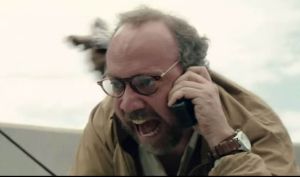
"You're not paying me enough!" - Paul Giamatti plays seismologist Lawrence Hayes in San Andreas

“You’re not paying me enough!” – Paul Giamatti plays seismologist Lawrence Hayes in San Andreas

Paul Giamatti, meanwhile, adds an extra bit of gravitas to the film (think Ian Holm in 2004’s The Day After Tomorrow) as another of those genre staples, the scientist no-one listens to until it’s too late, while the wooden spoon goes to the sleep-walking Gruffudd, whose make-up-ridden face is looking particularly strange these days.

To say San Andreas follows a narrative straight line probably won’t come as a surprise, but there’s a guilty pleasure to be had in watching the west coast sliding into the Pacific. Hardly a work of great originality or vision then, but San Andreas is far from a disaster.