Review – Rebellion

This review originally formed part of my blog covering the 2011 London Film Festival. Only now has the film finally gained a wide international release.

Mathieu Kassovitz's Rebellion - "brave, prescient film-making of the highest order"

Mathieu Kassovitz’s Rebellion – “brave, prescient film-making of the highest order”

Mathieu Kassovitz has never quite managed to reach the same heights as his hard-hitting debut feature La Haine (1995). In fact he was fast turning into a hack for hire with such lightweight US genre fare as the terrible Halle Berry ‘shocker’ Gothika (2003) and Vin Diesel-starring sci-fi dud Babylon AD (2008).

Well, Kassovitz is back in France and back to his best with the searing, heavyweight political thriller Rebellion, which chronicles an incident in 1988 in the French colony of New Caledonia when 27 hostages were taken by a group of indigenous guerilla fighters seeking independence, and the bloody military rescue operation that subsequently took place.

The French forces round up the 'insurgents' in Rebellion

The French forces round up the ‘insurgents’ in Rebellion

Kassovitz films the drama through the eyes and experiences of Philippe Legorjus (played by the director himself), a Captain with the French GIGN counter-terrorist special forces, which were called on to assist the army with tracking down the ‘insurgents’ and freeing the hostages.

Legorjus and his men are primarily trained to deal with hostage-takers through negotiation, but the Captain quickly gets the impression that talking isn’t the number one goal of the military brass and French minister Bernard Pons (Daniel Martin), especially when there’s a presidential election taking place in France and incumbent President François Mitterrand and his opponent Jacques Chirac are trying to out-do each other over their tough stances on the unfolding crisis.

The bloody fallout of the 1988 New Caledonia hostage crisis begins in Rebellion

The bloody fallout of the 1988 New Caledonia hostage crisis begins in Rebellion

Legorjus nevertheless tries to make contact with the group holding the hostages and succeeds after he is himself taken hostage. He wins the hard-earned trust of leader Alphonse Dianou (Iabe Lapacas) and is set free, promising to do what he can to give the group a platform in which to put their case for independence forward.

With the situation still tense, Legorjus works around the clock trying to convince the powers that be that the hostage-takers are willing to negotiate, but keeps running into brick walls until time runs out and a full military assault is ordered. With no time left, Legorjus realises he must betray Dianou’s trust in an effort to save as many of the hostages as he can.

The military brass in full effect in Rebellion

The military brass in full effect in Rebellion

Counting down over the course of 10 days until the dramatic, bloody assault on the cave where the hostages are being held, there’s a growing sense of inevitability that Legorjus is fighting a losing battle.

There are pointed remarks sprinkled throughout the film as to where this path is headed; when Legorjus tells a lawyer living on the island that the order to attack has been given, he asks the captain incredulously “the government wouldn’t do that would they?”. Another moment comes earlier in the film when Legorjus reminds his men that the population of New Caledonia are officially French citizens and therefore not ‘the enemy’. Needless to say these words ring hollow later in the film.

Thought-provoking and provocative, the anger of the film seeps out of every frame. This is brave, prescient film-making of the highest order.

Review – Welcome To The Punch

British film has many forms, but it’s period dramas and social realism we often still think of first when seeking to epitomise its cinematic identity.

Welcome to the Punch

Just as L.A. Takedown was Michael Mann’s dry run for Heat, it remains to be seen whether Eran Creevy’s Welcome to the Punch is going to be a dress rehearsal for something better

Directors of the stature of Ken Loach and Mike Leigh continue to cast a long shadow over the British film landscape. But while much of their output is justifiably revered this narrow focus ignores those other figures whose work has helped to shape 21st Century British cinema.

The likes of Danny Boyle, Michael Winterbottom and Shane Meadows owe much to Loach and Leigh (as well as other talismanic figures such as Alfred Hitchcock, Nicolas Roeg and Lindsay Anderson) and have themselves opened the door for a slew of exciting young directors.

The impressive opening robbery in Welcome to the Punch

The impressive opening robbery in Welcome to the Punch

Eran Creevy marked himself out four years ago with the ultra low-budget urban thriller Shifty, a highly promising debut funded by Film London’s Microwave scheme that won him a Bafta and the attention of Ridley Scott, who came on board as executive producer for Creevy’s sophomore feature.

The partnership with Scott makes perfect sense when watching Welcome to the Punch, a super-slick crime drama that belies its minimal budget and polishes London up to look like New York.

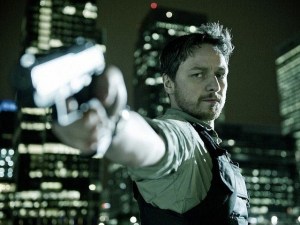
London provides the canvas on which the blood and bullets of the film are painted. Ex-criminal Jacob Sternwood (Mark Strong) must return to the Big Smoke when his son is involved in a botched heist, giving obsessed cop Max Lewinsky (James McAvoy) one last chance to bring his quarry to justice.

Obsessive cop Max Lewinsky (James McAvoy) in Welcome to the Punch

Obsessive cop Max Lewinsky (James McAvoy) in Welcome to the Punch

Although Michael Mann is an obvious touchstone for the film (specifically his epic crime thriller Heat, wherein the cop and criminal who are two sides of the same coin), Creevy owes an equally big debt to Scott.

Just as Scott has a penchant for using extreme levels of lighting, Creevy bathes each frame with light, much of it artificial due to most of the film being shot at night. Indeed London has rarely looked quite so mouth-watering (or so empty – seriously, where the hell is all the traffic, especially in the well-staged opening robbery?) and is arguably the most important character in Welcome to the Punch, in much the same way that Scott utilises cityscapes to emphasise many of his stories.

Master thief Jacob Sternwood fights for his life in Welcome to the Punch

Master thief Jacob Sternwood fights for his life in Welcome to the Punch

One area where Creevy doesn’t reflect Scott, however, is in his use of female characters. While Scott has G.I. Jane, Ripley and Thelma and Louise, Welcome to the Punch‘s most prominent female is Lewinsky’s plucky partner Sarah Hawks who, despite Andrea Riseborough’s galant efforts remains an underwritten token effort on the writer-director’s part.

Partners in fighting crime Sarah Hawks (Andrea Riseborough) and Max Lewinsky (James McAvoy) in Welcome to the Punch

Partners in fighting crime Sarah Hawks (Andrea Riseborough) and Max Lewinsky (James McAvoy) in Welcome to the Punch

It’s the script and characters where the film falls down most. Creevy’s tried so hard to give us a crime drama with the look of a Hollywood budget, he’s also fallen prey of the two-dimensional characterisation and clichéd dialogue that has blighted so many American films of this genre.

Lewinsky’s the kind of cop who’ll disobey orders to get his man, but is warned he’s getting “too close” to the case and is told: “You’re obsessed; you’re not thinking straight.” Likewise, David Morrissey gets an equally cringeworthy humdinger when, as senior cop Thomas Grainger he tells Lewinsky to “take him [Sternwood] down this time … take him down hard”.

"You're too close!" Senior cop Thomas Grainger (David Morrissey) gives Max Lewinsky (James McAvoy) a dressing down in Welcome to the Punch

“You’re too close!” Senior cop Thomas Grainger (David Morrissey) gives Max Lewinsky (James McAvoy) a dressing down in Welcome to the Punch

A starry British cast rise above the creaky dialogue, especially the ever-reliable Strong and Peter Mullan as Sternwood’s lieutenant Roy Edwards, while the usually unengaging McAvoy does just about enough to avoid looking like he’s channeling The Professionals.

What the film lacks in originality and a good script it makes up for in pace and the impressive set pieces. It’s here Creevy borrows heaviest from Mann, with the opening robbery nodding to Heat‘s incredible central bank heist and the skilfully handled nightclub gunfight (the best scene in the film) owing a debt to Collateral.

Creevy is clearly a director with an eye for style and an ability to make a small budget go a long way, but just as L.A. Takedown was Mann’s dry run for Heat, it remains to be seen whether Welcome to the Punch is going to be a dress rehearsal for something better.

Review – Red Dawn

After the New Hollywood of the 70s self-destructed in a blaze of cocaine and squandered opportunities the 80s ushered in the kind of cinematic reckoning we’re still living with today.

Red Dawn Poster

Red Dawn – “a film so underwhelming you’d have to check your ticket to remember what it is you’ve just seen”

As well as being the decade that taste forgot, the 80s also served as the decade that embraced the tent pole blockbuster and gave us countless straight-to-video dumb-as-nails cheapies.

It’s a cinematic legacy we’re still living with today as the brain puddle at the heart of Tinseltown green-lights more and more remakes, re-imaginings and reboots.

Red Dawn

Sullen-looking Matt Eckert, Robert Kitner (Josh Hutcherson) and Jed Eckert (Chris Hemsworth) wonder what they’re doing in Red Dawn

This law of diminishing returns reaches a new bone-headed, flag-waving nadir with Red Dawn, a retread of the equally appalling 1984 flick directed by John Milius.

The original has gained a sort of cult appeal over the years (which probably explains the remake), but this casually ignores its many, many flaws, not least of which a script that’s so rabidly anti-communist it tramples over everything else, like a coherent narrative or character development.

That the context of the original at least made sense in that it you knew it was nothing more than a propaganda exercise for Ronald Reagan’s reheating of the Cold War, the timing of stuntman-turned-director Dan Bradley’s update is way off.

Red Dawn

The evil North Korean Captain Cho (Will Yun Lee) in Red Dawn

If it had been released during George W Bush’s tenure in the White House a similar argument could possibly be made, but the fact it went before the cameras in 2009 and is only now seeing the light of day rubber stamps what it is – a film out of its time, out-of-place and out on its ass.

While Milius’ original relied on the evil old Soviet Union to launch an invasion of the United States, Red Dawn 2.0 couldn’t even have the courage of its convictions to stick with China as its chief villain; in post-production this was changed to North Korea so as not to offend a potentially lucrative financial territory (as such it’s now reminiscent of the video game Homeland, also written by Milius).

Red Dawn

Red Dawn 2.0 – Patrick Swayze is probably spinning in his grave

The fact that North Korea would be able to muster a big enough army to launch a successful land invasion of the Land of the Free, and that such a force would go unnoticed until thousands of parachutes are seen over American skies is beyond laughable.

One can imagine the only reason this has made it into cinemas is to cash in on the star power of its lead Chris Hemsworth (Thor, The Avengers), whose US Marine Jed Eckert turns a ragtag group of teenagers into a gun-toting squadron of insurgents called the Wolverines (named after the local high school football team) out to take the homeland back from the evil clutches of the North Koreans, led by Captain Cho (Will Yun Lee).

Red Dawn

“Go Wolverines!”, or not, in Red Dawn

Setting aside the complete ridiculousness of the plot (hardly the first movie to be guilty of such a crime), Red Dawn‘s 93 minute running time at least avoids the Michael Bay trap of not knowing when to employ an editor.

That being said, those 93 minutes are some of the most lame-brained you’re likely to sit through this year. Hemsworth aside, the entire cast is dreadful, most notably Josh Peck as Jed’s sullen-looking brother Matt.

The odd choice line of dialogue aside (“Marines don’t die. They just go to hell and regroup”), the script slavishly adopts the lowest common denominator setting of a film so underwhelming you’d have to check your ticket to remember what it is you’ve just seen.

Review – Wreck-It Ralph

There’s a guilty pleasure in watching Disney’s affectionate homage to the dusty old 8-bit video games that were so adored by kids of all ages when Steven Spielberg’s E.T. was setting the box office alight.

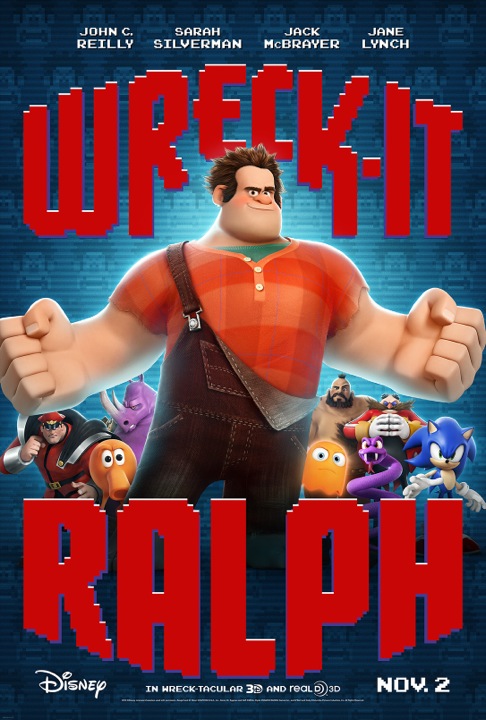
Wreck-It Ralph

The hugely entertaining and cleverly put-together Wreck-It Ralph

Once as common a sight as Starbucks, arcades have gradually retreated to seaside piers and motorway service stations in the face of the relentless onslaught of ever-more-technologically impressive games consoles.

The hugely entertaining and cleverly put-together Wreck-It Ralph celebrates this dying breed of coin-swallowing entertainment in a lavishly animated movie that also doesn’t forget the higher-definition games that have followed in their wake.

Wreck-It Ralph

Ralph (John C. Reilly) explains why he doesn’t want to be a bad guy anymore in Wreck-It Ralph

For the past 30 years, Ralph (voiced by John C. Reilly) has played the bad guy in the Donkey Kong-esque arcade game Fix-It Felix, Jnr, smashing up an apartment block only to see it put back together by gee-whizz good guy Felix (Jack McBrayer). It’s a role he’s grown tired of and, during a support group for video game villains reveals he wants to be the good guy for a change.

He gatecrashes a party at Felix’s penthouse home celebrating the game’s 30th anniversary, but is rebuffed by the other characters, who tell him to accept his station in life. Believing the only way he can be seen as ‘good’ is to earn a medal like Felix, Ralph sneaks into ultra-violent first-person shooter Hero’s Duty, but inadvertently launches a catastrophic chain of events that could lead to each of the games in the arcade being unplugged.

Wreck-It Ralph

Vanellope von Schweetz (Sarah Silverman) and Ralph (John C. Reilly) travel through the “candy-coated heart of darkness” of Sugar Rush in Wreck-It Ralph

From the moment an 8-bit Walt Disney title card appears at the start of the film, the warm glow of nostalgia takes hold. Much like the Toy Story franchise (which Wreck-It Ralph closely resembles in its premise), there’s a timelessness at work here. I can certainly remember slotting countless coins into games like Pac-Man, Out Run and Dragon’s Lair – it’s how my love affair with video games started – and each generation since will have their own memories of the games they grew up playing.

Wreck-It Ralph

“I’m gonna wreck it!” – Ralph (John C. Reilly) and the goody-two-shoes Felix (Jack McBrayer) in Wreck-It Ralph

This is nicely captured in a time-lapse sequence at the arcade where the action is set, wherein Fix-It Felix, Jnr sits in the same position over 30 years while the games around it come and go and the fashions and tastes of the youngsters who play them subtly change.

Director Rich Moore and his team introduce a number of nice little touches, including the jerky movements of the less-well developed supporting characters in the game and the blocky low-res furniture in Felix’s apartment, while in Sugar Rush, a garishly coloured kart racing game into which Ralph crash lands and ends up befriending the cute Vanellope von Schweetz (Sarah Silverman), all the characters are made of candy in some nightmarish Disney vision of hell, including policemen made of doughnuts.

Wreck-It Ralph

Poor old Q*bert hopes for a handout after his game gets unplugged in Wreck-It Ralph

As you might expect, there are nods subtle and unsubtle to a whole host of iconic games and game characters, including Tapper, Q*bert, Street Fighter, Metal Gear Solid, Sonic the Hedgehog and Halo (there are many more I undoubtedly missed), while the loony ruler of Sugar Rush King Candy (Alan Tudyk) is deeply reminiscent of the Mad Hatter from Disney’s 1951 adaptation of Alice in Wonderland.

Henry Jackman’s score, like the film itself, cleverly shifts in tone to reflect the different styles of the games and it wouldn’t be surprising if Wreck-It Ralph‘s ingenious ghost in the machine concept ends up breeding its own franchise.

After a slew of disappointing big-budget animations (even the normally reliable Pixar has been off its game of late), it’s great to see a return to form for the Mouse House and a film you’ll want to replay many times.

Review – Silver Linings Playbook

A quick glance at the plot for Silver Linings Playbook and you’d be forgiven for expecting yet another excruciating Hollywood romantic comedy, the kind that Gerard Butler and Jennifer Aniston seem to find themselves in.

Silver Linings Playbook

David O. Russell’s Silver Linings Playbook – “smart and spiky screwball comedy for the internet age”

What should make this film even worse is that its central figure Pat Jr (Bradley Cooper) has bipolar disorder, which normally results in the sort of turned-up-to-11  manic performance that cries out for an Academy Award.

The fact that Silver Linings Playbook manages to avoid the trap doors and skirts around the clichés is largely down to the mercurial David O. Russell, who adapts and directs this smart and spiky screwball comedy for the internet age from Matthew Quick’s short story.

Pat is diagnosed after attacking his wife’s lover in the shower and, after eight months in a psychiatric institution is released into the care of his OCD-afflicted, Philadelphia Eagles-obsessed father Pat Snr (Robert De Niro) and long-suffering mother Dolores (Australian actress Jacki Weaver). Without a job or a wife, Pat is determined to rebuild his life, believing that if he gets fit and stays positive he can save his marriage.

At a friend’s dinner party he meets the self-destructive Tiffany (Jennifer Lawrence), who has tried to overcome her grief at the death of her husband by sleeping around. Tiffany offers Pat a deal – she’ll help him reconnect with his wife as long as he becomes his dance partner for an upcoming ballroom competition.

Tiffany (Jennifer Lawrence) and Pat (Bradley Cooper) audition for Strictly Come Dancing in Silver Linings Playbook

Tiffany (Jennifer Lawrence) and Pat (Bradley Cooper) audition for Strictly Come Dancing in Silver Linings Playbook

Russell knows the rom-com tropes – Pat and Tiffany are clearly made for each other – but in the best tradition of those classic screwball comedies, all the fun comes in how these two broken souls finally realise what the audience have known all along.

Crucially, the chemistry between Cooper and Lawrence is fantastic. They fizz off each other like a pair of firecrackers, from the amusing dinner party when they swap anti-depressant stories like Christmas cards to the sultry dance sequences.

The two are equally tactless, whether it be Pat asking Tiffany how many people she slept with in her office before being fired, or Tiffany saving Pat the bother of reading Lord of the Flies by summarising it for him and throwing the book away, annoyed he’s only reading it because it’s on the high school syllabus his estranged wife is teaching (reflecting an earlier scene when Pat throws a copy of A Farewell to Arms through the window because he’s disgusted with the pessimistic ending).

"Go Eagles!" Pat Jnr (Bradley Cooper) and Pat Snr (Robert De Niro) celebrate in Silver Linings Playbook

“Go Eagles!” Pat Jnr (Bradley Cooper) and Pat Snr (Robert De Niro) celebrate in Silver Linings Playbook

This is no smooth ride to love of course; Tiffany attacks Pat for being “afraid to be alive” and feels increasingly used by her dance partner as nothing more than a tool in which to win back his spouse. Pat feels guilty for getting closer to Tiffany and suffers a number of violent bipolar episodes, including one in the reception of his therapist Dr Patel (Bollywood favourite Anupam Kher).

Pat Snr, meanwhile, faces his own struggles. In one moving scene, beautifully played by De Niro, he has a moment of guilty realisation that father and son are perhaps more alike than he thought and tries to find some common ground over their shared love of the Eagles.

Cooper has never been better, which admittedly isn’t saying a lot as his output, until now, has hardly been stellar. He isn’t afraid to make Pat unlikeable and restrains himself from falling back on the pretty-boy mugging he’s been guilty of in the past.

Pat Jnr (Bradley Cooper) tries to stay on top of his bipolar disorder in Silver Linings Playbook

Pat Jnr (Bradley Cooper) tries to stay on top of his bipolar disorder in Silver Linings Playbook

After years of picking up the pay cheque, it’s great to see De Niro back on form. For once, he looks fully engaged and appears to enjoy playing opposite Cooper again (following the patchy Limitless).

In lesser hands, the role of Tiffany could have become unbearably kooky or flaky. Apparently Russell originally had Zooey Deschanel in mind for the part, so one can only imagine how painful that would have been to watch.

Instead, Lawrence forgoes the crazy and brings a vulnerability to the role that’s refreshing to see. Instead of relying on a pout or a flailing of the limbs, she does a lot of her work with her eyes, expressing confidence, defensiveness or pain in a single look.

The exaggerated family dynamic and pent up emotions bring to mind Russell’s previous film The Fighter, but while that film somewhat lost its way, here he maintains a sharp focus and sweeps you along so persuasively that come the final dance contest you’ll be willing them on along with the rest.