Review – The Last Exorcism Part II

The word “last” clearly shouldn’t be taken literally in this lazy and derivative money-grabbing sequel that puts the ‘moron’ into oxymoron.
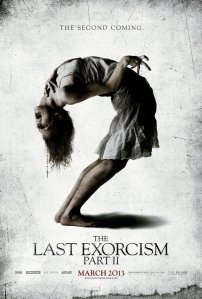
The word "last" clearly shouldn't be taken literally in this lazy and derivative money-grabbing sequel that puts the 'moron' into oxymoron in The Last Exorcism Part II

The word “last” clearly shouldn’t be taken literally in this lazy and derivative money-grabbing sequel that puts the ‘moron’ into oxymoron in The Last Exorcism Part II

Made for a pittance, 2010’s The Last Exorcism was something of a surprise hit with both horror-lovers and critics. Its plot was a clever twist on a tried and tested genre and at its core was a genuinely impressive performance by the relatively unknown Ashley Bell as troubled Nell Sweetzer.

Ashley Bell after reading the script for The Last Exorcism Part II

Ashley Bell after reading the script for The Last Exorcism Part II

The filmmakers (including producer Eli Roth) looked to have shaken off the tired and stale tropes of the found footage format for the first 70 unnerving and taut minutes, lost their bottle in the final reel and retreated to tried and tested genre staples, undermining everything the movie until that point had worked so hard to subvert.

The fact the film made a big profit was undoubtedly the driving force behind this ill-judged follow-up, whose title is as hilarious as it is non-sensical. Once again produced by Roth, directing duties have this time fallen to Canadian Ed Gass-Donnelly in what was presumably hoped to be a career breakthrough.

An unusual sleep pattern in The Last Exorcism Part II

An unusual sleep pattern in The Last Exorcism Part II

The opening credits are essentially a flashback to the events of the first movie, wherein a disillusioned preacher (played by Patrick Fabian) works with a documentary film crew to chronicle his final ‘exorcism’ and expose the whole practice as nothing more than religious hokum. The subject is Nell, whose father is convinced is possessed by the devil; but little do the preacher and film crew know that this particular case of satanic possession is all-too-real.

Picking up a short time afterwards, Part II‘s creepiest moments occur in the first few minutes when a demonic-looking Nell is discovered hiding in a couple’s kitchen. Alas, the promise of the opening scene dissolves quicker than you can say “Pazuzu”, and we’re very swiftly subjected to a game of spot the rip-off.

Poor old Nell Sweetzer (Ashley Bell) in The Last Exorcism Part II

Poor old Nell Sweetzer (Ashley Bell) in The Last Exorcism Part II

Nell is sent to a home for girls run by the kindly Frank (Muse Watson) and gradually comes out of her shell. She makes friends with several of the other girls, gets a job as a chambermaid and even develops a budding romance with bland hotel worker Chris (Spencer Treat Clark).

However, you know something bad’s going to happen when Frank reassures Nell by saying: “Whatever you’re running from won’t find you here.” And you definitely know it’s a case of famous last words when Nell happily declares: “There was a darkness, but now it’s gone … none of it was real.”

Gwen (Julia Garner) looking bland/evil in The Last Exorcism Part II

Gwen (Julia Garner) looking bland/evil in The Last Exorcism Part II

It almost goes without saying that Nell’s going to pay for wearing lipstick, being attracted to Chris and listening to rock ‘n’ roll (the devil’s music, lest we forget), but the film doesn’t even try to subvert what we know is coming from a mile off. What scares there are (next to none) are ruined by the lazy cliché of being accompanied by explosions of sound. A film’s always in trouble when is has to resort to that.

Bell gives a far better performance than the film deserves. Without her it would have been a total car wreck and it’s to her credit her turn brings to mind Sissy Spacek’s Carrie and Mia Farrow in Rosemary’s Baby. It’s a good job too, as the largely forgettable supporting cast only seem able to alternative between looking confused, evil or dumb.

To make matters worse, the door is left open for a sort of Omen III: The Final Conflict-style sequel which sounds about as much fun as being decapitated by a sheet of glass. Still, The Last Last Last Exorcism as it should be known could hardly be as demonic a waste of time as this.

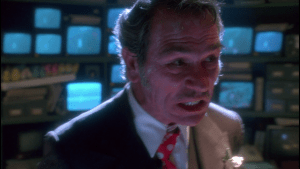
In Retrospect – Children Of Men (2006)

If the terrorist atrocities of 9/11 and 7/7 are the defining moments of this young century, then Alfonso Cuarón’s Children Of Men could arguably be cinema’s most defining response.

Although in essence about a society falling apart due to the fact no children have been born for 18 years, Cuarón’s loose adaptation of P.D. James’ novel is more a parable on the fear of the ‘other’ that has spread since those dreadful events of September 2001.

A truly astounding cinematic experience, Alfonso Cuarón's Children Of Men is profound filmmaking that will shock and awe in equal measure

A truly astounding cinematic experience, Alfonso Cuarón’s Children Of Men is profound filmmaking that will shock and awe in equal measure

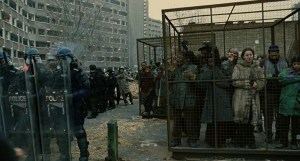
Refugees, "hunted down like cockroaches" in Children Of Men

Refugees, “hunted down like cockroaches” in Children Of Men

It is also a story of hope and thinly veiled spirituality that sees former activist turned cynical salaryman Theo Faron (Clive Owen) embarking on a perilous journey of redemption to help save the human race from its own destruction.

Set in 2027 Britain, Theo is offered money by his estranged wife Julian (Julianne Moore) – leader of a radical group fighting to protect immigrants’ rights called the Fishes – to escort refugee Kee (Clare-Hope Ashitey) to the coast. Theo discovers just how important she is to the future of humanity, but must evade both government forces and terrorists if they are to survive.

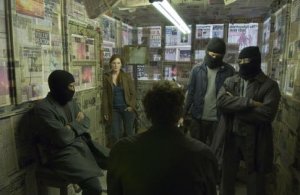
Julian (Julianne Moore) spells it out to estranged husband Theo (Clive Owen) in Children Of Men

Julian (Julianne Moore) spells it out to estranged husband Theo (Clive Owen) in Children Of Men

Children Of Men is unlike any science fiction film you’ve seen before. While most sci-fi wallows in high concept special effects and extravagant production design, Cuarón adopts an immersive vérité style to show a London on the verge of collapse. The pre-credits scene sets up the film perfectly. As customers in a packed cafe watch TV with despair at the news of the death ‘Baby’ Diego, the world’s youngest person, Theo absent-mindedly buys his coffee and walks out onto a busy London street dominated by piled-up rubbish, run-down public transport and rickshaws. His apathy towards Baby Diego’s death saves his life, however, as seconds later the shop is torn apart by an explosion triggered by the Fishes.

Ageing hippie Jasper Palmer (Michael Caine), no relation to Harry Palmer, in Children Of Men

Ageing hippie Jasper Palmer (Michael Caine), no relation to Harry Palmer, in Children Of Men

The UK, as we learn from government propaganda proudly stating “only Britain soldiers on”, is one of the few countries that hasn’t tipped over into outright anarchy. Society nevertheless seems on the brink of collapse. Refugees desperate to flee the chaos that has gripped much of the world have landed on British shores, only to be met by a police state that “hunts them down like cockroaches”, according to Theo’s friend, ageing anti-establishment hippie Jasper Palmer (Michael Caine).

Theo (Clive Owen) fights for survival in Children Of Men

Theo (Clive Owen) fights for survival in Children Of Men

The masses are told to remain suspicious of immigrants (bringing to mind Cold War East Germany) and walk around in a ghostly daze seemingly resigned to humanity’s gradual extinction. This is nicely observed when Theo goes to see his government minister cousin Nigel who, when asked why he still ‘rescues’ works of art when no-one will be around to appreciate them, responds: “I just don’t think about it.”

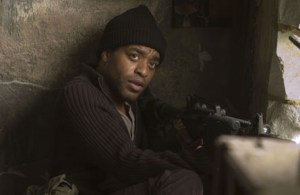
Senior rebel Luke (Chiwetel Ejiofor) in Children Of Men

Senior rebel Luke (Chiwetel Ejiofor) in Children Of Men

Cuarón pointedly evokes the holocaust in such provocative and chilling images as refugees staring hopelessly out of caged buses heading for the nightmarish concentration camp located in the former seaside town of Bexhill. In addition, piles of burning cattle bring to mind the apocalyptic scenes seen in Britain during the foot and mouth outbreak.

The use of diagetic and non-diagetic sound is masterfully handled by Cuarón. The sound of attack dogs seems to echo in every frame, while John Taverner’s elegiac, passionately spiritual Fragments of a Prayer is introduced at key moments in the film.

Children Of Men isn’t devoid of humour, however. While society falls apart, ceremonial traditions such as the Royal Horse Guard’s trot down The Mall are still observed. Theo also wears a faded London 2012 top, which is given a blackly ironic twist as it would have been the first Olympics to take place after babies stopped being born. The film isn’t afraid to throw in a few fart gags too.

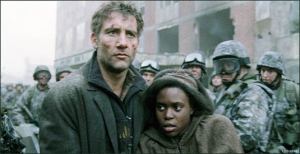
Theo (Clive Owen) leads Kee (Clare-Hope Ashitey) to safety in Children Of Men

Theo (Clive Owen) leads Kee (Clare-Hope Ashitey) to safety in Children Of Men

Owen has never been better as Theo, a reluctant hero who steps up to become Joseph to Kee’s Mary almost in spite of himself. The stellar supporting cast elevate the film, including the always-excellent Chiwetel Ejiofor as Julian’s right-hand man Luke, Ashley’s confused and frightened Kee and Pam Ferris as Fishes member Miriam, a former midwife who gets one of the movie’s most eloquent lines when she observes “very odd what happens in a world without children’s voices”.

Children Of Men‘s most indelible moments come during several bravura one-take shots. An ingeniously filmed chase sequence shot entirely within a car containing Theo, Julian, Luke, Miriam and Kee is chaotic, shocking and astonishing, while a tracking shot of Bexhill being turned into ground zero in the fight between government forces and the rebels is nothing short of extraordinary. You’ll be shaking your head at how Cuarón and cinematographer Emmanuel Lubezki pull it off.

Cuarón wisely avoids delving too directly into the causes of the mass sterility, although the theological subtext of the film (the struggle to ensure a child is born to save humanity from itself) suggests divine intervention. A truly astounding cinematic experience, Children Of Men is profound filmmaking that will shock and awe in equal measure.

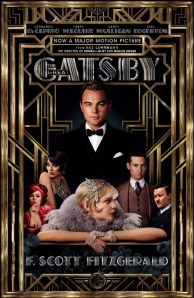
Review – The Great Gatsby

A great adaptation of what’s considered the Great American Novel has proven as elusive as the symbolic green light the obsessed Gatsby is desperately reaching for.

Baz Luhrmann's The Great Gatsby - "a beautifully designed but ultimately hollow experience which, much like Gatsby, would rather you didn't scratch beneath the veneer"

Baz Luhrmann’s The Great Gatsby – “a beautifully designed but ultimately hollow movie which, much like Gatsby, would rather you didn’t scratch beneath the veneer”

It’s been almost 40 years since the Robert Redford-starring misfire and now it’s the turn of Australian director Baz Luhrmann to see if he can capture the essence of F. Scott Fitzgerald’s most celebrated work.

Luhrmann certainly has some pedigree bringing iconic literature to the big screen; his unconventional modern-day version of Shakespeare’s most famous romantic tragedy (Romeo + Juliet) was a big hit and introduced the Bard to a whole new audience. His Oscar-nominated 2001 smash Moulin Rouge! also proved he’s no stranger when it comes to visual excess. That his 3-D take on The Great Gatsby is a failure, therefore, is a shame; all be it one with enough to save it from being labelled a disaster.

Nick Carraway (Tobey Maguire), sandwiched between dodgy businessman Meyer Wolfsheim (Bollywood star Amitabh Bachchan) and Jay Gatsby (Leonardo DiCaprio) in The Great Gatsby

Nick Carraway (Tobey Maguire), sandwiched between dodgy businessman Meyer Wolfsheim (Bollywood star Amitabh Bachchan) and Jay Gatsby (Leonardo DiCaprio) in The Great Gatsby

The source of the problem lies with Luhrmann himself, specifically his inability to both construct a well-paced scene and find the soul of the book. To borrow that great line from Shakespeare’s Macbeth, Luhrmann’s Gatsby is full of sound and fury, signifying nothing.

Set in New York at the height of the Roaring Twenties, our way into the story is through Nick Carraway (Tobey Maguire), an aspiring writer working in the city selling bonds, who rents a modest property next to the opulent mansion owned by the enigmatic and secretive Jay Gatsby (Leonardo DiCaprio). Carraway befriends Gatsby, whose decadent parties are the talk of the town, but can never pin down his true character. All he knows is that Gatsby is obsessed with Carraway’s cousin Daisy (Carey Mulligan), who’s unhappily married to two-timing millionaire Tom Buchanan (Joel Edgerton).

Unhappily married couple Daisy (Carey Mulligan) and Tom Buchanan (Joel Edgerton) in The Great Gatsby

Unhappily married couple Daisy (Carey Mulligan) and Tom Buchanan (Joel Edgerton) in The Great Gatsby

Films generally succeed or fail with their audience within the first 20 minutes. Luhrmann’s approach to winning us over in the first two reels is to burn a hole in the retina with a kinetic explosion of colour, razzmatazz, CGI and stomach-churning, epileptic camerawork – all accompanied by Jay-Z’s scattershot soundtrack taking in hip hop, George Gershwin and plenty more besides – that tries to batter you into submission but just ends up coming off as a mess.

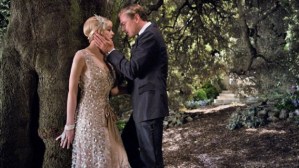
Daisy (Carey Mulligan) and Gatsby (Leonardo DiCaprio) steal a kiss in The Great Gatsby

Daisy (Carey Mulligan) and Gatsby (Leonardo DiCaprio) steal a kiss in The Great Gatsby

While Luhrmann’s at his most comfortable and confident during the myriad party scenes, where his supersonic style of direction suits the frenzied action on screen, when the story demands restraint to allow the narrative to flow and the characters to develop the film badly loses its way. The whole middle section is listless, with scenes that should be gripping (in particular the pivotal hotel room showdown that drives the final act) feeling unengaging and oddly lifeless.

The one truly great shot of Baz Luhrmann's The Great Gatsby

The one truly great shot of Baz Luhrmann’s The Great Gatsby

Luhrmann and co-writer Craig Pearce invent scenes of Carraway writing about his experiences with Gatsby while being treated in a sanatorium for “morbid alcoholism” as a way of explaining the narration, but get bogged down by continually returning to the washed-up wannabe writer pouring his tortured soul onto the page, even going so far as to etch choice bits of prose onto the screen.

Maguire’s lost puppy look soon grates and doesn’t work. Carraway may feel “within and without” of the world he stumbles into, but Maguire’s performance suggests he’s far happier observing than getting his hands dirty. Mulligan’s scared and inert southern belle is more believable, however, while Edgerton chews the scenery as the self-entitled Buchanan.

Nick Carraway (Tobey Maguire) and Jordan Baker (Elizabeth Debicki) in The Great Gatsby

Nick Carraway (Tobey Maguire) and Jordan Baker (Elizabeth Debicki) in The Great Gatsby

DiCaprio stands head and shoulders above everyone else (with the exception of Elizabeth Debicki’s cynical Jordan, a friend of Daisy), giving a performance far more understated and nuanced than anything else in the movie. His introduction – stood in front of a volley of fireworks, glass raised – is the one moment the film lives up to the title. DiCaprio has matured significantly as an actor in the past few years and delivers an engaging mix of charisma, mystery, sadness and unnerving obsession that saves the film from falling flat on its face.

At one moment Carraway compares what he’s witnessing to an “amusement park”. It’s a fitting description of this beautifully designed but ultimately hollow experience which, much like Gatsby, would rather you didn’t scratch beneath the veneer.

Review – Fast & Furious 6

For a franchise so long in the tooth, Fast & Furious is still firing on all nitrous-fuelled cylinders and showing no signs of slowing down as it shifts into sixth gear.

Fast and Furious 6 is unbelievable, ludicrous (or Ludacris) and absurd, but when brainless full-throttle action entertainment is done as effortlessly well as this it hardly matters

Fast & Furious 6 is unbelievable, ludicrous (or Ludacris) and absurd, but when brainless full-throttle action entertainment is done as effortlessly well as this it hardly matters

Although no slouch at the box office, 2009’s Fast & Furious accelerated the downward critical spiral of a series that had become weighed down by its underground car-racing roots. Realising the franchise needed a major jump-start, returning director Justin Lin and writer Chris Morgan expanded their horizons and delivered the most successful entry to date in 2011’s Fast Five.

Essentially Ocean’s Eleven on wheels, Fast Five managed to attract a whole new audience while still keeping the core fan base happy with plenty of turbo-charged vehicles.  Thankfully, Fast & Furious 6 is far from the car wreck that Ocean’s Twelve turned out to be; instead we get a high-octane joy ride that revels in its crazy stunts but doesn’t take itself too seriously.

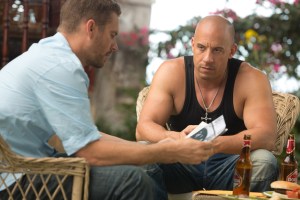
Brian (Paul Walker) and Dom (Vin Diesel) discuss where to go next in Fast and Furious 6

Brian (Paul Walker) and Dom (Vin Diesel) discuss where to go next in Fast & Furious 6

After pulling off the heist of their lives, Dominic Toretto (Vin Diesel), Brian O’Conner (Paul Walker) and the rest of the A-Team are enjoying the spoils. That is until Diplomatic Security Service agent Luke Hobbs (Dwayne Johnson) turns up unannounced offering to clear their criminal records in return for bringing down a highly professional and deadly gang of mercenaries led by criminal mastermind Owen Shaw (Luke Evans), whose second-in-command is Toretto’s presumed-dead lover Letty (Michelle Rodriguez).

The team realise they've taken on Mission: Difficult in Fast & Furious 6

The team realise they’ve taken on Mission: Difficult in Fast & Furious 6

One of the things that really worked in Fast Five was the addition of man mountain Johnson to the cast, a far better actor than he’s given credit for as well as an imposing screen presence. We not only get Johnson back for Fast & Furious 6, we also get the ‘face of women’s MMA’ Gina Carano, who proved her chops in Steven Soderbergh’s under-appreciated 2011 action flick Haywire and stars here as Hobbs’ right-hand woman Riley. With so many bad-asses on screen it wouldn’t have taken much for the film to become one long (and ridiculous) fist fight; however, the narrative, much of which takes place in London, and characters are more than engaging enough for the fito work.

Another believable action set piece in Fast and Furious 6

Another believable action set piece in Fast & Furious 6

That’s not to say it’s shy when it comes to action, which is both fast and furious. The fight scene between Riley and Letty in a London Underground station is one of the best you’ll see this or any other year, while the demolition derby involving Shaw and Letty in a tank and Toretto, O’Conner, Roman Pearce (Tyrese Gibson) in souped-up motors trying to stop his dastardly plans is utter lunacy. Although it can’t match that other epic highway wig out in The Matrix Reloaded for sheer over-the-top spectacle, it’s still jaw-dropping stuff (although the lack of interest given to the civilian casualties along the way is somewhat troubling). Likewise, the final stunt-filled set piece staged on what must be the longest runway in the world doesn’t reach the heights of Fast Five‘s joyously pleasurable denouement involving a bank vault being dragged through the streets of Rio, but it’s another fine example of how every penny spared is on screen.

Agent Luke Gibbs (Dwayne Johnson) and Riley (Gina Carano) look on impressed in Fast and Furious 6

Agent Luke Gibbs (Dwayne Johnson) and Riley (Gina Carano) look on impressed in Fast & Furious 6

Diesel (who now looks set to stay after realising this is his best bet at a regular pay cheque) is hardly the world’s greatest actor, but then he doesn’t need to be to play lunkhead Toretto. The same goes for Walker, although there’s no denying they work well off each other and with the other members of the ‘family’ (as we’re constantly reminded), tech whiz Tej (Chris Bridges, aka rapper Ludacris), street racer Han (Sung Kang) and former Mossad agent Gisele (Gal Gadot). It’s also good to see the return of a few old faces, including Shea Whigham as O’Conner’s former FBI colleague Agent Stasiak.

The post-credits coda is becoming one of the franchise’s staples and this time delivers its most dramatic final twist yet, promising a great villain for next year’s follow-up. That being said, neither Johnson nor director Lin have signed up for Fast Seven due to it being rushed into production which is a big shame.

It’s unbelievable, ludicrous (or Ludacris), absurd and if you had a drink for every time someone changes gear you’d be slaughtered half an hour in, but when brainless full-throttle action entertainment is done as effortlessly well as this it hardly matters.

In Retrospect – Natural Born Killers (1994)

It’s been almost 20 years since Oliver Stone’s outrageously provocative indictment of our obsession with media-fed celebrity and violence grabbed its own set of headlines, but if anything it’s become even more prescient.

As fearless as it is bombastic and problematic, it's unlikely we'll see the like of Oliver Stone's Natural Born Killers again

As fearless as it is bombastic and problematic, it’s unlikely we’ll see the like of Oliver Stone’s Natural Born Killers again

With each new school shooting, massacre and serial killer, America’s news networks have sunk to new depths and served up opinions and conjecture as ‘factual’ prime time entertainment to a public drawn to the grisly details like a moth to a flame.

Cinema has long-held a fascination with our darker side, from such classics as Badlands (1973), The Texas Chainsaw Massacre (1974) and Funny Games (1997) to schlock horror like the recent run of torture porn flicks.

Mickey and Mallory Knox (Woody Harrelson and Juliette Lewis) on their media-fuelled rampage in Natural Born Killers

Mickey and Mallory Knox (Woody Harrelson and Juliette Lewis) on their media-fuelled rampage in Natural Born Killers

Oliver Stone, one of America’s most polarising directors, has long explored humanity’s black heart and loss of innocence in the likes of Platoon, JFK and the under-appreciated Talk Radio, so it came as no surprise when it emerged he was making his most controversial film to date in Natural Born Killers.

Originally written by a pre-Reservoir Dogs Quentin Tarantino, Stone dramatically altered the tone of the script from popcorn action to a polemic attacking what he saw as the insidious and cynical devolution of the media from a fair and balanced news provider to a ratings-chasing entertainer that glorifies the violence it purports to condemn.

The shizer hits the fan fortabloid TV journalist Wayne Gale (Robert Downey Jr) in Natural Born Killers

The shizer hits the fan for tabloid TV journalist Wayne Gale (Robert Downey Jr) in Natural Born Killers

Drawn together by a common desire and abusive childhoods, lovers Mickey and Mallory Knox (Woody Harrelson and Juliette Lewis) hit the road and embark on a frenzied killing spree that captivates the sensation-hungry media machine, encapsulated by bloodthirsty tabloid journalist Wayne Gale (Robert Downey Jr) and his rabid TV show American Maniacs (which he describes as “junk food for the brain” for “those dim wits out there in zombieland”). Regarded as “the best thing to happen to mass murder since Manson” by his deluded fans, Mickey and Mallory’s notoriety only increases with each new massacre and explodes after they’re captured and locked up in prison, run by Warden Dwight McClusky (Tommy Lee Jones).

If you thought JFK was a cinematic smorgasbord, Stone and cinematographer Robert Richardson give us one of the most hyperactive and kaleidoscopic movie experiences ever committed to celluloid. Switching frenetically between colour, black and white, video, Super 8, CCTV, slow motion, projection, red lens, green lens and animation, it’s nothing if not eye-popping.

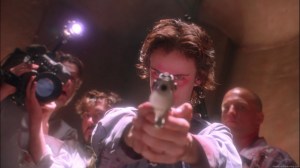
Not the thing you want to be staring at in Natural Born Killers

Not the thing you want to be staring at in Natural Born Killers

The late Roger Ebert said of the film: “Seeing this movie once is not enough. The first time is for the visceral experience, the second time is for the meaning.” Re-watching Natural Born Killers, I was able to get past the “visceral experience” and realised that Stone was trying to portray events through Mickey and Mallory’s crazy perspective. When we see the animated Mickey looking the cool hero, for instance, it’s how he sees himself.

Stone depicts his central pairing as an unstoppable force of nature relentlessly careering down “the road to hell”. When Mickey escapes prison for the first time, he jumps on a horse and symbolically rides towards a tornado. Likewise, they seem to float above those seeking to drag them down to the gutter, especially the parasitic Gale who sees Mickey and Mallory as his ticket to the big time. When Mickey poetically announces that “only love can kill the demon” during a live interview, Gale cheapens the moment by going to commercial, where an ad for Coke duly pops up.

Mickey and Mallory Knox (Woodly Harrelson and Juliette Lewis), “the best thing to happen to mass murder since Manson”, in Natural Born Killers

Mickey and Mallory Knox (Woody Harrelson and Juliette Lewis), “the best thing to happen to mass murder since Manson”, in Natural Born Killers

Images of sex and violence are projected in the background and dominate the airwaves, including footage of Scarface (an odd choice considering Stone wrote the screenplay). Also, Mickey and Mallory each have ying and yang tattoos to show their “extreme light and dark” sides, but they could just as easily represent the interdependence between their killing spree and the media’s insatiable blood lust.

However, for a film seeking to throw a cautionary spotlight on where we are and where we’re heading, Stone undermines his message in the way he depicts the moments of violence. Within the first five minutes, we’re shown a highly stylised scene of brutality visited upon the staff and customers of a diner, including an arresting tracking shot of a bullet fired from Mickey’s gun that dramatically stops in mid-flight before ending up in a cook’s head, and another tracking shot of a knife sent spinning slow motion through a window and into its victim. Crudely, Stone has the rednecks leer and grab at Mallory as she dances next to a jukebox, suggesting they’re asking for it.

Warden Swight McClusky (Tommy Lee Jones) loses it in Natural Born Killers

Warden Dwight McClusky (Tommy Lee Jones) loses it in Natural Born Killers

Stone would argue he’s seeking to project such violent scenes through the prism of satire, but when every cinematic trick in the book is adopted it’s difficult not to conclude he’s having his cake and eating it.

The excellent Harrelson and Lewis walk a fine line between being frightening, charming and sympathetic, while the manically over-the-top Jones and Downey Jr are deliciously sleazy and Arliss Howard’s angel of death on Mickey and Mallory’s shoulders is all the more unnerving for how underplayed it is.

As fearless as it is bombastic and problematic, it’s unlikely we’ll see the like of Natural Born Killers again, while for all his faults we need more directors like Oliver Stone to make us think, however unsubtle the message might be.