Review – Rush

More than three decades after his feature debut Grand Theft Auto, Ron Howard once more feels the need for speed in this loud and proud biopic centred around one of motor sport’s greatest rivalries.

Rush Poster

Although too conventional for a story such as this, Ron Howard’s Rush nevertheless fires on enough cylinders to make it a worthy study of what drove two men to risk it all to win

Perhaps more than any other sport, Formula One deeply divides opinion between those who would rather sit in a traffic jam to those who live for race day.

A typically laid-back James Hunt (Chris Hemsworth) in Rush

A typically laid-back James Hunt (Chris Hemsworth) in Rush

Previously, motor sport movies such as Grand Prix and Le Mans generally tailored themselves towards the petrol head. That was until the 2010 British documentary Senna, a stunning and deeply moving film about the life and tragic death of Brazilian F1 driver Ayrton Senna. Crucially, Senna managed to make its subject accessible to the uninitiated and avoid dumbing itself down to the serious fans at the same time.

It’s a feat Howard just about carries off in Rush which, like Senna, chronicles an intense duel between two drivers – Britain’s James Hunt and Austria’s Niki Lauda.

Daniel Brühl as Niki Lauda in Rush

Daniel Brühl as Niki Lauda in Rush

The film charts their professional rivalry from their days as young Formula Three drivers in 1970 to the topsy-turvy 1976 F1 season, during which Hunt suffered multiple setbacks and Lauda was involved in a horrifying crash that resulted in severe burns, before it  all came down to the final race in Japan.

It-girl Suzy Miller turns James Hunt's head in Rush

It-girl Suzy Miller turns James Hunt’s head in Rush

Howard has a capacity to imbue his more prestigious projects (Apollo 13, Cinderella Man, Frost/Nixon) with an admirable authenticity and he tackles Rush with a similar mindset. The saturated colours and grainy lens lend the film a 1970s air that’s complemented by a close attention to detail in the costume and production design.

Australian actor Chris Hemsworth’s acting talents are still relatively unknown beyond his performances as Thor in the Marvel film series and he has a ball as Hunt, the larger-than-life playboy who’s as gifted behind the wheel as he is between the sheets (he’s rumoured to have slept with more than 5,000 women). Hunt isn’t a one-dimensional cartoon, though, and Hemsworth evokes the highs and lows that came with his excessive lifestyle, while also showing why he chose to risk life and limb each and every race.

Feeling the need for speed in Rush

Feeling the need for speed in Rush

Normally it’s the Brits who are the reserved ones, but here it’s Daniel Brühl’s Lauda, who’s all about maximising performance, methodical preparation and driving within acceptable levels of risk. Brühl does a smart job of garnering the audience’s empathy for a character who, on paper, is a cool, self-controlled jerk with a singular purpose to win. In one effectively staged scene, a honeymooning Lauda stares worriedly out the window, realising that with new wife Marlene (Alexandra Maria Lara) he now has something to lose; while in the corner of the shot a fire burns, cleverly foreshadowing the appalling accident that is to come.

The intense rivalry between Niki Lauda (Daniel Brühl) and James Junt (Chris Hemsworth) in Rush

The intense rivalry between Niki Lauda (Daniel Brühl) and James Junt (Chris Hemsworth) in Rush

Howard reteams with writer Peter Morgan following Frost/Nixon, another 70s drama about high stakes and intense rivalry. Although not as powerful a script, Morgan’s spiky dialogue keeps things racing along at a fast enough speed in spite of the incessant exposition-heavy commentary that threatens to overtake each and every race.

The races themselves are when the film high truly hits top gear. Howard keeps the camera tight on Hunt or Lauda or low to the track (including some engine-specific digital effects work) to give a convincing impression of the terrifying speeds these horse-powered coffins were capable of, and almost overwhelms the senses with a ear-bleeding wall of sound.

This is Hemsworth’s and Lauda’s show, but Olivia Wilde impresses as it-girl Suzy Miller, who turns Hunt’s head, while Christian McKay is wonderfully fruity as Alexander Hesketh, the colourful owner of Hunt’s first racing team.

Although too conventional for a story such as this, Rush nevertheless fires on enough cylinders to make it a worthy study of what drove two men to risk it all to win.

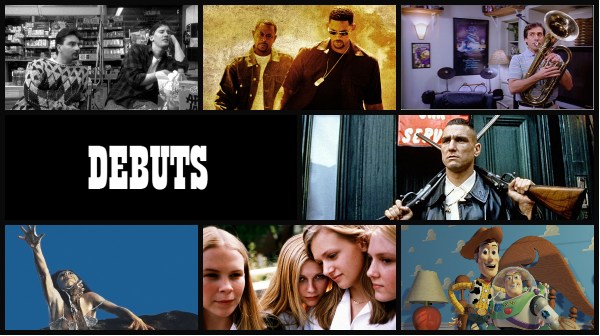
Debuts Blogathon Wrap Up

Terry Malloy's Pigeon Coop's avatarTerry Malloy's Pigeon Coop

debuts collage 2

Well there we go, it’s all done and dusted. This blogathon, which I co-hosted with Mark from Three Rows Back, has been a great experience. I’ve had the pleasure of chatting with some great bloggers, some familiar, some not-so familiar and I think it’s been a great success. There have been some fantastic posts, covering a wide range of directors and films, which is exactly what Mark and I were hoping for. There are some classics in there and also some directors I hadn’t even heard of, which has helped me broaden my knowledge that little bit more.

Thanks

First of all I would like to say thanks to Mark for proposing the idea of doing the blogathon in the first place. I’d toyed with the idea of a blogathon for a while but didn’t really know what to do and how to go about organising it, but Mark…

View original post 396 more words

Debuts Blogathon: Stanley Kubrick – Fear and Desire (1953)

Terry Malloy's Pigeon Coop's avatarTerry Malloy's Pigeon Coop

debuts banner 2

This is the final post on my site in the Debuts Blogathon, which has been co-hosted by myself and Mark from Three Rows Back. Here I’m taking a look at my favourite filmmaker Stanley Kubrick and his debut feature, Fear and Desire.

STANLEY KUBRICK

Fear and Desire (1953)

To me, Stanley Kubrick is one of, if not the, greatest directors of all time. Obviously I’ve not sampled every director but of all the directors whose films I have seen, it’s Kubrick who stands head and shoulders atop the pile. I don’t think he’s made a bad film, despite what others may argue, and it was really interesting going back to see his first feature and looking at how he subsequently evolved and grew as a filmmaker.

The story of Fear and Desire is pretty simple and goes a little something like this: Four soldiers in the midst of an…

View original post 1,068 more words

Debuts Blogathon: Sam Mendes – American Beauty (1999)

Terry Malloy's Pigeon Coop's avatarTerry Malloy's Pigeon Coop

Today’s post on the Debuts Blogathon, hosted by myself and Three Rows Back, comes from Nika at The Running Reel with a superb look At Sam Mendes’s excellent American Beauty. I urge everyone to head over and give Nika’s blog a read; there’s some great reviews and features well worth checking out. Take it away Nika…

SAM MENDES

American Beauty (1999)

I cannot imagine any talk about directing debuts without even mentioning Sam Mendes’s 5 Oscar winner picture American Beauty. Considering everything I am going to discuss in my post, none of the directors have ever had such a high standard debut as Mendes had.

American Beauty looks at average life of average American family, their aspiration to happiness, their failure to actually be happy and the way how it ends.

Lester Burnham (Kevin Spacey) is a father to a troubled teenage daughter Jane (Thora Birch) and a…

View original post 721 more words

Debuts Blogathon: Joel Coen – Blood Simple (1984)

Debuts Blogathon

Today in the Debuts Blogathon, hosted by myself and Chris at Terry Malloy’s Pigeon Coop, I’m delighted to welcome the contribution of Mark from Marked Movies. This was one of the first blogs I followed and I’ve never been less than mightily impressed by his output. Mark’s reviews set a high standard, while his great features, such as ‘Classic Scene’, are great fun to read. Here Mark covers Joel ‘Coen Brother’ Coen’s celebrated first feature Blood Simple. In case you haven’t already signed up to Marked Movies, do so now. You won’t regret it.

Joel Coen

Blood Simple (1984)

Having cut his teeth as Assistant Editor on director Sam Raimi’s cult classic The Evil Dead in 1981, Joel Coen went on to become a fully fledged director himself with his debut Blood Simple in 1984.

Blood Simple Poster On the advice of Raimi, Joel and his brother Ethan (whom it has always been said, actually shared directorial duties) went door-to-door showing potential investors a two minute ‘trailer’ of the film they planned to make, which resulted in them raising $750,000 and just enough to begin production of their movie. It was at this point that two of cinema’s most consistent and original talents had arrived.

Blood SimpleIn West Texas, saloon owner Julian Marty (Dan Hedaya) suspects that his wife Abby (Frances McDormand) is cheating on him with Ray (John Getz), one of his bartenders. Marty then hires Loren Visser (M. Emmet Walsh), a private detective, to investigate. Once Marty gains proof of the adulterous affair, he pays Visser to kill them. However, Visser is a very unscrupulous type and has plans of his own.

When you comb through the filmography of the Coen’s, three renowned and highly respected crime writers will inevitably surface. They are: James M. Cain, Raymond Chandler and Dashiell Hammett. However, it’s their debut Blood Simple that fully harks back to the hard boiled noirs of the 1940′s, namely The Postman Always Rings Twice and Double Indemnity – both of which are written by Cain and the latter, in fact, co-scripted by Chandler when it made it the screen.

Blood SimpleHammett was also a contemporary of these writers and wrote the novel Red Harvest, which actually coined the term “blood simple”. It is described as “the addled, fearful mindset people are in after a prolonged immersion in violent situations”. This very description sums the movie up perfectly. It’s a homage to these great writers and the genre they excelled in. Also, like their stories, once the characters and their motivations are established, there is no going back.

Although this was their debut, labyrinthine plots and double-crosses would become a staple of the Coens’ work that followed. Give or take the odd zany comedy, their filmography largely consists of these writers; Miller’s Crossing was heavily influenced by Hammett’s The Glass Key, while The Big Lebowski loosely took its structure from the work of Raymond Chandler, and James M. Cain would resurface in The Man Who Wasn’t There. Even the Oscar-winning Fargo and No Country For Old Men could be seen as riffs on Blood Simple itself. The thing that’s most apparent about this debut from the Coen’s, though, is that their stylistic approach is plain to see. It cast the mould from which we have witnessed their serpentine abilities in storytelling and hugely inventive directorial flourishes.

Blood SimpleMuch has been said about the cinematography on the Coens’ output. This has largely been due to the work of their regular collaborator Roger Deakins. However, it was Barry Sonnenfeld who worked on the first three Coen’s movies and you’d be hard pushed to notice much of a difference between them. This simply comes down to them translating exactly the vision that the brothers had. That’s not to take away from the work of Deakins or, in this case, Sonnenfeld as their cinematography has always been sublime but ultimately it comes down to the Coens’ inventively keen eye for a shot.

Blood SimpleThey are known for being sticklers for detail, knowing exactly what they want and exactly how it should look and working from a shoestring budget doesn’t prevent them from realising their Hitchcockian melee of passion, bloodshed and suspense. If anything, their limited budget shows how artistic and creative they really are and they’re not without (or what would become) their trademark moments of irony.

The Coen Brothers have gone on to become two of the most respected filmmakers in the business, and rightfully so. With many classics – cult and mainstream – under their belts already, there’s really no end to what they’re capable of. That being said, it’s always a pleasure to return to their roots and see where it all began.

Over at Terry Malloy’s Pigeon Coop, Alex from And So It Begins… writes about David Gordon Green’s much-loved debut George Washington. Head over to Chris’s site now by clicking here.

Next up, it’s the turn of Ruth from the awesome FlixChatter. Ruth will be covering Ben Affleck’s first feature Gone Baby Gone. Looking forward to this; see you then.