In Retrospect – Batman (1989)

It’s difficult to overestimate just what a seismic impact Tim Burton’s reimagining of the Dark Knight’s on-screen persona had on the movie landscape.

Twenty five years on, the cracks and holes in Burton's first of many forays into blockbuster filmmaking are all-too glaring to miss

Twenty five years on, the cracks and holes in Burton’s first of many forays into blockbuster filmmaking are all-too glaring to miss

While Steven Spielberg had given birth to the Hollywood blockbuster with Jaws (1975) and George Lucas had taken it into the stratosphere in Star Wars (1977), ‘event’ cinema reached a whole new level with the arrival of Batman in 1989.

I was one of the many millions seduced by the carefully orchestrated marketing hype that became known as ‘Batmania’ and queued as a young lad with barely contained excitement on the opening day… before watching it again the following day.

At the time I recall thinking it was “ace”. However, 25 years on, the cracks and holes in Burton’s first of many forays into blockbuster filmmaking are all-too glaring to miss.

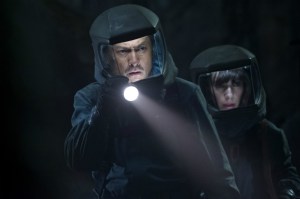
The Nosferatu-esque Batman hunts his prey in Tim Burton's Batman

The Nosferatu-esque Batman hunts his prey in Tim Burton’s Batman

Taking its lead from Alan Moore and Brian Boland’s classic graphic novel The Killing Joke, the film follows the early days of Batman’s war against crime in Gotham City, an urban cesspool riven by police corruption, terrified citizens, desperate politicians and mob rule.

An intervention by the Caped Crusader (Michael Keaton) at a chemical plant inadvertently leads to the ‘death’ of senior mob enforcer Jack Napier (Jack Nicholson) and the ‘birth’ of the cackling, psychopathic Joker and soon Gotham turns into the playground in which these two opposing sides of a scarred coin go mano-a-mano. Dragged into the fray is star photo-journalist Vicky Vale (Kim Basinger), who’s lured to Gotham by the fantastical news of a “winged freak” terrorising the city’s underground.

Gotham City, as depicted in Tim Burton's Batman

Gotham City, as depicted in Tim Burton’s Batman

The first thing that strikes you is Anton Furst’s astonishing vision of Gotham City; a mish-mash of conflicting architectural styles that’s brought to life so vividly it practically dwarfs everything else.

With such eye-opening visuals to contend with, Burton’s long-time collaborator Danny Elfman needed to bring his A-game for Batman‘s score and did just that. Elfman threw everything and the kitchen sink in, from the dark and sinister to screwball via operatic organs and the pulse-quickening march which memorably opens the movie.

The Joker (Jack Nicholson) hatches another dastardly plan in Batman

The Joker (Jack Nicholson) hatches another dastardly plan in Batman

However, a great score and production design do not a great film make. Despite several quotable lines – “Think about the future”; “I think I’ve got a live one here!”; “This town needs an enema!”; “Have you ever danced with the devil in the pale moonlight?” – Sam Hamm and Warren Skaaren’s screenplay is all over the place (Burton subsequently admitted that chunks of the script were improvised on the hoof).

Burton allows scenes to go on too long, usually to indulge Nicholson, while others are clunky or completely unnecessary, most notably the sequence in Gotham City Museum wherein the Joker and his henchmen bespoil a series of valuable artworks.
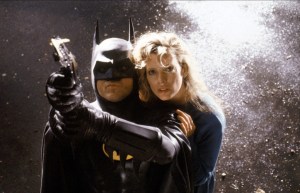
Batman (Michael Keaton) protects reporter Vicky Vale (Kim Basinger) in Batman

Batman (Michael Keaton) protects reporter Vicky Vale (Kim Basinger) in Batman

Elfman’s score is so memorable that the inclusion of Prince’s soundtrack feels jarring next to it. The decision to draft in Prince – one of the most popular musicians on the planet at the time – was savvy thinking on the part of the money men at Warner Bros, but the film has an awkward time crowbarring the tunes into the narrative.

Burton works hard to create a dark and brooding tone akin to a 1940s-era noir (everyone wears hats!), but counterbalances it with a series of cartoonish moments (Napier’s bleached white hand emerging from the chemical waste; Wayne caught hanging Bat-like upside down by Vale) that seek to remind us we’re watching a comic book superhero movie. The movie also nods not once, but twice, to Raiders Of The Lost Ark‘s swordsman scene.
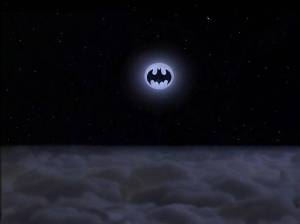
Batman's coolest shot

Batman’s coolest shot

It’s difficult to believe that neither Vale nor fellow reporter Alexander Knox (Robert Wuhl) would know why Bruce Wayne – Gotham City’s most well-known businessman after all – is an orphan. Furthermore, it stretches credulity that so many people fail to suspect the Joker (who, let’s not forget, had tried to kill the city’s citizens a short time earlier) has an ulterior motive when he announces he’ll be staging a night parade in which he’ll dish out millions in cash.

In a parallel with Gene Hackman’s casting of Lex Luthor in Superman, the film’s biggest name is its villain. Nicholson seemed like the most logical choice at the time and there are moments when he truly strikes the balance between humourous and homicidal. However, too often his performance feels like a big screen extension of Cesar Romero’s take in the 1960s camp TV show. Meanwhile, Keaton is better than you’d expect as Batman, although Wayne inevitably takes a back seat.

The Batmobile, as imagined in Tim Burton's Batman

The Batmobile, as imagined in Tim Burton’s Batman

The homage to Nosferatu when we first see the Dark Knight is nicely done, as is the nod to Batman creator Bob Kane (in spite of being refered to as a “dick” by Knox when he shows the young reporter a mock-up of what the Bat Man looks like). There’s also a cool moment when the Batwing flies in front of the moon. However, these moments are too few and far between to override the feeling that this is a film which has dated badly.

Burton himself summed up Batman better than any critic when he said on reflection: “I liked parts of it, but the whole movie is mainly boring to me. It’s OK, but it was more of a cultural phenomenon than a great movie.”

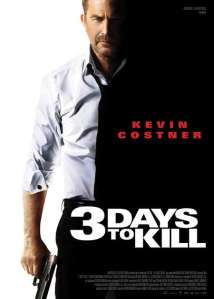
Review – 3 Days To Kill

If you thought the world needed another B-movie about an ageing American CIA agent laying waste to half of Paris, you’ll probably think again after watching this sloppy Eurotrash from journeyman McG.

No-one's happier to see Costner back on the big screen than I, it's just a shame it's in something as underwhelming as 3 Days To Kill

No-one’s happier to see Costner back on the big screen than I, it’s just a shame it’s in something as underwhelming as 3 Days To Kill

Following an early career spent making offbeat and highly stylised action films, Luc Besson has largely turned to writing and producing thrillers that are as formulaic as they are interchangeable.

In certain cases that formula has chimed with audiences – The Transporter series proved a tidy hit and turned Jason Statham into a bona fide action star, for instance. Taken also set the box office alight and gave Liam Neeson a surprising and unlikely new career turn as a movie hard ass.

It's an ageing American CIA guy (played by Kevin Costner) in Paris (again) in 3 Days To Kill

It’s an ageing American CIA guy (played by Kevin Costner) in Paris (again) in 3 Days To Kill

There’s an argument to be made for giving audiences what they want; however, Besson has barely bothered changing up the formula and, with McG’s lunk-headed direction in tow, the end result is the unnecessary and lazy 3 Days To Kill.

That being said, it’s great to see Kevin Costner back as a leading man following a series of supporting turns in the likes of Man Of Steel (2013) and this year’s unfairly maligned Jack Ryan: Shadow Recruit, even if he looks like he’d rather be sightseeing in Paris than shooting half of its citizens.

Ethan Renner (Kevin Costner) shares a moment with her estranged daughter Zoey (Hailee Steinfeld) in 3 Days To Kill

Ethan Renner (Kevin Costner) shares a moment with her estranged daughter Zoey (Hailee Steinfeld) in 3 Days To Kill

Costner plays CIA agent Ethan Renner, who’s diagnosed with a terminal disease and decides to spend his last days trying to rebuild his fractured relationship with estranged daughter Zoey (Hailee Steinfeld) and, in turn, ex-wife Christine (Connie Nielsen). Ethan’s Company service is cut short by his illness; however, he’s drafted in by CIA assassin Vivi Delay (Amber Heard) to track down an international arms dealer called the Wolf (Richard Sammel). You can guess the rest.

The single biggest problem with 3 Days To Kill – aside from the fact it’s not very good – is that it doesn’t know what film it wants to be. On one hand there’s a family drama in which an absent father endeavours to reconnect with the people who really matter once all the assassinating and running after criminals appears to have been swept aside. Steinfeld is a fine young actress and the scenes she shares with Costner are nicely played. Tellingly, it’s in these quieter moments when Costner looks properly switched on.

CIA assassin Vivi Delay ('actress' Amber Heard) in 3 Days To Kill

CIA assassin Vivi Delay (‘actress’ Amber Heard) in 3 Days To Kill

On the other hand there’s the well-worn action set pieces that involve Costner waving a gun around and chasing down generic evil-looking foreign terrorists. Even the film’s big explosive set piece loses its impact after having appeared in the trailer (naturally).

Linked to all this gunplay is the character is Vivi Delay, who looks like she’s been dragged in from a European porn film. It’s fair to say Heard doesn’t get cast in movies for her acting prowess, but she’s on hilariously bad form here and the scenes she shares with a bewildered looking Costner are frankly bananas.

No-one’s happier to see Costner back on the big screen than I, it’s just a shame it’s in something as underwhelming as 3 Days To Kill.

Review – Fruitvale Station

There’s something remarkably matter-of-fact about Ryan Coogler’s portrait of the hours leading up to the tragic and needless shooting of Oscar Grant III.

An undeniably powerful and harrowing lament of a life taken far too early it may be, but Fruitvale Station fails to break free of its heavy-handed shackles

An undeniably powerful and harrowing lament of a life taken far too early it may be, but Fruitvale Station fails to break free of its heavy-handed shackles

The drama that unfolds over the course of Fruitvale Station‘s 85 minutes could so easily have been amplified for propagandistic effect, so it’s to the credit of both the writer-director and a mature and measured Michael B. Jordan in the lead role that this is avoided.

However, a heavy-handed script, manipulative visual touches and a televisual style cut the film short of being a truly outstanding debut feature from Coogler.

Oscar (Michael B. Jordan) hangs out with his daughter Tatiana (Ariana Neal) in Fruitvale Station

Oscar (Michael B. Jordan) hangs out with his daughter Tatiana (Ariana Neal) in Fruitvale Station

Fruitvale Station follows the final day of Grant, a young guy from California who spends New Year’s Eve in 2008 trying to make a fresh start.

As well as attempting to work things through with his girlfriend Sophina (Melonie Diaz) for the sake of their daughter Tatiana (Ariana Neal), Oscar is treading a more straight and narrow path with the law and hoping to get his job back while preparing for his mother Wanda’s (Octavia Spencer) birthday.

Oscar's loving mother Wanda  (Octavia Spencer) in Fruitvale Station

Oscar’s loving mother Wanda (Octavia Spencer) in Fruitvale Station

However, in a cruel irony, an act of kindness earlier in the film inadvertently creates a chain of events that lead to Oscar’s death at the eponymous Fruitvale Station when he’s shot in the back by a BART police officer; an act filmed by several passengers on their mobile phones.

The film’s elliptical structure opens with chilling footage taken by one of the passengers before rewinding back to the start of the day and following Oscar until his tragic shooting. The harrowing events at the station are undeniably shocking and are powerfully reenacted by Coogler with the help of Kevin Durand and Chad Michael Murray as the police officers whose actions led to his death (the officer who shot Oscar argued in court that he mistakenly used his firearm, believing it to be his Taser weapon).

Sophina (Melonie Diaz) faces an awkward moment with boyfriend Oscar (Michael B. Jordan) in Fruitvale Station

Sophina (Melonie Diaz) faces an awkward moment with boyfriend Oscar (Michael B. Jordan) in Fruitvale Station

There’s a sadness to the scenes leading up to this moment as we know Oscar is going to be denied the fruits of his labours. However, Coogler lets himself down by forcing the issue too much.

The death of a dog right in front of Oscar is a little too on the money and isn’t helped by the director pulling the shot back to show a train leaving a station as a prophetic sign of what’s to come.

Officer Caruso (Kevin Durand) imposes himself on Oscar (Michael B. Jordan) and his friends in Fruitvale Station

Officer Caruso (Kevin Durand) imposes himself on Oscar (Michael B. Jordan) and his friends in Fruitvale Station

Later in the film, Oscar suggests to Sophina that they should stay in, but she insists on going out to enjoy New Year’s Eve. Likewise, his daughter implores Oscar not to go out because she can hear “gunshots” (actually firecrackers), but he promises her there’s nothing to worry about.

This lack of subtly extends to some of the visual choices made by the director. A slo-mo scene of Oscar running after Tatiana feels manipulative and the cheesy score laid on top merely reinforces this. A further life decision that sees Oscar driving to the coast and staring out to sea is beautifully filmed, but serves no other purpose than to hammer home a point we’ve already ascertained.

Michael B. Jordan plays Oscar Grant III in Fruitvale Station

Michael B. Jordan plays Oscar Grant III in Fruitvale Station

In spite of this, the performances are universally compelling, with Spencer on devastating form as Oscar’s mother, whose hopes of a better life for her son following a stint in jail are cruelly snatched away. Diaz is also excellent as the headstrong Sophina, while Neal is a natural who’s required to do as much heavy lifting as many of her older co-stars.

However, this is Jordan’s film and he gives a magnetic turn as Oscar. Jordan is careful not to paint his character as a saint, rather’s he’s a good man who’s smart enough to understand the path he needs to take is different to the one he’s found himself down.

An undeniably powerful and harrowing lament of a life taken far too early it may be, but Fruitvale Station fails to break free of its heavy-handed shackles.

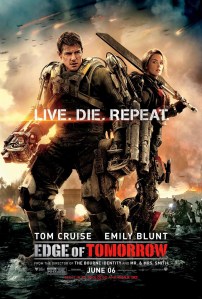
Review – Edge Of Tomorrow

Movies and video games have never made the easiest of bedfellows, so it’s ironic a film based on a book should inadvertently capture what makes great games tick.

As fun a ride as you're likely to have all summer, Edge Of Tomorrow is a film you'll want to watch it all over again

As fun a ride as you’re likely to have all summer, Edge Of Tomorrow is a film you’ll want to watch it all over again

Although Edge Of Tomorrow inevitably attracts comparisons to Groundhog Day in its time loop structure, Major William Cage’s (Tom Cruise) seemingly endless replays and slow, obsessive battle to defeat the bad guys brings to mind the likes of Halo and other highly intensive action games.

In fact it wouldn’t have looked out of place for the words ‘Game Over’ to appear each time Cage dies before respawning at the same point, while its tagline ‘Live. Die. Repeat.’ will be familiar to millions of gamers trying to progress through their latest game.

Major William Cage's (Tom Cruise) day is about to turn very bad in Edge Of Tomorrow

Major William Cage’s (Tom Cruise) day is about to turn very bad in Edge Of Tomorrow

Setting aside his odd personal beliefs, you have to hand it to Cruise for having managed to remain at the top of the tree for more than 30 years. He’s also done it on his own terms and has often been prepared to use that winning smile he became famous for early in his career to subversive effect.

Here, the smile is used to sell the allied war effort against an invading alien race known as Mimics who have conquered most of  Europe. In spite of his senior rank, PR guru Cage has seen no combat, choosing instead to fight the war in front of the TV cameras as the face of the United Defence Forces (UDF).

Major William Cage (Tom Cruise) and Special Forces soldier Rita Vrataski (Emily Blunt) consider their next move in Edge Of Tomorrow

Major William Cage (Tom Cruise) and Special Forces soldier Rita Vrataski (Emily Blunt) consider their next move in Edge Of Tomorrow

So when UDF commander General Brigham (Brendan Gleeson) informs the cowardly Cage that he’s being embedded on the frontlines for Operation Downfall, the UDF’s all-or-nothing invasion of France (it can’t be a coincidence the film has been released in the US on the 70th anniversary of D-Day), Cage unsuccessfully attempts to worm his way out of it.

Deployed in the first wave, Cage is killed within a few minutes, only to suddenly awaken back at the barracks, where the invasion begins all over again. With the help of super soldier and UDF poster girl Rita Vrataski (Emily Blunt), who appears to be the only one who understands what is happening to Cage, they set about trying to defeat the enemy, one death and one time loop at a time.

Super soldier Rita Vrataski (Emily Blunt) does the business in Edge Of Tomorrow

Super soldier Rita Vrataski (Emily Blunt) does the business in Edge Of Tomorrow

Director Doug Liman is now best regarded as an action director, although he made a name for himself with the indie classic Swingers (1996). His form in the genre has been patchy; on the plus side he gave us The Bourne Identity (2002), but this was followed by the smug Mr And Mrs Smith (2005) and the tedious Jumper (2008).

The scales have been balanced with this rousing romp (based on the novel All You Need Is Kill by Hiroshi Sakurazaka) that zips along at a dizzying pace and doesn’t get lost in its time-space continuum. Cruise plays a genuinely slimy and unlikable character who is forced to become a better man by the fortitude and bravery shown by Vrataski.

Major William Cage (Tom Cruise) finds himself on the frontline in Edge Of Tomorrow

Major William Cage (Tom Cruise) finds himself on the frontline in Edge Of Tomorrow

Blunt, who must have a thing for time travel movies after staring in Rian Johnson’s Looper (2012), is a breath of fresh air. It’s a role that demands a strong performance and Blunt delivers it with consummate ease; she’s more than Cruise’s equal on screen and flexes both her acting and physical chops.

The film’s kinetic editing style effectively emphasises the sheer number of times Cage must undergo the same events in order to progress that little bit further each time and the psychological impact it must have is etched on Cruise’s increasingly tortured face.

Sci-fi movies steal from each other all the time and Liman is happy to maintain this tradition. The exoskeleton used in the film is lifted from Aliens and last year’s Elysium, while the influence of militaristic sci-fi flicks such as Starship Troopers is palpable.

As fun a ride as you’re likely to have all summer, Edge Of Tomorrow is a film you’ll want to watch it all over again.

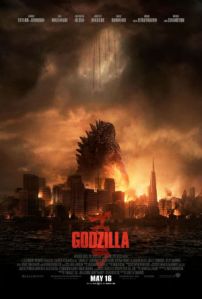
Review – Godzilla

The King of the Monsters may have rediscovered his rrrrroar after Roland Emmerich’s 1998 disaster (pun intended), but Gareth Edwards’ creature feature follow-up to his micro-budget debut doesn’t quite reach the giddy heights you’d hope it would.

Godzilla is almost a first-rate blockbuster, it just doesn't have the magic formula of great action and great characters to make it truly rrrroar-some

Godzilla is almost a first-rate blockbuster, it just doesn’t have the magic formula of great action and great characters to make it truly rrrroar-some

Trailers often fail to quicken the pulse, but the promos for Gojira’s latest big screen outing were a masterclass in wringing every last of drop of anticipation from an audience rubbing their hands at what the director of Monsters would bring to the table.

There are enough moments here to remind you of why Edwards is such an exciting talent. However, for a film that (correctly) chooses to spend so much of its time exploring the human story, it’s a shame too many of the characters fail to leap off the screen.

Nuclear physicist Joe Brody (Bryan Cranston) and son Ford (Aaron-Taylor Johnson) go in search of the truth in Godzilla

Nuclear physicist Joe Brody (Bryan Cranston) and son Ford (Aaron-Taylor Johnson) go in search of the truth in Godzilla

Godzilla‘s cracking opening credits sequence doffs its cap to Ishirō Honda’s 1954 Japanese original and runs with that film’s nuclear-inflected theme. Rather than a nuclear test, the hydrogen bomb dropped on Bikini Atoll by the US military was, we learn, aimed at destroying the gigantic ocean-dwelling Gojira.

All is quiet until 1999 when a Japanese nuclear power plant succumbs to what’s labelled a ‘natural disaster’, although plant supervisor Joe Brody (Bryan Cranston) is having none of it and believes something else is going on. Cut to 15 years later and Joe’s search for the truth lands him in hot water, forcing his estranged bomb disposal expert son Ford (Aaron-Taylor Johnson) to leave his wife Elle (Elizabeth Olsen) and son behind in San Francisco to fly to Japan to bring him back to the US. Joe’s convinced the government is hiding something, although not even he can quite believe what it eventually turns out to be and soon enough all hell is breaking loose.

Scientists  Ishiro Serizawa (Ken Watanabe) and Vivienne Graham (Sally Hawkins) investigate in Godzilla

Scientists Ishiro Serizawa (Ken Watanabe) and Vivienne Graham (Sally Hawkins) investigate in Godzilla

That Edwards’ Godzilla stomps all over Emmerich’s effort is pretty much a given (Ed Wood could have made a better film in all honesty). However, a cast full of stellar names are often reduced to delivering one-note performances that serve the story without adding any substance.

The strained father-son relationship between the Brody bunch is worthy of screen time and a driver of the film’s opening half, but Cranston and Taylor-Johnson never truly sell it to us.

The US military HALO jumps into the carnage in Godzilla

The US military HALO jumps into the carnage in Godzilla

Ken Watanabe spends almost the entire film as scientist Serizawa looking like he needs to go to the toilet, while the incredibly versatile Sally Hawkins never deviates from appearing ashen-faced as Seizawa’s colleague Graham. In fact, all the female roles are underwritten; with Juliette Binoche in a blink and you’ll miss it turn as Joe’s wife Sandra, while Olsen gets very little to do as Elle.

That being said, it’s admirable in this day and age for a blockbuster to even give a second’s thought to developing relationships and a narrative ahead of budget-sapping CGI. It’s an approach that worked well for Edwards in Monsters (although, with next-to-no funding it’s always easier to film talking heads rather than space creatures) and, with a little more finesse, will undoubtedly serve him well going forward.

A terrified Elle (Elizabeth Olson) and son hope for the safe return of husband Ford (Aaron-Taylor Johnson) in Godzilla

A terrified Elle (Elizabeth Olson) and son hope for the safe return of husband Ford (Aaron-Taylor Johnson) in Godzilla

Where Edwards really hits it out of the park is in the action scenes involving Godzilla and the massive unidentified terrestrial organisms (MUTOs) that are thrown into the mix. These aren’t just faceless CGI monsters; each of these creatures (Godzilla especially) are emotive forces of nature, whether it be the extended glance shared by ‘zilla and Ford or the moment of tenderness shared by the MUTOs amid the destruction. If this is indeed going to become a franchise (as looks likely) then it’s only right that you feel something for the King of the Monsters.

ROOOOAAARRR!!

ROOOOAAARRR!!

Other dramatic moments, including the Fukushima-inflected destruction of the Japanese nuclear power plant are deftly handled, while the film’s real highlight remains the awesome HALO jump sequence (a candidate for scene of the year), wherein Ford and a crack team of soldiers free-fall into a devastated San Francisco to the eerie strains of György Ligeti’s Requiem (a piece of music used to equally unnerving effect in 2001: A Space Odyssey).

Edwards’ love for Spielberg’s Jaws is evident throughout, from the name Brody, to the long delay in showing the monster in all its titanic glory and the boat which Ford clambers onto in the film’s final act. Let’s hope the sequels fare better than the follow-ups to that franchise.

Godzilla is almost a first-rate blockbuster, it just doesn’t have the magic formula of great action and great characters to make it truly rrrroar-some.

Here’s that awesome trailer…