Debuts Blogathon – Second Call

Debuts

Myself and Chris at Terry Malloy’s Pigeon Coop are jointly hosting our first blogathon … and there’s still time to join us!

We’re both delighted at the response so far to what is our first Blogathon, entitled ‘Debuts’, which focuses on a director’s first feature (shorts not included). We put the call out for you to get involved and you haven’t let us down! So far, the following are on board with their director and first feature of choice:

Head in a Vice – Quentin Tarantino’s Reservoir Dogs (1992)

The Soul of the Plot – Alfred Hitchcock’s The Pleasure Garden (1925)

Cindy Bruchman – Clint Eastwood’s Play Misty For Me (1971)

FlixChatter – Ben Affleck’s Gone Baby Gone (2007)

Committed to Celluloid – Alejandro González Iñárritu’s Amores Perros (2000)

Cinematic – Terrence Malick’s Badlands (1973)

Tranquil Dreams – Hayao Miyazaki’s The Castle of Cagliostro (1979)

Karamel Kinema – Darren Aronofsky’s Pi (1998)

The IPC – Jodie Foster’s Little Man Tate (1991)

The Silver Screener – Christopher Nolan’s Following (1998)

And So It Begins… – David Gordon Green’s George Washington (2000)

She Speaks Movies – Joon-ho Bong’s Barking Dogs Never Bite (2000)

Film Police – David Lynch’s Eraserhead (1977)

Ewan at the Cinema – Jean-Luc Godard’s Breathless (1960)

The Running Reel – Sam Mendes’ American Beauty (1999)

Marked Movies – Joel Coen’s Blood Simple (1984)

Big Screen Small Words – Wes Anderson’s Bottle Rocket (1996)

Keith & The Movies – John Huston’s The Maltese Falcon (1941)

The Cinematic Katzenjammer – Duncan Jones’ Moon (2009)

Video as Life – John Lasseter’s Toy Story (1995)

From the Depths… – Frank Henenlotter’s Basket Case (1982)

On top of these discerning types, Chris will be reviewing Stanley Kubrick’s Fear and Desire (1953), while I’ll be writing about Steven Soderbergh’s Sex, Lies and Videotape (1989).

As well as reviewing the film itself, we’d also love your write-ups to look at how their first feature has impacted on their work. How have their subsequent films fared against their debut? Has the director improved or steadily declined over subsequent features?

Do you have a director whose debut you’d like to cover? If so, then there’s still time to contribute! We’re looking to run the blogathon from Monday, September 2. Before you get cracking, please drop me an email at threerowsback@gmail.com or email Chris at chris1039@hotmail.com by Sunday, August 25 letting us know who you’d like to write about (just so we don’t get duplicate posts) or for more info.

Thanks for reading and, most importantly, DON’T MISS OUT!

Money, Money, Money – Product Placement in Movies

From the moment some entrepreneurial bright spark cottoned on to the money-making opportunities presented by the moving image, cinema and business were forever linked.

Making movies can be an expensive business which explains why studios (and by extension filmmakers) have been so willing to offset the cost by working in a bit of product placement here and there.
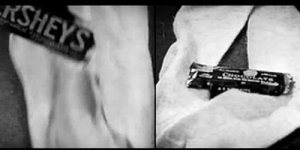
An early(ish) use of product placement (in this case Hershey's chocolate) in 1927's Oscar-winning Wings

An early(ish) use of product placement (in this case Hershey’s chocolate) in 1927’s Oscar-winning Wings

The cinematic romantics out there may disregard the notion that product placement could have featured in the good old days of black and white films, preferring to believe instead that such shameless activities are a relatively new phenomenon.

They would be wrong, however. Product placement has been with us almost as long as cinema itself. As well as being the first film to win the Best Picture Oscar, 1927’s Wings also featured a plug for Hershey’s chocolate. It wasn’t just American cinema that was happy to take the corporate dollar, world cinema also got in on the act. Fritz Lang’s 1931 classic M features in one scene a blatant advert for Wrigley’s PK chewing gum.

The Internship - an example of where the product was placed but never taken awayway

The Internship – an example of where the product was placed but never taken away

While many films shoehorn in a company’s logo or one of its products so conspicuously as to distract you from what you’re watching, at its cleverest, product placement can be used so subtly as to be almost subliminal.

In other cases, such as 1992’s Wayne’s World, product placement can be used to humourous effect – still making sure to actually feature those brands of course – while Morgan Spurlock’s 2011 documentary The Greatest Movie Ever Sold was entirely paid for by sponsors (most notably POM Wonderful) and featured the tagline ‘he’s not selling out, he’s buying in’. Likewise, in 2000’s Cast Away, FedEx featured so prominently (as, of course, did the company Wilson) it’s difficult to disassociate the film and firm.

A more clever use of product placement, hidden inside a joke, in Alan Partridge: Alpha Papa

A more clever use of product placement, hidden inside a joke, in Alan Partridge: Alpha Papa

Recently, we’ve had one of the most barefaced examples of product placement in movie history with the Vince Vaughn/Owen Wilson ‘comedy’ The Internship, which essentially boils down to being one long advert for Google. Meanwhile, the newly released Alan Partridge: Alpha Papa is a more successful use of product placement. By including the product in a fairly blatant joke wherein the words “Alan Partridge drives this Ka” are emblazoned across the vehicle, not only is it part of the joke, it also gives the impression that Ford has a sense of humour and is happy to be associated with a petty, egomaniacal and lonely person such as Alan.

Below are just a few of the many, many examples of shameless product placement in the movies.

Let me know some of your worst offenders:

Mac And Me (1988)

Mac and Me

One of the weirdest, and most cynical attempts at product placement in cinema history, this E.T. rip off has to be seen to be believed. Ostensibly about an alien’s attempt to reunite with its family with the help of wheelchair-bound boy Eric, the film is actually a very thinly veiled advert for fast food chain McDonald’s. In one scene Eric and the Mysterious Alien Creature (MAC – even his name is the same as the company’s most famous burger!) go into a Maccy D’s and are met by the scary-looking Ronald McDonald before MAC, dressed as a giant teddy bear, leads an impromptu dance on the premises. I’m lovin’ it? Not really.

Casino Royale (2006)

Casino Royale

The Bond franchise has had a long association with product placement, be it a well-known vodka brand, or the long list of cars that 007 wrecks. The character’s association with watch makers Omega has been around since the Pierce Brosnan era, but came into its own when the franchise relaunched itself with the Daniel Craig-starring Casino Royale. In one scene that must have had Craig questioning his serious actor credentials, he’s sat opposite Eva Green’s Vesper Lynd, who makes an observation about “former SAS types with easy smiles and expensive watches”, before randomly asking “Rolex?”. Bond suavely corrects her, pointing out it’s an Omega, to which Vesper can only reply “beautiful”. Like you do.

Blade: Trinity (2004)

Blade Trinity

Apple had been struggling to win the public over with the iPod since its 2001 launch and, to give the product a push, paid for it to be featured heavily in this third and final chapter in the Blade franchise about the titular blood-sucker. Blade (Wesley Snipes) is joined this time around by sexy vampire hunter Abigail (Jessica Biel), who can’t seem to be able to kick vampire ass without listening to her trusty MP3 player. In one galling scene, she takes time out to download songs from iTunes and create a playlist before once again going into battle. Safe to say, it’s one of the more shameless examples of product placement in the movies.

I, Robot (2004)

I, Robot

Set in 2035, it is of course entirely coincidental that Will Smith’s detective Del Spooner has a love of Converse trailers circa 2004, the year in which this sci-fi movie based loosely on Isaac Asimov’s more considered series of short stories was released. Director Alex Proyas must have been swallowing some of his own sick when he filmed Smith lovingly caress the shoe box, open it up like a kid unwrapping a Christmas present and slide those new wheels on his grateful feet. Like so much jarring product placement, the scene has absolutely no relevance to the film and makes you grate your teeth at the thought of handing money over for a glorified advert.

What Women Want (2000)
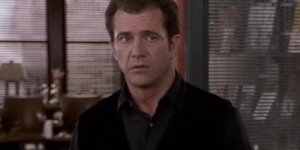
What Women Want

Before Mel Gibson destroyed his career with ill-advised religious comments and run-ins with the law, he made this high concept comedy in which he plays Nick, who acquires the ability to hear womens’ thoughts following an accident with a hairdryer. Nick works in advertising and wows his bosses by stealing rival Helen Hunt’s thoughts for a Nike campaign. The whole Nike thing is woven into the plot in an attempt at ‘brand integration’, but you’re left with a bad taste in your mouth when you realise it’s being rammed down your throat.

Blogathon Announcement – ‘Debuts’

Debuts Banner

Calling all bloggers! Myself and the stupendous Terry Malloy’s Pigeon Coop are jointly hosting our first blogathon … and we want you to join us!

Speaking for myself, a blogathon is something I’ve wanted to get off the ground for a long time and I’m delighted to be working with the critical heavyweight Chris Thomson – aka Terry Malloy’s Pigeon Coop – to finally host one.

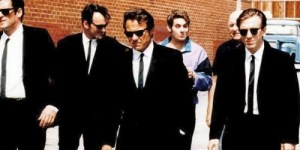
Quentin Tarantino's Reservoir Dogs

Quentin Tarantino’s Reservoir Dogs

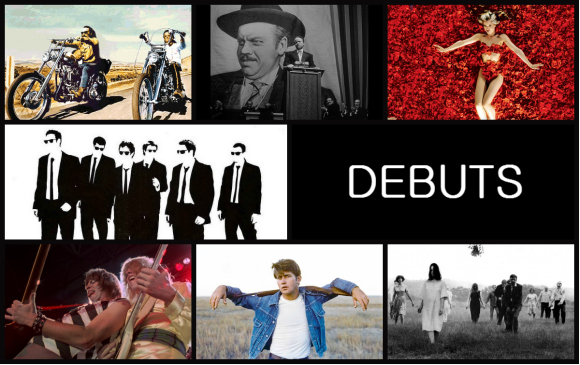
The ‘Debuts’ blogathon will, as the name implies, focus on directors’ first features (shorts not included), whether that be some little known work no-one’s heard of or a breakthrough piece that catapulted them to stardom. All directors, be they legends of the silver screen or plain old also-rans start somewhere and it’s fascinating looking back at a director’s first film to see how their work has matured, improved or steadily declined over subsequent features.

Orson Welles' Citizen Kane

Orson Welles’ Citizen Kane

And this is, of course, where you come in. Do you have a director whose debut you think deserves to be put in the spotlight? Maybe you’d like to look at Tarantino’s Reservoir Dogs? Or Jean-Luc Godard’s A Bout de Souffle? How about Sam Raimi’s The Evil Dead or Orson Welles’ Citizen Kane?

Chris and I are getting our choices in early – perks of hosting a blogathon. I’m going to be examining Steven Soderbergh’s Sex, Lies, and Videotape, while Chris is focusing on Stanley Kubrick’s Fear & Desire. Aside from those two, the world of directorial debuts is your oyster.

Charles Laughton's The Night of the Hunter

Charles Laughton’s The Night of the Hunter

Is there a movie director whose debut feature you’d like to re-examine? If so, then make sure to contribute! We’re looking to run the blogathon from Monday, September 2, probably for about a week or so. Before you get cracking, however, please drop me an email at threerowsback@gmail.com or email Chris at chris1039@hotmail.com by Sunday, August 25 letting us know who you’d like to write about (just so we don’t get duplicate posts) or for more info.

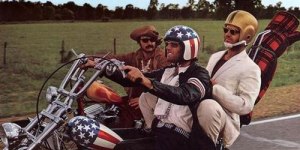
Dennis Hopper's Easy Rider

Dennis Hopper’s Easy Rider

We’ll stick out a few reminders over the coming weeks, but as we may well put a cap on the number of entries, we advise that you get in early to avoid disappointment (ours as much as yours).

We’re looking forward to receiving your posts for what we’re hoping will be a diverse and fascinating blogathon. Thanks for reading and we hope to hear from you soon! Most importantly, though, GET INVOLVED!

Once Is Enough

Sometimes once is enough. However great or ‘important’ certain films are, once you’ve watched them you know that you’ll likely never choose to view them again.

There are some films, like DW Griffith’s pioneering 1915 classic The Birth Of A Nation, that any aspiring cinefile needs to have on their ‘to watch’ list, but after viewing all three racist hours of it you’ll probably not want to give it a repeat viewing.

These are just some of the films I’ve really appreciated over the years but have no particular desire to watch again.

Let me know some of your one-timers:

The War Game (1965)

The War Game

Peter Watkins’ trailblazing docu-drama made for the BBC about the devastating effects of a nuclear war on Britain won Best Documentary at the 1966 Academy Awards, but was shelved by a spineless Beeb in light of serious misgivings by Harold Wilson’s Labour government for more than 20 years. An important social document of what would actually happen should a nuclear missile strike that put the ‘duck and cover’ nonsense the people were being told into stark perspective, it’s a terrifying and harrowing experience that I wouldn’t wish to repeat any time soon.

Irréversible (2002)

Irreversible

Just as Christopher Nolan’s Memento had done two years earlier, Gaspar Noé’s notorious Irréversible employs a non-linear structure by starting at the end and working backwards in time to finish at the start. Infamous for its deeply distressing and prolonged rape scene, Noé’s second film also features bursts of stomach-churning violence that led to it becoming a poster boy of the New French Extremity movement alongside the likes of Inside and Martyrs. Noé has always enjoyed pushing buttons (his most recent film Enter The Void is just plain bonkers) and he pushed plenty with this one-timer.

Requiem For A Dream (2000)

Requiem for a Dream

Based on Hubert Selby Jr’s novel of the same name, Darren Aronofsky followed up his acclaimed debut Pi with this numbing account of several characters’ spiralling descent into a vortex of delusional drug addiction. Although Jared Leto’s Harry and Jennifer Connelly’s Marion are put through hell, it’s Ellen Burstyn’s devastating journey into the abyss of amphetamine dependence that proves the film’s real sucker punch. Burstyn’s performance as the pitiful Sara is as traumatic as it is brilliant (Julia Roberts beat her to the Best Actress Oscar for Erin Brockovich; a good performance but not on the same planet as Burstyn), and the final 15 minutes of the film is some of the most gut-wrenching cinema you’ll ever watch.

Salò, or the 120 Days of Sodom (1975)

Salo

Of all the films on this list, Pier Paolo Passolini’s Salò is the one that I know for absolutely certain I won’t be watching again. Based on the Marquis de Sade’s book The 120 Days Of Sodom, Salò follows four corrupt Italian fascists who, following the fall of Mussolini’s tyrannical regime in World War II, kidnap a group of young men and women and subject them to four months of mental, sexual and physical torture, degradation and sadism. Passolini is making political points about how absolute power corrupts absolutely (tellingly the four men represent the church, the political establishment, the aristocracy and the legal system), but the sheer relentless suffering meted out to the men and women is almost beyond belief (the film was banned in several countries). Most certainly not for the squeamish.

Antichrist (2009)

Antichrist

Lars von Trier has long enjoyed a controversial reputation for his films and Antichrist remains possibly his most notorious work to date. Ostensibly about a married couple (Willem Defoe and Charlotte Gainsbourg) retreating to a cabin in the woods to grieve following the sudden death of their child, von Trier shows in extremely graphic detail Gainsbourg’s ‘She’ going completely off the rails and Defoe’s ‘He’ experiencing increasingly bizarre visions. Throw in a talking fox spouting how “chaos reigns” and you have the sort of lunacy which one viewing will suffice. The film’s final 20 minutes involving an act of self-mutilation and a further act of extreme violence is pretty hard to watch once let alone several times.

Trailers, Or The Art Of Spoiling A Movie

The hype machine is now as much a part of the fabric of a big budget tent pole movie as the director, cast, special effects and, more often than not, the script.

The relentless drip, drip marketing campaigns for such pictures generally kick off months ahead of release before reaching a crescendo of wall-to-wall promotional blitz targeted at winding audiences up into a collective frenzy of well coordinated anticipation.

The trailered-to-death Man of Steel

The trailered-to-death Man of Steel

One of the oldest, but still most reliably effective weapons in a studio’s armoury is the trailer. Once upon a time, a film got by with just the one trailer to sell itself to the masses. However, as the campaigns for blockbusters have got longer, the number of trailers produced has in turn increased, to the extent that Zack Snyder’s reboot of the Superman franchise Man Of Steel managed a whopping five trailers (not forgetting the numerous teasers and TV spots etc) prior to its release.

When so many trailers are produced for a single film, with each one focussing on a slightly different plot or character aspect, the chances of giving away way too much to the audience are pretty high. Even films that have just one or two trailers are now cut in such a way that you feel like you’re watching the entire movie, or at the very least the best action scenes or the most amusing gags (stand up Fast & Furious 6 and The Hangover Part III).

Just as damaging are the trailers that idiotically give away major plot points, thus spoiling the experience of watching the film. In the right hands, a trailer shows you just enough to whet your appetite for the main feature.

In the wrong hands, trailers such as the ones below can end up ruining a movie before you’ve paid for a ticket.

Warning: The following trailers give away the entire film

The Negotiator (1998)

Probably one of the very worst offenders in Hollywood history, the trailer for this decent action thriller featuring Samuel L Jackson as a hostage negotiator turned hostage taker who only wants to talk to fellow negotiator Kevin Spacey ended up totally ruining the movie when a critical plot point was senselessly revealed at the end. To make matters worse, the offending spoiler-filled line of dialogue spoken by Spacey in the trailer didn’t even make the final cut of the movie!

Carrie (1976)

It seems whoever put together the trailer for Brian De Palma’s horror classic assumed everyone in the world had read the Stephen King book on which the film is based, as absolutely every plot point is crammed in. It may not have revealed the very final shot, but that’s about the only surprise that was spared.

Cast Away (2000)

Robert Zemeckis’ survival drama about an Average Joe stranded on a deserted island remains one of the director’s very best films and sees Tom Hanks at the top of his game, but do we really need the entire plot layed out before us in a single trailer? Anyone in any doubt as to Chuck Noland’s fate need only watch the trailer to realise everything’s been helpfully spelt out for you.

Terminator: Salvation (2009)

The fourth installment in the Terminator franchise managed the double-whammy of being not only uninspiring, but also ruined by its spoiler-tastic trailer. Sam Worthington’s role as Marcus Wright is just as integral to the film as Christian Bale’s resistance leader John Connor, so it was only right to have featured him prominently in the trailer. What wasn’t as smart was the decision to spoon feed us a key character development involving Marcus that pretty much ruined the whole movie.

The Island (2005)

There just had to be a Michael Bay movie somewhere on this list, and while this Philip K Dick-esque dystopian sci-fi is far from his worst, whatever twists the film has are well and truly blown by the trailer. Impressively, it not only gives away the film’s central conceit in one swift line of dialogue by Steve Buscemi, it goes on to ruin another key moment involving Ewan McGregor’s Lincoln Six Echo in between the explosions, chases and leering shots of Scarlett Johansson. Way to go.

Quarantine (2008)

Anyone who watched the far superior Spanish language horror film REC will know exactly how this slavish American remake turns out, but to the uninitiated a semblance of surprise would have been nice. Instead, the trailer serves up all the grisliest details in true bloodthirsty fashion and can’t even resist chucking in the climatic shot, just to make sure there are no surprises.

Those are some of my picks for the worst movie trailers. What are the trailers that most annoy you?