Great Films You Need To See – Fail Safe (1964)

This is my latest contribution to The Big Picture, the internationally-recognised magazine and website that offers an intelligent take on cinema, focussing on how film affects our lives. This piece about Sidney Lumet’s Cold War thriller Fail Safe was written as part of The Big Picture’s Lost Classics strand, although I am including it within my list of Great Films You Need To See.

No doubt frazzled by the Cold War running ever hotter, it’s perhaps not surprising audiences in 1964 preferred their nuclear scare movies to be in the mould of the scabrously satirical Dr Strangelove rather than the grimly portentous Fail Safe.
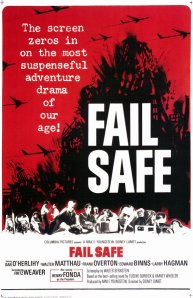
No film before or since has played out the nightmarish endgame of Mutually Assured Destruction to quite such a chilling and methodical degree

No film before or since has played out the nightmarish endgame of Mutually Assured Destruction to quite such a chilling and methodical degree

As the cold horror of what is unfolding dawns on America’s top brass, the President (played by Henry Fonda) engages in an increasingly desperate exchange with his Russian counterpart via telephone to find a way to stop the bombers from triggering World War III before it’s too late.

The tension builds as the President (Henry Fonda) and his interpreter (Larry Hagman) talk to the Russians in Fail Safe

The tension builds as the President (Henry Fonda) and his interpreter (Larry Hagman) talk to the Russians in Fail Safe

Director Sidney Lumet stages the film in a similar fashion to his 1957 debut 12 Angry Men. The drama plays out in several locations, each of them boiler rooms of fetid tension where the temperature is mercilessly cranked up to the point where a number of characters crack under the strain. Even Fonda’s President loses his cool as the terrible reality of what is happening sinks in.

By doing relatively little with the camera and refusing to pull away, Lumet is able to poison the atmosphere with a thickening dread; so much so that when Larry Hagman’s interpreter’s hands start to shake as he drinks a glass of water we question whether he’s acting or not.
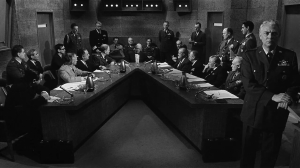
The pressure builds in the War Room in Fail Safe

The pressure builds in the War Room in Fail Safe

The only one who seems unphased is Walter Matthau’s coldly analytical civilian advisor Professor Groeteschele, who is seen at the start of the film at a dinner party calmly rationalising how 60 million deaths should be the highest price America is prepared to pay in a war. The ultimate utilitarian, Groeteschele sees the unfolding tragedy as a golden opportunity to wipe Russia off the map to ensure that American culture, whatever’s left of it, survives. Ironically, his uber-hawkish outlook shocks even the most senior military brass.

The film explores the duality we feel towards technology through the banks of dials, buttons and flashing lights at Strategic Air Command headquarters and the imposing screen displaying the whereabouts of military assets and targets across the world.

The detestable Professor Groeteschele (Walter Matthau) coldly rationalises nuclear war in Fail Safe

The detestable Professor Groeteschele (Walter Matthau) coldly rationalises nuclear war in Fail Safe

Implicit trust has been placed in the instruments, which General Bogan (Frank Overton) confidently states are so good “they can tell the difference between a whale breaking wind and a sub blowing its tanks”. However, it’s this same technology that betrays us by sending the ‘go code’ to the bombers. We are all of us Dr Frankensteins, Fail Safe implies, courting our own destruction through our insatiable hunger for ever more sophisticated technology (a concept more colourfully explored in the Terminator franchise).

Fail Safe concludes with a disclaimer courtesy of the Department of Defense and US Air Force that safeguards and controls are in place to ensure the film’s events can never come to pass. It’s unlikely that would have made anyone watching Fail Safe back in 1964 any more comfortable in their beds.

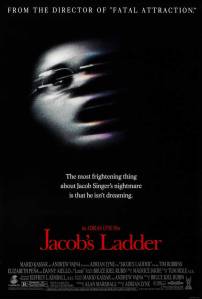
Great Films You Need To See – Jacob’s Ladder (1990)

This is my latest contribution to The Big Picture, the internationally-recognised magazine and website that offers an intelligent take on cinema, focussing on how film affects our lives. This piece about Adrian Lyne’s psychological horror Jacob’s Ladder was written as part of The Big Picture’s Lost Classics strand, although I am including it within my list of Great Films You Need To See.

Psychological horror has long been the neglected offspring of a genre that too often falls back on lazy shocks, recycled storylines and dismembered body parts.

While its unfortunate protagonist is unable to separate reality from demonic hallucination, the unique and relentlessly creepy Jacob's Ladder can be viewed through a prism of nightmarish perceptions, all as valid as each other

While its unfortunate protagonist is unable to separate reality from demonic hallucination, the unique and relentlessly creepy Jacob’s Ladder can be viewed through a prism of nightmarish perceptions, all as valid as each other

Yet, it’s through this underused sub-genre that some of horror’s finest hours have emerged, not least of which the largely forgotten Jacob’s Ladder.

Jacob (Tim Robbins) fights for his life in Jacob's Ladder

Jacob (Tim Robbins) fights for his life in Jacob’s Ladder

Directed by Adrian Lyne, Jacob’s Ladder may seem like an odd fit in a filmography dominated by such libidinous titles as 9½ Weeks and Indecent Proposal, but makes more sense when you consider it followed his 1987 smash Fatal Attraction, a psychological horror in all but name that scared the shit out of men and riled feminists the world over.

Vietnam vet Jacob Singer’s (Tim Robbins) nightmares/flashbacks of a horrific incident during the war begin to bleed into his waking life when he experiences demonic visions that grow ever more disturbing and threatening. Jacob’s slippery grasp on reality is further corroded by his unwitting involvement in what appears to be a deadly military conspiracy seeking to silence him.

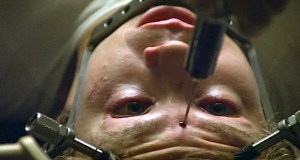
Just one of the nightmarish images in Jacob's Ladder

Just one of the nightmarish images in Jacob’s Ladder

Much like his tortured protagonist, Lyne never lets the viewer settle for more than a few minutes before taking a further step down the ladder towards hell. Best known at the time for supporting turns in Bull Durham and Cadillac Man (not forgetting Howard the Duck and Erik the Viking), Robbins brings a tragic innocence to the tortured Jacob, a psychologically scarred war vet who’s as terrified as he is confused by what he’s being forced to endure.

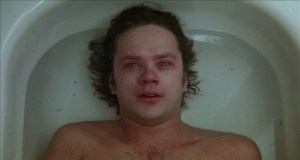
Jacob's (Tim Robbins) life falls apart in Jacob's Ladder

Jacob’s (Tim Robbins) life falls apart in Jacob’s Ladder

What makes Jacob’s visions more frightening is the plausibility in which Lyne presents them. One woman appears to have filed-down horns which only become apparent when her hat slips, while a car trying to run him down contains the violently shaking masked figure he glimpsed earlier at the back of a subway train. Cronenbergian body horror is also used to phantasmagorical effect at a party where Jacob’s girlfriend Jezebel (Elizabeth Peña) is seemingly violated by a grotesque demon; and the unnerving hospital scene when an incapacitated Jacob is confronted by doctors who really don’t seem to have his best interests at heart.

The angelic chiropractor Louis (Danny Aiello) in Jacob's Ladder

The angelic chiropractor Louis (Danny Aiello) in Jacob’s Ladder

The film features a number of startling images, including a helicopter shot Oliver Stone would have been proud of and the haunting moment when a coin’s sudden movement spells doom for one character. Lyne’s inspirations for the film’s visual palette include the Oscar-winning 1962 short film An Occurrence at Owl Creek Bridge and the austere work of artist Francis Bacon (in particular the film’s poster which shows a ghostly Jacob seemingly trapped in an abyss).

Jacob's (Tim Robbins) war buddy Paul (Pruitt Taylor Vince) confides in Jacob's Ladder

Jacob’s (Tim Robbins) war buddy Paul (Pruitt Taylor Vince) confides in Jacob’s Ladder

Despite toning down Bruce Joel Rubin’s portentous script, the film is still cut through with Old Testament religious symbolism, from the title that refers to a chapter in Genesis in which the prophet Jacob dreams of a ladder ascending to heaven, to the overtly Biblical names (Jacob, Jezebel, his ex-wife Sarah, who in the Bible was Jacob’s grandmother, and son Gabe/Gabriel) and the angelic quality of Jacob’s chiropractor Louis (Danny Aiello).

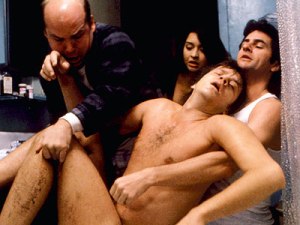
A nasty spot for Jacob (Tim Robbins) in Jacob's Ladder

A nasty spot for Jacob (Tim Robbins) in Jacob’s Ladder

Louis’ citation to Jacob of Christian philosopher Meister Eckhart about devils really being angels freeing a soul that isn’t ready to let go not only strikes at the heart of Jacob’s tortured psyche, but is also a breadcrumb left by Lyne that provides one explanation of the film’s wider context.

While its unfortunate protagonist is unable to separate reality from demonic hallucination, the unique and relentlessly creepy Jacob’s Ladder can be viewed through a prism of nightmarish perceptions, all as valid as each other.

Great Films You Need To See – 24 Hour Party People (2002)

Never let the truth get in the way of a good story, especially when it’s told with as much, well, ecstasy as Michael Winterbottom’s chaotically crazy paean to the high watermark of the Manchester music scene.

One of the best British movies of this century's first decade, 24 Hour Party People has pills, thrills, bellyaches and plenty more besides

One of the best British movies of this century’s first decade, 24 Hour Party People has pills, thrills, bellyaches and plenty more besides

Paraphrasing John Ford’s The Man Who Shot Liberty Valance, local TV reporter and music impresario (and the ultimate unreliable narrator) Tony Wilson would rather “print the legend” given the choice between that and the truth and Winterbottom and screenwriter Frank Cottrell Boyce are happy to go along.

Wilson is a singular figure and, played by Steve Coogan as Alan Partridge’s cooler, more successful brother, is as clever as he is funny, arrogant, pseudo-intellectual and eccentric. Although claiming at one point that “this is not a film about me; I’m a minor character in my own story” (in one of the film’s many fourth wall-breaking moments), 24 Hour Party People, like Madchester itself, wouldn’t exist without him.

Tony Wilson (Steve Coogan) and wife Lindsay (Shirley Henderson) attend the Sex Pistols' seminal 1976 gig at Manchester Lesser Free Trade Hall in 24 Hour Party People

Tony Wilson (Steve Coogan) and wife Lindsay (Shirley Henderson) attend the Sex Pistols’ seminal 1976 gig at Manchester Lesser Free Trade Hall in 24 Hour Party People

Winterbottom and Coogan gleefully pull the rug from under the audience right from the beginning of the movie, which starts in 1976 with Wilson throwing himself off a hill while attached to a hand-glider. After the elation comes the danger and finally the inevitable crash. Before we can work out the scene’s a metaphor for what’s to come, Wilson gets there ahead of us, saying straight to camera “obviously it’s symbolic, it works on both levels”. He goes on to add: “All I’ll say is … Icarus – If you know what I mean, great. If you don’t, it doesn’t matter; but you probably should read more.”

When not presenting quirky items that generally show up on the “And finally…” section of news programmes, Wilson fronted So It Goes, one of the only avenues in which to discover exciting new music before the days of the world wide web. In June 1976 he and 41 other people (including his first wife Lindsay, played by Shirley Henderson) attended the Sex Pistols’ seminal Manchester Lesser Free Trade Hall gig (which Winterbottom cleverly films by intermingling archive footage for the close-ups of the Pistols) alongside the future movers and shakers of Manchester music (as well as Simply Red’s Mick Hucknall, who doesn’t count).

Ian Curtis (Sean Harris) on stage in 24 Hour Party People

Ian Curtis (Sean Harris) on stage in 24 Hour Party People

Through that gig, Wilson met Ian Curtis (Sean Harris) and the other members of soon-to-become post-punk poster boys Joy Division and created Factory Records. The film follows the crazy highs and the crazier lows of Factory’s turbulent existence, from Joy Division through to New Order (formed by the surviving members of Joy Division after Curtis’ suicide in 1980), the Happy Mondays, the Hacienda nightclub, the birth of rave culture and the inevitable implosion.

The no-nonsense Rob Gretton (Paddy Considine) and unconventional producer Martin Hannett (Andy Serkis) in 24 Hour Party People

The no-nonsense Rob Gretton (Paddy Considine) and unconventional producer Martin Hannett (Andy Serkis) in 24 Hour Party People

Winterbottom purposefully splits 24 Hour Party People into two distinct sections – everything that went on prior to Curtis hanging himself and everything that happened after. Curtis is given the respect he deserves; it’s through his band that Wilson formed Factory in the first place and his suicide is dealt with sensitively and suddenly. Harris’ portrayal of the troubled singer is excellent and particularly captures his intense and contorted on-stage persona (he’s even better than Sam Riley in 2007’s Control, the more autobiographical film about Curtis).

Following Curtis’ death, the film gets increasingly anarchic, reflecting both the times and the head space of Wilson, who doesn’t help himself by making a series of rash financial decisions in the name of art. He doesn’t care, for instance, when told Factory will lose money on every copy of New Order’s elaborately designed gatefold 12″ of Blue Monday as he thinks it won’t sell – only to be proved disastrously wrong when it goes on to become the highest-selling 12″ single in history.

Paul (Paul Popplewell) and Shaun Ryder (Danny Cunningham) up to no good in 24 Hour Party People

Paul (Paul Popplewell) and Shaun Ryder (Danny Cunningham) up to no good in 24 Hour Party People

Likewise, in spite of the fact the Hacienda is haemorrhaging cash he invests in new offices, which include a zinc roof that can only be observed from a helicopter and a £30,000 boardroom table that’s as pointless as it is cheap-looking. That was the dichotomy of Wilson; a can-do entrepreneur Thatcher would undoubtedly have been proud of had he not helped to usher in rave culture.

The film is strengthened by a rogue’s gallery of new and established talent, including Paddy Considine as the no-nonsense Joy Division/New Order manager Rob Gretton, John Simm as New Order singer Bernard Sumner, Andy Serkis as unpredictable genius producer Martin Hannett and Danny Cunningham as Happy Mondays frontman Shaun Ryder.

The seminal Hacienda nightclub brought back to life in 24 Hour Party People

The seminal Hacienda nightclub brought back to life in 24 Hour Party People

It also features a whole host of cameos, many of whom are used imaginatively in the movie, not least of which the real Tony Wilson as a TV producer lambasting the other Wilson’s presentation skills. In another inspired moment, Wilson recalls his wife having sex in a public toilet with Buzzcocks frontman Howard Devoto. As he walks out the camera pans to a cleaner who happens to be the real Howard Devoto, who turns to the camera and says: “I definitely don’t remember this happening.”

Despite the nods to Partridge, Coogan gives the role far more nuance than he’s credited for and clearly relishes the opportunity to flex his acting muscles. He’s arguably never been better.

Needless to say, if you’re a fan of Manchester’s music scene from the late 70s to the early 90s you’ll be in seventh heaven when it comes to the soundtrack (there’s no Stone Roses or Oasis here, however; they’re not part of the Factory story).

One of the best British movies of this century’s first decade, 24 Hour Party People has pills, thrills, bellyaches and plenty more besides.

Great Films You Need To See – Exit Through The Gift Shop (2010)

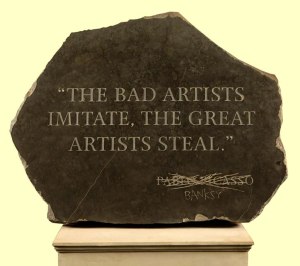
There’s a moment during slippery, chameleonic (mock?) documentary Exit Through The Gift Shop when someone says: “I think the joke’s on … actually, I don’t know if there’s even a joke.”

In Exit Through The Gift Shop, Banksy has conjured up a playfully provocative work of art in and of itself

In Exit Through The Gift Shop, Banksy has conjured up a playfully provocative work of art in and of itself

It’s a revealing admission that sums up (as much as anything can) street artist Banksy’s directorial debut, a true one-off that will leave you questioning whether you’ve been conned as much as the hype-happy media and gullible sycophants who fawn over the art world’s self-proclaimed next big thing, Mr Brainwash.

Asked at the start of the film what it’s about, Banksy responds: “It’s about a guy who tried to make a documentary about me, but he was a lot more interesting than I am, so now the film is kind of about him.”

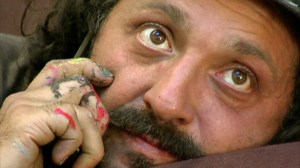
Thierry Guetta, aka Mr Brainwash, in Exit Through The Gift Shop

Thierry Guetta, aka Mr Brainwash, in Exit Through The Gift Shop

That man is Frenchman Thierry Guetta, an LA-based compulsive videographer who we learn from Rhys Ifans’ incredulous narration stumbles across the burgeoning street art movement through his cousin, an internationally recognised graffiti artist called Invader. He documents Invader going about his legally dubious business and is introduced to many of its major players, in particular Shepard Fairey, whose trademark tag of ex-wrestler Andre the Giant with the word ‘Obey’ underneath has been become so iconic “it gains real power from perceived power” (he’s equally well-known for designing the famous Obama ‘Hope’ poster which came to represent their 2008 presidential campaign).

The enigmatic Banksy in Exit Through The Gift Shop

The enigmatic Banksy in Exit Through The Gift Shop

When Banksy arrives in LA, Thierry excitedly hooks up with the elusive artist and, following a colourful episode in Disneyland involving a Guantanamo Bay detainee doll, the two become trusted friends. After documenting Banksy’s wildly successful show Barely Legal (part of which involves painting an elephant pink as a statement about how we ignore the things right in front of us, apparently), Thierry turns the thousands of hours of footage he has into a 90-minute street art film called Life Remote Control (trailer below), which Banksy writes-off as “shit” and made by someone “with mental problems”.

The highlight of Banksy's Barely Legal LA show in Exit Through The Gift Shop

The highlight of Banksy’s Barely Legal LA show in Exit Through The Gift Shop

He takes the footage off Thierry’s hands and suggests he give street art a go. Running with the idea, Thierry reinvents himself as ‘Mr Brainwash’ and, with the help of a team doing all the work, a promotional soundbite from Banksy (“Mr Brainwash is a force of nature, he’s a phenomenon. And I don’t mean that in a good way”) and a ravenous media, slaps together the show Life Is Beautiful that’s as creatively bankrupt as it is crowd-pleasing.

Opinions are split on whether the film – marketed as ‘The world’s first street art disaster movie’ – is one giant prank on Banksy’s part or that Thierry really did suddenly transform himself into Mr Brainwash and become an overnight sensation. Some have even posited the theory that Thierry is actually Banksy hiding in plain sight, a pink elephant so to speak.

Street art in full effect in Exit Through The Gift Shop

Street art in full effect in Exit Through The Gift Shop

Banksy has always maintained the film is real, although Thierry in an interview with the LA Times admitted of his Mr Brainwash persona: “In the end, I became [Banksy’s] biggest work of art.”

That being said, a revealing moment at the start of the film suggests there’s plenty of Thierry in Mr Brainwash. Talking about his time as the owner of a retro clothes store in LA, Thierry admitted he would buy items cheap, rebrand them as designer and sell them on to the hipster brigade (including alt-rock musician Beck, who’s caught on camera) at hugely marked up prices. It’s an approach he adopts for Life Is Beautiful and one that cleverly throws a spotlight on the value we place on art, especially when it’s in fashion.

Words that Banksy may not choose to apply to Mr Brainwash, however, in Exit Through The Gift Shop

Words that Banksy may not choose to apply to Mr Brainwash, however, in Exit Through The Gift Shop

The influence of hype on a gullible public is also satirised. One punter queuing for the show says “I’m not quite sure what I’m here for, but I’m excited about it,” while another gets a bad case of hyperbole when she ecstatically calls Life Is Beautiful “a triumph … it will go down in history”.

Away from the vacuous sycophancy, Thierry comes across as a buffoon, all be it a likeable one. When he isn’t walking into lamp-posts or accidentally tipping paint over the back of his car he’s described as “retarded” or a waste of space and lambasted for not having a clue, which kind of adds to his charm.

Whether Thierry/Mr Brainwash is the real deal or an elaborate practical joke is ultimately irrelevant, what counts is that Banksy has conjured up a playfully provocative work of art in and of itself.

“Maybe it means art’s a bit of a joke,” he says. Watch Exit Through The Gift Shop and make your own mind up.

Great Films You Need To See – Battle Royale (2000)

Teenagers are forced by a paranoid, dystopian government to compete in all-or-nothing game where they must use whatever weapons are at their disposal to kill each other in order to win.

You’d be forgiven for thinking a review of The Hunger Games would be forthcoming off the back of that premise. However, more than a decade before that acclaimed blockbuster made it to the big screen, director Kinji Fukasaku unleashed this ultra-violent black comedy.

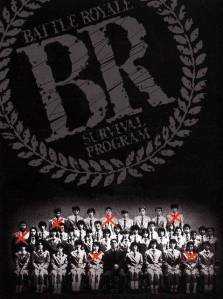
Battle Royale

The ultra-violent black comedy Battle Royale

Subsequently re-released in 3D (in 2010 in Japan and this year in the United States, presumably to cash-in on the hysteria surrounding The Hunger Games), Battle Royale was as successful in its native Japan as it was controversial (there’s no such thing as ‘bad’ news when it comes to drumming up box office receipts, after all).

Adapted from Koushon Takami’s novel of the same name, the film begins with a prologue explaining how high unemployment, mass truancy, escalating juvenile crime and peadophobia led to the adoption of The Battle Royale Act, wherein a class of ninth grade kids are selected at random to participate in an epic bloodletting against their will. Ferried to a deserted island, the 40-plus friends and classmates are fitted with explosive neck braces and told they have three days to ensure they are the last one standing or face certain death.

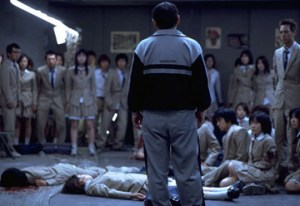
They are given this unwelcome news by their former teacher Kitano (played by Japanese actor/director ‘Beat’ Takeshi Kitano), who casually informs his ex-students that “today’s lesson is you kill each other off till there’s only one of you left; nothing is against the rules”. Kitano is a metaphor for the system; an implacable tyrant who stamps his authority by killing two of the terrified teens before the game has even started, one for whispering and the other for talking back. “You don’t respect adults”, he states, by way of explanation.

Some of the students choose to commit suicide rather than play along, while others either go it alone or fall back on the friendships they had in school and team up. Although class heart-throb Shuya (Tatsuya Fujiwara) emerges as the hero and Noriko (Aki Maeda) the plucky heroine, the film gives ample screen time to the other students to work together, turn on each other or die tragically (often all three).

Battle Royale

Kitano (‘Beat’ Takeshi Kitano) gives his former pupils a lesson they won’t forget in Battle Royale

Fukasaku displays a clever understanding both of the overtly emotional, naive rebelliousness of many teens and the Dawson’s Creek-esque soap operas that have embellished these traits with lashings of post-modernist melodrama.

Scenes of eye-popping gore are followed by characters declaring their love as they lie dying in each other’s arms, punctuated by Masamichi Amano’s knowingly over-the-top score. Others wallow in reductive woe-is-me angst, usually just before killing or being killed.

Battle Royale definitely has plenty of fun with its subject matter. One girl’s amusing last words to the boy she loves are “you look really cool”, while another boy unsuccessfully attempts to convince the girl he likes to have sex with him, shortly before he’s stabbed to death by her. Classroom rivalries are also allowed to reach their natural conclusion when the characters concerned each have a weapon in hand.

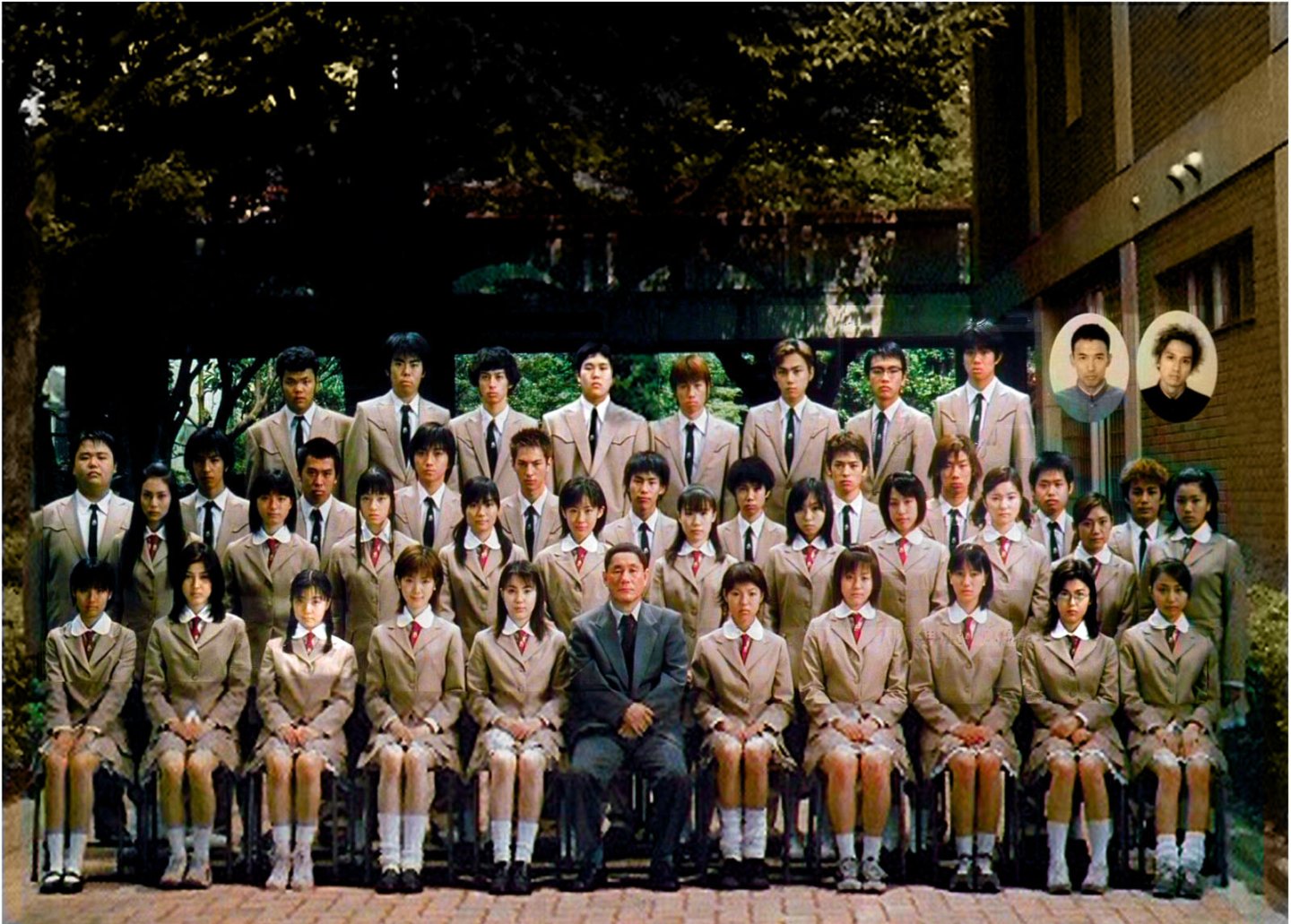
The class in happier, less-deadly times in Battle Royale

The class in happier, less-deadly times in Battle Royale

That being said, there’s no winking at the audience by the young cast, who equip themselves admirably and play it straight. Only the psychopathic Kiriyama (Masanobu Ando) feels a little out-of-place, his killer-who-just-won’t-die routine more suited for slasher films.

Although the events taking place on the island aren’t screened on television for mass consumption, the media is seen scrambling over itself to cover the story – the ultimate example of the ‘if it bleeds it leads’ axiom.

Sequels to dystopian dramas such as this tend to switch focus to the resistance that is born in its wake.  Battle Royale II: Requiem adheres to this formula, but does so to full effect with a daring, post-9/11 narrative that courts controversy even more gleefully than its predecessor and should also be sought out.

Battle Royale is ultimately a story about the loss of innocence and its young cast can be seen as a microcosm of where Fukasaku possibly felt society was headed. Adults are presented here as a different species, afraid and confused in equal measure of a generation they have spectacularly failed to understand and engage with. Like all those who live in fear, the walls go up and the consequences be damned.