London Film Festival 2010 – Chapter 10

I’ve watched films during this festival from all four parts of the globe. In fact the only continent I haven’t seen something from is Antarctica and that’s only because I was unable to catch the restored print of The Great White Silence which charted Captain Scott’s ill-fated race to the South Pole.

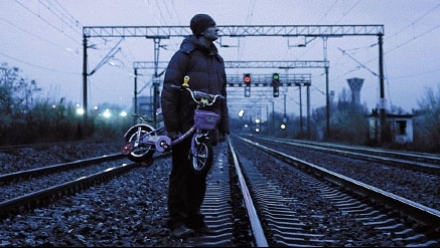
One other area of Planet Earth I hadn’t stuck a pin in at the LFF was the Middle East, an unforgivable state of affairs which I rectified with a hasty viewing of the Israeli film Infiltration.
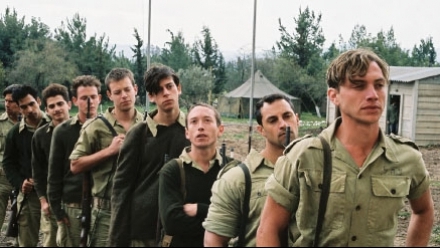
Infiltration

The BFI South Bank’s NFT2, where Infiltration was screened is a little cramped to be honest. The amount of legroom available is limited, but you kind of learn to live with it.

Well, most of us do anyway. Shortly before the film started a young woman turned up and stood at the end of our row looking uncertain. She said to no-one in particular: “It’s a bit tight isn’t it? What if I need to go to the toilet?” before bravely venturing into the row, where it became apparent very quickly she was at the other end of it. She then uttered, holding her hands to her head in genuine distress: “Oh, this is sooo scary.” Scary? What, walking along a row of amiable cinemagoers? Jesus wept; if someone was holding a gun to her head and making a series of unreasonable demands then maybe she would have a case with a statement like that, but as things go this shouldn’t rank up there as one of the scariest things to happen to you. If so, then you need to get some flippin’ perspective.

Anyway, onto the film. Falling somewhere between Oliver Stone’s Platoon (1986) and Stanley Kubrick’s Full Metal Jacket (1987), Infiltration is set in 1956 and follows a series of misfits aspiring to be soldiers.

They’re an unpolished rabble, made up of a smorgasbord of North African and European immigrants and Holocaust survivors, petty criminals and bourgeoisie.

Up until then you’d have put none of them together, but they are forced to share the same barracks during boot camp and learn the hard way what it means to be a soldier.

Much like its characters, Infiltration is somewhat of a ragtag film from Dover Kosashvili, a bit rough round the edges with an ill-advised jaunty soundtrack.

The script, by Kosashvili and Reuven Hecker is also a bit clunky, making unsubtle comments about Israel’s apparent penchant for military aggression towards its neighbours in reaction to the terrible suffering the Jews experienced at the hands of the Nazis.

Neither as visceral as Platoon nor as tough as Full Metal Jacket, Infiltration is a bit of a misfire I’m afraid.

Thankfully the day was livened up with Alejandro Gonzalez Iñárritu’s highly anticipated latest Biutiful.
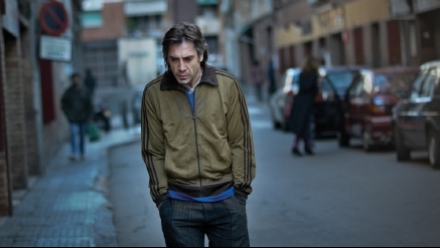
Biutiful

Iñárritu is one of the world’s most celebrated directors, having broken out with his startlingly fresh debut Amores Perros (2000), which launched the career of Gael Garcia Bernal, and its acclaimed follow-ups, 21 Grams (2003) and Babel (2006), both of which garnered Oscar nominations.

Although impressive films in their own right, 21 Grams and Babel were accused of being derivative, with Babel especially being criticised for pushing Iñárritu’s formula of weaving multiple plot strands together to the limits of acceptability. Perhaps wisely, he has backed away from going down this road once again with Biutiful, his first Spanish-language film since Amores Perros.

Uxbal (Javier Bardem) is a man fighting to keep his head above water. He lives in a grotty flat with his two children, while his estranged wife Marambra (Maricel Álvarez) is having an affair with his brother and partner-in-crime Tito (Eduard Fernández).

Away from his kids, Uxbal is a different man, a hustler making money wherever and however he can – and if that means exploiting sweatshop workers and illegal immigrants then so be it.

Uxbal also makes money on the side by using a special gift, an ability which allows him to connect with the dead, to comfort those grieving a recent loss.

When Uxbal is informed he is terminally ill, life suddenly shifts him in a different direction and he resolves to get his affairs in order before his time’s up. He reconnects with the bipolar Marambra and tries to make amends by helping out the wife of a Sudanese man who has been deported after being caught by the police selling black market goods.

He also endeavors to make life a little more comfortable for the Chinese immigrants he is exploiting and who live illegally in a warehouse basement, but his gesture leads to tragedy and, eaten by guilt he realises he cannot do this any longer.

A film of immense assurance, Biutiful makes the down and dirty a thing of visual splendour, thanks to Rodrigo Prieto’s stunning cinematography.

The supernatural angle, at first, seems tacked on and unnecessary, but as the film progresses this plot device begins to make sense and provides Biutiful‘s most distressing and disturbing scene when Uxbal enters the basement of dead Chinese immigrants and we can see their ghosts clinging to the ceiling, faces etched with horror. It’s a moment that stays with you long after the end credits roll.

A splendid, committed cast give their all, especially Uxbal’s two kids, the charming Maramba (Hanaa Bouchaib) and Mateo (Guillermo Estrella) and Álvarez, whose life is falling apart even faster then Uxbal’s.

But this is Bardem’s film. He is talismanic as Uxbal, a desperate bully one moment, a loving father the next and a man desperately trying to find the right path for his kids before it is too late. As it happens, a moment of kindness shown earlier in the film proves to be a blessing later on and offers him a chance of redemption he is strong enough to take.

It comes as little surprise Bardem won the Best Actor award at this year’s Cannes Film Festival. It’s a performance of real stature that catapults this film into the realms of genuine beauty.

London Film Festival 2010 – Chapter 9

Well, here we are in the final flourishes of what has so far been a hugely enjoyable London Film Festival.

After the fantastic films of the previous day, my hopes were high that things could continue in the same impressive vein.

Although no masterpiece, The Kids Are All Right didn’t let me down, delivering as it did a smart and sassy comedy that is sure to get noticed come awards time.

The Kids Are All Right

Teenagers Joni (Mia Wasikowska) and Laser (Josh Hutcherson) were conceived as a result of an anonymous sperm donor and have been raised by long-term couple Nic (Annette Bening) and Jules (Julianne Moore).

Joni is just about to head off to college and is convinced by Laser that they should seek out their biological father, who turns out to Paul (Mark Ruffalo), owner of an organic farm and restaurant.

Paul is the kind of guy who takes each day as it comes and the trio hit it off enough to decide to keep seeing each other. When Laser accidentally lets slip what he and Joni have been up to, his moms decide the time has come for the whole ‘family’ to finally meet.

While hippy chick Jules takes to Paul, the uptight and worrisome Nic is more resistant, concerned at the effect he may have on their lives. When Paul becomes the first client of Jules’ new landscape gardening business and the kids start spending even more time with Paul, it seems his influence has been for the best. But as time goes by, the life that they all knew slowly starts to change, not necessarily for the better.

Homosexuality is still something of a rarity in Hollywood and in the past has been treated in a crude, heavy-handed fashion. But in The Kids Are All Right director/co-writer Lisa Cholodenko gives us in Nic and Jules two people who are a couple first and lesbians second.

Credit for this must first be given to the polished and intelligent script, which is full of spot-on observations about married life and the trials of parenting. Secondly Moore and Bening, especially, must be congratulated on delivering totally believable performances. You genuinely think these are two people who have lived together for many years, with all the bad habits and shorthand that go with it.

Likewise, Ruffalo does a sterling job as Paul. Despite some unwise life choices, it’s almost impossible to dislike the character. He’s such a cool guy you could forgive him almost anything.

The story itself may be pretty slight, but the fact the film navigates its way through a labyrinth of cheese and melodrama relatively unscathed is a hugely impressive achievement and makes for a great way to spend 106 minutes.

Rachid Bouchareb’s 2006 film Days Of Glory remains one of the most original and enlightening of the present batch of World War Two films which have cropped up since Saving Private Ryan back in 1998.

Hugely controversial on its release, Days Of Glory sought to give proper dues to the thousands of Algerian soldiers who fought to free France from the grip of Nazi occupation. In spite of the countless men who gave their lives, they were sidelined by Charles de Gaulle when it came to recognising the sacrifice made.

It was only after the film’s release that the French government changed its policy to bring foreign combatant pensions in line with what French veterans have been paid.

Bouchareb goes even further in his equally absorbing follow-up Outside The Law.

Outside The Law

On the same day citizens of Paris were celebrating the surrender of Nazi Germany, a parade by about 5,000 Muslims in the Algerian province of Setif culminated in violent clashes between demonstrators and French troops which left more than 100 dead.

Bouchareb points the finger of blame firmly at the French gendarmerie and it is this event that helps to spawn the formation of the National Liberation Front (FLN) in Algeria, a movement instrumental to the lives of three brothers, ex-soldier Messaoud (Roschdy Zem), the scholarly Abdelkader (Sami Bouajila) and criminal and boxing promoter Said (Jamel Debbouze) who chooses to stay out of it.

As Messaoud and Abdelkader become more embroiled in the fight for Algerian independence in 1950s Paris, their morals get ever muddier and soon they both have blood on their hands.

Their actions soon get the attention of the French authorities and lead to the formation of the Red Hand, a covert armed squadron charged with using whatever means necessary to destroy the FLN. The Red Hand is led by Colonel Faivre (Bernard Blancan), a former senior member of the French resistance who understands what the FLN is fighting for but now wears the shoe on the other foot, labeling them “terrorists”.

It’s not hard to see the ties that Outside The Law is striving to make between 50 years ago and today, but the film is directed with such a passion by Bouchareb that it is very much its own animal and, as well as being purposefully provocative and political is also a thrill ride from start to finish.

Although not a sequel to Days Of Glory, the fact that its three main leads have been reassembled for this film means comparisons are inevitable. Outside The Law has a harder, darker edge than its predecessor, which is hardly surprising given the highly charged subject matter.

It will be fascinating to see what Bouchareb comes up with next, but he’ll have to go some to improve on this fascinating polemic.

London Film Festival 2010 – Chapter 8

As the LFF enters its final few days, it’s a pleasant surprise to find the best has been saved till last.

Following the disappointments of the previous day, Darren Aronofsky’s Black Swan was just the tonic I needed.

Black Swan

Since his fantastic calling card Pi in 1998, Aronofksy has become one of Hollywood’s most versatile and audacious directors. His adaptation of Hubert Selby’s Requiem For A Dream (2000) remains a one-timer for me, not because of any faults on its part – far from it – but more for the fact it presents the starkest view of drug addiction I’ve ever seen on screen.

I appear to be one of the few people on the planet who loves The Fountain (2006), a work of extraordinary visual beauty that conjures a hugely original love story. The Wrestler (2008) was more universally praised – quite right too – and contains one of the most honest screen portrayals I’ve ever seen courtesy of Mickey Rourke.

Like Quentin Tarantino, Aronofsky has an uncanny ability to draw out something extra special from his actors and he’s done it again in Black Swan, with Natalie Portman giving a career-best turn.

Portman plays Nina, a technically gifted dancer with the New York City ballet who strives so hard for perfection she never seems to let herself go. All she wants is to play the lead in Swan Lake and she’s given the chance to realise her dream when she is chosen by artistic director Thomas Leroy (Vincent Cassel) to replace the embittered Beth MacIntyre (Winona Ryder) as prima ballerina.

Leroy’s is a daring new production of Swan Lake, where Nina must not only play the gracefully innocent White Swan, but also the darker, more uninhibited and lustful Black Swan.

Nina has no problem with becoming the White Swan, but her repressive, inhibited personality doesn’t lend itself to her portraying a convincing Black Swan.

As the pressure builds, Nina’s mind starts to fracture and soon she is clinging on to what she perceives as reality. Her fragile mental state isn’t helped by her wildly over-protective mother (Barbara Hershey), herself a retired ballerina, while sexier, darker new dancer Lily (Mila Kunis) seems to possess all the qualities of the Black Swan and, as such, is perceived by Nina as a very real threat.

That only scrapes the surface of Black Swan, Aronofsky’s most complex and visually sumptuous film to date and one of the very best pictures you’ll see all year.

Nina’s gradual breakdown is powerfully realised on screen, both through the visual tricks Aronofsky uses and Portman’s tour de force performance, without a doubt the best she has ever committed to screen.

As psychologically daring as anything you’ll see, the ballet performances are as almost as breathtaking as those in Powell and Pressburger’s The Red Shoes (1948), and that is about as big a compliment as I can pay.

Earlier in the week we were treated to Mike Leigh’s new film Another Year. To complete the diptych of much-loved British veterans, we now have Route Irish, the latest from Leigh’s stablemate Ken Loach.

Route Irish

Route Irish is the name given to the road between Baghdad International Airport and the Green Zone, the closest thing to a safe place for the Allied troops stationed in Iraq’s capital.

It’s the most dangerous stretch of road in the world and is where private contractor Frankie (John Bishop) loses his life. At first it seems Frankie was in the wrong place at the wrong time, but lifelong mate and fellow ex-soldier and contractor Fergus (Mark Womack) isn’t convinced and, with the help of Frankie’s widow Rachel (Andrea Lowe), launches a quest to uncover the truth.

Loach has made a career out of picking the kinds of scabs that governments would rather he left well alone and in Route Irish he turns his spotlight on the privatisation of war.

The private security firm of Route Irish reeks of corruption and greed. Set in 2007, the film implies companies like these have been allowed to operate with complete impunity and, as it turns out, get away with murder.

The anger that Loach feels seeps out of every frame and in the tormented character of Fergus he has the perfect cipher for that rage. In Womack’s capable hands, Fergus is a mad dog blinded by grief, guilt and fury who simply won’t be stopped until Frankie’s death is avenged.

In the past Loach has been a bit guilty of romanticising his lead characters and treating his films as extended lectures. In recent films though one can sense he has been trying to make his work more accessible and that’s certainly the case here. That’s not to say it has any less to say than any of his other pictures, but Loach seems to trust his extremely accomplished storytelling more to give us a hugely powerful thriller.

If you watch Route Irish and leave feeling angry, your blood will be boiling after sitting through the compelling documentary Draquila – Italy Trembles.

Draquila – Italy Trembles

You know as a filmmaker that you’re doing something right when your documentary incurs the wrath of the system it is directly criticising.

At this year’s Cannes Film Festival, Italy’s culture minister boycotted Sabina Guzzanti’s film, branding it as nothing more than propaganda against Italian Prime Minister Silvio Berlusconi.

This statement is pretty ironic as after watching Draquila – Italy Trembles you’d be forgiven for thinking that this documentary is about the only visual document of the terrible earthquake that devastated L’Aquila in 2009 that isn’t propagandistic.

Focussing on the aftermath of the earthquake, Guzzanti presents an exhaustive case for mass incompetence and corruption at the heart of Italy’s rotten political system, with Berlusconi at the head of the table.

For much of the film, you’re left shaking your head at the sheer bare-faced greed on show, be it for money, land, political capital or power.

Guzzanti can’t help poking fun at Berlusconi from time to time (like shooting fish in a barrel, admittedly), but the overriding tone of this enlightening and important documentary is of anger at the way a system which subjugates its citizens and treats the victims of the earthquake as nothing more than cattle is allowed to stand.

London Film Festival 2010 – Chapter 7

Part of the gamble you take when attending these things is that you can sometimes fork out a chunk of change for what can best be described as a disappointment.

Aurora

I went into Cristi Puiu’s Aurora with hopes at a reasonable height. Puiu’s last film The Death Of Mr Lazarescu (2005) pretty much launched the Romanian New Wave, a movement that has led to such works as 12.08 East Of Bucharest (2006) and the masterpiece 4 Months, 3 Weeks And 2 Days (2007).

The fact Aurora was three hours long also wasn’t a particular issue – I had managed five-and-a-half-hours for Carlos, after all. However, while Carlos was 330 minutes and felt nothing like that length, the 181 minutes of Aurora felt like 181 hours.

Aurora follows Viorel (played by the director) over the course of 36 hours. We first see him awake and naked next to his lover, before he goes to work, purchases a 12-gauge shotgun and makes use of it on a series of unwitting victims.

Puiu plays Viorel as a man of very few words, an implacable automaton who is given to bouts of shocking violence (similar in many ways to the protaganist in the rather more effective Chilean film Tony Manero (2008)).

The robotic ways Viorel goes about his business are reflected in the long takes Puiu uses, whether it be walking back and forward in his flat or driving a borrowed car. The moments of violence are undoubtedly shocking (which is obviously the point) and it is only at the very end when Viorel hands himself in to the police (the best scene in the film by far, played out with deadpan humour) when the reason for his actions is explained and the connection between the victims is established.

In the post-film Q&A, Puiu defended the lack of action without someone having asked him to do so, stating that in real life not many of us can catalogue a series of exciting events over 36 hours, so why should his central character?

It’s a fair point, but we need to at the very least engage with, understand or feel something for the characters before us, otherwise our patience can wear thin pretty soon, as it did here I’m afraid.

The festival’s hottest ticket is always its Surprise Film and I was keen to see what the LFF team would be serving up this year. As previously mentioned, festivals are a lottery and the Surprise Film is the biggest gamble of all. However, if previous years were anything to go by (The Coen Brothers’ No Country For Old Men in 2007, The Wrestler in 2008 and Michael Moore’s Capitalism: A Love Story last year) then expectations were certainly high.

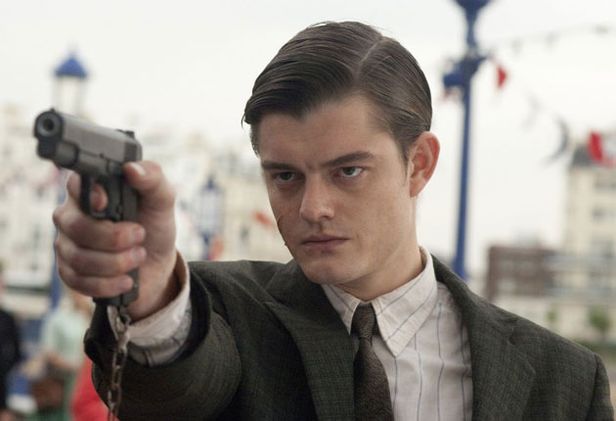
In the end we got Brighton Rock.

Brighton Rock

The original 1947 film pretty much defined British noir and helped to make a household name out of Richard Attenborough.

This latest version, which screenwriter/director Rowan Joffe was at pains to stress in the post-film Q&A was not a remake, is rather a new version of Graham Greene’s source novel.

Whatever Joffe says, it’s nigh-on impossible not to compare it to the Dickie Attenborough classic, though, and it’s here where his version starts to fall down.

That said, the first 20 minutes is highly effective, with a honking score playing over the film’s opening gangland killing and the revenge that follows. But as soon as Sean Harris’ shifty Hale is dispatched in a scene that begins on Brighton Pier and ends on the pebbled beach beneath it, the momentum that’s been building since the first frame suddenly withers away and a whole new, far inferior film takes its place.

To give his Brighton Rock its own identity, Joffe places the film in 1964, as opposed to the post-war setting of the original. This gives the film an extra bite as mods square up to rockers in a Britain whose youth are angry and not going to take it any more.

Although it kind of makes sense on paper, by shifting away from a war-weary post-war society where thugs like the central protaganist Pinkie are able to thrive to the mid-60s just doesn’t work in practice. The Pinkies of this world no longer seem to fit and feel like exactly what they are, by-products of another age.

Likewise, the character of Rose (Andrea Riseborough) feels like someone out of time. This is an era when women were starting to flex their political and societal muscles, so to have a character who is so deluded in her slavish devotion to Pinkie doesn’t convince. The scene in which she takes it upon herself to purchase a fashionable new dress is the one moment the 60s setting works for the character, otherwise she’s lost in another time and another film.

And what of Pinkie himself? While Attenborough gave his gangster a heart, albeit one that beats to a particular nasty tune, Sam Riley may have the look and the voice but gives Pinkie about as much depth as a stick of Brighton rock. There’s nothing going on behind Riley’s eyes and his sudden transformation from scared young man to sociopathic murderer doesn’t wash.

Hats off to Nonso Anozie for elevating  Dallow from the sweary henchman he could so easily have become, while Phil Davis get the tone just right as an aging gangster desperate to escape. But a starry cast, including Helen Mirren, John Hurt and Andy Serkis are wasted in sub-standard roles which require little or no work on their part.

At the end of the film, the person next to me commented to his girlfriend: “Brighton Rock? Shite-on Rock more like”, which kind of sums it up really.

London Film Festival 2010 – Chapter 6

One of the problems with the British film industry (apart from the fact there probably won’t be one in a couple of years if the Tories and their Lib Dem bitches have their way) is the lack of movies that actually speak to a young audience.

Don’t misunderstand me, I enjoy a good costume drama when it has something to say, but the dearth of British films that dare to challenge the viewer or aren’t pigeonholed at the 45-65 age bracket is actually pretty depressing.

So when one comes along it feels like a breath of fresh air. The LFF, bless it, tries its best to showcase the best that Britain has to serve up, and it most certainly got it right with its decision to screen Submarine.

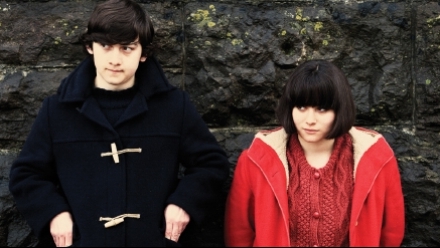
Submarine

Submarine certainly caught my attention – I’m sure I wasn’t the only one – as it marks the directorial debut of Richard Ayoade, best known as uber-geek Moss in Channel 4’s The IT Crowd, as well as Garth Marenghi’s Darkplace and Chris Morris’ Nathan Barley.

Based on Joe Dunthorne’s novel, Submarine‘s central character is Oliver Tate (Craig Roberts), a 15-year-old Swansea schoolboy who can best be described as a square box living in a world with only round windows.

Oliver has a soft spot for classmate Jordana (Yasmin Paige), who finally notices him when he inadvertently pushes a fellow pupil into a puddle in a pathetic attempt at bullying.

Still hugely confused with where he fits into the world, Oliver constantly divorces himself from reality. For instance, he imagines his awkward relationship with the fragile Jordana as a movie in which he sits in the director’s chair and can’t understand why someone else (namely Jordana) wouldn’t want to read Nietzsche or turn up to a cinema an hour before 1928’s The Passion Of Joan Of Arc “to make sure to get a good seat”. You can imagine how he handles going about losing his virginity to Jordana when the  situation presents itself.

Meanwhile, Oliver starts having suspicions his unhappy mum Jill (Shirley Hawkins) is having an affair with old flame and new-age evangelist Graham (Paddy Considine) and decides to intervene on behalf of his sad, quiet dad Lloyd (Noah Taylor).

Remembering this is a first-time effort, Ayoade has a supremely confident touch with the camera, reminiscent of Wes Anderson and Truffaut’s The 400 Blows (1959), and has crafted a film that will speak to every teenager and everyone who can still recall their formative years.

He’s served by a fantastic cast, with Hawkins and Taylor brilliant as a couple uncertain of how to rediscover a spark that may no longer be there, and Considine proving that comedy comes just as easily to him as drama.

However, these pale in comparison to Ayoade’s teen cast. Both products of children’s television, Paige and Roberts are natural leads, with Roberts especially able to bring the truth to a complex role that lesser actors would have turned into kooky or weird.

There really is so much to recommend about Submarine, but this being Ayoade’s baby the plaudits must ultimately fall at his feet. This is one of the finest, most astute debuts from a British director for many years and its existence reassures you that the future of our film industry may not be quite so bleak.

While Richard Ayoade is taking his first bold steps as a director, Japan’s Takashi Miike is something of a veteran, with scores of features under his belt.

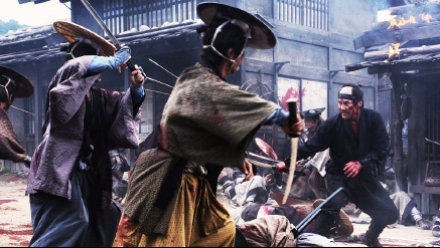
13 Assassins

Many of these features have to be seen to be believed. Miike has made something of a career out of shocking his audience – or at least surprising the hell out of them. Audition (1999) became notorious for its graphic moments of torture (most notably a scene in which a drugged and paralyzed man watches his foot being sawn off by an unhinged girlfriend), while the ultra-violent Ichi The Killer (2001) has to be seen to be believed (or not as the case may be!).

So it’s unusual that his latest, 13 Assassins, is so conventional in comparison. Although based on a true story and a remake of a 1963 black and white Japanese film of the same name, 13 Assassins owes a big debt to Akira Kurosawa’s seminal Seven Samurai (1954).

Set in 1840s Feudal Japan, the sadistic Lord Naritsugu is destined by his lineage to ascend to a high political office. Already untouchable due to his being the Shogun’s brother, his depraved actions have reached such a point, the decision is made at the highest level to assassinate him to stop him from destroying the whole country.

Retired samurai Shinzaemon (Koji Yakusho) is tasked with recruiting a posse of warriors before Naritsugu completes his journey home. Shinzaemon gathers together 12 assassins (and one bandit) and they travel through the mountains to cut Naritsugu off at the village of Ochiai, where they will make their stand.

Ochiai is converted into a giant mousetrap designed to ensnare Naritsugu and make sure he never leaves. But Shinzaemon and his samurai seriously underestimate the forces at Naritsugu’s disposal and they are soon forced to make their almost suicidal stand facing odds of more than 15 to one.

The comparisons to Seven Samurai really are difficult to ignore. Yakusho’s wise, embattled Shinzaemon can’t help but remind you of Shimada (played by veteran Japanese actor Takashi Shimura) in Kurosawa’s classic, while the larger than life bandit is a virtual carbon copy of the character played by Toshiro Mifune. Mind you, there’s worse things than being compared to one of the greatest films of all time.

After a deliberately slow build up, the pace quickens in the second half as the assassins work to convert the village and then explodes into action for the epic battle between the samurai and Naritsugu’s soldiers.

Brilliantly framed and choreographed, this third act is totally gripping throughout and a tour-de-force by Miike. Although you can guess what’s coming, it doesn’t stop 13 Assassins from punching you in the guts and reminding you that you needn’t look west to find action on a grandiose scale.