In Retrospect – Home Alone (1990)

I’ve been enlisted by Tom at the never-less-than-superb Digital Shortbread to take part in his weekly Throwback Thursday segment. Tom came to me to see if I would like to contribute one half of a double-feature evaluation of that festive favourite Home Alone (1990) and its 1992 sequel Home Alone 2: Lost In New York. Needless to say, I was honoured to be invited to take part in what’s always a fun and informative feature and delighted to be able to share my thoughts on Home Alone. Make sure to head on over to Tom’s great site (the quality of writing is something else) and check out his thoughts on Home Alone 2. Thanks again Tom!

Christmas just wouldn’t be Christmas without Home Alone, right?

Criticising Home Alone is like taking candy from a baby; it's easy but you feel bad about doing it. For all its faults - and it has a few - it's a guilty pleasure you don't feel too bad about indulging when the festive season comes around

Criticising Home Alone is like taking candy from a baby; it’s easy but you feel bad about doing it. For all its faults – and it has a few – it’s a guilty pleasure you don’t feel too bad about indulging when the festive season comes around

As much a festive tradition as roasting chestnuts on an open fire and receiving socks from granny, Chris Columbus’ monster box office hit had a seismic impact on Hollywood and helped to usher in a gamut of family friendly flicks hoping to ride the wave.

The home invasion movie was hardly a new concept, but writer and producer John Hughes sought to lighten up this normally dark sub-genre with a pair of bungling burglars and a protagonist whose early years and cutesy smile disguise a natural aptitude for home security and a hunger for sadistic violence.

Macaulay Culkin doing what he does best - mock, shock face in Home Alone

Macaulay Culkin doing what he does best – mock, shock face in Home Alone

The kid in question is eight-year-old Kevin (Macaulay Culkin), who’s left to fend for himself in his palatial home after being accidentally left behind by his family when they fly to Paris for a Christmas vacation. While Kevin’s guilt-ridden mom (Catherine O’Hara) tries to get back home by any means necessary, the wee lad goes about protecting his castle from a pair of notorious burglars called the Wet Bandits (Joe Pesci and Daniel Stern).

Although Culkin was a known entity to Hughes, having appeared in his 1989 comedy Uncle Buck opposite John Candy (who gets a cameo here as Gus Polinski – ‘the Polka King of the Midwest’), his casting in Home Alone was nevertheless a considerable gamble due to the demands of having to hold the audience’s attention for long periods with no support. It’s a test for any actor to pull this off, but when that performer is a kid the challenge is immense.

Grrrrrr. The Wet Bandits (Joe Pesci and Daniel Stern) looking mean in Home Alone

Grrrrrr. The Wet Bandits (Joe Pesci and Daniel Stern) looking mean in Home Alone

Culkin didn’t become the biggest child star since Shirley Temple for nothing, though. With a cherubic all-American face, cheeky attitude and natural on-screen confidence, Culkin is a perfect fit for the role of Kevin. He might not have the acting chops of many of today’s child actors, but when all he’s got to do is put his hands to his face and pull that over-the-top shocked expression now and again (and again) he doesn’t need to worry about it.

The film does a nice job early on of showing how an eight-year-old would probably react when left home alone.  When he isn’t tearing around the house and eating big bowls of ice cream Kevin’s making his own entertainment, like sledging down the stairs.

"Kevin!!" Kate (Catherine O'Hara) realises she's left her son Home Alone

“Kevin!!” Kate (Catherine O’Hara) realises she’s left her son Home Alone

Kevin must soon come to realise, however, just how important family is, especially at Christmas time. After wishing they would all just go away (his brother Buzz calls him a “flem-wad” and, when asked by Kevin if he can sleep in his room, is told: “I wouldn’t let you sleep in my room if you were growing on my ass”), he’s soon pining for them. He also learns the importance of not judging books by their covers, especially the slightly odd guy next door who actually turns out to be a kind old man.

Life lessons aside, Home Alone is, for all intents and purposes, a cartoon, with Culkin’s mannered performance complementing the Laurel and Hardy shenanigans of Pesci and Stern (it’s hard to believe this came out just a couple of months after Goodfellas, which saw Pesci portray a rather more unhinged bad guy).
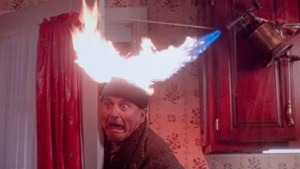
Joe Pesci was on fire back in 1990

Joe Pesci was on fire back in 1990

The film spends a long time teasing the audience before letting rip with Pesci and Stern’s Wacky Races-esque attempt to catch Kevin (instead of the pigeon) in the final act. Needless to say, it’s the most entertaining part of the film, with a gleeful Kevin parading around as the blundering burglars walk into trap after trap and mutter indiscernible obscenities in the same manner as Dick Dastardly’s dog Mutley.

One half of the Wet Bandits (Daniel Stern) about to regret messing with Kevin in Home Alone

One half of the Wet Bandits (Daniel Stern) about to regret messing with Kevin in Home Alone

The violence unleashed is quite nasty in places, in particular when an iron drops on Stern’s head, which in normal circumstances probably would have killed him.

Criticising Home Alone is like taking candy from a baby; it’s easy but you feel bad about doing it. For all its faults – and it has a few – it’s a guilty pleasure you don’t feel too bad about indulging when the festive season comes around.

Review – The Hobbit: The Desolation Of Smaug

We’ve had goblins and Gollum and now it’s time to enter the dragon for this breathless and sure-footed middle slab of Peter Jackson’s second Middle Earth saga.

The Desolation Of Smaug is a major improvement on An Unexpected Journey and, come the cliffhanger ending, you'll be eager to find out how they get there and back again

The Desolation Of Smaug is a major improvement on An Unexpected Journey and, come the cliffhanger ending, you’ll be eager to find out how they get there and back again

The bumpy beginnings of Bilbo Baggins’ unexpected journey were a worrying sign for this elongated adaptation of JRR Tolkien’s children’s novel.

However, just as The Two Towers was an an improvement of The Fellowship Of The Ring (and the best of the The Lord Of The Rings trilogy in this reviewer’s opinion), Jackson has rediscovered his Middle Earth mojo following the relative disappointment of An Unexpected Journey for this hugely enjoyable follow-up.

There's trouble brewing for Bilbo (Martin Freeman) in The Hobbit: The Desolation Of Smaug

There’s trouble brewing for Bilbo (Martin Freeman) in The Hobbit: The Desolation Of Smaug

The now standard near three-hour running time this time doesn’t feel like a slog as the film zips from one frenetic set piece to another, while the introduction of new characters and environments enrich this expansive universe rather than weigh it down.

No concessions are made for the uninitiated as the story picks up where it left off, with Bilbo (Martin Freeman) and the wizard Gandalf (Ian McKellen) accompanying a 13-strong band of Dwarves, led by Thorin Oakenshield (Richard Armitage), to the Lonely Mountain to reclaim their lost treasure from the dragon Smaug. Their journey is made more perilous by the fact they’re being hunted by a bloodthirsty group of orcs, while the identity of the evil Necromancer who has been marshalling the orc forces is revealed.

The dwarves of Erebor, led by Thorin (Richard Armitage) at the door of the Lonely Mountain in The Hobbit: The Desolation Of Smaug

The dwarves of Erebor, led by Thorin (Richard Armitage) at the door of the Lonely Mountain in The Hobbit: The Desolation Of Smaug

In spite of the film’s length, the first thing that’s apparent when watching The Desolation Of Smaug is its urgency. The decision to stretch a 300-page novel into a trilogy that in all likelihood will last close to nine hours still grates with many, but the flab that bloated much of An Unexpected Journey is trimmed down here.

In the time it took Bilbo to leave the Shire in the first film, our not-so merry fellowship has evaded orcs, encountered a mysterious ‘skin-changer’ and made it to the oppressive confines of Mirkwood. If anything, the film zips about too much towards the end and looses its direction as it attempts to juggle too many balls.

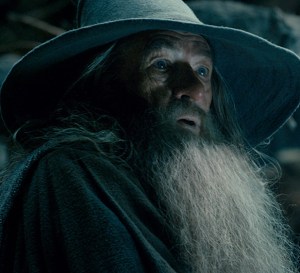
Gandalf (Ian McKellen) comes face-to-face with evil in The Hobbit: The Desolation Of Smaug

Gandalf (Ian McKellen) comes face-to-face with evil in The Hobbit: The Desolation Of Smaug

While the set pieces of An Unexpected Journey were largely underwhelming, The Desolation Of Smaug delivers a breadth of spectacle that reminds you why you fell in love with LOTR. The creepy giant spider sequence in Mirkwood is masterfully done and reminiscent of the nightmarish attack by huge insects in Jackson’s version of King Kong. It also offers Freeman’s one real moment to portray the dehumanising effect of the Ring as a horrified Bilbo recoils at the possessive fury he temporarily succumbs to.

Just as Jackson captures the dark and suffocating mood of the spider sequence, he switches things up in the tremendously entertaining barrel escape from the wood elves. Shot like a roller coaster ride and infused with as much humour as danger, it’s exhilarating stuff.

Tauriel (Evangeline Lilly) and fellow elf Legolas (Orlando Bloom) on the trail of orcs in The Hobbit: The Desolation Of Smaug

Tauriel (Evangeline Lilly) and fellow elf Legolas (Orlando Bloom) on the trail of orcs in The Hobbit: The Desolation Of Smaug

And what of Smaug? As a work of CGI, it rivals Gollum and King Kong for sheer impact. Given voice by an oily Benedict Cumberbatch, Smaug is amusing, arrogant and deadly in equal measure and provides the film with a rousing final act. The interplay between Bilbo, who has been sent by the dwarfs into the dragon’s lair to retrieve a priceless heirloom, and Smaug is laced with tension as the hobbit flatters to deceive in the vain hope the beast will let him leave unscathed.

Freeman has visibly relaxed into the role and gets some lovely moments with his dwarf companions who, by sheer weight of numbers, still struggle to make much of an impact, save for Ken Stott’s Balin and Aidan Turner’s dashing Kíli.

The scenery remains just as lovely in The Hobbit: The Desolation Of Smaug

The scenery remains just as lovely in The Hobbit: The Desolation Of Smaug

The sense of entitlement, as well as the desire for power and its poisonous consequences are themes present in much of Tolkien’s work and are touched on here through a subtle shift in Thorin’s character, nicely played by Armitage.

It’s a shame McKellen’s Gandalf isn’t on screen more as, just as in An Unexpected Journey, he’s the star attraction. That said, the portentous scenes of him investigating the identity of the Necromancer are among the film’s strongest. As well as McKellen, Orlando Bloom also returns as a more impetuous Legolas, who has a personal attachment to Evangeline Lilly’s strong-willed Tauriel (a creation by Jackson and his fellow writers, presumably to balance the male/female scales at least a little bit).

This is a major improvement on An Unexpected Journey and, come the cliffhanger ending, you’ll be eager to find out how they get there and back again. That’s all the middle section of a trilogy can do, right?

Review – Homefront

The script may be expendable, but Jason Statham does what he does best in this enjoyably old school action flick written by Sylvester Stallone.

Homefront is hardly groundbreaking stuff, but it gets the job done and offers up another star vehicle for Mr Chrome Dome

Homefront is hardly groundbreaking stuff, but it gets the job done and offers up another star vehicle for Mr Chrome Dome

Following the touchy-feely Hummingbird (aka Redemption), The Stath is back on more familiar ground with his third film of the year.

Phil Broker (Jason Statham) enjoys some quality time with daughter Maddy (Izabela Vidovic) in Homefront

Phil Broker (Jason Statham) enjoys some quality time with daughter Maddy (Izabela Vidovic) in Homefront

Since breaking out as a leading man in 2002’s The Transporter, Statham has methodically turned himself into a bankable action man. It speaks to his star wattage that his movies have attracted increasingly big name casts, whether it’s opposite Robert De Niro and Clive Owen in Killer Elite or Jennifer Lopez in Parker earlier this year.

Slumming it they may be, but Homefront co-stars James Franco, Winona Ryder and a barely recognisable Kate Bosworth nevertheless add an extra touch of class to proceedings.

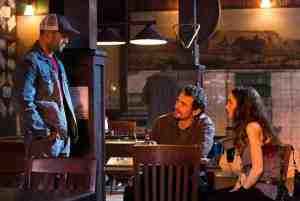
Drug kingpin Gator (James Franco) and his white trash sister Cassie (Kate Bosworth) in Homefront

Drug kingpin Gator (James Franco) and his white trash sister Cassie (Kate Bosworth) in Homefront

Statham plays Phil Broker, who retired as a DEA agent after helping to take down a notorious biker gang. He retreats to a seemingly sleepy Louisiana town with his young daughter Maddy (Izabela Vidovic) but, following a series of improbable coincides, finds his past catching up with him after getting on the wrong side of a bunch of redneck meth dealers led by Gator (Franco).

Despite receiving a Best Original Screenplay Oscar nomination all those years ago for Rocky, Stallone’s range as a scriptwriter is relatively limited. The premise of Homefront is pretty basic, but Sly at least injects Gator and his trailer trash sister Cassie (Bosworth) with a more interesting human dimension than we’re used to seeing in these kinds of flicks. That said, you’d be hard pushed to remember/care about any of the dialogue.

Phil Broker (Jason Statham) confronts Gator (James Franco) and girlfriend Cheryl (Winona Ryder) in Homefront

Phil Broker (Jason Statham) confronts Gator (James Franco) and girlfriend Cheryl (Winona Ryder) in Homefront

Imagine that Alien from Spring Breakers had a brother and you’d be pretty close to nailing Franco’s Gator. Using that same crooked smile (minus the gold teeth), sleazy demeanour and southern drawl, Franco may not inhabit the part as thoroughly as he did the drug-dealing Alien, but it’s a fun performance and you half expect him to say “look at my shit” when he’s showing white trash lover Cheryl (Ryder, looking out-of-place) around his meth lab.

Jason Statham doing what he does best in Homefront

Jason Statham doing what he does best in Homefront

Director Gary Fleder goes through the motions somewhat, using warm colours and clunky pianos in the scenes between Broker and his loving daughter, while – surprise surprise – juxtaposing this a desaturated look for the scenes involving the cold-hearted bikers who ride into turn seeking vengeance.

Although the interplay between Statham and Vidovic is nicely judged by both actors, the film inevitably lives or dies on its action scenes and it’s here the film doesn’t disappoint. In The Stath’s reliable hands, the moments of ass-kicking are explosively handled, in particular the bullet-tastic showdown between Broker and the bikers.

Homefront is hardly groundbreaking stuff, but it gets the job done and offers up another star vehicle for Mr Chrome Dome.

Review – The Secret Life Of Walter Mitty

There’s fridge magnet philosophy a go-go in Ben Stiller’s latest about an ordinary guy with extraordinary fantasies of heroic adventure who finally decides to get busy livin’ when he embarks on a globe-trotting quest.

While there's no denying The Secret Life Of Walter Mitty's anti-capitalist message will chime with many, its hero should have dreamed for someting better than this

While there’s no denying The Secret Life Of Walter Mitty’s message will chime with many, its hero should have dreamed for something better than this

Originally a short story by James Thurber, The Secret Life Of Walter Mitty first appeared on screen in 1947 starring Danny Kaye as the titular everyman.

Apparently Thurber hated the script so much he voiced his disillusionment through the letter pages of Life, the magazine Walter (played by Stiller) works for in this remake.

Walter (Ben Stiller) dissapears into a dram world, to the amusement of his boss (Adam Scott) in The Secret Life of Walter Mitty

Walter (Ben Stiller) disappears into a dram world, to the amusement of his boss (Adam Scott) in The Secret Life of Walter Mitty

Bean counters with identikit suits and beards (led by Adam Scott sporting the scariest facial hair since John Travolta in Killing Season) announce that Life is being turned into a web-only publication and half-heartedly motivate the people they’re firing to make sure its final newstand edition is the best yet. Not only is Walter’s job on the line, but that of his secret crush Cheryl (Kristen Wiig) too.

As much out of a desire to impress Cheryl than a knee-jerk attempt to save his job, Walter goes in search of esteemed photojournalist Sean O’Connell (Sean Penn, obviously) to track down the edition’s missing cover image – called the “quintessence of Life”.

One of Walter's (Ben Stiller) numerous fantasies in The Secret Life of Walter Mitty

One of Walter’s (Ben Stiller) numerous fantasies in The Secret Life of Walter Mitty

Walter’s quest takes him to Greenland, Iceland and Afghanistan and sees him jump out of a helicopter, almost get eaten by a shark, inadvertently skateboard towards a volcanic eruption and climb a great mountain as he finally starts living the dream instead of fantasising about it.

There can’t be many of us who haven’t, at some point, wanted to throw off the shackles of our daily lives and do the things we’ve spent so long going on about. To that end, The Secret Life Of Walter Mitty will chime with a lot of cinemagoers. Despite the stunning locations we’re treated to, however, the film ultimately feels a letdown.

Steve Conrad’s uneven script is very episodic and leads to a topsy-turvy narrative that threatens to stifle the emotional engagement you feel for Walter. In taking big strides to reach the desired end point for our hero, the film misses out on the little things that could and should have made this journey special.

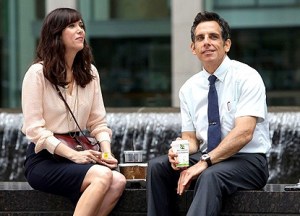
Walter (Ben Stiller) with the object of his affection, co-worker Cheryl (Kristen Wiig) in The Secret Life of Walter Mitty

Walter (Ben Stiller) with the object of his affection, co-worker Cheryl (Kristen Wiig) in The Secret Life of Walter Mitty

A life-changing and possibly dangerous section of Walter’s journey that takes him to the top of a mountain is (literally) written-off by Stiller as a series of bland and cheesy diary entries, while his eventual encounter with O’Connell is undermined by a rather heavy-handed metaphor involving a snow leopard.

While the first section of The Secret Life Of Walter Mitty feels very much like a Stiller movie (including a weird and genuinely funny Curious Case Of Benjamin Button fantasy sequence), the second half comes off as second-rate Wes Anderson, from the use of quick zooms, to long tracking shots and stylised montage. The soundtrack also screams ‘indie’ in an attempt to give the film an edge it never really earns.

Walter's (Ben Stiller) on the adventure of a lifetime in The Secret Life of Walter Mitty

Walter’s (Ben Stiller) on the adventure of a lifetime in The Secret Life of Walter Mitty

Stiller veers between low-key and over-the-top and, like the film itself, can’t seem to decide what he wants to go for. He’s a fine, if limited actor and you can’t help feeling he should have cast someone else and stayed behind the camera. Wiig, meanwhile, does her best with limited material, while the less said about the shameless plugs given to an online dating company and pizza firm the better.

While there’s no denying The Secret Life Of Walter Mitty‘s message will ring true with many, its hero should have dreamed for something better than this.

In Retrospect – Gone With The Wind (1939)

The budgets may get ever bigger and the special effects ever more impressive, but the ambition of contemporary Hollywood is a shadow of its more aspirant younger days.

Despite its refusal to deal with the stain of slavery, as a work of cinema Gone With The Wind is as big an event as they come, an epic in the truest sense of the word that's sure to sweep audiences along for another 75 years

Despite its refusal to deal with the stain of slavery, as a work of cinema Gone With The Wind is as big an event as they come, an epic in the truest sense of the word that’s sure to sweep audiences along for another 75 years

‘Epic’ has become a cheapened term in recent years through its sheer overuse. It gets bandied about so often when describing the latest swathe of blockbusters that its meaning has been lost. It takes a dose of Old Hollywood to offer some perspective and a better appreciation of what ‘epic’ cinema truly is.

We all have black spots in our movie-watching repertoire; films that everyone appears to have seen except us. Gone With The Wind is one such example for me (an ‘epic’ fail you might say), so a pristine digital reissue to mark its impending 75th anniversary seemed as good a time as any to finally give in to Victor Fleming’s grandiose adaptation of Margaret Mitchell’s Pulitzer Prize-winning novel.

Scarlett O'Hara (Vivien Leigh) in Gone With The Wind

Scarlett O’Hara (Vivien Leigh) in Gone With The Wind

As the drums beat inexorably towards Civil War, impetuous and spoiled Southern belle Scarlett O’Hara (Vivien Leigh) seems more interested in stealing the affections of dashing Ashley Wilkes (Leslie Howard) away from her saintly sister Melanie (Olivia de Havilland). When Ashley and Melanie marry and war breaks out, the lovelorn Scarlett finds herself constantly coming back to the wealthy and self-preserving Rhett Butler (Clark Gable), who finds himself falling for Scarlett against his better judgement.

Man about town Rhett Butler (Clark Gable) in Gone With The Wind

Man about town Rhett Butler (Clark Gable) in Gone With The Wind

When taking stock of Gone With The Wind it’s difficult to get away from the numbers. Featuring dozens of speaking parts, almost 2,500 extras and a nigh-on four-hour running time, everything about the film screams ‘epic’. However, it seems only appropriate considering the film’s events take place in the shadow of one of the defining periods in American history.

That being said, at its core Gone With The Wind is a human drama of love lost, found and unrequited. Used to getting what she wants, the petulant and selfish Scarlett becomes obsessed with attaining the one thing she wants the most, but can’t have – the love of Ashley. Her infatuation prevents her from fully embracing a life with the Rhett, who recognises in Scarlett a kindred spirit, and utters: “We’re bad lots, both of us.”

Atlanta burns in Gone With The Wind

Atlanta burns in Gone With The Wind

The chemistry between Gable and Leigh is electric. What’s striking almost 75 years on is how fresh and modern both Rhett and Scarlett remain. Gable’s eyes twinkle as he rolls Sidney Howard’s dialogue around his mouth, but there’s also a sadness there and a resignation that, no matter how hard he tries, he and Scarlett can never last.

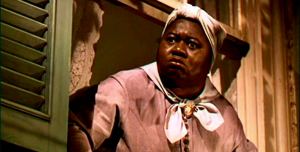
Oscar-winning Hattie McDaniel as house servant Mammy in Gone With The Wind

Oscar-winning Hattie McDaniel as house servant Mammy in Gone With The Wind

Leigh, who came through a tortuous audition process to land the part, positively crackles. Although still one of the feistiest and most driven female parts committed to screen Scarlett is, for the most part, pretty damn annoying and does little to enamour herself as the film progresses. When she runs a horse ragged until it drops down dead in order to get back to her beloved Georgia plantation Tara, she doesn’t bat an eyelid for the animal, while her pursuit of Ashley behind her sister’s back borders on stalking. Rhett sums Scarlett up perfectly when he remarks that she’s “like the thief who isn’t the least bit sorry he stole, but is terribly, terribly sorry he’s going to jail”.

The end is nigh for the Old South in its battle against the Yankee North in Gone With The Wind

The end is nigh for the Old South in its battle against the Yankee North in Gone With The Wind

Rhett is far from perfect himself, of course. Asked why he isn’t fighting for the South, he replies “I believe in Rhett Butler, he’s the only cause I know”, while the scene late on in the film implying marital rape is still troubling to this day.

As a visual spectacle, the film still packs a wallop.  The burning of Atlanta is vividly handled, while the painterly camera shots are a sight to behold. The pull-back from Scarlett to reveal hundreds of dying soldiers and a tattered Confederate flag is pure cinema, while the numerous shots of characters dwarfed by the brooding Technicolor skies overhead (set to Max Steiner’s stiring score) are astounding.

Rhett Butler (Clark Gable) and Scarlett O'Hara (Vivien Leigh) trike a classic pose from Gone With The Wind

Rhett Butler (Clark Gable) and Scarlett O’Hara (Vivien Leigh) trike a classic pose from Gone With The Wind

Despite the visual majesty, there’s no escaping the problems that exist with the film. It’s perversely ironic the film is being re-released around the same time as 12 Years A Slave bearing in mind Gone With The Wind doesn’t give a damn about this long and dark chapter in the country’s history. Hattie McDaniel may have been the first African-American to win an Oscar for her role as house servant Mammy, but this sits very uncomfortably next to the film’s refusal to question the Good Ol’ South’s practice of ‘owning’ fellow human beings. It leaves a bitter taste in the mouth for sure.

Despite its refusal to deal with the stain of slavery, as a work of cinema Gone With The Wind is as big an event as they come, an epic in the truest sense of the word that’s sure to sweep audiences along for another 75 years.