This is my latest contribution to The Big Picture, the internationally recognised magazine and website that shows film in a wider context. The Big Picture has been running a series of horror-related features and reviews, while its contributors have also provided their Top 10 horror movies. The nature of these lists is such that you invariably change your mind every five minutes but, for now, this is my list (The Shining doesn’t make it I’m afraid – sorry).
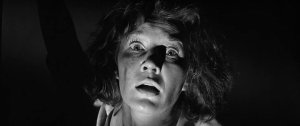
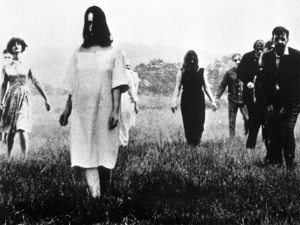
Horror has been a staple part of my movie watching since I was a teenager. I can remember getting collywobbles the first time I watched Psycho at 3am on my own; being genuinely freaked out by the end of Ringu; and sitting through The Texas Chainsaw Massacre thinking it was unlike anything I’d ever seen before. However, no other horror film has stayed with me like George A Romero’s Night of the Living Dead. It was a game changer, not only for cinema in general, but also for my appreciation of what an often derided genre can be capable of.
Long hijacked – and cheapened – by the marketing spiel of a multitude of schlocky blockbusters, the true meaning of the word ‘epic’ is hereby reclaimed by this modern masterpiece that’s as grand in its ambition as it is intimate in its emotional spirit.
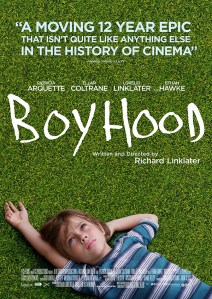
Linklater’s masterpiece is a film that will become regarded as one of the defining pieces of cinema of this decade. To borrow the title of the late Roger Ebert’s autobiography, Boyhood is simply ‘life itself’
The most beautifully simple concepts are often the best and the 12-year project that led to Richard Linklater’s Boyhood is sublime and unique indeed.
Setting aside the hoo-ha over the film’s time-spanning audaciousness, however, Boyhood must still be judged for what it is – a film. And what a film it is; not just a powerful and enrapturing coming-of-age drama, but also a remarkable portrait of America seen through the eyes of a boy, his sister and estranged parents living through a tumultuous decade.
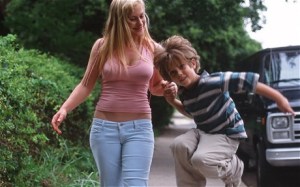
Mason Jnr (Ellar Coltrane) aged six with his mom Olivia (Patricia Arquette) in Boyhood
The film follows the trials and tribulations of Mason Jr (Ellar Coltrane) as he matures from a six-year-old boy, through adolescence to the age of 18 as he leaves for college and an independent life. Along the way he experiences love and heartbreak, as well as pure and damaged souls, but the constants in his life remain his older sister Samantha (Linklater’s daughter Lorelei), single mother Olivia (Patricia Arquette) and father Mason Snr (Ethan Hawke).
Mason is shaped, like the rest of us by the events and people he experiences and Linklater, rather than inserting titles telling us what year it is, chooses instead to structure the film around cultural touchstones (the war in Iraq, Harry Potter, the 2008 US election) and technological advancements (iPods, Facebook, Wii, smart phones).
Mason Jnr (Ellar Coltrane) growing up in Boyhood
This is not just Mason Jnr’s story, though. Olivia’s journey is given as much care and attention and is powerfully realised by Arquette in a career-best turn. Olivia stumbles and falls from one bad relationship to the next, but with each knock down she picks herself up and moves on, discovering first and foremost that happiness must come from within.
Paralyzed by a serious case of arrested development, Mason Snr must first learn what it is to be a father and then an adult. It’s startling at first seeing the fresh-faced Hawke of the early Before… chapters, but as the years wear themself on the actor’s face a gradual evolution takes place in his character. Mason Snr isn’t a bad guy, he’s just a little lost and learns to find his way with the benefit of time.
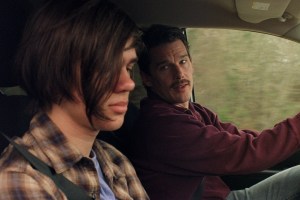
Mason Snr (Ethan Hawke) has a spot of father-son time with Mason Jnr (Ellar Coltrane) in Boyhood
It’s understandable that Coltrane has described finishing the film as like losing a limb. This is all he has known for a large part of his life and it’s fascinating observing the way he changes, both physically (at one point he visibly ages between heading upstairs one night and coming downstairs in the morning, such is Linklater’s canny editing) and emotionally.
The film is full of beautifully observed moments that stay with you – Mason’s best friend waving goodbye on his bike when the family move to Houston; the look on Mason Snr’s face when he realises his son has become a man; the quiet devastation Olivia feels when Mason is packing to leave for college. All these are bookended by the look of hope, contemplation and wonder Mason gives at the start and end of the film.
Mason Jnr looks forward to life in Boyhood
The magic that Linklater has found in Boyhood is that these are people we all know. Just as a programme like The Simpsons works on multiple levels and can be appreciated in different ways over the course of time, so to will Boyhood. Personally, I recognised myself both in Mason Jnr as a lad wondering what the world held in store and in Mason Snr through my struggle to accept the limitations life sometimes imposes.
Linklater’s masterpiece is a film that will become regarded as one of the defining pieces of cinema of this decade. To borrow the title of the late Roger Ebert’s autobiography, Boyhood is simply ‘life itself’.
This is my latest contribution to The Big Picture, the internationally recognised magazine and website that shows film in a wider context. To tie in with Frightfest, The Big Picture is running a series of horror-related features and reviews. This piece is part of the Four Frames section, wherein the importance of four significant shots are discussed, in this case from Danny Boyle’s 2002 horror classic 28 Days Later.
The zombie film was, to excuse the pun, a sub-genre that had flatlined at the turn of the century.
Movies thrown together by hacks with low budgets and even lower ambitions had consigned the undead to the DVD shelves. What this sub-section of horror needed was an injection of life and British genre-spanning director Danny Boyle was the man to administer it.
Boyle’s raw and unsettling 28 Days Later acknowledges its debt to George A. Romero’s Dead trilogy while striking out on its own with an all-too plausible apocalyptic nightmare that, as the director has argued, could happen next Wednesday.
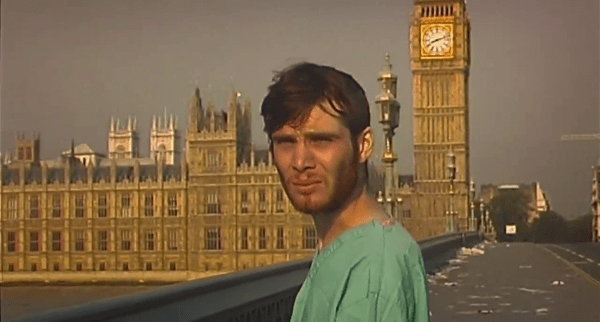
Four weeks after anti-vivisectionists uncage an infected monkey from a research lab and unwittingly unleash the highly contagious ‘Rage’ virus, Jim (Cillian Murphy) awakens from a coma in a deserted London hospital.
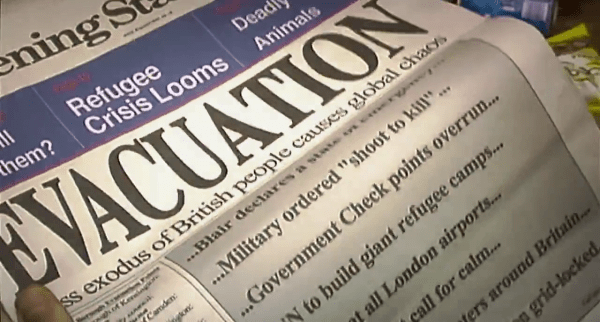
Confusion gives way to a queasy disbelief as he wanders the streets of a seemingly depopulated city that has evidently suffered some sort of cataclysm. A glance at a newspaper featuring the headline ‘Evacuation’ reinforces this, but Jim has no comprehension of the threat he faces.
To overcome the challenge of depicting an abandoned London, police closed roads at 4am to allow filming to take place, although only for an hour so as not to incur the Rage-like ire of drivers. The rewards can be seen on screen in what has rightly become one of modern horror’s most iconic scenes.
What gives the scene an even more resonant eeriness is its stillness. London has rarely looked more serene or threatening thanks to Anthony Dod Mantle’s urgent DV cinematography, while the escalating horror that Jim and the audience experience as he stumbles further into the city is amplified by Godspeed You! Black Emperor’s apocalyptic post-rock.
There are clever touches, such as when Jim feverishly picks up a pile of banknotes, little realising just how worthless they now are. Likewise, a shot of Jim dwarfed by a giant advertising billboard showing smiling, healthy models is a blackly ironic antithesis of what’s to come.
While the nods to the Dead trilogy are clear, the threat of infected, rather than undead, owes more to Romero’s cult classic The Crazies (1973), in which the citizens of a small American town are sent into a homicidal rage after being contaminated with an infectious disease.
The film is also heavily indebted to John Wyndham’s The Day Of The Triffids, in particular when Jim awakens in the deserted hospital (a scene subsequently lifted by TV show The Walking Dead).
Just as 28 Days Later has borrowed from past masters, so too have others stolen from Boyle’s horror classic, most notably the concept of the ‘fast zombie’ that has shown up in Zack Snyder’s Dawn Of The Dead (2004) remake, Zombieland (2009) and, more recently, the mega-budget World War Z (2013).
As the world entered a dark new chapter post 9/11, 28 Days Later’s horrific vision of a world turned upside down reflected our fears of just how precarious social order actually is.
They may be old enough to know better, but try telling that to Sly and the Family Crone as the Geriaction poster boys dispense more old school justice.
Quite how much steam is left in this franchise, or its stars, (don’t be fooled by the ‘one last ride’ tagline) is highly debatable, but The Expendables 3 remains a diverting enough way to spend two hours with the oldies
The 80s was a pretty naff decade for many reasons, but it did deliver a new kind of action film featuring a new kind of action star; one that didn’t ask you to think too much about what it was you were watching, rather to trust in the knowledge that the good guy would always win and kill a lot of people along the way.
They may not have been blessed with matinée idol looks, but that didn’t matter to the box office generated by the likes of Sylvester Stallone, Arnold Schwarzenegger and, to a lesser extent, Jean-Claude Van Damme, Dolph Lundgren, Steven Seagal, Chuck Norris et al.
Sly Stallone reprises his role as Barney Ross in The Expendables 3
The ‘one-man-war-machine’ genre largely disappeared to the DVD shelves during the late 90s and early 2000s, but made a big screen comeback in the latter half of the decade, most notably in the fun Liam Neeson flick Taken (2008). Not wanting to miss out, Stallone wrote and directed the insane Rambo (2008), in which the monosyllabic Vietnam vet turns the Burmese army into a giant hamburger with the aid of a massive machine gun.
Taking screenwriter David Callaham’s pitch and running with it, Sly co-wrote and directed The Expendables in 2010, essentially The Dirty Dozen (1967) and The Wild Geese (1978) featuring 21st century stunts and hardware in the hands of guys who should be lining up for their weekly pension.
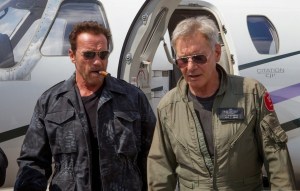
Arnold Schwarzenegger with trademark cigar as Trench Mauser opposite Harrison Ford’s CIA operative Max Drummer in The Expendables 3
Although hardly earth shattering, it more than wiped its face at the box office and instigated the inevitable follow-ups. The team this time faces that old action cinema trope – one of their own who’s gone rogue and is out for vengeance, in this case Conrad Stonebanks (Mel Gibson).
Barney Ross (Stallone), Lee Christmas (Jason Statham) and the rest of the Expendables are tasked by CIA operative Max Drummer (Harrison Ford) to track down Stonebanks, who has become a highly successful arms dealer. However, when things don’t go as planned Barney decides it’s time to inject some younger, fresher blood and recruits a quartet of new faces (including Ronda Rousey’s Luna) into the team.
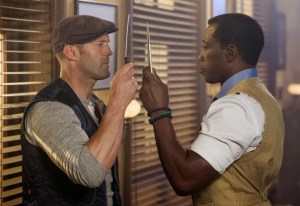
Lee Christmas (Jason Statham) and Doctor Death (Wesley Snipes) get knives out in The Expendables 3
Anyone expecting anything apart from more of the same will be in for a disappointment with The Expendables 3. Stallone previously indicated he wanted more humour in this latest escapade but, if anything, it has even fewer chuckles than the previous two films. Part of the reason is the arc surrounding Gibson’s character, whose bloodthirsty quest for revenge isn’t the sort of plotline that gets played for laughs.
Director Patrick Hughes keeps things zipping along and knows his way around an action set piece, especially the final firefight that takes place in and around a wrecked building (he’s clearly getting practice in for his English language remake of The Raid). The stunt work is also well handled, in particular an awesome motorcycle stunt in which one of the team bypasses the stairs to get several floors up on the building and a moment early on when Wesley Snipes’ Doctor Death flings himself from a train as it’s about to hit a prison (you’d think Snipes would have had enough of prisons by now).
The boys (and girl) are back in town in The Expendables 3
With such a hefty cast it’s not always easy to remember who’s doing what (aside from just killing people) and the new recruits don’t really add enough to warrant their inclusion. Schwarzenegger looks like he’s at least not phoning it in this time, although Ford has that usual I’m-too-good-for-this look on his face and Banderas tries too hard to be zany as sharpshooter Galgo.
Of the rest, Gibson relies on his mad-eyed schtick to play the villain and Grammer adds a dose of humour as deadpan mercenary Bonaparte. Meanwhile, Stallone, Statham et al do what they do best.
Quite how much steam is left in this franchise, or its stars, (don’t be fooled by the ‘one last ride’ tagline) is highly debatable, but The Expendables 3 remains a diverting enough way to spend two hours with the oldies.
It’s fitting that a director so steeped in genre fare should veer so spectacularly in style for his blood-soaked and blackly comic neo noir crime drama.
The shift in tone may not suit everyone’s tastes, but Cold In July earns its plaudits with a well-told tale that’s as solid as its leading trio
Jim Mickle’s back catalogue may fall firmly within the bracket of horror, but his films are rarely so black and white. His 2006 debut Mulberry Street is stripped back claustrophobic filmmaking with an edge, while his fang-tastic follow-up Stake Land (2010) is a mash-up of gothic vampire chiller, end-of-the-world drama and tobacco-chewing western.
His remake of the Mexican movie We Are What We Are (2013), meanwhile, may ostensibly be an oppresive horror flick, but is also soaked in religious satire.
An impulsive act has unexpected consequences for Richard Dane (Michael C. Hall) in Cold In July
Mickle once again reteams with co-writer Nick Damici for this adaptation of Joe R Lansdale’s novel which is three movies in one – part Coen-esque noir akin to Blood Simple or John Dahl’s Red Rock West; part comedy more befitting of Lansdale’s other big screen adaptation Bubba Ho-Tep (minus Elvis); and part comic book drama that puts the ‘graphic’ in graphic novel.
Michael C. Hall plays Richard Dane, an everyday guy who shoots dead an unarmed intruder in his home. While gaining a new-found respect among his redneck Texan townsfolk, Richard doesn’t count on the intruder’s jail-bird father Ben (Sam Shepard), who’s just been released on parole. Ben goes after Richard and his family in search of revenge, but neither one is prepared for what comes next.
Richard Dane (Michael C. Hall) in a rare moment of peace with wife Ann (Vinessa Shaw) in Cold In July
Mickle diligently sticks to the novel’s late-80s setting, right down to Jeff Grace’s brilliantly suspenseful synth score that unapologetically lifts from John Carpenter’s best efforts.
Hall, who’s been playing a serial killer on cable television for the better part of the last decade, inhabits the role of a man whose initial shock and disgust at the act of violence he’s responsible for slowly gives way to a more disturbing familiarity and collusion. He also sports a haircut that only someone in 1989 Texas could, or should have.
Ben Russell (Sam Shepard), Richard Dane (Michael C. Hall) and Jim Bob Luke (Don Johnson) go hunting in Cold In July
Cold In July‘s excellent opening act (which the rest of the film falls short of matching) sets an uneasy tone as Richard and his wife Ann (Vinessa Shaw) struggle to come to terms with the consequences of a home invasion that has a shocking ending and an unwanted impact on their otherwise stable family life. The introduction of Shepard’s grizzled and cold-eyed Ben cranks up the tension before the film takes an intriguing and light-hearted turn half way through when Don Johnson’s colourful private eye Jim Bob Luke turns up in a red Cadillac with bull horns on the radiator and a ‘RED BTCH’ license plate.
Old acquaintances with a mutual taste for violence they may be, but Jim Bob and Ben are chalk and cheese in their demeanour. Ben is the sort of bottled up sociopath Shepard has excelled at in his autumn years, while Johnson’s more flamboyant, stetson-wearing wannabe cowboy is similar to the charismatic roles he’s played of late in the likes of Django Unchained and HBO’s Eastbound And Down.
Sandwiched between these elder statesmen is Hall, who more than carries his own in a role that demands a subtle character shift and a growing intimacy with the way of the gun.
The shift in tone may not suit everyone’s tastes, but Cold In July earns its plaudits with a well-told tale that’s as solid as its leading trio.













 three rows back