In Retrospect – 2001: A Space Odyssey

The year 1968 proved to be a particularly fertile one when it came to science fiction and apes.
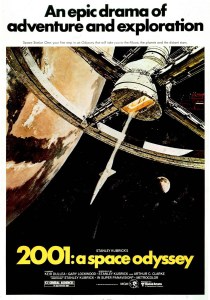
A work of genius that will continue to enrapture us, 2001: A Space Odyssey remains one small step for Stanley Kubrick; one giant leap for cinema

A work of genius that will continue to enrapture us, 2001: A Space Odyssey remains one small step for Stanley Kubrick; one giant leap for cinema

Franklin J. Schaffner’s seminal Planet Of The Apes vividly brought Pierre Boule’s novel to the big screen and earned John Chambers a honourary Oscar for his incredible make-up effects.

Released in the US just days later, Stanley Kubrick’s 2001: A Space Odyssey missed out on a similar award, as popular myth would have it, because the Academy judges believed the apes featured in the film were real rather than men in suits.

The Dawn of Man. Apes discover a thirst for violence in 2001: A Space Odyssey

The Dawn of Man. Apes discover a thirst for violence in 2001: A Space Odyssey

Whether true or not, it serves as a fitting metaphor for the beguiling nature of Kubrick’s remarkable masterpiece, which remains devilishly confounding and awe-inspiring more than four decades on.

It’s the film’s (and by extension Kubrick’s) refusal to kowtow to those who can’t abide a mystery that is a big reason why we keep revisiting 2001 time and again in the hope of cracking the enigma; all the while knowing that it is a fool’s errand.

Based on Arthur C. Clarke’s novella The Sentinel, 2001 posits the theory that mankind has been aided in its evolutionary journey by an almost infinitely superior alien intelligence, represented by imposing black monoliths. From imbuing early hominids with the transformative leap to discern that a bone can be used as both a tool and a weapon to claim territory from others and to kill, an identical monolith uncovered on the moon four million years later triggers mankind’s next step when it emanates a piercing radio signal towards Jupiter.

Dr Dave Bowman (Keir Dullea) stares into the void in 2001: A Space Odyssey

Dr Dave Bowman (Keir Dullea) stares into the void in 2001: A Space Odyssey

The Discovery spacecraft is sent to Jupiter to investigate the signal with a crew including Dr Dave Bowman (Keir Dullea), Dr Frank Poole (Gary Lockwood) and the ship’s computer HAL 9000 (voiced by Douglas Rain), but as they near the planet the mission comes under jeopardy and the next step in our evolution awaits.

While there had been science fiction films of a serious nature before, 2001 represented a unparalelled leap forward not only for the genre but for cinema itself. Simply put, no-one had seen anything like it before.

Although certain aspects of the film feel dated (Pan Am is no more of course, while Hardy Amies’ costume design for the stewardesses, for example, has that retro-future look which pegs it to the Sixties), it’s incredible just how much stands the test of time.

The unforgettable HAL 9000 (voiced by Douglas Rain) in 2001: A Space Odyssey

The unforgettable HAL 9000 (voiced by Douglas Rain) in 2001: A Space Odyssey

Ever a stickler for the smallest detail, Kubrick was insistent the spacecraft seen in the film should be grounded in science rather than fantasy. Life onboard the Discovery is shown to be routine despite characters seemingly bypassing the laws of physics by appearing at different angles in close proximity; a remarkable feat achieved through the use of an ingenious set built around a centrifuge.

Represented by a single red glowing light, the film’s most effective piece of design also happens to be its most brilliantly realised character. Kubrick is able to imply so much in HAL’s demeanor by clever editing and a subtle shift in camerawork, whether it be paranoia, threat or desperation; all intensified by Rain’s delivery. When HAL informs a TV interviewer that “no 9000 computer has ever made a mistake or distorted information. We are all, by any practical definition of the words, foolproof and incapable of error”, it’s akin to a character coughing and saying they’re alright before dropping dead 10 minutes later.
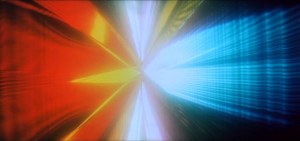
Staaaar-gaaaaate

Staaaar-gaaaaate

Douglas Trumbull’s pioneering special effects still look good today and must have been mind-blowing at the time, which probably explains why Kubrick luxuriantly devotes whole sequences to space planes docking or arriving on the moon. It’s safe to say that no film today would get away with spending so much time on such things, but there’s a hypnotic quality to watching these scenes as Strauss’ Blue Danube Waltz washes over you.

The use of classical music is another of 2001‘s timeless qualities. Kubrick decided early on to strip the narrative and exposition back as much as possible (as opposed to modern day sci-fi films; I’m looking at you Interstellar), which puts more weight on the soundtrack’s shoulders. Older compositions sound like they’ve been written especially for the film, while György Ligeti’s eerily discordant works have a ghostly quality that creeps under the skin and lends its scenes an extra bite.

Little moments stay with you, such as when an ape casts a glance up to the moon the night before the monolith appears, foreshadowing what’s the come – so indelibly realised by the audacious match cut from the bone being tossed into the air to the space craft orbiting the Earth four million years later.

A rebirth of sorts in 2001: A Space Odyssey

A rebirth of sorts in 2001: A Space Odyssey

So, what exactly are the monoliths? Some have said they represent God (the ape touching the monolith is reminiscent of Michelangelo’s famous painting The Creation of Adam). Perhaps it’s best not to think about it too much, though. If in doubt, take a stress pill and read Roger Ebert’s wry analysis.

There is a wonderfully elliptical nature to the film that’s almost as perfectly formed as the monoliths. Just as we start with the Dawn of Man, so too do we finish with another birth in the form of the iconic starchild. Four million years may have passed, but we are just like that early hominid, casting our eyes up to the sky in fear and wonder.

A work of genius that will continue to enrapture us, 2001: A Space Odyssey remains one small step for Stanley Kubrick; one giant leap for cinema.

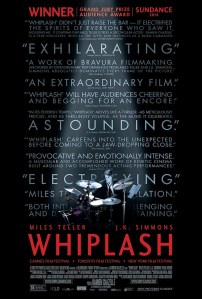
Review – Whiplash

If music be the food of great cinema, then Damien Chazelle’s note-perfect study of the human cost of aspiring to greatness is a rich feast indeed.

Whiplash is one of the discoveries of the year and should not be missed. Good job? Great job more like

Whiplash is one of the discoveries of the year and should not be missed. Good job? Great job more like

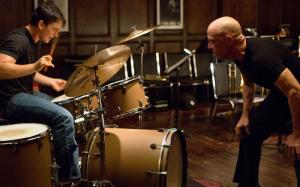
Whiplash lives up to its name by snapping the viewer back and forth with an intensity as ferocious as J.K Simmons’ demonic black-clad conductor Terence Fletcher.

The crucible of sound and fury that is the Shaffer Conservatory music school makes Fame‘s Fiorello H. LaGuardia High School look like kindergarten, while the complex relationship between Fletcher and gifted jazz drummer student Andrew Neyman (Miles Teller) has the air of Frankenstein and his monster.

Andrew (Miles Teller) gets the first of many bollockings in Whiplash

Andrew (Miles Teller) gets the first of many bollockings in Whiplash

Fletcher at one point states to Andrew: “There are no two words more harmful to the English language than ‘good job’.” Fletcher’s style of teaching (if that’s what you can call it) is to bully and excoriate those he deems worthy of interest in order to, so he claims, unlock the greatness within them.

His drill instructor approach terrifies many of the students in his elite class, but for Andrew it propels him to the next level and soon every waking moment is taken up with obsessively refining his talent in the hope of winning Fletcher’s approval.

Andrew (Miles Teller) gives it what for in Whiplash

Andrew (Miles Teller) gives it what for in Whiplash

The story behind how someone becomes great in their chosen field has long captivated filmmakers who, like most of us, have a morbid fascination with the price that is often paid to reach the very top. While we marvel at the skill they display and the accomplishments they make, the human cost can be terrible and it this we are drawn to.

One of the more striking examples in recent years was Darren Aronofsky’s superb Black Swan, in which Natalie Portman’s ballet dancer slowly loses her grip on reality as she strives for artistic perfection.

Andrew (Miles Teller) gets friendly with Nicole (Melissa Benoist) in Whiplash

Andrew (Miles Teller) gets friendly with Nicole (Melissa Benoist) in Whiplash

Whiplash may not be as weirdly horrific as that movie, but it shines just a harsh a spotlight on its protagonist, whose growing arrogance and unhealthy determination to succeed at all costs make us question our sympathy for him at the hands of Fletcher.

The way he treats love interest Nicole (Melissa Benoist) is revealing, particularly during their first date when he reacts disdainfully to her admission that she doesn’t yet have her whole life mapped out in front of her. The same goes for his father (played by Paul Reiser), who is also a teacher but more of the ‘good job’ school. Andrew’s reaction to his dad during a dinner scene involving family friends is also telling in that it reflects the influence Fletcher is having.

Fletcher (J.K Simmons) opens up a can of whupass on Andrew (Miles Teller) in Whiplash

Fletcher (J.K Simmons) opens up a can of whupass on Andrew (Miles Teller) in Whiplash

That said, there’s no denying the commitment Andrew has to his craft, especially in the film’s near-wordless final reel; a gladiatorial battle of wits between master and student that is one of the most electrifying and exhilarating scenes of the year. Some critics have accused it of being too manipulative, but it’s in keeping with the characters with whom we’ve spent the previous 90 minutes.

Blood, sweat and... drums in Whiplash

Blood, sweat and… drums in Whiplash

Teller treads a very fine line between unlikable and sympathetic and is utterly convincing behind the drums. For a movie such as this to work, you have to believe the actor is actually playing the instrument in question and in Teller’s case nary a shred of doubt exists.

As good as Teller is, however, Simmons is out of this world. It’s a part any seasoned actor would love to sink their teeth into, but Simmons makes it his own and imbues Fletcher with an unpredictability that’s frankly mesmirising.

Whiplash is one of the discoveries of the year and should not be missed. Good job? Great job more like.

Review – The Imitation Game

It’s a fascinating, if troubling, thought to imagine how different the world would be without Professor Alan Turing having been in it.

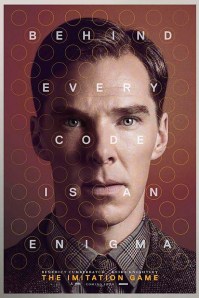
The Imitation Game may not quite discover the unwritten code to great cinema, but it remains an engrossing account of a remarkable man's world-changing accomplishments

The Imitation Game may not quite discover the unwritten code to great cinema, but it remains an engrossing account of a remarkable man’s world-changing accomplishments

Recounting a compliment given to him at school by his best friend Christopher, the person who would have the greatest impact on his life, Turing notes that “sometimes it is the people no one imagines anything of who do the things that no one can imagine”.

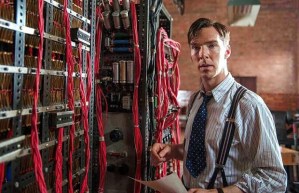
How true. Not only did Turing break Nazi Germany’s Enigma code, but the machine he created to achieve what had previously been thought impossible also unlocked the building blocks that ushered in the computer age.

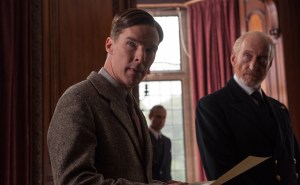
Professor Alan Turing (Benedict Cumberbatch) with 'Christopher' in The Imitation Game

Professor Alan Turing (Benedict Cumberbatch) with ‘Christopher’ in The Imitation Game

His reward for all this? Chemical castration at the hands of a British government that at the time regarded homosexuals like Turing as illegal deviants.

While Morten Tyldum’s fine adaptation of Andrew Hodges’ book Alan Turing: The Enigma dwells more on Turing the code breaker, his homosexuality isn’t swept under the carpet as some critics have unfairly judged. Rather, it chooses to define its central, enigmatic protagonist by the remarkable accomplishments he made first and his sexuality second.

Joan Clarke (Keira Knightley) gets ready for the adventure of a lifetime in The Imitation Game

Joan Clarke (Keira Knightley) gets ready for the adventure of a lifetime in The Imitation Game

Whether you agree with that approach or not shouldn’t detract from what is a taut and gripping thriller featuring yet another towering performance from Benedict Cumberbatch in the central role of the complex and difficult Turing.

One of the most interesting, and potentially controversial, aspects of The Imitation Game is its unspoken suggestion that Turing was possibly autistic. The difficulty he has in the film interacting with people, including fellow Bletchley Park code breakers Hugh Alexander (Matthew Goode), John Cairncross (Allen Leech) and Peter Hilton (Matthew Beard); his struggle to understand how others feel and think; and the trouble he has expressing his thoughts and feelings about anything except his beloved decryption machine seem to imply this, although we can never know for sure, of course.

Eureka! Alan Turing (Benedict Cumberbatch) is flanked by Joan Clarke (Keira Knightley), Peter Hilton (Matthew Beard), Hugh Alexander (Matthew Goode) and John Cairncross (Allen Leech) in The Imitation Game

Eureka! Alan Turing (Benedict Cumberbatch) is flanked by Joan Clarke (Keira Knightley), Peter Hilton (Matthew Beard), Hugh Alexander (Matthew Goode) and John Cairncross (Allen Leech) in The Imitation Game

The only real connection he makes, aside from school friend Christopher (Jack Bannon), is with Keira Knightley’s Joan Clarke, although even this bond is more intellectual than anything else. While Turing insists that Joan be given the chance to prove herself (to the frustration of some of his more sexist colleagues) his position isn’t dictated by seeking gender equality; rather he sees a person who can contribute towards realising his single-minded obsession to perfect the code-breaking device.

Tyldum does an effective job of wringing the tension out of the key moment when the breakthrough is made and we, as much as Turing and his team, suddenly comprehend the seismic impact of what they’ve achieved. This is then nicely undercut by the terrible realisation of what they must – and must not – do in order to maintain the illusion to the Germans that Enigma remains unbroken.

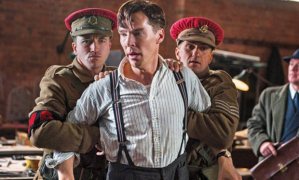
Alan Turing (Benedict Cumberbatch) gets on the wrong side of the military in The Imitation Game

Alan Turing (Benedict Cumberbatch) gets on the wrong side of the military in The Imitation Game

The awful personal and professional burden of preserving secrets at all costs eats away at Turing, who ostracises himself so much from Joan and the others that the only person he can turn to is pragmatic MI6 operative Maj. Gen. Stewart Menzies (Mark Strong).

A cast studded with British thespian talent eats up the material, in particular Charles Dance as Turing’s brusque commanding officer Cdr. Alastair Denniston and Rory Kinnear as the detective who digs into Turing’s past after the war, only to realise too late what he’s done. Knightley holds her own in the film’s only major female part and imbues Joan with more than just plucky English stoicism; there’s a steeliness to her performance and a refreshing depth the actress hasn’t always plumbed.

Alan Turing (Benedict Cumberbatch  butts heads with Cdr. Alastair Denniston (Charles Dance) while Maj. Gen. Stewart Menzies (Mark Strong) looks on in The Imitation Game

Alan Turing (Benedict Cumberbatch butts heads with Cdr. Alastair Denniston (Charles Dance) while Maj. Gen. Stewart Menzies (Mark Strong) looks on in The Imitation Game

Alex Lawther gives a marvellous turn as the young Turing, an “odd duck” who betrays a gamut of emotions in a single glance towards fellow pupil Christopher – his is a name to watch out for in the future. Cumberbatch, meanwhile, does a superb job of showing just enough of the brilliant professor while still remaining an enigma.

The Imitation Game may not quite discover the unwritten code to great cinema, but it remains an engrossing account of a remarkable man’s world-changing accomplishments.

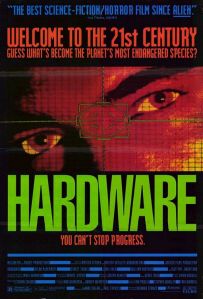
Great Films You Need To See – Hardware (1990)

As part of the BFI’s Days of Fear and Wonder Sci-fi season, The Big Picture, the internationally recognised magazine and website that shows film in a wider context, is running a series of sci-fi-related features. My contribution is a piece about Richard Stanley’s cult 1990 sci-fi horror Hardware. It was written as part of The Big Picture’s Lost Classics strand, although I am including it within my list of Great Films You Need To See.

Richard Stanley’s grim and gory debut may never be counted among the greats of science fiction, but that hasn’t stopped it chiseling out a place among the affections of a loyal band of cult followers.

Richard Stanley would go on to direct one more feature, 1992's Dust Devil before slipping out of sight. It's a shame as the director of a film as demented and dynamic as Hardware deserved bette

Richard Stanley would go on to direct one more feature, 1992’s Dust Devil before slipping out of sight. It’s a shame as the director of a film as demented and dynamic as Hardware deserved bette

Squabbles over the rights to Hardware meant the only way to check it out for a good few years was through a less-than-ideal VHS copy and it wasn’t until 2009 that it finally made it onto DVD. The shenanigans surrounding the film following its modestly successful 1990 release have lent Hardware an edge in keeping with a down and dirty punk attitude.

A nomadic scavenger wanders the apocalyptic wastelands in Hardware

A nomadic scavenger wanders the apocalyptic wastelands in Hardware

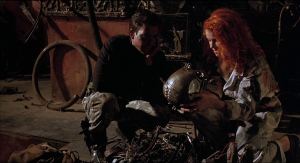
Ex-soldier ‘Hard Mo’ Baxter (Dylan McDermott in one of his first starring roles) buys a nasty-looking robot head from a nomadic scavenger and gives it to his metal sculptor girlfriend Jill (Stacey Travis), not realising his gift has the ability to reassemble itself to become a machine whose only purpose is to kill.

Despite the meagre budget, Hardware‘s doom-laden industrial world, scarred by nuclear war and controlled by a government that isn’t exactly looking out for its citizens, is impressively realised on screen thanks to solid production design and vivid lighting (the heavy use of red throughout to symbolise the bloodbath that’s to come is especially evocative).

'Hard Mo' Baxter (Dylan McDermott) presents a gift of a robot head to girlfriend Jill (Stacey Travis) in Hardware

‘Hard Mo’ Baxter (Dylan McDermott) presents a gift of a robot head to girlfriend Jill (Stacey Travis) in Hardware

The killer robot premise is hardly original and the nods to genre stablemates The Terminator (1984) and Demon Seed (1977) are clear to see, but the film rises above the schlock-fest it could so easily have become thanks to the vision of its one-of-a-kind writer/director.

Stanley started work on the film in the immediate aftermath of a terrifying stint in war-ravaged Afghanistan where he had been making his documentary Voice Of The Moon. The horrors he no doubt witnessed are channelled into Hardware, particularly in the freakiness of the TV footage we get to see – grainy images of the Holocaust sitting alongside dystopian news footage, footage of thrash metal merchants Gwar and Robocop-style satirical adverts (“radiation free reindeer steaks”). As if that wasn’t enough, the robot head is painted with the Stars and Stripes to make a none-too-subtle observation about American imperialism.

The impassive killer robot in Hardware

The impassive killer robot in Hardware

He had originally intended to set the film in Britain, but decided to make the location non-specific following the addition of American leads at the studio’s insistence. It’s a smart move that works to the movie’s advantage as the multi-national flavour is entirely in keeping with the world created.

This being a killer robot movie, it’s necessary to buy in to threat posed by the machine and it’s here where Hardware amps up the gore. The scenes within Jill’s apartment, which take up a good chunk of the film’s running time, exude a real menace as the robot impassively goes after anyone it can.

'Hard Mo' Baxter (Dylan McDermott) with his robot hand in Hardware

‘Hard Mo’ Baxter (Dylan McDermott) with his robot hand in Hardware

While Simon Boswell’s soundtrack doesn’t do the film any favours, Stanley makes better use of musicians in other capacities, with Motörhead frontman Lemmy playing a taxi driver who recommends Motörhead’s Ace Of Spades to Mo; and Iggy Pop as DJ Angry Bob, “the guy with the industrial dick” whose at one point says: “As for the good news… there is no fucking good news! So let’s just play some music!”

Stanley would go on to direct one more feature, 1992’s Dust Devil before slipping out of sight. It’s a shame as the director of a film as demented and dynamic as Hardware deserved better.

Review – Nightcrawler

There is an idea of Louis Bloom; some kind of abstraction. But there is no real Louis Bloom – only an entity, something illusory. And though he can hide his cold gaze… he is simply not there.

A remarkably assured debut from Gilroy featuring a tour de force performance by Gyllenhaal, the wickedly disturbing Nightcrawler will crawl under your skin and stay there

A remarkably assured debut from Gilroy featuring a tour de force performance by Gyllenhaal, the wickedly disturbing Nightcrawler will crawl under your skin and stay there

I’m sure American Psycho’s Patrick Bateman wouldn’t mind being paraphrased to describe someone whom he would no doubt approve of.

Louis is a go-getter in the truest sense of the word; a guy chasing his share of the American Dream who also happens to be a sociopath and a monster made flesh by our insatiable appetite for blood-soaked true crime.

Screenwriter Dan Gilroy’s directorial debut turns over the bright and shiny rock of TV news to reveal the desperate putrescence beneath. It may not be particularly earth-shattering to lay bare the grisly cynicism that constitutes the US media machine – Sidney Lumet’s peerless Network did that almost 40 years ago – but Nightcrawler succeeds by wallowing in the muck with the leeches who feed the ‘if if bleeds, it leads’ TV news culture, in particular new kid of the block Lou (Jake Gyllenhaal).

Lou Bloom (Jake Gyllenhaal) goes for his major scoop in Nightcrawler

Lou Bloom (Jake Gyllenhaal) goes for his major scoop in Nightcrawler

When we first encounter Lou, he’s being caught stealing metal fencing by a security guard, whom he beats up. Even at this early juncture, it’s plainly obvious that something isn’t right with the guy and our unease is heightened further when he attempts to fence the fencing to a scrap yard owner and angles for a job at the same time; all the while quoting self-help book rhetoric and fixing the person in front of him with a rictus grin his saucer eyes fail to match.

It’s an affectation we discover he puts on for everyone and when he stumbles across Joe Loder’s (Bill Paxton) freelance film crew shooting footage of a car crash in order to sell it to the Los Angeles news networks, the missing link falls into place for Lou, who buys a camera and dives headlong into the venal world of ‘nightcrawling’.

The city of nightmares... Lou Bloom (Jake Gyllenhaal) and cable TV news director Nina (Rene Russo) in Nightcrawler

The city of nightmares… Lou Bloom (Jake Gyllenhaal) and cable TV news director Nina (Rene Russo) in Nightcrawler

With the assistance of intern Rick (Riz Ahmed), a down-and-out looking for a break, who goes along for the ride for a measly few dollars despite knowing his employer is a few slices short of a loaf, he hurtles around the city and sells on his grisly footage to vampire shift news director Nina (Rene Russo) with a self-assured expectation rarely seen since The King Of Comedy’s Rupert Pupkin that he will become a major TV news player.

Bravely, Gilroy eschews backstory for his unhinged protagonist and hands it over to the audience to mull over how Lou arrives where he does. He comes across as almost as blank a slate as Scarlett Johansson’s extraterrestrial visitor from Under The Skin and certainly has the same singular drive, while his mesmeric bug-eyed stare (made more striking by Gyllenhaal’s weight loss for the part) brings to mind the description of many a little green man.

Lou Bloom (Jake Gyllenhaal) shows 'intern' Rick (Riz Ahmed) the ropes in Nightcrawler

Lou Bloom (Jake Gyllenhaal) shows ‘intern’ Rick (Riz Ahmed) the ropes in Nightcrawler

It’s great to see Russo back on the big screen in a part deserving of her talents and it’s fascinating watching her character reduce from alpha dominance (her description of TV news as “a screaming woman running down the street with her throat cut” being a case in point) to Lou’s lap dog as she relies more heavily on his macabre footage and falls under his spell.

Likewise, Ahmed in his breakout US role following a series of very strong roles in such British fare as Chris Morris’ Four Lions, is the only emphathetic character on screen (save for Kevin Rahm’s aghast news editor) and becomes trapped by Lou, who cruelly dangles the prospect of a pay raise based on a non-existent “performance review”.

The man who wasn't there... bug eyed Lou Bloom (Jake Gyllenhaal) in Nightcrawler

The man who wasn’t there… bug-eyed Lou Bloom (Jake Gyllenhaal) in Nightcrawler

Needless to say, though, this is Gyllenhaal’s movie and he really goes for it, giving a career best turn in the process. Gyllenhaal has generally been at his best when playing misfits or obsessive types in such films as Donnie Darko (2001), Zodiac (2007) and last year’s Prisoners and amps it up here to a previously untapped level. Lou is a truly unrepentant figure and is as mesmerising as he is appalling.

Less successful is James Newton Howard’s fist-pumping score, which is presumably meant as the soundtrack that Lou has swirling around his head as he goes about his nightly activities (akin to Taxi Driver); however, it doesn’t really come off and ends up becoming distracting. A gripe, albeit a small one.

A remarkably assured debut from Gilroy featuring a tour de force performance by Gyllenhaal, the wickedly disturbing Nightcrawler will crawl under your skin and stay there.