Decades Blogathon – The Battle Of Algiers (1966)

Featured Image -- 6000

1966

Welcome to another day of the event of the year: the Decades Blogathon – 6 edition – hosted by myself and Tom from Digital Shortbread! The blogathon focuses on movies that were released in the sixth year of the decade. Tom and I are running a different entry each day (we’ll also reblog the other’s post) and for Super Tuesday it’s the turn of Marta from Ramblings of a Cinephile, who turns her sights on the masterpiece that is The Battle Of Algiers (1966).

The gritty and rather bloody story of the uprising that led to the independence of Algeria in 1962 is shot by Gillo Pontecorvo in a compelling style.

Commissioned by the Algerian government less than a decade after the facts, it shows both sides in an unforgiving way – from the terrorist attacks of the Algerian militants to the tortures of the French army. Pontecorvo plunges the viewer in the middle of the action starting his tale with a raid of the French paratroopers to hunt down the last leader of the FLN (National Liberation Front), holed up in the Casbah, the Muslim district of Algiers.

The whole sequence is very gripping thanks to the amazing music by Ennio Morricone and introduces two of the main characters: Colonel Matthieu (Martin), who is in charge of quelling the rebellion and Ali La Pointe (Hadjadi), prominent leader of the FLN. From there it goes back to the beginning of the story, in 1954, with the recruitment of Ali, at the time a small-time con artist, by Djafar (Saadi), one of the leaders of the FLN.

Through Ali’s eyes we see how the liberation movement grows and how the violence escalates from individual attacks on policemen to bombing cafes and restaurants in the affluent European district. The viewer is also shown the reactions from the French, both sanctioned and unsanctioned by the government in Paris. The use of force is, of course, met with more violence until the situation is so dire that the army is sent to deal with it.

A contingent of paratroopers led by General Carelle arrives in Algiers in 1957, but the real, hands-on commander is Colonel Matthieu, veteran of WWII and the war of Indochina. He puts his experience to good use and slowly but surely dismantles the FLN, working his way through the organisation with ruthless efficiency; either killing or capturing its members and compelling information with torture. This fight without quarter seems to be over in Algiers since there are no more FLN militants, but rebels keep resisting in the mountains.

Algeria will gain its independence four years later mostly due to widespread popular demonstrations and the support of the UN, the latter due to a shift in the international public opinion that will become more sympathetic towards the Algerians and their plight.

What I find very interesting about this film is that it’s partially based on the memoirs of Yacef Saadi, who was a leader of the FLN, but it’s even-handed. It doesn’t demonise the French domination; the facts are presented in a detached way with a very effective documentary-like style.

It’s rather striking that, commissioned by the government of the newly independent Algeria, it avoids any bias and presents the events in stark but impartial light. It’s even more striking that the only professional actor is Jean Martin and none of the scenes are from newsreels but they are all carefully planned and shot to create the right effect.

Pontecorvo, his cinematographer Marcello Gatti and his editors Mario Morra and Mario Serandrei give us a true work of art.


Decades Blogathon – Casino Royale (2006)

Decades Blogathon Banner 20162006It’s week two of the Decades Blogathon – 6 edition – hosted by myself and the awesome Tom from Digital Shortbread! The blogathon focuses on movies that were released in the sixth year of the decade. Tom and I are running a different entry each day (we’ll also reblog the other’s post) and I’m thrilled to welcome the one and only Ruth from FlixChatter. I’m sure many of you will know of Ruth’s brilliant site and for our little event she is reviewing Daniel Craig’s first foray into the world of Bond with 2006’s Casino Royale.

I can’t believe it’s been a decade since Casino Royale came out. I just rewatched it this weekend to refresh my memory, though I had probably rewatched it a few times in the last 10 years. It’s still as good as the first time I saw it, and I still would regard it as one of my favorite Bond films… ever.

I’ve mentioned Casino Royale so many times on my blog, in fact it’s one of my fave films of 2000s and one of the eight films I’d take with me if I were stuck on a desert island.

Casino Royale Poster

Like many Bond fans, I too had trepidation about Daniel Craig’s casting (too blond, too short, etc) but of course we’re all proven wrong the second he appeared on the pre-credit scene. Craig might not be the most good-looking Bond actor (and he is the shortest), but he more than made up for it in charisma AND swagger.

Apart from Craig’s brilliant casting, it’s the story that makes this film so re-watchable. It’s not only a great Bond film, it’s a great film, period. An origin story of sort, James Bond goes on his first ever mission as 007 and he doesn’t get off on the right foot with M right away. The scene when M berates Bond when he breaks into her flat is intense but humorous, a perfect balancing act the film continuously plays throughout. It’s not the first time we see the venerable Dame Judi Dench as M, but I must say I LOVE the banter between her and Craig even more.

A great Bond film has to have an effective adversary and we find that in Mads Mikkelsen’s Le Chiffre, a cold-looking Scandinavian with a bleeding eye. It would’ve been a silly gimmick if not played carefully, but here Le Chiffre is a cool and ominous villain. The fact that he’s really not a mastermind in the likes of Blofeld or Drax, but the fact that he’s not hellbent in ruling or destroying the entire world is frankly refreshing. He is a banker to the world’s terrorists, and so his only motive is money, like most of real world villains are.

Casino Royale

And a great Bond film also needs a memorable Bond girl. Well, Eva Green’s Vesper Lynd is perhaps the hottest cinematic accountant ever. “I’m the money”, she quips the first time she enters the screen and into Bond’s heart. To this day I’m still enamored by the train scene to Montenegro, the way Bond and Vesper banter each other with wit and sexual undercurrents is what Bond movies are all about. Vesper is no bimbo and that automatically makes her a bazillion times more intriguing than bombshells in lesser Bond movies.

Casino Royale isn’t big on gadgetry and as a longtime Bond fan I actually didn’t mind it. It’s got everything else one would expect in a Bond movie – the cars, the exotic locations, the suspense, action and quick wit – it’s all there. Compared to Craig’s Bond movies, the Roger Moore versions feel more like a drama given how relentless and vigorous all the action sequences are.

The opening parkour/free running scene apparently took six weeks to shoot and my goodness, I’m out of breath just watching it! This is one sprightly Bond and Craig did most of his own stunts, so it looks believable that he was the one doing the action in the movie. He reportedly has the injuries to prove it too! The car chase wasn’t overlong, but dayum was it memorable. The scene where the Aston Martin misses Vesper by a hair and rolls over multiple times still takes my breath away every time I see it.

Casino Royale

But all of that action stuff wouldn’t have mattered much without a grounding story. I think the last time Bond was genuinely romantic and emotional was On Her Majesty’s Secret Service, which was when Bond fell in love. The scene of Bond tenderly comforting Vesper in the shower is one of my favorite scenes in all of the Bond films. There is nothing erotic or sexual in this scene, instead it packs an emotional wallop that makes the Bond/Vesper relationship one of the best and most convincing romances in a Bond movie. The love story in Casino Royale is core to the plot and is woven perfectly into all the espionage intrigue.

Vesper: “You’re not going to let me in there, are you? You’ve got your armour back on. That’s that.”

Bond: “I have no armour left. You’ve stripped it from me. Whatever is left of me – whatever is left of me – whatever I am – I’m yours.”

Bond films are known for being eye and ear candy and this probably ranks as one of the most beautifully shot. The scenery in Venice as Bond strolls in the Grand Canal is especially striking, topped off by the intense fight scene in a crumbling house (shot at Pinewood Studios modeled after Venice’s Hotel Danieli). The soundtrack ranks as one of the best as well, done by David Arnold with an homage to the legendary composer John Barry. I can’t get over how much I love the track City Of Lovers, which I’ve highlighted for my Music Break here.

Casino Royale

Per IMDb, this was the first James Bond movie to be based on a full-length Ian Fleming novel since Moonraker 27 years prior. GoldenEye‘s director Martin Campbell helms the film from a screenplay from Neal Purvis, Robert Wade and Paul Haggis. I wish Campbell would be back in the director seat again as his previous two Bond films rate as one of my all time favorites.

There’s so much style and sophistication in abundance here, but never at the expense of story and character. What I also love is that the quieter moments in the movie are still just as intriguing as the high-octane action scenes. That poker game in Montenegro is brimming with elegance as well as suspense, whilst showcasing the film’s excellent production design and costume design. Vesper’s plunging purple dress is a real head-turner and I don’t think Craig has looked more suave than in his tuxedo that Vesper tailor-makes for him.

I really can go on and on about this movie as it’s really a masterpiece in the 50 years of James Bond films we’ve got so far. It also made me even more dismayed that the recent film in which the plot directly follows on from this one was such a downgrade. Looking back at Casino Royale‘s fantastic finale with Bond introducing himself to Mr White, I expected SO much more than what they gave us with Spectre.

Decades Blogathon – The Tenant (1976)

Decades Blogathon Banner 20161976 2Hot diggity, it’s already day five of the Decades Blogathon – 6 edition – hosted by myself and the awesome Tom from Digital Shortbread. That means we’re already half way through! The blogathon focuses on movies that were released in the sixth year of the decade. Tom and I will run a different entry each day (we’ll also reblog the other’s post); and I’m delighted to welcome Jordan from Epileptic Moondancer to present his views on Roman Polanski’s unnerving psychological drama The Tenant.
Years ago, I introduced myself to film by rifling through the filmographies of Kubrick and Gilliam. Once that was done, I wanted to find another director whose films I could work through.

Through a Google search using the phrase ‘mind-f**k movies’ I came across Repulsion, perhaps Polanski’s best film. The atmosphere and the camerawork instantly hyptonised me and after watching the film the next day for a second time I was left wanting more.

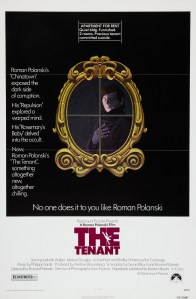
The Tenant Poster

Made about a decade after Repulsion and Rosemary’s Baby, The Tenant was a return to familiar territory after the brilliant noir-homage that is Chinatown. It is a simple story about isolation and alienation, and their possible consequences.

It is about a man who manages to rent an apartment in France, where it is apparently hard to find an apartment. While Mr Trelkovsky manages to find an apartment, it is instantly noticeable that there is something a little strange about the building, the least of which is its incredibly strict rules, such as no female guests at night.

The Tenant

And that is only the start. With a perpetually annoyed looking concierge, the entire apartment seems to have something against Trelkovsky as soon as he moves in, much to his dismay and confusion.

The best part about the story is how slowly Polanski peels away the layers, gradually sinking into creepy and unsettling territory, where he has shone the brightest in the past. His character is a shy, honest man whose friends aren’t real friends, but hey, it’s better than being alone. They take advantage of him and mock him, while his neighbours seem to turn against him. Sudden complaints made against him that he knows are false cause him to become paranoid about everything and everyone in the building. The final act isn’t as thrilling as Repulsion or Rosemary’s Baby, but it is a creative and bizarre way to display the way paranoia and delusion can take over his psyche.

The Tenant

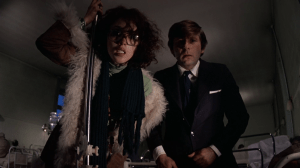
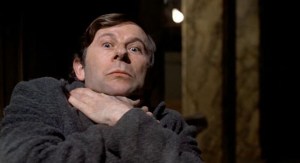
Polanski is great as the main character, who must be in every scene in the movie. He underplays this character well, as this is a man who would prefer to let people run over him than have his own way, even by supposed friends. The concierge is also memorable, played by Shelly Winters, who has a consistent hateful gaze, often directed towards Trelkovsky from the beginning of the film.

This is one of those open-ended movies that doesn’t smack of laziness; in fact the very opposite. It invites thought and introspection and for me several rewatches. If you like Polanski’s greats from the ’60s, this one is essential viewing.