Great Films You Need To See – In America (2003)

This is my latest contribution to The Big Picture, the internationally recognised magazine and website that shows film in a wider context and is this month running a series of features and reviews with the theme of ‘migration’. This piece about Jim Sheridan’s 2003 deeply personal drama In America was written as part of The Big Picture’s Lost Classics strand, although I am including it within my list of Great Films You Need To See.

Making a change can be difficult at the best of times, but doing so as a way of beginning again following the tragic loss of a loved one is a challenge that almost breaks the Sullivans; the wounded family at the centre of Jim Sheridan’s achingly moving In America.

In America a real family affair, with a warmth and spirit that won't fail to move even the most stone-hearted cynics

In America a real family affair, with a warmth and spirit that won’t fail to move even the most stone-hearted cynics

The clan – dad Johnny (Paddy Considine), mum Sarah (Samantha Morton) and their two kids Christy and Ariel (real life sisters Sarah and Emma Bolger) – have made the decision to up sticks from Ireland and illegally start a new life in the land of the free via Canada.

The reason becomes clear when Johnny inadvertently responds to a U.S. border guard’s question over how many kids they have by saying “three”; only to be corrected by the softly spoken Sarah. Their young son Frankie, it transpires, has died from a brain tumour and despite moving to New York, the bright lights of the Big Apple can only distract the clan for so long from the cloud that has followed them to their new home.

The Sullivan clan - mum Sarah (Samantha Morton), dad Johnny (Paddy Considine) and kids Christy and Ariel (Sarah and Emma Bolger) in In America

The Sullivan clan – mum Sarah (Samantha Morton), dad Johnny (Paddy Considine) and kids Christy and Ariel (Sarah and Emma Bolger) in In America

They share a rundown tenement block with a ragtag bunch of misfits, most notably “the man who screams”, aka Mateo (Djimon Honsou, an actor whose range has sadly been restricted to stern-faced action movie roles of late); a reclusive Nigerian artist who pours the anger and despair he feels over his worsening health into his painting.

He’s brought out of his self-imposed monasticism by the angelic Christy and Ariel, who love their parents deeply but struggle to recognise their father as the same man who existed before their brother’s death.
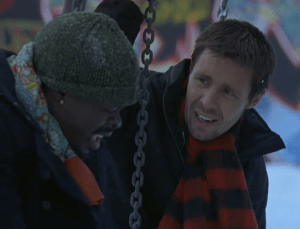
Johnny (Paddy Considine) and Mateo (Djimon Hounsou) form a bond in In America

Johnny (Paddy Considine) and Mateo (Djimon Hounsou) form a bond in In America

Johnny is an actor unable to land a part because he’s been left emotionally numb since Frankie’s death and the desperation eating away at him to make things right spills out during a street carnival when a trivial game of chance takes on high stakes consequences as he puts the family’s limited finances on the line to win a toy for Ariel.

The script can’t resist symbolism, with Sarah’s pregnancy running parallel to Mateo’s worsening illness. The mysterious Mateo, meanwhile, comes dangerously close to fulfilling the ‘magical negro’ stereotype so beloved of American cinema; a noble and principled man who forms a bond with the Sullivans and helps Johnny to finally overcome the pain of Frankie’s death.
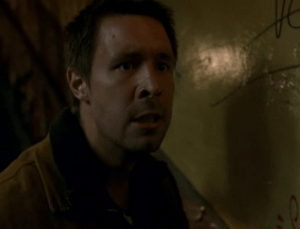
Johnny (Paddy Considine) is a man on the edge in In America

Johnny (Paddy Considine) is a man on the edge in In America

However, such is the heartfelt and convincing bond struck between the Sullivans – the Bolger sisters especially are a revelation – that you never feel manipulated and the shameless sentimentality that could so easily have derailed the picture is avoided by the sincerity of the cast and filmmakers.

Sheridan has spoken openly of how personal the project is to him (the film is dedicated to his brother Frankie, who died aged 10), while the fact the script was co-written by the director and his two daughters Naomi and Kirsten makes In America a real family affair, with a warmth and spirit that won’t fail to move even the most stone-hearted cynics.

Review – Everest

Our insignificance in the face of Mother Nature has claimed many souls over the years and did so again to tragic effect as this often heart-stopping drama based on the events that unfolded on top of the world almost 20 years ago shows.

Whilst it never quite reaches the heights it aspires to, Everest, much like its namesake, is often a sight to behold

Whilst it never quite reaches the heights it aspires to, Everest, much like its namesake, is often a sight to behold

Mountain movies have often been the preserve of the documentarian, perhaps most notably in Kevin Macdonald’s superb Touching The Void (2003). Feature films of this ilk are more thin on the ground and tend to emphasise action over character; Sly Stallone’s Cliffhanger (1993) and 2000’s Vertical Limit being a case in point.

Whilst there’s no denying the spectacle is there on screen in Icelandic director Baltasar Kormákur’s visually stunning Everest, the film’s sombre tone gives way to a growing morbidity as the tragic events it portrays play out.

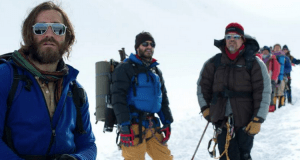
Things start going wrong for Rob Hall (Jason Clarke) and his clients on Everest

Things start going wrong for Rob Hall (Jason Clarke) and his clients on Everest

William Nicholson and Simon Beaufoy’s script also tries to give as much attention to its characters as it does to the mountain, but the sheer abundance of figures on screen, many of whom are virtually indistinguishable from each other as they try to shield themselves from the hostile environment, inevitably dilutes the drama on screen.

Set in 1996, the film follows Rob Hall (Jason Clarke), an experienced and respected mountaineer whose successful Adventure Consultants business aimed at guiding less experienced clients to the top of Everest and back down has spawned rival firms looking to get in on the action; including Scott Fischer’s (Jake Gyllenhaal) Mountain Madness.

Mountaineer Scott Fischer (Jake Gyllenhaal) leads Beck Weathers (Josh Brolin) and others up Everest

Mountaineer Scott Fischer (Jake Gyllenhaal) leads Beck Weathers (Josh Brolin) and others up Everest

Rob leads his latest group of clients, including Beck Weathers (Josh Brolin), mailman Doug Hansen (John Hawkes) and journalist John Krakauer (Michael Kelly) to Everest’s Base Camp only to find it swarming with amateur guides and climbers looking to go for the summit on the same day as he is planning. The expedition turns to disaster as Everest’s notoriously unpredictable weather strikes with full force, leaving Rob and his fellow climbers battling to survive against the elements.

Much has been made of Kormákur’s desire to shoot as much as possible on location and the scenes in Nepal and Base Camp are certainly breathtaking. Whilst the mountain scenes themselves were shot at Val Senales in Italy (with the moments towards the peak shot in a studio wherein real snow was reportedly imported), the fact that many of the cast were nevertheless subjected to freezing temperatures and unforgiving terrain provides an authenticity that’s hard to fake.

Aaaannnddd there. The summit of Everest is reached

Aaaannnddd there. The summit of Everest is reached

In spite of an excellent cast, many of the female actors are given little to do but sit at home and look worried, in particular Keira Knightley as Rob Hall’s wife Jan and Robin Wright as Beck Weathers’ wife Peach. However, Emily Watson shines as she so often does as Helen Wilton, Adventure Consultants’ Base Camp Manager. With often just a radio as a prop in which to communicate with the increasingly stricken group, Watson imbues Helen with a stoicism that flickers with despair as she realises that some of the team aren’t going to make it back down the mountain alive.

Clarke brings a warm grace to Rob, while Hawkes is our way into a world that few of us will fully understand. Gyllenhaal feels underused, however, and the same can be said of numerous other cast members who are all ultimately left in the shadow of the mountain itself.

Whilst it never quite reaches the heights it aspires to, Everest, much like its namesake, is often a sight to behold.

Review – Amy

If there were ever any doubts about the toxic and shameful damage that fame can have once the meat hooks have taken hold then look no further than this profoundly sad and deeply moving documentary about the extinguishing of a unique talent.

Whilst Amy Winehouse's music will remain, so too will this captivating documentary of a singer whose story shines a harsh spotlight on the celeb-baiting world we have created

Whilst Amy Winehouse’s music will remain, so to will this captivating documentary of a singer whose story shines a harsh spotlight on the celeb-baiting world we have created

Anyone who casts their eyes over the mainstream media will likely have formed a preconception about Amy Winehouse.

What Asif Kapadia’s comprehensive and absorbing documentary triumphantly achieves is to read between the lines of the numerous drink and drug-related articles that were written about the hugely successful British singer and instead tell a painstakingly researched story of a flawed woman who found herself lost in a self-destructive spiral as her rare talent became a tool in which to be exploited.

Much like the subject of his debut doc Senna (2011) about Formula 1 driver Ayrton Senna, Kapadia has spoken of his interest in taking Winehouse off her pedestal and casting a human gaze on a profoundly gifted individual. Working from this brief, Kapadia and his team carried out around 100 interview with friends, family, partners and music industry figures who knew and worked with her and, just like in Senna, let’s them do the talking; telling Winehouse’s story through their eyes and mouths.

Amy Winehouse, seen in happier days, in the documentary Amy

Amy Winehouse, seen in happier days, in the documentary Amy

The film follows a chronological path, with certain figures such as ex-manager and friend Nick Shymanksy playing a bigger part early on before falling away to let others take centre stage. The two who come to the fore most in the latter half of the film are her father Mitch and husband Blake Fielder-Civil.

Both speak honestly about their time with Amy, but neither comes out of the film with much sympathy. Fielder-Civil essentially admits to having introduced his wife to heroin, a decision that proved to be catastrophic (a TV interview in which he bigs himself up and ‘reveals’ information about their relationship casts him in a particularly unsavoury light), while the actions of her father, in particular the fact he brought along a reality TV crew to her St Lucia hideaway, have seen him denounced as a gold-digger – something he has strenuously denied in interviews in which he accuses the film of bias.

Singer Amy Winehouse in her element on stage in Asif Kapadia's Amy

Singer Amy Winehouse in her element on stage in Asif Kapadia’s Amy

There’s a telling moment that takes place early in the film during a 2003 interview with a broadsheet journalist when the then up-and-coming singer jokingly states: “I don’t think I’m going to be at all famous… I’d probably go mad.”

It’s one of numerous moments that, inevitably, have a bittersweet weight to them in hindsight and lend the film a heart-rending tragedy as it winds painfully to its endpoint in 2011 when her body was discovered in her London flat; the singer having died from alcohol poisoning.

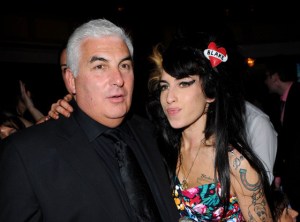
Amy Winehouse, with her father Mitch, in Asif Kapadia's Amy

Amy Winehouse, with her father Mitch, in Asif Kapadia’s Amy

This journey is none more despairing than when we catch a glimpse of the emaciated figure of Winehouse staring dead-eyed at a camera in her home; her face cast in a ghostly pallor by the light of a laptop screen. It’s a lifetime away from the fresh-faced teenager we see at the start of the film whose rich and sonorous voice is used for pleasure, not profit.

Kapadia’s undoubted intention is to leave you to make your own mind up; for myself it’s difficult to escape the conclusion that too many people close to Winehouse were seemingly more interested in exploiting her talent for their own ends, rather than nurturing both it and her to go on to do even more special things.

Whilst Amy Winehouse’s music will remain, so to will this captivating documentary of a singer whose story shines a harsh spotlight on the celeb-baiting world we have created.

Review: Me And Earl And The Dying Girl

The Sundance seal of approval may have put off some, but don’t let the prospect of yet another young adult adaptation deter you from this charming little indie.

Me And Earl And The Dying Girl is a wholly pleasant surprise that will charm and moves you in equal measure

Me And Earl And The Dying Girl is a wholly pleasant surprise that will charm and moves you in equal measure

It’s not too difficult to imagine just how painful Me And Earl And The Dying Girl could have turned out in the wrong hands, but Alfonso Gomez-Rejon avoids cranking the quirk-ometer up to 11 and instead draws affecting and appealing performances from his young leads.

That being said, the film takes a little while to find its feet as the angular camera moves (characters often deliberately appear at the side of a frame, for instance), Wes Anderson-friendly chapter headings and twee stop motion animation suggest a tough 105 minutes awaits.

However, Thomas Mann’s Greg, the “Me” of the title, soon wins you over with his hangdog self-deprecation.

Me and Earl: Greg (Thomas Mann) and Earl (Ronald Cyler II) IN Me And Earl And The Dying Girl

Me and Earl: Greg (Thomas Mann) and Earl (Ronald Cyler II) IN Me And Earl And The Dying Girl

Narrated in self-referentially cinematic fashion by Greg, we’re introduced to life in his small corner of Americana, which involves trying to ignore advice from his well-meaning parents (Connie Britton and Nick Offerman, who doesn’t seem to work which raises the question of how they are able to afford to live how they do), being on the periphery of the school’s various cliques and hanging out with Earl (Ronald Cyler II).

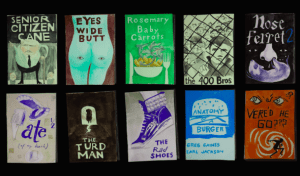
Greg doesn’t describe Earl as his friend, rather his “co-worker” due to the numerous movie pastiches they’ve filmed together, including Senior Citizen Cane, A Sockwork Orange and The 400 Bros. Greg’s obvious attachment issues are put to the test when he’s reluctantly persuaded to spend time with fellow student Rachel (Olivia Cooke), who has been diagnosed with leukemia. A frosty acquaintance gradually thaws into something altogether warmer, though, as Greg, Rachel and Earl form a sweet bond.

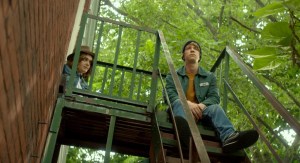
Me and the dying girl: Greag (Thomas Mann) and Rachel (Olivia Cooke) in Me And Earl And The Dying Girl

Me and the dying girl: Greg (Thomas Mann) and Rachel (Olivia Cooke) in Me And Earl And The Dying Girl

Me And Earl And The Dying Girl manages to work almost in spite of itself. The best teen movies are invariably the ones that try least hard to be teen movies. Jesse Andrews’ screenplay, based on his novel of the same name, doesn’t feed arch, ham-fisted dialogue to its characters; rather it creates a world which feels lived in and – largely – succeeds in avoiding overly saccharine life-lessons.

The film also benefits greatly from the excellent chemistry of its core triumverate; Cooke especially, who has a spikiness that hides a scared fragility that is refreshing in a character such as this and builds on the good work she’s done in TV series Bates Motel (also playing a sickly teen – don’t get yourself typecast Olivia).

A few of the movie pastiches in Me And Earl And The Dying Girl

A few of the movie pastiches in Me And Earl And The Dying Girl

Despite being served with the occasional duff line (“titties” gets mentioned more than once), Cyler’s Earl is arguably the most interesting character, if only because you are so keen to find out more about his upbringing, which has seemingly involved growing up in a desperately run-down neck of the woods.

The film is at its best when it indulges in its love of cinema, something that serves as catnip for movie lovers who can spot the various references to the likes of Powell and Pressburger, Herzog and Truffaut, alongside all the affectionately staged reproductions of many well-loved moving pictures.

Me And Earl And The Dying Girl is a wholly pleasant surprise that will charm and moves you in equal measure.

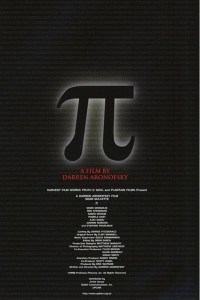
Great Films You Need To See – Pi (1998)

This is my latest contribution to The Big Picture, the visually focused film magazine that proves there’s more to film than meets the eye. The Big Picture is running a series of features and reviews throughout August with the theme of ‘outsiders, loners and losers’. This piece is part of the site’s Lost Classics section (featuring in my list of Great Films You Need To See), in this case Darren Aronofsky’s debut Pi.

It’s a trait that has remained constant throughout much of his career, but the dangerous consequences of obsession were never more strikingly explored than in Darren Aronofsky’s distinctive debut.

Filmed on jarring black and white reversal film stock, the high contrast it provides to Pi (1998) is emblematic of the madness/genius see-saw its gifted young mathematician Max Cohen (Sean Gullette) rides as he becomes progressively more consumed with finding a numerical pattern that unlocks the door to life, the universe and everything.

Aronofsky's Pi adds up to an absorbing and idiosyncratic calling card for its uncompromising director and a compulsive study in the destructive power of obsession

Aronofsky’s Pi adds up to an absorbing and idiosyncratic calling card for its uncompromising director and a compulsive study in the destructive power of obsession

As Max himself states: “One – mathematics is the language of nature. Two – everything around us can be represented and understood through numbers. Three – if you graph the numbers though any system, patterns emerge. Therefore there are patterns everywhere in nature.”

Shot through Max’s POV or in tight close up (occasionally through the disarming use of steadicam), we see the world through his repressed and paranoid perspective. He lives in a cramped apartment swallowed up by a vast computer system he’s built to reveal the pattern that exists behind the numbers of the New York Stock Exchange.

Do the math: Max Cohen (Sean Gullette) in Pi

Do the math: Max Cohen (Sean Gullette) in Pi

Despite keeping human contact to a bare minimum – his only acquaintance is former maths teacher Sol (Mark Margolis) – he attracts the unwanted attention of a Wall Street analysis firm keen to exploit him; and Lenny, part of a radical group of Hasidic Jews that believe Max is the vessel to reveal the 216-digit string of numbers hidden within the Torah that imparts the true name of God.

Max Cohen (Sean Gullette) finds the goden spiral pattern in the universe in Pi

Max Cohen (Sean Gullette) finds the golden spiral pattern in the universe in Pi

The conspiracy theories, mysticism and high level maths may make for a good thriller and feed the pre-millennial angst that was rife at the time of the film’s release, but Pi is at its strongest as an unnerving psychological horror of one man’s descent into the very spiral he believes represents the pattern to end all patterns.

Clint Mansell’s aggressive electro score, in turns intriguing and nightmarish, is the perfect soundtrack to the chaos that plays out in Max’s mind, most discordantly during the increasingly debilitating headaches he experiences.

Peek-a-boo: Max Cohen (Sean Gullette) in Pi

Peek-a-boo: Max Cohen (Sean Gullette) in Pi

Aronofsky takes a number of visual cues from the industrial horrors of David Lynch’s Eraserhead (1977), while the nod to Japanese cyberpunk classic Tetsuo: The Iron Man (1989) can be seen in Max’s search for the soul in the machine.

The director’s doffing of the cap to Twilight Zone creator Rod Serling as “the patron saint of the movie” also makes sense when considering how that TV show’s penchant for the cautionary tale fits neatly alongside the numerous references Max makes to Icarus; the tragic figure from Greek mythology who ignored the warnings and flew too close to the sun.

Driller killer: Maths genius Max Cohen (Sean Gullette) in Pi

Driller killer: Maths genius Max Cohen (Sean Gullette) in Pi

Max’s obsession with the golden spiral, meanwhile, is reflected in much of the film’s imagery, from the swirl of milk in a stirred cup of coffee, to the circular journey of a paper plane; and the 360-degree movement of the camera as it coils around him.

Aronofsky’s Pi adds up to an absorbing and idiosyncratic calling card for its uncompromising director and a compulsive study in the destructive power of obsession. Do the math.