Review – All Is Lost

More than anything, dialogue played a crucial role in transforming J.C. Chandor’s financial crisis drama Margin Call into a gripping and intelligent debut feature.

All Is Lost is cinema in its purest form, a visual poem of hope, despair, strength and weakness that will wash over you like a warm tide

All Is Lost is cinema in its purest form, a visual poem of hope, despair, strength and weakness that will wash over you like a warm tide

Conversely, in Chandor’s compelling and very moving follow-up, All Is Lost, it’s actions rather than words that drive the narrative forwards and give the film its raw, physical power.

What links both films are the sky-high stakes – livelihoods are on the line in Margin Call, while a man’s life hangs precariously in the balance in All Is Lost. Robert Redford plays the unnamed near-ancient mariner whose solo sailing journey turns into a desperate fight for survival when a stray shipping container rips a hole in the side of his boat.
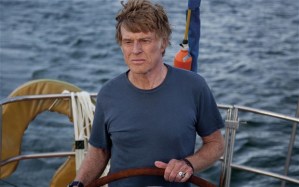
The calm before the storm in All Is Lost

The calm before the storm in All Is Lost

A brutal storm turns a bad situation into something far worse and, still 1,700 miles from land and without any working means of communication, Redford’s mariner (described as “Our Man” in the closing credits) must rely on his resourcefulness and dwindling resolve if he has any hope of survival.

Redford’s casting is a masterstroke on Chandor’s part. An icon of cinema for five decades, Redford was the anti-establishment pin-up respected by the establishment, who has often been at his best playing mysterious loners.

The full scale of the problems for Robert Redford's unnamed protagonist emerge in All Is Lost

The full scale of the problems for Robert Redford’s unnamed protagonist emerge in All Is Lost

Far from resting on his laurels, All Is Lost is arguably the 77-year-old’s most daring and challenging role to date. Few actors are as intriguing to watch as Redford and, with little or no dialogue to get in the way, it frees him up to act with his gut.

It’s a brave and entirely naturalistic performance and takes the actor to places we’ve never seen him go before. Picture Redford and the Sundance Kid or Jay Gatsby will likely spring to mind – a fresh-faced icon of cinema. But here, that familiar shock of blonde hair is greying at the sides, while the physical disintegration he goes through over the course of the film is alarming. The film may take place over the course of eight days, but Redford appears to age several decades.

The storm hits hard in All Is Lost

The storm hits hard in All Is Lost

Although few words are spoken, sound plays an integral role in the film. We know the groaning, snapping sound that starts the movie spells big trouble for Our Man, while the terrible cacophony of the storm feels like a punishment for unexplained past deeds. Likewise, Alex Ebert’s elemental score drifts in and out of the film and never once tries to get in the way of the drama.

Things go from bad to worse for our nameless sailor in All Is Lost

Things go from bad to worse for our nameless sailor in All Is Lost

The title of the film derives from Redford’s opening voiceover (which accounts for almost all of the dialogue), wherein he seeks forgiveness from an unnamed person, presumably his wife and/or family (a wedding ring is pretty much the only back story we get for his character), before concluding that “all is lost”.

As to whether all is indeed lost come the ambiguous ending and the cut to white is clearly open to interpretation, but it’s worth playing over in your mind what Our Man has been forced to endure throughout his ordeal before making a final judgement.

All Is Lost is cinema in its purest form, a visual poem of hope, despair, strength and weakness that will wash over you like a warm tide.

Review – Frozen

Winter may be coming, but the Mouse House is on fire in this enchanting reworking of Hans Christian Anderson’s timeless fairy tale The Snow Queen.

Far from leaving me cold, Frozen once again proved that when Disney gets it right, no-one else comes close

Far from leaving me cold, Frozen once again proved that when Disney gets it right, no-one else comes close

Disney’s affiliation with Anderson’s work is a long one; from its Silly Symphony short of The Ugly Duckling in the 1930s through to its hugely successful version of The Little Mermaid in 1989, which spawned a renaissance in animated features by the studio.

Although not a straight adaptation, Frozen fulfills the dream long-held by Uncle Walt to bring The Snow Queen to the big screen and does so in a way that would have made Disney extremely proud.

The sumptuous visuals in Frozen

The sumptuous visuals in Frozen

A chunk of the credit for the Mouse House’s creative and critical upturn should go to Pixar head honcho John Lasseter,  who was appointed Disney’s Chief Creative Officer back in 2006 and since then has overseen a fresh resurgence in the studio’s output.

It’s also notable that of Disney’s last four animated movies, three have featured strong female leads, with Frozen‘s Anna (voiced by Kristen Bell) and sister Elsa (Idina Menzel) among the most tenacious yet.

Snow Queen Elsa (Idina Menzel) in Frozen

Snow Queen Elsa (Idina Menzel) in Frozen

Elsa has the ability to create ice and snow and locks herself away to maintain her secret, even from Anna. When her powers are unintentionally revealed Elsa, in the process of escaping, unwittingly unleashes an eternal winter on the kingdom. Anna goes after her sister to save the kingdom from her icy spell and on her quest is joined by mountain man Kristoff (Jonathan Groff), his faithful reindeer Sven and a funny little snowman called Olaf (Josh Gad).

The dashing Prince Hans (Santino Fontana) sweeps Anna (Kristen Bell) off her feet in Frozen

The dashing Prince Hans (Santino Fontana) sweeps Anna (Kristen Bell) off her feet in Frozen

This wouldn’t be a Disney film without the musical numbers and Frozen upholds this fine tradition right from the off with the catchy men-at-work Frozen Heart that brings to mind Snow White And The Seven DwarfsHeigh-Ho.

The plaintive Do You Want To Build A Snowman? does what Disney does best – a heartfelt tune matched by swirling visuals that progresses the story and sticks in the mind, while a group of diminutive trolls are oddly reminiscent of the Fraggles (remember Fraggle Rock? No? Just me then) when they sing Fixer Upper.

Olaf (Josh Gad) just wants a hug in Frozen

Olaf (Josh Gad) just wants a hug in Frozen

The relationship between Anna and Elsa is both simple and complex; they clearly love each other deeply, but time and Anna’s secret has driven a wedge between them, as evidenced by their awkward exchanges during Anna’s coronation as Queen. Disney has been guilty many times of drowning its films in saccharine sweetness, but it’s also the studio that respected its young audience enough to make them deal with death in Bambi and The Lion King.

Heroic mountain man Kristoff (Jonathan Groff) aboard his trusty reindeer Sven in Frozen

Heroic mountain man Kristoff (Jonathan Groff) aboard his trusty reindeer Sven in Frozen

It pretty much goes without saying that the animation is stunning, but it’s always worth drinking it in regardless, especially the rendering of ice and snow which is simply beautiful. Likewise, the film rattles along at such a pace that you forgive its rather lacklustre plot.

Strong female characters aside, Frozen‘s most memorable character is the loveable Olaf, a figment of Anna’s childhood imagination brought magically and amusingly to life by Elsa’s magic. A lover of “warm hugs”, Olaf is well written and acts just as you’d imagine an imaginary friend brought to life would. Gad’s lively performance elevates Olaf into the premier division of Disney sidekicks next to Pinocchio‘s Jiminy Cricket, the Genie from Aladdin and The Jungle Book‘s Baloo.

Far from leaving me cold, Frozen once again proved that when Disney gets it right, no-one else comes close.

Review – 12 Years A Slave

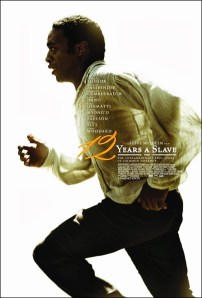
To do a film about one of the darkest chapters in human history justice, it needs the sort of uncompromising and unflinching directorial stamp that Steve McQueen brings.

Not for the faint of heart, and neither should it be, 12 Years A Slave is, befittingly considering the director's original vocation, a work of art

Not for the faint of heart, and neither should it be, 12 Years A Slave is, as befits the director’s original vocation, a work of art

The British Turner Prize-winning artist’s two previous films, 2008’s Hunger and Shame (2011) both explored the outer limits of human behaviour and have remained as critically divisive as they are intransigent.

However, McQueen has broken out to a far wider audience with his remarkable adaptation of Solomon Northup’s 1853 autobiography, whilst staying true to his unique filmmaking sensibility.

The torment has only just begun for Solomon (Chiwetel Ejiofor) in 12 Years A Slave

The torment has only just begun for Solomon (Chiwetel Ejiofor) in 12 Years A Slave

Solomon (Chiwetel Ejiofor) is an accomplished violinist living with his wife and children in New York when he is deceived into accompanying two men to Washington, where he is kidnapped, transported to Louisiana and sold into slavery. The next dozen years are a living hell as he’s first ‘bought’ by hypocritical plantation owner William Ford (Benedict Cumberbatch) before being sold on to a different ‘master’ in the form of the psychopathic and paranoid Edwin Epps (McQueen regular Michael Fassbender) to work on his cotton plantation.

Epps, like most of his kind, sees Solomon – renamed Platt – and the other slaves as nothing more than mere possessions which he can do with as he pleases, most sickeningly to the timid Patsey (Lupita Nyong’o) whom he abuses repeatedly. As the brutality the sadistic Epps metes out to the slaves goes on seemingly without end, Solomon’s resolve and spirit gradually erode as despair and hopelessness at the thought of ever seeing his family again eat into his soul.

Solomon Northup's (Chiwetel Ejiofor) first 'master' William Ford (Benedict Cumberbatch) and his cruel carpenter John Tibreats (Paul Dano) in 12 Years A Slave

Solomon Northup’s (Chiwetel Ejiofor) first ‘master’ William Ford (Benedict Cumberbatch) and his cruel carpenter John Tibeats (Paul Dano) in 12 Years A Slave

Certain critics have criticised 12 Years A Slave for straying far too long on the numerous gut-wrenching scenes of violent punishment (some have gone so far as to label the film ‘torture porn’). Similar denunciations were made about Hunger and Shame.

However, what few films about slavery there have been have almost all shied away from what life must have really been like for thousands upon thousands of people who were bought and sold as if they were apples and oranges. As tough as it is to watch (and it can be extremely tough at times), to water it down would have been a far bigger crime.

Solomon Northup (Chiwetel Ejiofor) is brutalised at the hands of psychopathic plantation owner Edwin Epps (Michael Fassbender) in 12 Years A Slave

Solomon Northup (Chiwetel Ejiofor) is brutalised at the hands of psychopathic plantation owner Edwin Epps (Michael Fassbender) in 12 Years A Slave

McQueen has cited the dark and bewitching work of Spanish painter Francisco Goya as a major influence on the film’s aesthetic design. It makes sense; just as in Hunger, there’s a hypnotic horror at work here that’s all the more potent for being so masterfully shot (the director’s signature lengthy takes and static shots are both liberally employed). Scenes of unfathomable suffering are bookended with moments of beautiful tranquility worthy of Terrence Malick – a sort of calm before and after the storm.

One of the film’s most distressing scenes comes when Solomon is saved from hanging at the hands of the racist overseer John Tibeats (Paul Dano), but is left for hours on the verge of suffocation with his toes barely touching the muddy ground while other slaves go about their daily work and children play in the background. It’s a quietly chilling evocation of the institutionalism of slavery.

Patsey (Lupita Nyong'o) begs Solomon (Chiwetel Ejiofor) for help in 12 Years A Slave

Patsey (Lupita Nyong’o) begs Solomon (Chiwetel Ejiofor) for help in 12 Years A Slave

Another memorable shot comes early in the film when a chained Solomon stares helplessly out of his Washington cell as the camera pulls up to show The White House – a supposed symbol of justice and equality.

However, perhaps 12 Years A Slave‘s most devastating image comes when Solomon breaks the fourth wall and stares hollow eyed at the audience in hopeless exasperation. For me, it’s the single greatest shot of any film this year.

Ejiofor is simply magnificent is the central role. The horrors he is forced to witness and participate in etch themselves on his face. The actor loses himself in the part and is mesmerising to watch.

Solomon Northup's (Chiwetel Ejiofor) happy family before being kidnapped in 12 Years A Slave

Solomon Northup’s (Chiwetel Ejiofor) happy family before being kidnapped in 12 Years A Slave

Many of the film’s supporting cast are superb, in particular the incredible Nyong’o as the tragic Patsey and Fassbender, whose bravura performance as Epps is terrifying and genuinely unhinged. While Django Unchained‘s plantation owner Calvin Candie got all the best lines, there’s nothing glamorous to Epps; he’s just a monster whose evil is as ferocious as it is deadly.

It’s not a perfect film; John Ridley’s screenplay is a little too on-the-nose at times, especially in the scenes between Solomon and a noble Canadian labourer played by Brad Pitt, who gets to speechify about the sin of slavery. In addition, the radiance of the scenes with Solomon’s family early in the film tries too hard to exacerbate the darkness that is to come.

These are insignificant quibbles, however, in a film that comes as close to visual poetry as I’ve seen for a long time. Not for the faint of heart, and neither should it be, 12 Years A Slave is, as befits the director’s original vocation, a work of art.

Review – American Hustle

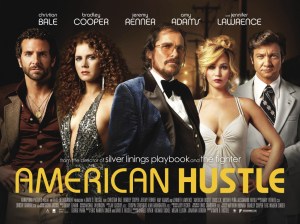
A story about people doing anything to survive may not sound like a laugh riot, but David O. Russell’s wild ride through the hair strewn world of 70s era grifters is irresistibly entertaining.

Featuring performances as crazy as the film is chaotic, American Hustle is a feast for the senses and as much fun as you'll have in front of the big screen this year

Featuring performances as crazy as the film is chaotic, American Hustle is a feast for the senses and as much fun as you’ll have in front of the big screen this year

Russell has a thing for dysfunctional families, from boxer Mickey Ward’s (Mark Wahlberg) mouthy clan in The Fighter to the parents of Pat (Bradley Cooper) in Silver Linings Playbook, who are almost as nuts as he is.

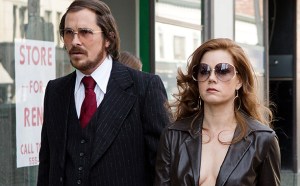
In American Hustle, Russell cranks it up another notch by having Christian Bale’s con artist Irving Rosenfeld married to the deeply unhappy Rosalyn (Jennifer Lawrence), while also having a mistress in the form of ex-stripper Sydney Prosser (Amy Adams), who becomes Irv’s partner-in-crime by posing as an English aristocrat in order to better sell his money-making scams.

Irving Rosenfeld (Christian Bale) and partner-in-crime/girlfriend Sydney Prosser (Amy Adams) in American Hustle

Irving Rosenfeld (Christian Bale) and partner-in-crime/girlfriend Sydney Prosser (Amy Adams) in American Hustle

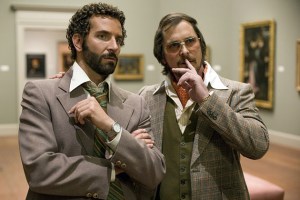
When they’re trapped by FBI agent Richie Di Maso (Cooper) they’re forced to help set up an elaborate sting operation (based loosely on the FBI’s Abscam operation) involving a fake Sheikh that at first targets popular New Jersey politician Carmine Polito (Jeremy Renner) before becoming something much bigger, and far more dangerous.

Russell’s affinity for families extends to the repertoire of actors he has formed during his career, with The Fighter‘s Bale and Adams and Silver Linings Playbook‘s Cooper and Lawrence returning, all be it in very different guises.

American HustleIn another Machinist-esque body transformation, Bale’s rotund Irv Rosenfeld (he gained 40 lbs for the role) is arguably his most complete performance to date. The “elaborate” comb over that we see Irv methodically setting in place at the start of the film thanks to plenty of hair glue and spray speaks to the polished act he puts on for the world that’s always a gust of wind away from falling apart.

FBI agent Richie Di Maso (Bradley Cooper) and con man Irving Rosenfeld (Christian Bale) in American Hustle

FBI agent Richie Di Maso (Bradley Cooper) and con man Irving Rosenfeld (Christian Bale) in American Hustle

Richie’s tight, manicured perm equally sends out a message of control that is at odds with the character once things start to get heavy. Cooper does his best work with Russell and brings plenty of entertaining tics to the table to make Richie a memorable character.

Russell has spoken publicly of his interest in strong female roles and the work of both Adams and Lawrence is outstanding. Adams especially is a powerhouse and oozes self-confidence and self-loathing in equal measure. Sydney is the smartest person in the room and it’s easy to understand why both Irv and Richie are so drawn to her.

A fantastic ensemble is the key to the success of American Hustle

A fantastic ensemble is the key to the success of American Hustle

Renner, who also sports a hairdo that can best be described as “very 70s”, holds his own as a politician doing the wrong thing for the right reasons, while a brief cameo from an uncredited Robert De Niro is one of the film’s many highlights.

American Hustle is very much the bastard offspring of Martin Scorsese and Paul Thomas Anderson, while Steven Soderbergh could very well be its godfather (pun not intended). It’s impossible to watch the kinetic camerawork and quick zooms and not be reminded of Goodfellas and Casino, while the beautiful squalor of Boogie Nights is also evoked. Likewise, the caper element is very reminiscent of Ocean’s Eleven, all be it without the smugness.

Irving Rosenfeld (Christian Bale) kind-of admires his gut in American Hustle

Irving Rosenfeld (Christian Bale) kind-of admires his gut in American Hustle

At 138 minutes, the film feels too long and could have done with a 20-minute trim to make it truly great instead of very good. On the flip side, we’re treated to more of Russell’s razor-sharp dialogue and amusing vignettes, not least of which the whole “science oven” (aka microwave) sequence and Lawrence’s OTT stab at Paul McCartney’s Live And Let Die in her rubber kitchen gloves.

Featuring performances as crazy as the film is chaotic, American Hustle is a feast for the senses and as much fun as you’ll have in front of the big screen this year.

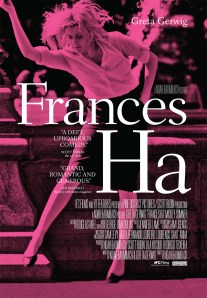
Review – Frances Ha

One shouldn’t judge a book by its cover – as Noah Baumbach’s charming tale about arrested development on the too-cool-for-school streets of New York City attests.

Frances Ha can be seen as that last hurrah before the inescapable call of adulthood becomes too loud to ignore. Don't pre-judge it; just go with the flow like Frances and give yourself in to its charms

Frances Ha can be seen as that last hurrah before the inescapable call of adulthood becomes too loud to ignore. Don’t pre-judge it; just go with the flow like Frances and give yourself in to its charms

More respected than cherished, Baumbach has made a habit of shining a harsh light on his liberal WASP-ish characters, none more so than in his last three pictures The Squid And The Whale (2005), Margot At The Wedding (2007) and Greenberg (2010), wherein Ben Stiller’s titular misanthrope stumbles along a fine line between amusing and annoying.

For his latest film, Baumbach softens this harsh gaze by switching his focus away from characters crippled by regret to a protagonist who, in her own words, isn’t “a real person yet”.

Frances (Greta Gerwig) and best friend Sophie (Mickey Sumner) in Frances Ha

Frances (Greta Gerwig) and best friend Sophie (Mickey Sumner) in Frances Ha

That character is played by Greta Gerwig, whose turn as Violet Wister in Whit Stilman’s ill-judged Damsels In Distress was so irritating as to colour my judgement of the actress. In spite of the near-universal praise lavished on Frances Ha, I consequently approached the film with apprehension.

However, just as Sally Hawkins’ performance as the relentlessly upbeat Poppy in Mike Leigh’s Happy-Go-Lucky won me over in spite of myself, so to does Gerwig as Frances, a struggling dancer in her late twenties who lives day-to-day with her best friend Sophie (Mickey Sumner) in Brooklyn.

Frances' one-time flatmates Lev (Adam Driver) and Benji (Michael Zegen) in Frances Ha

Frances’ one-time flatmates Lev (Adam Driver) and Benji (Michael Zegen) in Frances Ha

Frances compares their relationship to that of “a lesbian couple that doesn’t have sex anymore”, but when Sophie is asked to move into the perfect apartment with her boyfriend the bubble bursts. Frances has a habit of falling on her feet, though, and the film follows her as she moves between apartments, her parent’s home in Sacramento and a spontaneous sojourn in Paris.

Those with a glass-half-empty disposition may find themselves shifting uneasily in their seats during the opening montage which sees Frances and Sophie kookily buzzing around NYC. However, spend some time with Frances and it becomes impossible not to warm to her heart-on-sleeve brio despite regular bouts of self-absorption.

There's more than a hint of François Truffaut in Frances Ha

There’s more than a hint of François Truffaut in Frances Ha

Gerwig, who co-wrote the script with Baumbach, gives the best performance of her career and infuses Frances with an awkwardness and eagerness-to-please that’s set against bursts of shameless exuberance. Her dance through the New York streets to David Bowie’s Modern Love is as joyous a moment of cinema as you’ll see all year. It’s one of several inspired marriages of sound and vision (to borrow another Bowie song title); another being the use of Hot Chocolate’s Every 1’s A Winner over Frances’ impromptu trip to Paris.

Sumner does a fine job as a more toned-down version of Frances; someone who is facing her own doubts about moving on. Sophie’s nostalgia for a life-less-complicated is matched by hipsters Lev (Girls‘ Adam Driver) and Benji (Michael Zegen), who temporarily share their apartment with Frances and find themselves sucked in to her ever-changing life.

Frances (Great Gerwig) hangs out with Lev (Adam Driver) in Frances Ha

Frances (Great Gerwig) hangs out with Lev (Adam Driver) in Frances Ha

Benji shares a particular bond with Frances over their penchant for self-contradiction. By way of example, Benji proudly points to a photo and says: “That’s me with Jay Leno.” When Frances retorts “he’s such a dick”, Benji replies: “I know, but don’t you just love him?”

The film’s stunning black and white photography inevitably brings to mind that other ode to New York, New York; Woody Allen’s Manhattan, although the film’s willful abandon also very consciously nods in the direction of the French New Wave, in particular François Truffaut.

Frances Ha can be seen as that last hurrah before the inescapable call of adulthood becomes too loud to ignore. Don’t pre-judge it; just go with the flow like Frances and give yourself in to its charms.