Four Frames – Night Of The Living Dead (1968)

I’m proud to say that I’ve become an offical contributor to The Big Picture, the internationally-recognised magazine and website that offers an intelligent take on cinema, focussing on how film affects our lives. Aimed at the enthusiastic film-goer at large, The Big Picture provides an original take on the cinematic experience. This piece is part of the Four Frames section, wherein the importance of four significant shots are discussed, in this case from George A. Romero’s horror classic Night Of The Living Dead.

It’s perhaps fitting that in the year that saw the world descend into civil unrest, a micro-budget splatter movie in which the dead rise from the grave and usher in the apocalypse would redefine both the horror genre and contemporary cinema.
Night of the Living Dead

There’s horror before 1968’s epochal Night of the Living Dead and there’s what came after, such is the seismic impact that George A. Romero’s debut feature continues to have.

Chucking out the rulebook in true anti-establishment style, he found a unique and unorthodox way to envisage the tipping point society seemed to be inevitably careering towards at the time.
Night of the Living Dead

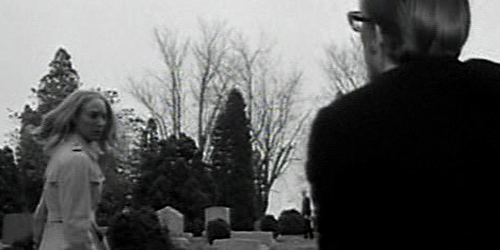
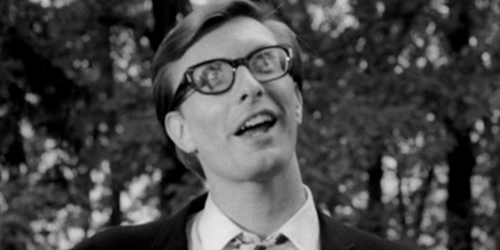
Romero monkeys about with the audience’s expectations from the film’s opening moment when siblings Barbra (Judith O’Dea) and Johnny (Russell Steiner) visit their father’s grave. Our assumed hero Johnny latches onto his sister’s unease and, putting on his best Boris Karloff pokes fun saying: “They’re coming to get you Barbra!”

He continues to freak out an angry Barbra and observes a shambling figure seen earlier in long-shot drawing ever nearer. “Look! There’s one of them now!”
Night of the Living Dead

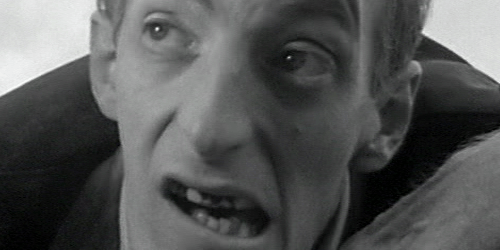
The unintended irony of this statement arrives with a jolt when the man (Bill Hinzman, who in basing his shuffling gait on Karloff in The Walking Dead proves that the old ways are sometimes the best) attacks Barbra. We presume Johnny will come to the rescue, but in fighting the ghoul (the word “zombie” is never uttered in the film) he falls and smacks his noggin on a headstone. Not so much the hero after all.

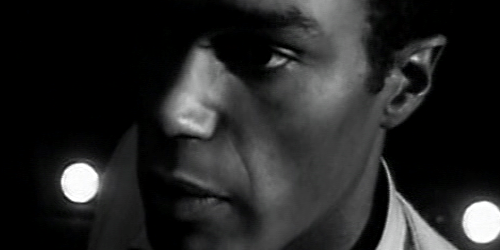
With our assumptions in tatters, all bets are off as Barbra flees to a farmhouse and is joined by Ben (Duane Jones), who doesn’t convince anyone, least of all himself when he shuts the growing horde of undead out (or imprisons them both, more to the point) and says “it’s alright”.
Night of the Living Dead

Not for nothing has Steiner’s Karloff impression become a defining moment in horror cinema. Romero, deciding that no-one else was going to do it passed the baton to himself by choosing to subvert an old icon, as if to say: “That’s then, this is now and you ain’t seen nothin’ yet.”

Tellingly, it’s the one amusing moment in a film that, like its implacable army of the undead, relentlessly progresses towards a soul-shattering conclusion.

Sequels Schmequels

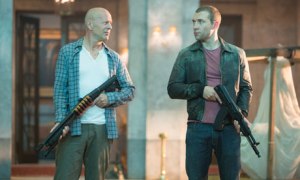
A little piece of my soul died when I finally ignored my better judgement and watched with increasing dismay as Bruce Willis took the pay cheque and trampled over one of my favourite movie franchises (fully justifying the title in the process) with A Good Day To Die Hard.

"What are we doing here again?" - The lazy cash-in that is A Good Day To Die Hard

“What are we doing here again?” – The lazy cash-in that is A Good Day To Die Hard

A very pale shadow of the classic 1988 original – arguably the greatest action movie ever made – this fifth very bad day for John McClane sees him joined by his son (who’s suddenly come out of the woodwork) to “put a whuppin'” on a cabal of evil Ruskies.

It’s fair to say that none of Die Hard‘s follow-ups has matched that film’s ridiculously high standards, but the laziness and empty-headed cynicism of A Good Day To Die Hard would be incredible if it wasn’t so insulting.

A Good Day To Die Hard (we’re being promised a sixth film in the same way that children are promised a smack for being naughty) is just one of many, many terrible sequels that have soiled the good name of the original film they were so hoping to cash-in on.

In no particular order, here are five that unfortunately came to mind, although I’d love to know what you think are the worst sequels ever made.

Speed 2: Cruise Control (1997)

Speed 2

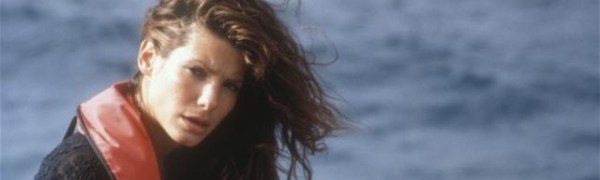
Keanu Reeves has made some very questionable career choices over the years (Johnny Mnemonic, anyone?), but even he had the foresight to give a wide berth to this woeful ‘action’ film that, bizarrely for a film with the word ‘speed’ in it, was largely set on a boat capable of travelling only slightly faster than the milk float used in Father Ted‘s hilarious homage to Speed. Sandra Bullock at least had the stones to admit it was terrible, although to claim anything else would have been unwise.

The Exorcist II: The Heretic (1977)

Exorcist 2

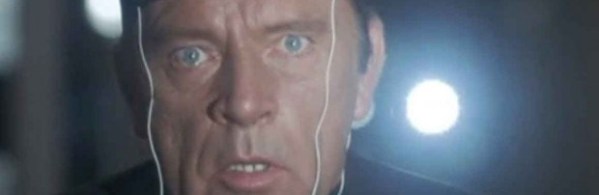
Never has a title been so accurate. William Friedkin’s 1973 original is still regarded as one of the greatest horror films ever and still has the ability to unnerve 40 years later. The only thing memorable about John Boorman’s follow-up, however, is just how massively ill-judged it is. Not even Richard Burton can save what ended up being an unruly mess of confused and conflicting themes thrown together by a director who recut the film, but found out to his cost that a stinker’s a stinker whichever way you package it.

Son Of The Mask (2005)

Son of the Mask

Although hardly a work of art, 1994’s The Mask did at least boast star-making turns from Jim Carrey and Cameron Diaz and a zany plot that matched its lead’s hyperactive temperament. This afterthought made more than a decade on sees Jamie Kennedy donning the mask while impregnating his wife, with the resulting baby-related ‘comedy’ being more unnerving than anything else. It’s safe to say Kennedy’s no Carrey and this is about as far from “smmmookin’!” as you can get.

Highlander 2: The Quickening (1991)

Highlander 2

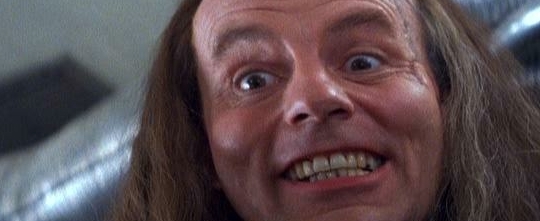
Currently in that special club of films with a 0% rating on Rotten Tomatoes, it’s unlikely this sequel to the cult 1986 original (which itself lost money) is going to win critics over from now until the end of time. As well as having a plot so nuts you’ve got to wonder how on Earth (or the Highlander’s home planet Zeist) it ever got the green light, Christopher Lambert can’t act, Sean Connery (who had his head lopped off in the first film, lest we forget) can’t be bothered and Michael Ironside can’t be controlled. Who wants to live forever? After watching this, not me.

Jaws 4: The Revenge (1987)

Jaws 4

We were told that ‘This Time It’s Personal’. Hollywood movies have never tried too hard to strive for authenticity, but dreaming up a storyline in which a great white shark stalks the Brody clan from the United States to the Bahamas in a bloodthirsty attempt at revenge is pushing it. The film co-stars Michael Caine (who at the time would have read the phone book had there been money involved), who had this to say: “I have never seen it, but by all accounts it is terrible. However, I have seen the house that it built, and it is terrific!”

Batman And Robin (1997)

Batman and Robin

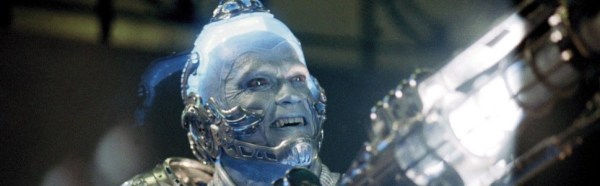
Thank god for Christopher Nolan. Before Batman Begins reinvented the comic book movie, director Joel Schumacher was busy burying the Dark Knight under a garish pile of camp costumes, ridiculous plotlines, bad acting and terrible Arnie one-liners with what in effect was one long advert for peddling lunch boxes to kids. Summing it up better than I ever could, comedian Michael J. Nelson wrote in his book Movie Megacheese: “Batman & Robin is not the worst movie ever. No, indeed. It’s the worst thing ever. Yes, it’s the single worst thing that we as human beings have ever produced in recorded history.”

There are lots more awful sequels to choose from, unfortunately? What are yours?

Proud To Be A Member Of…

The LAMB Banner

I’m delighted to announce I’ve been let in through the side door to join the great and good of the movie blogging world at The LAMB.

Many of the excellent sites I follow are LAMB members and I’m pleased to see some of these sites having been nominated for – and in a few cases won – LAMMYs. Congratulations to everyone who won recognition for their site. I know we all created our sites to wax on about our abiding love of all things cinema, however, it always makes you feel a little warm inside knowing others out there not only take the time to check out your stuff, but like it enough to feel some form of official appreciation is in order.

The LAMB has a lot of great features I look forward to delving into and a fantastic community of people who, like me, absolutely adore films.

Very Inspiring Blogger Award

Very Inspiring Blogger Award

Natalie at the fantastic Natalie Stendall blog has very graciously awarded me my very first Very Inspiring Blogger Award. To say I am thrilled is an enormous understatement and I thank Natalie for recognising my blog. Can I also thank everyone who has taken the time to read any one of my reviews and an extra special thanks to those who have chosen to follow my blog, it’s truly appreciated folks.

It’s worth noting there are a set of rules attached to receiving an award of this magnitude:

  • Link back to the blogger who nominated you – Please see above, I refer back to the splendid Natalie Stendall
  • Post the award image to your blog – Done
  • Share seven facts about you – See below!
  • Nominate other blogs and inform them about it – Also see below!

Here are my seven facts:

  • The first film I ever watched was Snow White and the Seven Dwarfs – I’ve never seen it since, oddly
  • I have run two marathons, including last year’s London Marathon. I am pleased to report all my toe nails and nipples survived intact
  • Scottish hero Rob Roy is a distant ancestor – I was originally disappointed not to be asked to appear in the Liam Neeson-starring film … until I actually watched it
  • I recently returned from an amazing six month trip to Japan, Australia and New Zealand – my cinematic highlight during this time was watching a film at the Rooftop Cinema in Melbourne (it helped that it was warm)
  • My favourite toy as a young chap was Jasper, a toy leopard
  • My first Christmas present for my girlfriend was jewellery – A good idea I think you’d agree, but this was unfortunately before I discovered she is jewellery-phobic. I apologised with a box of Ferrero Rocher … and then found out she has a nut allergy. Who knew?!
  • I make a mean apple crumble

And here’s who I believe deserves a Very Inspiring Blogger Award. I’m uncertain if there is a limit on the number of blogs you can select, however I’ve gone with the six below. All of these blogs are as informative as they are entertaining and I highly recommend that you pay them a visit:

Bringing ‘Unfilmable’ Books To The Big Screen

For as long as the movie industry has existed as a popular art form, books in all their forms have been the subject of cinematic adaptation.

Whether it’s an old or modern classic or a schlocky best-seller, literature has been the source of some of the most loved films in history.

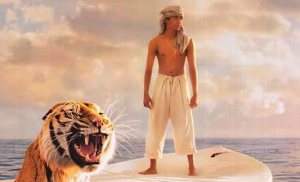
Ang Lee's Life of Pi

Ang Lee’s Life of Pi

In spite of cinema’s basic, inherent function to take words from the page and visualise them there are certain books, some have argued, that are simply impossible to film and as such will never be seen on the silver screen.

Never say never, though, especially in the movie industry, as time and again the critics are confounded and what was once written-off as ‘unfilmable’ ends up going before the cameras – all be it to varying levels of success.

This has never been more true than today, with several adaptations of books that have previously been deemed too complex or challenging to work as films reaching our cinemas. Just recently, we’ve seen an admirable take on Jack Kerouac’s defining beat generation work On The Road by Walter Salles, Ang Lee’s version of Yann Martel’s beloved novel Life of Pi and a bold adaptation of David Mitchell’s sprawling epic Cloud Atlas by the Wachowski brothers and Tom Tykwer, while this month also sees the cinematic release of Salman Rushdie’s critically lauded book Midnight’s Children.

Michael Winterbottom's A Cock and Bull Story

Michael Winterbottom’s ingenious adaptation of Tristam Shandy, A Cock and Bull Story

This is hardly a new phenomenon, however. Stanley Kubrick’s adaptation of Vladimir Nabokov’s controversial tome Lolita arrived in 1962 (the film poster even states “How did they ever make a movie of Lolita?”). Mike Nicholls faced major challenges bringing Joseph Heller’s satirical anti-war classic Catch-22 to the big screen in 1970, while more recently Peter Jackson finally delivered a truncated, but no less epic production of J.R.R Tolkien’s The Lord of the Rings to huge acclaim.

David Cronenberg's Naked Lunch

David Cronenberg’s unique Naked Lunch

Some directors have taken a more metatextual approach, including David Cronenberg who brilliantly weaved events from William Burroughs’ life into a unique adaptation of the writer’s drug-addled opus Naked Lunch. Michael Winterbottom’s A Cock and Bull Story inventively (and hilariously) acknowledged the difficulty of realising Laurence Sterne’s 18th century novel Tristam Shandy on screen by adopted the film-within-a-film approach, while Charlie Kaufman channeled his head-banging struggle to write a script for The Orchard Thief to ingenious effect in Spike Jonze’s Adaptation.

As Cronenberg, Winterbottom and Kaufman/Jonze have proved, the book is merely the beginning of the process, it needn’t have to be the end. For years movies have been ‘printing the legend’ and playing fast and loose with ‘true’ stories, so why shouldn’t the adaptation of novels be any different?

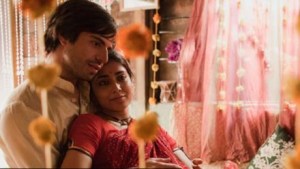
Midnight's Children

The supposedly ‘unfilmable’ Midnight’s Children

As Lee has stated on adapting Life of Pi: “We can never write a book or make a movie as good as how it plays in the audience’s mind.”

Once published, a book no longer belongs to the writer, it becomes the intellectual property of each and everyone who visualises the words they are reading in their own heads. A film is just another visualisation of the material, it just happens to be the one that gets the most attention.

When the source is a graphic novel, problems can occur as the author/illustrator have already set down how it should look. Zack Snyder was on a hiding to nothing when he adapted Alan Moore’s seminal Watchmen, thought to be one of the medium’s most unfilmable works.

Mixed reaction greeted Zack Snyder's adaptation of Watchmen

A mixed reaction greeted Zack Snyder’s adaptation of Watchmen

Snyder tried to stay as close to Moore’s vision as he could, but compromises inevitably needed to be made, incurring the ire of both the author and some within the fan community.

Directors and screenwriters will invariably tell you it’s not their job to come up with an ultra-faithful translation of the source. An adaptation is exactly that, an interpretation of the material that should be taken on its own merits.

So-called ‘unfilmable’ books should be treated no differently; we can only hope screenwriters and directors continue to have the vision necessary to bring these texts to the big screen. After all, the books aren’t going anywhere.