Hot diggity, it’s already day five of the Decades Blogathon – 6 edition – hosted by myself and the awesome Tom from Digital Shortbread. That means we’re already half way through! The blogathon focuses on movies that were released in the sixth year of the decade. Tom and I will run a different entry each day (we’ll also reblog the other’s post); and I’m delighted to welcome Jordan from Epileptic Moondancer to present his views on Roman Polanski’s unnerving psychological drama The Tenant.
Years ago, I introduced myself to film by rifling through the filmographies of Kubrick and Gilliam. Once that was done, I wanted to find another director whose films I could work through.
Through a Google search using the phrase ‘mind-f**k movies’ I came across Repulsion, perhaps Polanski’s best film. The atmosphere and the camerawork instantly hyptonised me and after watching the film the next day for a second time I was left wanting more.
Made about a decade after Repulsion and Rosemary’s Baby, The Tenant was a return to familiar territory after the brilliant noir-homage that is Chinatown. It is a simple story about isolation and alienation, and their possible consequences.
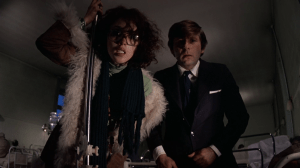
It is about a man who manages to rent an apartment in France, where it is apparently hard to find an apartment. While Mr Trelkovsky manages to find an apartment, it is instantly noticeable that there is something a little strange about the building, the least of which is its incredibly strict rules, such as no female guests at night.
And that is only the start. With a perpetually annoyed looking concierge, the entire apartment seems to have something against Trelkovsky as soon as he moves in, much to his dismay and confusion.
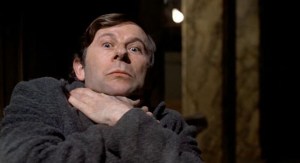
The best part about the story is how slowly Polanski peels away the layers, gradually sinking into creepy and unsettling territory, where he has shone the brightest in the past. His character is a shy, honest man whose friends aren’t real friends, but hey, it’s better than being alone. They take advantage of him and mock him, while his neighbours seem to turn against him. Sudden complaints made against him that he knows are false cause him to become paranoid about everything and everyone in the building. The final act isn’t as thrilling as Repulsion or Rosemary’s Baby, but it is a creative and bizarre way to display the way paranoia and delusion can take over his psyche.
Polanski is great as the main character, who must be in every scene in the movie. He underplays this character well, as this is a man who would prefer to let people run over him than have his own way, even by supposed friends. The concierge is also memorable, played by Shelly Winters, who has a consistent hateful gaze, often directed towards Trelkovsky from the beginning of the film.
This is one of those open-ended movies that doesn’t smack of laziness; in fact the very opposite. It invites thought and introspection and for me several rewatches. If you like Polanski’s greats from the ’60s, this one is essential viewing.
It’s day four of the Decades Blogathon – 6 edition – hosted by myself and the awesome Tom from Digital Shortbread. The blogathon focuses on movies that were released in the sixth year of the decade. Tom and I will run a different entry each day (we’ll also reblog the other’s post); and this typically first class review of Clint Eastwood’s The Outlaw Josey Wales is written by Michael’s It Rains… You Get Wet.
Senator: “The war’s over. Our side won the war. Now we must busy ourselves winning the peace. And Fletcher, there’s an old saying: To the victors belong the spoils.” Fletcher: “There’s another old saying, Senator: Don’t piss down my back and tell me it’s raining.”
Words like “unexpected”, or at the very least, “unanticipated” could well have described actor Clint Eastwood’s sixth effort as a film director. Though the ‘western’ was what made him a ’60s icon, spurring his rise to movie box office supremacy the subsequent decade, the genre’s popularity was already dying by the bicentennial year of 1976. As much as John Wayne in real life, as was his final film character in The Shootist. Why those terms fit so well when it comes to describing The Outlaw Josey Wales.
Most critics and studios had by then read the tea leaves and diminishing returns since the genre’s heydays in the ’40s and ’50s. Even the considerable John Ford had closed out his westerns by 1964; most well aware his last great one, The Man Who Shot Liberty Valance, occurred in ’62. Then again, it was the ’70s. Tumult flowered, especially after the fall of Saigon put the final kibosh on the Vietnam War that had divided the country almost as much as the American Civil War did the previous century.
The same vestiges that weigh so heavily upon Clint Eastwood’s lead character and the tale’s storyline – which reveal much, so this is your standard spoiler alert warning for what lay ahead.
While the western may have fallen out of favour with ticket buyers, perhaps even among the unemployed and disaffected during the recession-riddled era, the genre remained a more versatile vehicle than given credit. I know it’s not one with universal appeal these days, but remains a favorite of mine since childhood. Yet, The Outlaw Josey Wales proved to be a more than worthy work for its actor-director, the era of cinema, and as a classic that’s stood the test of time as it approaches its fortieth year.
From the atypical cold opening to its less than clear-cut ending the film, which uniquely swam against the unsentimental tide of the time, proved a turning point in Eastwood’s budding directorial career to be one of best the ’70s ever produced.
Synopsis: As the Civil War rages, Missouri farmer Josey Wales is pulled into its carnage via a rivalrous band of pro-Union Jayhawker militants who’ve murdered his wife and young son. Scarred, left to bury and grieve for his family, joining the pro-Confederate Missouri bushwhackers is the only recourse as Josey sees it – spending the rest of the war skirmishing with the murderers tied to U.S. Senator Jim Lane’s Kansas Brigade, led by the man most hold accountable for the atrocities, Captain Terrill.
The war’s conclusion barely ceases antagonism, even as both sides look to end the Kansas-Missouri border conflict. Most in Josey’s posse are persuaded to surrender by a fellow rebel, Captain Fletcher, seeking amnesty for his men. Wales steadfastly refuses. As a result, he and a wounded young man – the lone survivors in Terrill’s treacherous massacre of the Missourians – turn themselves in. Now with a $5,000 bounty, Wales heads for the Indian Nations in Texas to hold up and escape his pursuers.
With death on his trail The Outlaw Josey Wales vows his own war against those who’ve wronged and betrayed him.
Senator: “You’re going after ’em, after all. Fletcher, I’m giving you a commission. Hound this Wales to kingdom come.” Fletcher: “Hound ’em, Senator? A man like Wales lives by the feud. Cause of what you did here today, I’ve got to kill that man.” Senator: “Well, he’ll have to run for it now… and hell is where he’s headed.” Fletcher: “He’ll be waiting there for us, Senator.”
Traditional westerns have used revenge as a staple in many of its dramas, from film to television. Redemption, too, as both apply here. By itself, this goes against expectations in the conventional portrayals of most 19th century shoot-em-ups and horseback melodrama. Rightly identified as a “revisionist western”, this film’s stature only rises when keeping the punctilios and Clint Eastwood precisely in mind. Chiefly, as it tosses the ‘Man with No Name’ concept that brought him fame on its well-worn ear.
Purposely going against his ’60s Italian spaghetti western persona [^1] by giving the character a name and distinct backstory steeped in American history. Drawing Josey Wales as much of a victim as well as a pistoleer during the bloodiest period of this country. One of the few films casting the Civil War with an eye toward how the conflict conducted itself out west, in Missouri [^2] and Texas, specifically. As opposed to the uniformed blue and gray hostilities down south, à la John Ford’s Horse Soldiers.
The Outlaw Josey Wales proved to be a milestone by showing naysayers the western could still kick up as much dust as any contemporary antihero ‘genre flick’ making waves, or those deemed “… imbued with an intelligence and riskiness”, as ShortList once described. Elevating Eastwood’s work as a filmmaker, confidently breaking from his mentors’ (Sergio Leone, Don Siegel) stylings, as a result. Certainly, beyond a studio merely placating its movie star…
Sim Carstairs: “Ten year I been ferryin’ Kansas Redlegs, Union cavalry, Missouri guerillas… you name it. Mad dogs them guerillas. You look sideways at ’em… they kill ‘ya.” Carpetbagger: “Sound like hard men to do business with.” Sim Carstairs: “You bet. You know in my line of work, you gotta be able either to sing The Battle Hymn Of The Republic, or Dixie, with equal enthusiasm… dependin’ upon present company.”
Based loosely on The Rebel Outlaw Josey Wales [^3] by Forrest Carter, aka Asa Earl Carter, a segregationist speech writer for George Wallace, KKK member and later a western novelist, producers saw a certain something in the material. Its treatment of Native Americans. Screenwriters Philip Kaufman and Sonia Chernus transformed its less savory elements into a literate treatise on war and its slaughter (echoing our Vietnam involvement) and filling it with surprisingly savvy character dialogue [^4].
That is, among the usual badass aspects most expected of Clint Eastwood back then. The customary violent western loner that’s just never left alone. Somehow the family he’s lost restored care of the colourful dramatis personae latching on to his journey west. Mainly the indigenous people, here finally given a chance to shine outside the genre’s habitual clichés, for once. Chief Dan George (post-Little Big Man), Will Sampson, and Geraldine Keams opening viewers eyes way before Dances With Wolves (1990).
The first third of the film creating the grim aura of Josey Wales against the overcast, mud-strewn Missouri landscape [^5]. A rebel guerilla hell-bent to rage upon any Kansas Red Leg or blue coat. The worst of ’em that won’t put his guns away or swear allegiance to the Union. The sea change for the vengeful widower, the youngin’s (Sam Bottoms) eventual death, which closes the chapter. The distinct reshape in tenor marked by sun-filled vistas and foliage, even occasional humor, once the outlaw reaches “The Nations”.
It’s what sets the tough-natured The Outlaw Josey Wales apart and turns the work into something quite compelling in story and approach.
This would have been Philip Kaufman’s second western to helm (The Great Northfield Minnesota Raid his first), but famously “creative differences” brought Eastwood back into the ‘star-director’ role, and we’re ever grateful. The supporting cast rich with Eastwood regulars and western vets, but most notably the pairing of deep-voiced Dirty Harry co-star John Vernon portraying the put upon Fletcher, tasked to hunt his colleague alongside his despised enemy, Captain Terrell (Deliverance‘s Bill McKinney).
Directory of photography and another long-time crewmate of Malpaso Productions, Bruce Surtees’ distinct cinematography claimed the autumn light for this film production, which even John Ford would have been proud of. Hoisted it above the few westerns then dribbling out of Hollywood. But with an unmistakable neo-noir edge, color contrasted with heavy shadows, which envisioned its use in Eastwood’s later masterwork Unforgiven. Again, could only be tied to an era such as this one, me thinks.
Wales would say, “I reckon so.”
For all that ’70s attitude, The Outlaw Josey Wales remains a timeless tale to behold, even if you’re not into this genre. A former “grey rider” finding himself at the center of a growing community of outcasts, including various tribal people, castaways of a now defunct mining town, even Jayhawkers (Sondra Locke’s first collaboration with Clint) and a red bone hound. Flipping a death-fixated revenge western into a remarkably redemptive life-embracing, post-Civil War study.
Hell, even Orson Welles considered it one of his favorites.
Whereas aging former outlaw William Munny spends his journey up to Wyoming losing family and friends in Unforgiven, 1992’s Best Picture winner, the opposite was true with this film. Our fugitive gains both in his unlikely odyssey down Texas way, even if The Outlaw Josey Wales received little award recognition as America turned two-hundred. Each served as a counterpoint for the other; allegories bookended just 16 years apart. Evidence the western far from dead then, as a genre or storytelling device, and even today.
Fletcher: “I think I’ll go down to Mexico to try to find him.” Josey Wales: “And then?” Fletcher: “He’s got the first move. I owe him that. I think I’ll try to tell him the war is over. What do you say, Mr. Wilson?” Josey Wales: “I reckon so. I guess we all died a little in that damn war.”
[^1]: The uniquely supernatural High Plains Drifter, which preceded this film, an eerie homage to his early Sergio Leone horse opera trilogy.
[^2]: Ang Lee’s Ride With The Devil (1999) another that showcased the guerilla warfare going on between Kansas and Missouri during this “War Between the States.”
[^3]: Listed in the movie credits under another title, Gone To Texas.
[^4]: Kaufman and Chernus should have garnered at least a Best Adapted Screenplay nod, but the vaunted Academy only recognised Jerry Fielding’s fine work with an Original Score nomination that year.
[^5]: Northern California locations standing in for Missouri, with Arizona-Utah for what the Spanish referred as Tejas.
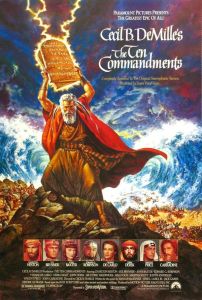
Welcome to day three of the Decades Blogathon – 6 edition – hosted by myself and the one and only Tom from Digital Shortbread! The blogathon focuses on movies that were released in the sixth year of the decade. Tom and I will run a different entry each day (we’ll also reblog the other’s post); and today we feature this excellent contribution from Mark at Fast Film Review – Cecil B. DeMille’s epic The Ten Commandments.
This lavish, Technicolor extravaganza shot in VistaVision is Cecil B. DeMille’s last and most celebrated work. Remaking his own 1923 black and white silent movie, The Ten Commandments is a sumptuous religious epic.
Pure soap opera is woven into the Old Testament story about a man whose perspective changes when he realises his true origins. Few films have attained such an unqualified level of sheer excess. Over the course of almost four hours, the picture dramatises the life of Moses. That the script treats this topic with only the most holy reverence,is never a question.
A viewing is akin to a religious experience. However, it presents its subject with such unrestrained grandiloquence that at times the exhibition verges on pageantry. Nevertheless, the drama is an unqualified success.
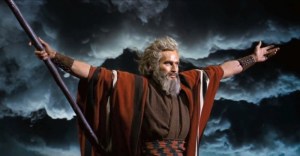
Two mesmerising performances highlight the saga. Charlton Heston is front and centre as the main character. He embodies every bit the part with honour and authority. DeMille had been responsible for his breakthrough as a circus manager in The Greatest Show On Earth. As successful as that picture was, The Ten Commandments would prove to be much more iconic.
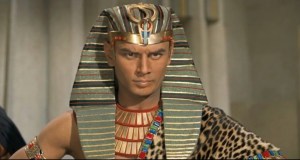
“Let my people go!” he demands in one of his signature lines. Matching Heston for sheer magnetism as his arch nemesis is Yul Brynner as the Pharaoh Rameses II. He will not relent, seemingly ending every proclamation with “So let it be written, so let it be done”. For Brynner, 1956 was a phenomenal year. The Ten Commandments was sandwiched right between The King And I which had come out three months prior and Anastasia which was two months away. His subsequent Oscar win for playing the King of Siam overshadowed his work here. It was well deserved but Yul is quite extraordinary as the unrelenting pharaoh.
This is Heston’s film but Brynner’s importance cannot be underestimated. He is a charismatic villain yet he engenders some sympathy. One would not expect a ruler who advocates slavery to have any redeeming qualities. A scene where he pleads with a statue of a falcon-headed Egyptian god to resurrect his firstborn son has an unexpected emotional nuance.
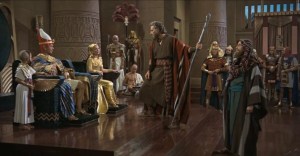
Cecil B. DeMille doesn’t know the meaning of moderation and thank goodness for that. Ornate sets, crowds of extras, special effects; it is a magnificent spectacle unlike any other. A director with a well-tended ego, he even appears as himself at the beginning. Perhaps in an effort to silence critics over the liberties he took with the story, he freely admits that the narrative is compiled from sources that include other ancient texts.
Occasionally the script veers into unintentionally hilarious dialogue; perhaps chief among them, “Oh, Moses, Moses, you stubborn, splendid, adorable fool!”. These actual words are uttered by Anne Baxter as Nefertiri, a part enhanced by her lustily exaggerated dramatics. She’s joined by a host of solid supporting performances, including blacklisted actor Edward G. Robinson in a comeback role. He is memorably evil as Dathan, the unethical Israelite who betrays his own people.
There’s sultry Yvonne DeCarlo as Moses’ loyal wife Sephora – this was before achieving TV fame as Lily Munster. The young slave Joshua is played by actor John Derek, later known for launching the career of wife Bo Derek, and Jewish slave girl Lilia is portrayed by ’50s starlet Debra Paget. Even Vincent Price and John Carradine show up in minor roles.
The Ten Commandments is certainly extravagant – it was the most expensive film ever made up to that point. All exterior shots were actually photographed on location in Egypt. It employs a cast of thousands with 70 speaking parts. In an era where they really had to hire all of those people you see in the background, this was truly an epic undertaking. No computer animation – this is all practical effects.
In a surprising bit of restraint, only three of the 10 plagues are depicted: the water turning into blood, thunder and hail storm and the killing of the oldest sons. The latter features an Angel of Death imagined as a thick, green mist that creeps through the streets claiming the lives of Egypt’s firstborn sons. As memorable as that was, it pales next to one of the greatest special effects sequences of all time that follows the Exodus of over 12,000 extras. The production culminates in Moses’ parting of the Red Sea in the climatic scene. Even now it’s a visual feat to be admired.
It was nominated for seven Academy Awards winning one for Best Visual Effects. To this day, the movie is the sixth most successful ever when adjusting for inflation. It remains the yardstick by which all biblical stories must be measured.
P.S. I’m well aware Ben-Hur is technically set during biblical times but it’s still not a biblical story.

 Hot diggity, it’s already day five of the Decades Blogathon – 6 edition – hosted by myself and the awesome Tom from Digital Shortbread. That means we’re already half way through! The blogathon focuses on movies that were released in the sixth year of the decade. Tom and I will run a different entry each day (we’ll also reblog the other’s post); and I’m delighted to welcome Jordan from Epileptic Moondancer to present his views on Roman Polanski’s unnerving psychological drama The Tenant.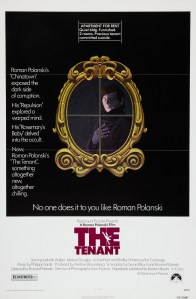







 three rows back